
공지사항
-
- '노란봉투'캠페인/국제연대..
- no chr.!
Similar reports and articles about the following issue I was reading in the last few weeks in the Isreali media, such as Jerusalem Post or Haaretz (just check it out by yourself...).

Nuclear War against Iran
By Michel Chossudovsky
January 3, 2006
The launching of an outright war using nuclear warheads against Iran is now in the final planning stages.
Coalition partners, which include the US, Israel and Turkey are in "an advanced stage of readiness".
Various military exercises have been conducted, starting in early 2005. In turn, the Iranian Armed Forces have also conducted large scale military maneuvers in the Persian Gulf in December in anticipation of a US sponsored attack.
Since early 2005, there has been intense shuttle diplomacy between Washington, Tel Aviv, Ankara and NATO headquarters in Brussels.
In recent developments, CIA Director Porter Goss on a mission to Ankara, requested Turkish Prime Minister Recep Tayyip Erdogan "to provide political and logistic support for air strikes against Iranian nuclear and military targets." Goss reportedly asked " for special cooperation from Turkish intelligence to help prepare and monitor the operation." (DDP, 30 December 2005).
In turn, Prime Minister Ariel Sharon has given the green light to the Israeli Armed Forces to launch the attacks by the end of March:
All top Israeli officials have pronounced the end of March, 2006, as the deadline for launching a military assault on Iran.... The end of March date also coincides with the IAEA report to the UN on Iran's nuclear energy program. Israeli policymakers believe that their threats may influence the report, or at least force the kind of ambiguities, which can be exploited by its overseas supporters to promote Security Council sanctions or justify Israeli military action.
(James Petras, Israel's War Deadline: Iran in the Crosshairs, Global Research, December 2005)
The US sponsored military plan has been endorsed by NATO, although it is unclear, at this stage, as to the nature of NATO's involvement in the planned aerial attacks.
"Shock and Awe"
The various components of the military operation are firmly under US Command, coordinated by the Pentagon and US Strategic Command Headquarters (USSTRATCOM) at the
Offutt Air Force base in Nebraska.The actions announced by Israel would be carried out in close coordination with the Pentagon. The command structure of the operation is centralized and ultimately Washington will decide when to launch the military operation.
US military sources have confirmed that an aerial attack on Iran would involve a large scale deployment comparable to the US "shock and awe" bombing raids on Iraq in March 2003:
American air strikes on Iran would vastly exceed the scope of the 1981 Israeli attack on the Osiraq nuclear center in Iraq, and would more resemble the opening days of the 2003 air campaign against Iraq. Using the full force of operational B-2 stealth bombers, staging from Diego Garcia or flying direct from the United States, possibly supplemented by F-117 stealth fighters staging from al Udeid in Qatar or some other location in theater, the two-dozen suspect nuclear sites would be targeted.
Military planners could tailor their target list to reflect the preferences of the Administration by having limited air strikes that would target only the most crucial facilities ... or the United States could opt for a far more comprehensive set of strikes against a comprehensive range of WMD related targets, as well as conventional and unconventional forces that might be used to counterattack against US forces in Iraq
(See Globalsecurity.org at http://www.globalsecurity.org/military/ops/iran-strikes.htm
In November, US Strategic Command conducted a major exercise of a "global strike plan" entitled "Global Lightening". The latter involved a simulated attack using both conventional and nuclear weapons against a "fictitious enemy".
Following the "Global Lightening" exercise, US Strategic Command declared an advanced state of readiness (See our analysis below)
While Asian press reports stated that the "fictitious enemy" in the Global Lightening exercise was North Korea, the timing of the exercises, suggests that they were conducted in anticipation of a planned attack on Iran.
Consensus for Nuclear War
No dissenting political voices have emerged from within the European Union.
There are ongoing consultations between Washington, Paris and Berlin. Contrary to the invasion of Iraq, which was opposed at the diplomatic level by France and Germany, Washington has been building "a consensus" both within the Atlantic Alliance and the UN Security Council. This consensus pertains to the conduct of a nuclear war, which could potentially affect a large part of the Middle East Central Asian region.
Moreover, a number of frontline Arab states are now tacit partners in the US/ Israeli military project. A year ago in November 2004, Israel's top military brass met at NATO headqaurters in Brtussels with their counterparts from six members of the Mediterranean basin nations, including Egypt, Jordan, Tunisia, Morocco, Algeria and Mauritania. A NATO-Israel protocol was signed. Following these meetings, j
oint military exercises were held off the coast of Syria involving the US, Israel and Turkey. and in February 2005, Israel participated in military exercises and "anti-terror maneuvers" together with several Arab countries.The media in chorus has unequivocally pointed to Iran as a "threat to World Peace".
The antiwar movement has swallowed the media lies. The fact that the US and Israel are planning a Middle East nuclear holocaust is not part of the antiwar/ anti- globalization agenda.
The "surgical strikes" are presented to world public opinion as a means to preventing Iran from developing nuclear weapons.
We are told that this is not a war but a military peace-keeping operation, in the form of aerial attacks directed against Iran's nuclear facilities.
Mini-nukes: "Safe for Civilians"
The press reports, while revealing certain features of the military agenda, largely serve to distort the broader nature of the military operation, which contemplates the preemptive use of tactical nuclear weapons.
The war agenda is based on the Bush administration's doctrine of "preemptive" nuclear war under the 2002 Nuclear Posture Review.
Media disinformation has been used extensively to conceal the devastating consequences of military action involving nuclear warheads against Iran. The fact that these surgical strikes would be carried out using both conventional and nuclear weapons is not an object of debate.
According to a 2003 Senate decision, the new generation of tactical nuclear weapons or "low yield" "mini-nukes", with an explosive capacity of up to 6 times a Hiroshima bomb, are now considered "safe for civilians" because the explosion is underground.
Through a propaganda campaign which has enlisted the support of "authoritative" nuclear scientists, the mini-nukes are being presented as an instrument of peace rather than war. The low-yield nukes have now been cleared for "battlefield use", they are slated to be used in the next stage of America's "war on Terrorism" alongside conventional weapons:
Administration officials argue that low-yield nuclear weapons are needed as a credible deterrent against rogue states.[Iran, North Korea] Their logic is that existing nuclear weapons are too destructive to be used except in a full-scale nuclear war. Potential enemies realize this, thus they do not consider the threat of nuclear retaliation to be credible. However, low-yield nuclear weapons are less destructive, thus might conceivably be used. That would make them more effective as a deterrent. ( Opponents Surprised By Elimination of Nuke Research Funds Defense News November 29, 2004)
In an utterly twisted logic, nuclear weapons are presented as a means to building peace and preventing "collateral damage". The Pentagon has intimated, in this regard, that the ‘mini-nukes’ (with a yield of less than 5000 tons) are harmless to civilians because the explosions ‘take place under ground’. Each of these ‘mini-nukes’, nonetheless, constitutes – in terms of explosion and potential radioactive fallout – a significant fraction of the atom bomb dropped on Hiroshima in 1945. Estimates of yield for Nagasaki and Hiroshima indicate that they were respectively of 21000 and 15000 tons (
http://www.warbirdforum.com/hiroshim.htm
In other words, the low yielding mini-nukes have an explosive capacity of one third of a Hiroshima bomb.
|
The earth-penetrating capability of the [nuclear] B61-11 is fairly limited, however. Tests show it penetrates only 20 feet or so into dry earth when dropped from an altitude of 40,000 feet. Even so, by burying itself into the ground before detonation, a much higher proportion of the explosion energy is transferred to ground shock compared to a surface bursts. Any attempt to use it in an urban environment, however, would result in massive civilian casualties. Even at the low end of its 0.3-300 kiloton yield range, the nuclear blast will simply blow out a huge crater of radioactive material, creating a lethal gamma-radiation field over a large area. http://www.fas.org/faspir/2001/v54n1/weapons.htm
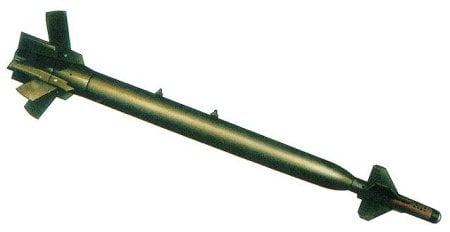
http://www.globalresearch.ca/images/gbu28.jpg Guided Bomb Unit-28 (GBU-28) |
The new definition of a nuclear warhead has blurred the distinction between conventional and nuclear weapons:
'It's a package (of nuclear and conventional weapons). The implication of this obviously is that nuclear weapons are being brought down from a special category of being a last resort, or sort of the ultimate weapon, to being just another tool in the toolbox,' said Kristensen. (Japan Economic News Wire, op cit)
We are a dangerous crossroads: military planners believe their own propaganda.
The military manuals state that this new generation of nuclear weapons are "safe" for use in the battlefield. They are no longer a weapon of last resort. There are no impediments or political obstacles to their use. In this context, Senator Edward Kennedy has accused the Bush Administration for having developed "a generation of more useable nuclear weapons."
The international community has endorsed nuclear war in the name of World Peace.
"Making the World safer" is the justification for launching a military operation which could potentially result in a nuclear holocaust.
But nuclear holocausts are not front page news! In the words of Mordechai Vanunu,
The Israeli government is preparing to use nuclear weapons in its next war with the Islamic world. Here where I live, people often talk of the Holocaust. But each and every nuclear bomb is a Holocaust in itself. It can kill, devastate cities, destroy entire peoples. (See interview with Mordechai Vanunu, December 2005).
Space and Earth Attack Command Unit
A preemptive nuclear attack using tactical nuclear weapons would be coordinated out of US Strategic Command Headquarters at the Offutt Air Force base in Nebraska, in liaison with US and coalition command units in the Persian Gulf, the Diego Garcia military base, Israel and Turkey.
Under its new mandate, USSTRATCOM has a responsibility for "overseeing a global strike plan" consisting of both conventional and nuclear weapons. In military jargon, it is slated to play the role of "a global integrator charged with the missions of Space Operations; Information Operations; Integrated Missile Defense; Global Command & Control; Intelligence, Surveillance and Reconnaissance; Global Strike; and Strategic Deterrence.... "
In January 2005, at the outset of the military build-up directed against Iran, USSTRATCOM was identified as "the lead Combatant Command for integration and synchronization of DoD-wide efforts in combating weapons of mass destruction."
To implement this mandate, a brand new command unit entitled Joint Functional Component Command Space and Global Strike, or JFCCSGS was created.
JFCCSGS has the mandate to oversee the launching of a nuclear attack in accordance with the 2002 Nuclear Posture Review, approved by the US Congress in 2002. The NPR underscores the pre-emptive use of nuclear warheads not only against "rogue states" but also against China and Russia.
Since November, JFCCSGS is said to be in "an advance state of readiness" following the conduct of relevant military exercises. The announcement was made in early December by U.S. Strategic Command to the effect that the command unit had achieved "an operational capability for rapidly striking targets around the globe using nuclear or conventional weapons." The exercises conducted in November used "a fictional country believed to represent North Korea" (see David Ruppe, 2 December 2005):
"The new unit [JFCCSGS] has 'met requirements necessary to declare an initial operational capability' as of Nov. 18. A week before this announcement, the unit finished a command-post exercise, dubbed Global Lightening, which was linked with another exercise, called Vigilant Shield, conducted by the North American Aerospace Defend Command, or NORAD, in charge of missile defense for North America.
'After assuming several new missions in 2002, U.S. Strategic Command was reorganized to create better cooperation and cross-functional awareness,' said Navy Capt. James Graybeal, a chief spokesperson for STRATCOM. 'By May of this year, the JFCCSGS has published a concept of operations and began to develop its day-to-day operational requirements and integrated planning process.'
'The command's performance during Global Lightning demonstrated its preparedness to execute its mission of proving integrated space and global strike capabilities to deter and dissuade aggressors and when directed, defeat adversaries through decisive joint global effects in support of STRATCOM,' he added without elaborating about 'new missions' of the new command unit that has around 250 personnel.
Nuclear specialists and governmental sources pointed out that one of its main missions would be to implement the 2001 nuclear strategy that includes an option of preemptive nuclear attacks on 'rogue states' with WMDs. (Japanese Economic Newswire, 30 December 2005)
CONCEPT PLAN (CONPLAN) 8022
JFCCSGS is in an advanced state of readiness to trigger nuclear attacks directed against Iran or North Korea.
The operational implementation of the Global Strike is called CONCEPT PLAN (CONPLAN) 8022. The latter is described as "an actual plan that the Navy and the Air Force translate into strike package for their submarines and bombers,' (Ibid).
CONPLAN 8022 is 'the overall umbrella plan for sort of the pre-planned strategic scenarios involving nuclear weapons.'
'It's specifically focused on these new types of threats -- Iran, North Korea -- proliferators and potentially terrorists too,' he said. 'There's nothing that says that they can't use CONPLAN 8022 in limited scenarios against Russian and Chinese targets.'(According to Hans Kristensen, of the Nuclear Information Project, quoted in Japanese economic News Wire, op cit)
The mission of JFCCSGS is to implement CONPLAN 8022, in other words to trigger a nuclear war with Iran.
The Commander in Chief, namely George W. Bush would instruct the Secretary of Defense, who would then instruct the Joint Chiefs of staff to activate CONPLAN 8022.
CONPLAN is distinct from other military operations. it does not contemplate the deployment of ground troops.
CONPLAN 8022 is different from other war plans in that it posits a small-scale operation and no "boots on the ground." The typical war plan encompasses an amalgam of forces -- air, ground, sea -- and takes into account the logistics and political dimensions needed to sustain those forces in protracted operations.... The global strike plan is offensive, triggered by the perception of an imminent threat and carried out by presidential order.) (William Arkin, Washington Post, May 2005)
The Role of Israel
Since late 2004, Israel has been stockpiling US made conventional and nuclear weapons systems in anticipation of an attack on Iran. This stockpiling which is financed by US military aid was largely completed in June 2005. Israel has taken delivery from the US of several thousand "smart air launched weapons" including some 500 'bunker-buster bombs, which can also be used to deliver tactical nuclear bombs.
The B61-11 is the "nuclear version" of the "conventional" BLU 113, can be delivered in much same way as the conventional bunker buster bomb. (See Michel Chossudovsky, http://www.globalresearch.ca/articles/CHO112C.html , see also http://www.thebulletin.org/article_nn.php?art_ofn=jf03norris ) .
Moreover, reported in late 2003, Israeli Dolphin-class submarines equipped with US Harpoon missiles armed with nuclear warheads are now aimed at Iran. (See Gordon Thomas, http://www.globalresearch.ca/articles/THO311A.html
|
Late April 2005. Sale of deadly military hardware to Israel. GBU-28 Buster Bunker Bombs: Coinciding with Putin's visit to Israel, the US Defence Security Cooperation Agency (Department of Defense) announced the sale of an additional 100 bunker-buster bombs produced by Lockheed Martin to Israel. This decision was viewed by the US media as "a warning to Iran about its nuclear ambitions." The sale pertains to the larger and more sophisticated "Guided Bomb Unit-28 (GBU-28) BLU-113 Penetrator" (including the WGU-36A/B guidance control unit and support equipment). The GBU-28 is described as "a special weapon for penetrating hardened command centers located deep underground. The fact of the matter is that the GBU-28 is among the World's most deadly "conventional" weapons used in the 2003 invasion of Iraq, capable of causing thousands of civilian deaths through massive explosions.The Israeli Air Force are slated to use the GBU-28s on their F-15 aircraft. (See text of DSCA news release at http://www.dsca.osd.mil/PressReleases/36-b/2005/Israel_05-10_corrected.pdf |
Extension of the War
Tehran has confirmed that it will retaliate if attacked, in the form of ballistic missile strikes directed against Israel (CNN, 8 Feb 2005). These attacks, could also target US military facilities in Iraq and Persian Gulf, which would immediately lead us into a scenario of military escalation and all out war.
At present there are three distinct war theaters: Afghanistan, Iraq and Palestine. The air strikes against Iran could contribute to unleashing a war in the broader Middle East Central Asian region.
Moreover, the planned attack on Iran should also be understood in relation to the timely withdrawal of Syrian troops from Lebanon, which has opened up a new space, for the deployment of Israeli forces. The participation of Turkey in the US-Israeli military operation is also a factor, following last year's agreement reached between Ankara and Tel Aviv.
More recently, Tehran has beefed up its air defenses through the acquisition of Russian 29 Tor M-1 anti-missile systems. In October, with Moscow`s collaboration, "a Russian rocket lifted an Iranian spy satellite, the Sinah-1, into orbit." (see Chris Floyd)
The Sinah-1 is just the first of several Iranian satellites set for Russian launches in the coming months.
Thus the Iranians will soon have a satellite network in place to give them early warning of an Israeli attack, although it will still be a pale echo of the far more powerful Israeli and American space spies that can track the slightest movement of a Tehran mullah’s beard. What’s more, late last month Russia signed a $1 billion contract to sell Iran an advanced defense system that can destroy guided missiles and laser-guided bombs, the Sunday Times reports. This too will be ready in the next few months. (op.cit.)
Ground War
While a ground war is not envisaged under CONPLAN, the aerial bombings could lead through the process of escalation into a ground war.
Iranian troops could cross the Iran-Iraq border and confront coalition forces inside Iraq. Israeli troops and/or Special Forces could enter into Lebanon and Syria.
In recent developments, Israel plans to conduct military exercises as well as deploy Special Forces in the mountainous areas of Turkey bordering Iran and Syria with the collaboration of the Ankara government:
Ankara and Tel Aviv have come to an agreement on allowing the Israeli army to carry out military exercises in the mountainous areas [in Turkey] that border Iran.
[According to] ... a UAE newspaper ..., according to the agreement reached by the Joint Chief of Staff of the Israeli army, Dan Halutz, and Turkish officials, Israel is to carry out various military manoeuvres in the areas that border Iran and Syria. [Punctuation as published here and throughout.] [Dan Halutz] had gone to Turkey a few days earlier.
Citing certain sources without naming them, the UAE daily goes on to stress: The Israeli side made the request to carry out the manoeuvres because of the difficulty of passage in the mountain terrains close to Iran's borders in winter.
The two Hakari [phonetic; not traced] and Bulo [phonetic; not traced] units are to take part in the manoeuvres that have not been scheduled yet. The units are the most important of Israel's special military units and are charged with fighting terrorism and carrying out guerrilla warfare.
Earlier Turkey had agreed to Israeli pilots being trained in the area bordering Iran. The news [of the agreement] is released at a time when Turkish officials are trying to evade the accusation of cooperating with America in espionage operations against its neighbouring countries Syria and Iran. Since last week the Arab press has been publishing various reports about Ankara's readiness or, at least, agreement in principle to carry out negotiations about its soil and air space being used for action against Iran.
(E'temad website, Tehran, in Persian 28 Dec 05, BBC Monitoring Services Translation)
Concluding remarks
The implications are overwhelming.
The so-called international community has accepted the eventuality of a nuclear holocaust.
Those who decide have swallowed their own war propaganda.
A political consensus has developed in Western Europe and North America regarding the aerial attacks using tactical nuclear weapons, without considering their devastating implications.
This profit driven military adventure ultimately threatens the future of humanity.
What is needed in the months ahead is a major thrust, nationally and internationally which breaks the conspiracy of silence, which acknowledges the dangers, which brings this war project to the forefront of political debate and media attentiion, at all levels, which confronts and requires political and military leaders to take a firm stance against the US sponsored nuclear war.
Ultimately what is required are extensive international sanctions directed against the United States of America and Israel.
Michel Chossudovsky is the author of the international best seller "The Globalization of Poverty " published in eleven languages. He is Professor of Economics at the University of Ottawa and Director of the Center for Research on Globalization, at www.globalresearch.ca . He is also a contributor to the Encyclopaedia Britannica. His most recent book is entitled: America’s "War on Terrorism", Global Research, 2005.,
Related article: Planned US-Israeli Attack on Iran, by Michel Chossudovsky


George Bush insists that Iran must not be allowed to develop nuclear weapons. So why, six years ago, did the CIA give the Iranians blueprints to build a bomb?
In an extract from his explosive new book, New York Times reporter James Risen reveals the bungles and miscalculations that led to a spectacular intelligence fiasco
Thursday January 5, 2006
The Guardian
Mistake piled on mistake. As the CIA later learned, the Iranian who received the download was a double agent. The agent quickly turned the data over to Iranian security officials, and it enabled them to "roll up" the CIA's network throughout Iran. CIA sources say that several of the Iranian agents were arrested and jailed, while the fates of some of the others is still unknown.
This espionage disaster, of course, was not reported. It left the CIA virtually blind in Iran, unable to provide any significant intelligence on one of the most critical issues facing the US - whether Tehran was about to go nuclear.
In fact, just as President Bush and his aides were making the case in 2004 and 2005 that Iran was moving rapidly to develop nuclear weapons, the American intelligence community found itself unable to provide the evidence to back up the administration's public arguments. On the heels of the CIA's failure to provide accurate pre-war intelligence on Iraq's alleged weapons of mass destruction, the agency was once again clueless in the Middle East. In the spring of 2005, in the wake of the CIA's Iranian disaster, Porter Goss, its new director, told President Bush in a White House briefing that the CIA really didn't know how close Iran was to becoming a nuclear power.
But it's worse than that. Deep in the bowels of the CIA, someone must be nervously, but very privately, wondering: "Whatever happened to those nuclear blueprints we gave to the Iranians?"
The story dates back to the Clinton administration and February 2000, when one frightened Russian scientist walked Vienna's winter streets. The Russian had good reason to be afraid. He was walking around Vienna with blueprints for a nuclear bomb.
To be precise, he was carrying technical designs for a TBA 480 high-voltage block, otherwise known as a "firing set", for a Russian-designed nuclear weapon. He held in his hands the knowledge needed to create a perfect implosion that could trigger a nuclear chain reaction inside a small spherical core. It was one of the greatest engineering secrets in the world, providing the solution to one of a handful of problems that separated nuclear powers such as the United States and Russia from rogue countries such as Iran that were desperate to join the nuclear club but had so far fallen short.
The Russian, who had defected to the US years earlier, still couldn't believe the orders he had received from CIA headquarters. The CIA had given him the nuclear blueprints and then sent him to Vienna to sell them - or simply give them - to the Iranian representatives to the International Atomic Energy Agency (IAEA). With the Russian doing its bidding, the CIA appeared to be about to help Iran leapfrog one of the last remaining engineering hurdles blocking its path to a nuclear weapon. The dangerous irony was not lost on the Russian - the IAEA was an international organisation created to restrict the spread of nuclear technology.
The Russian was a nuclear engineer in the pay of the CIA, which had arranged for him to become an American citizen and funded him to the tune of $5,000 a month. It seemed like easy money, with few strings attached.
Until now. The CIA was placing him on the front line of a plan that seemed to be completely at odds with the interests of the US, and it had taken a lot of persuading by his CIA case officer to convince him to go through with what appeared to be a rogue operation.
The case officer worked hard to convince him - even though he had doubts about the plan as well. As he was sweet-talking the Russian into flying to Vienna, the case officer wondered whether he was involved in an illegal covert action. Should he expect to be hauled before a congressional committee and grilled because he was the officer who helped give nuclear blueprints to Iran? The code name for this operation was Merlin; to the officer, that seemed like a wry tip-off that nothing about this programme was what it appeared to be. He did his best to hide his concerns from his Russian agent.
The Russian's assignment from the CIA was to pose as an unemployed and greedy scientist who was willing to sell his soul - and the secrets of the atomic bomb - to the highest bidder. By hook or by crook, the CIA told him, he was to get the nuclear blueprints to the Iranians. They would quickly recognise their value and rush them back to their superiors in Tehran.
The plan had been laid out for the defector during a CIA-financed trip to San Francisco, where he had meetings with CIA officers and nuclear experts mixed in with leisurely wine-tasting trips to Sonoma County. In a luxurious San Francisco hotel room, a senior CIA official involved in the operation talked the Russian through the details of the plan. He brought in experts from one of the national laboratories to go over the blueprints that he was supposed to give the Iranians.
The senior CIA officer could see that the Russian was nervous, and so he tried to downplay the significance of what they were asking him to do. He said the CIA was mounting the operation simply to find out where the Iranians were with their nuclear programme. This was just an intelligence-gathering effort, the CIA officer said, not an illegal attempt to give Iran the bomb. He suggested that the Iranians already had the technology he was going to hand over to them. It was all a game. Nothing too serious.
On paper, Merlin was supposed to stunt the development of Tehran's nuclear programme by sending Iran's weapons experts down the wrong technical path. The CIA believed that once the Iranians had the blueprints and studied them, they would believe the designs were usable and so would start to build an atom bomb based on the flawed designs. But Tehran would get a big surprise when its scientists tried to explode their new bomb. Instead of a mushroom cloud, the Iranian scientists would witness a disappointing fizzle. The Iranian nuclear programme would suffer a humiliating setback, and Tehran's goal of becoming a nuclear power would have been delayed by several years. In the meantime, the CIA, by watching Iran's reaction to the blueprints, would have gained a wealth of information about the status of Iran's weapons programme, which has been shrouded in secrecy.
The Russian studied the blueprints the CIA had given him. Within minutes of being handed the designs, he had identified a flaw. "This isn't right," he told the CIA officers gathered around the hotel room. "There is something wrong." His comments prompted stony looks, but no straight answers from the CIA men. No one in the meeting seemed surprised by the Russian's assertion that the blueprints didn't look quite right, but no one wanted to enlighten him further on the matter, either.
In fact, the CIA case officer who was the Russian's personal handler had been stunned by his statement. During a break, he took the senior CIA officer aside. "He wasn't supposed to know that," the CIA case officer told his superior. "He wasn't supposed to find a flaw."
"Don't worry," the senior CIA officer calmly replied. "It doesn't matter."
The CIA case officer couldn't believe the senior CIA officer's answer, but he managed to keep his fears from the Russian, and continued to train him for his mission.
After their trip to San Francisco, the case officer handed the Russian a sealed envelope with the nuclear blueprints inside. He was told not to open the envelope under any circumstances. He was to follow the CIA's instructions to find the Iranians and give them the envelope with the documents inside. Keep it simple, and get out of Vienna safe and alive, the Russian was told. But the defector had his own ideas about how he might play that game.
The CIA had discovered that a high-ranking Iranian official would be travelling to Vienna and visiting the Iranian mission to the IAEA, and so the agency decided to send the Russian to Vienna at the same time. It was hoped that he could make contact with either the Iranian representative to the IAEA or the visitor from Tehran.
In Vienna, however, the Russian unsealed the envelope with the nuclear blueprints and included a personal letter of his own to the Iranians. No matter what the CIA told him, he was going to hedge his bets. There was obviously something wrong with the blueprints - so he decided to mention that fact to the Iranians in his letter. They would certainly find flaws for themselves, and if he didn't tell them first, they would never want to deal with him again.
The Russian was thus warning the Iranians as carefully as he could that there was a flaw somewhere in the nuclear blueprints, and he could help them find it. At the same time, he was still going through with the CIA's operation in the only way he thought would work.
The Russian soon found 19 Heinstrasse, a five-storey office and apartment building with a flat, pale green and beige facade in a quiet, slightly down-at-heel neighbourhood in Vienna's north end. Amid the list of Austrian tenants, there was one simple line: "PM/Iran." The Iranians clearly didn't want publicity. An Austrian postman helped him. As the Russian stood by, the postman opened the building door and dropped off the mail. The Russian followed suit; he realised that he could leave his package without actually having to talk to anyone. He slipped through the front door, and hurriedly shoved his envelope through the inner-door slot at the Iranian office.
The Russian fled the mission without being seen. He was deeply relieved that he had made the hand-off without having to come face to face with a real live Iranian. He flew back to the US without being detected by either Austrian security or, more importantly, Iranian intelligence.
Just days after the Russian dropped off his package at the Iranian mission, the National Security Agency reported that an Iranian official in Vienna abruptly changed his schedule, making airline reservations to fly home to Iran. The odds were that the nuclear blueprints were now in Tehran.
The Russian scientist's fears about the operation seemed well founded. He was the front man for what may have been one of the most reckless operations in the modern history of the CIA, one that may have helped put nuclear weapons in the hands of a charter member of what President George W Bush has called the "axis of evil".
Operation Merlin has been one of the most closely guarded secrets in the Clinton and Bush administrations. It's not clear who originally came up with the idea, but the plan was first approved by Clinton. After the Russian scientist's fateful trip to Vienna, however, the Merlin operation was endorsed by the Bush administration, possibly with an eye toward repeating it against North Korea or other dangerous states.
Several former CIA officials say that the theory behind Merlin - handing over tainted weapon designs to confound one of America's adversaries - is a trick that has been used many times in past operations, stretching back to the cold war. But in previous cases, such Trojan horse operations involved conventional weapons; none of the former officials had ever heard of the CIA attempting to conduct this kind of high-risk operation with designs for a nuclear bomb. The former officials also said these kind of programmes must be closely monitored by senior CIA managers in order to control the flow of information to the adversary. If mishandled, they could easily help an enemy accelerate its weapons development. That may be what happened with Merlin.
Iran has spent nearly 20 years trying to develop nuclear weapons, and in the process has created a strong base of sophisticated scientists knowledgeable enough to spot flaws in nuclear blueprints. Tehran also obtained nuclear blueprints from the network of Pakistani scientist Abdul Qadeer Khan, and so already had workable blueprints against which to compare the designs obtained from the CIA. Nuclear experts say that they would thus be able to extract valuable information from the blueprints while ignoring the flaws.
"If [the flaw] is bad enough," warned a nuclear weapons expert with the IAEA, "they will find it quite quickly. That would be my fear"
© James Risen 2006
· This is an edited extract from State of War, by James Risen, published by The Free Press
http://www.guardian.co.uk/iran/story/0,12858,1678220,00.html
WITHOUT ANY COMMENT:
All eyes on WTO protesters
By Keith Bradsher The New York Times
MONDAY, JANUARY 9, 2006
The prosecution of 14 people here after a violent demonstration at the World Trade Organization conference last month is turning into a contentious and diplomatically sticky issue for the governments of Hong Kong, China and South Korea.
Labor union federations and social groups, primarily from Asia and Europe, are trying to portray the 14 as "WTO political prisoners." They held a small march Monday in Hong Kong and said they had sent delegations to deliver letters, and in some cases hold demonstrations, at Chinese consulates and embassies in New York, Bangladesh, Belgium, Hungary, Thailand and Switzerland.
Legal proceedings against the demonstrators are scheduled to begin this week.
The prosecution of the protesters has drawn considerable attention in South Korea, with three of the country's most famous film and soap opera stars issuing a recent appeal for their release.
All but three of those facing prosecution are South Korean citizens.
The prosecution also coincides with considerable resentment in South Korea of China's tough treatment of refugees from North Korea, many of whom have been repatriated to face long prison terms and even execution.
The South Korean government has appealed to the Hong Kong government repeatedly to release the protesters here, all of whom are men. But the Hong Kong authorities have refused, pointing out that the protest on the night of Dec. 17 left 137 people injured, including 67 police officers.
"Hong Kong is a place where the rule of law is strongly upheld," said Wong Yan-lung, Hong Kong's secretary for justice, after meeting in Hong Kong on Monday with three opposition lawmakers from South Korea who complained about the prosecution. "This case is being processed in accordance with the laws of Hong Kong and our established and announced prosecution policy."
Britain returned Hong Kong to China in 1997, but the territory, now designated a special autonomous region, retains its own independent legal system. Large pro-democracy demonstrations here over the past two years have been peaceful, and government officials have expressed worries that local radicals might misinterpret leniency toward the WTO protesters as a willingness to tolerate violence.
South Korea and China have been closely aligned in strongly criticizing Japan for not doing more to acknowledge crimes committed during World War II. They have built a very close commercial relationship in the past two decades.
Hong Kong has close to 7,000 South Korean citizens, and Lee Kyu Hyung, South Korea's vice foreign minister, came here two days after the protest to express regret for the confrontation, and to ask for the release of all detainees.
The protesters, 11 of whom began a hunger strike last Thursday, contend they are innocent and are victims of mistaken identity.
Yang Kyung Kyu, the president of the Korean Federation of Transportation, Public and Social Services Workers' Unions and one of the 14 protesters being prosecuted, said at a news conference here on Monday that the Hong Kong police lacked experience in distinguishing people of Korean descent.
The police encircled the protesters on the night of Dec. 17 and then arrested more than 1,000 of them the following morning. It released all except 14 of them a day later.
All 14 have been released on bail but have not been allowed to leave the territory, with the exception of one who is a Taiwanese student and has been allowed to go home for exams. Another protester is Japanese and the last is a mainland Chinese citizen.
The first court hearing is scheduled for Wednesday. The protesters have been charged with unlawful assembly and officials have said that they are considering other charges, including assaulting police officers.
Many in Hong Kong were shocked by televised scenes of protesters who managed to get around police officers in riot gear and began using plywood boards and steel pipes to strike lightly protected officers. One police officer was hospitalized for 10 days, but most were treated and released the night of the protest.
Police officers have long enjoyed high social standing in Hong Kong, allowing thousands of working class men and women and their children to move up the social ladder.
朝鮮日報:
Hong Kong Faces Second Wave of Korean Protestors

The Korean Confederation of Trade Unions has threatened to dispatch a second army of Korean protestors (^^) to Hong Kong unless a court there throws out charges of illegal assembly against a group of 11 Koreans who were arrested in violent demonstrations in the territory last month...
http://english.chosun.com/w21data/html/news/200601/200601090021.html
YONHAP (English&Korean):
Labor group threatens new protests in Hong Kong
HONG KONG, Jan. 9 -- The head of a South Korean labor umbrella organization on Monday threatened further protests in Hong Kong unless a group of South Korean farmer activists arrested there are acquitted of all criminal charges and released immediately.
Jun Jae-hwan, head of the militant Korean Confederation of Trade Unions (KCTU), said his organization would dispatch 1,000 protesters if Hong Kong's court decides to convict any of the 11 South Korean protesters on trial.
The charged farmers joined more than 1,000 of their compatriots in staging anti-globalization rallies here during the December meeting of WTO ministers.
A total of 1,001 South Koreans were detained, but the rest were released without charge while. The other 11 faced trial on suspicion of staging violent rallies.
They have been waging a hunger strike since Thursday, claiming their charges have been fabricated.
The Hong Kong police on Friday admitted to making "minor mistakes" in handling the South Korean protesters, such as holding up the translation service for them during their investigation.
But Jun, who arrived here to observe the trial that is slated for Wednesday, claimed the Hong Kong prosecution was unlikely to withdraw its charges, and said his organization is preparing to stage a second round of street protests depending on the outcome of Wednesday's ruling.
"(The organization) will try to stage the second round of the demonstration rallies peacefully, but (its) leadership may not be able to control the protesters once they become emotional," Jun told reporters while visiting the protesters.
KCTU officials claimed the South Korean protesters were also drawing much sympathy from Hong Kong citizens, who have donated some 130 million won (US$132,000) so far to help with their legal expenses.
More than 3,000 Hong Kong citizens have also signed a petition calling for the acquittal of the South Koreans, according to the officials.
A group of some 400 civic activists from here were to hold a candlelight vigil in front of the house of Hong Kong's Chief Executive Donald Tsang later in the day, the officials said.
민노총 "시위대 억류시 1천명 홍콩 원정시위"..
|
시위대 무죄방면촉구 페리터미널 단식농성 닷새째
(홍콩=연합뉴스) 정주호 특파원 = 민주노총은 한국 시위대가 조속히 무죄 방면되지 않을 경우 또다시 1천명의 시위대를 홍콩에 파견, 대규모 시위를 벌이겠다고 9일 밝혔다.
시위대 지원을 위해 홍콩을 방문한 전재환 민주노총 위원장은 오는 11일 재판에서 시위대에 대해 공소취하나 무죄 판결이 이뤄지지 않을 경우 오는 20∼22일 사이 300명의 선발대에 이어 모두 1천명의 원정 시위대를 재차 파견하겠다고 밝혔다.
그는 홍콩 경찰의 현재 태도로 본다면 시위자들의 공소취하 가능성이 그렇게 높지 않다며 "2차 원정투쟁을 평화적으로 진행하겠지만 시위대의 감정이 격화되면 지도부도 이들을 통제하기 어렵다"고 덧붙였다.
단식농성중인 양경규 민주노총 공공연맹 위원장은 민주노총과 전농 및 각 사회단체가 이런 방침을 정하고 11일 재판 결과에 따라 조직별로 2차 원정시위를 준비하고 있다고 말했다.
양 위원장을 비롯한 시위대 11명은 구속후 보석 석방된 뒤 일본인 시위자 스케 나카기리(中桐康介.30)와 함께 9일 현재 침사추이 페리 터미널 앞에서 천막을 치고 세계무역기구(WTO) 반대 및 무죄 방면을 주장하며 5일부터 닷새째 단식 농성을 벌이고 있는 중이다.
단식 농성장 앞에 홍콩 시민단체가 마련해놓은 모금함에는 홍콩 시민과 관광객들이 지금까지 10만홍콩달러(1억3천만원)의 성금을 기탁했으며 3천여명이 석방을 촉구하는 성명에 서명했다.
재판 참관차 홍콩을 방문중인 권영길 민주노동당 임시대표와 강기갑, 단병호 의원은 9일 홍콩 검찰 지휘를 맡고 있는 웡옌룽(黃仁龍) 율정사장(법무 담당 부총리격)을 만나 시위대에 대한 공정한 재판과 조속한 석방을 촉구했다.
한편 홍콩 시민과 운동가 400여명은 8일 홍콩 도심에서 시위대 무죄방면 촉구를 위한 가두행진을 벌인데 이어 9일 오후에도 시위대 무죄방면을 위한 국제 단결 집회를 갖고 홍콩 정부청사 앞까지 가두행진을 벌였다.
이들은 또 이날 저녁 도널드 창(曾蔭權) 홍콩 행정장관 관사 앞에서 촛불집회도 가질 예정이며 10일 오후부터는 쿤통(觀塘) 법원 앞에서 홍콩 시민단체 100여명이 공판 개시 직전까지 24시간 동조 단식농성을 벌일 계획이다.
박민웅 공공연맹 사무총장은 "홍콩 당국의 기소 내용이 전혀 사실과 맞지 않기 때문에 이를 철회할 때까지 무죄 투쟁을 벌이기로 했다"며 "홍콩 시민들의 지지와 성원이 놀라울 정도"라고 말했다.

최근 덧글 목록