본문
The Maghreb, What Movements For Which Perspectives?
The deepening of the world economic crisis, since 2008, has caused a significant degradation of living and working conditions in the “poor” countries and frontal attacks through austerity plans, the increase in unemployment, and the revocation of many [long standing] “social gains” in the “rich” countries.
Class reactions have multiplied throughout the world, there are strikes, riots with violent confrontations with the forces of repression, demonstrations…
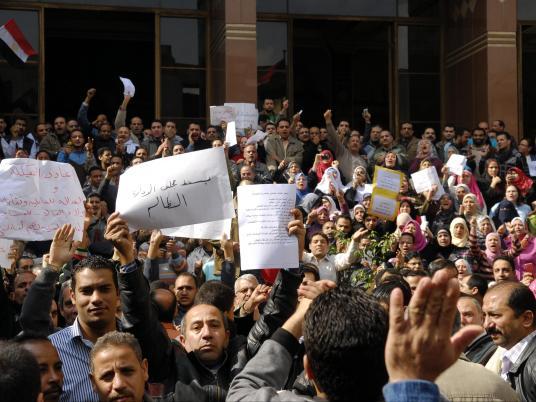
What is significant in the current movements is the mobilization of youth. Greek youth have been the cutting edge of contestation since 2008 but in their wake, French and English students and, now, Tunisian, Algerian and Egyptian are the motivating force of the movements. But these young people, in Tunisia, in Egypt seem to have forged a link to other demands. They have been set in motion
The movements unfolding in the Maghreb must be situated in this context of a major aggravation of the world economic crisis and its repercussions on the proletariat, working or unemployed. They express a revolt against the price increase, but also, and this is fundamental, against the complete absence of any perspective represented by the capitalist system. This absence of any perspective manifests itself more and more strongly and affects the whole planet.
These movement are important in other ways too: they constitute an experiment in collective struggle, in the capacity to oppose, the capacity to say “No”, to reject the established order. These experiences, combined with the questioning about [the lack of any perspective, will not fail to have an important impact on the future development of the political consciousness of the proletariat.
The risk exists that the current demands in Tunisia and Egypt will be swallowed up by the illusion that a change of President or of the government will give work to the young people, will fill the shopping baskets of the housewife, and will allow freedom of expression and of organization.
Remember that the transformation of Latin America dictatorships and the so-called “communist” regimes into more modern, “democratic,” political systems, corresponded to a change into regimes better adapted to the present needs of the accumulation of capital, and the need for a democratic control of the working class. But, if these political adaptations allowed a better exploitation of natural resources and some industrial development, they only very partially masked the overturning of existing health care, housing, educational, systems, and the creation of an even wider gap between a newly enriched class and an increasing mass of the poor consigned to unemployment, to poverty, to drugs, and to the violence of the shantytowns and the street.
Thus, the movements of revolt agitating Tunisia and Egypt express at the same time the refusal of the poverty generated by the capitalist mode of production, the search for new perspectives, but also the hopes invested in a change [in the mode] of political management. They reflect the difficulty, for the world proletariat, to envision a new society and thus to break with the economic, social, and political functioning of capitalism.
It is now clear that life in this system, under whatever form it takes, can only produce more poverty, wars, destruction of the environment, and, at the end of the day, a major degradation in the conditions of existence of human beings.
Only putting into question the very bases of this society on a world scale can open up a revolutionary perspective for the creation of a society offering radically different perspectives.
Internationalist Perspective
On Egypt (1)
IP is publishing articles and comments on the events in Egypt. This piece originally appeared on the Internationalist Discussion List.
——————————–
Greetings all
I assume most people on this list have been following the recent events in Egypt with interest. There are many sites on the internet which provide detailed factual accounts of what has transpired there since January 25. I have wondered, however, about the question of how (pro-)revolutionaries are analyzing the developing situation there, and what they/we would have to say to the working class in Egypt were they/we there. There are some who are saying that this is all just bourgeois politics, a movement to change the government/regime, to find a less corrupt one, maybe, at most, to bring about a representative democratic system of government with associated legal civil rights, on the model of the sorts of movements that took place around Eastern Europe 20 years ago following the collapse of the ‘Iron Curtain’. I am assuming that many here don’t share that perspective, and see that there is more going in Egypt than that.
The movement seems to be focused so far on one key demand: Mubarak (and his National Democratic Party regime) out! All of the hundreds of thousands, if not millions, of Egyptians involved in this movement agree on this. These people are convinced that Mubarak and his regime are responsible for their plight. There is a common feeling that this plight is unacceptable, and they are demanding “No more!” When a regime is as totalitarian as Mubarak’s has been, it becomes the obvious focus for all who are dissatisfied with their situation, their socio-economic conditions. It becomes attractive to believe that if only the dictator and his regime were gone, things would be so much better. Of course, many people know better, since the world has seen many such dictators thrown out, only to give way to either another equally “bad” dictator/regime, or perhaps a slightly “less bad” regime, but general socio-economic conditions remaining the same as before or even worsening, specifically for the working class, depending on the overall state of the economic crisis.
The willingness and determination of masses of people (and I am assuming that at least a large minority of these people are working class) to stand up to a dictatorial regime and say “Enough! Get out!” surely must be inspiring for (pro-)revolutionaries everywhere. And the fact that they have accomplished this and held their ground for as long as they have, determined to continue until Mubarak is gone, is already a kind of victory, in that it is a major step forward from passive acquiescence. But of course, we know that for the working class to fight for their interests they need to go much further than just getting rid of Mubarak and his regime. So the question is: what else to do?
It would seem that there is a fledgling ‘independent trade union federation’ which has arisen from the various strikes and workers’ struggles since 2007 in Egypt (e.g. in Mahalla), and it has issued a call-out for a ‘general strike’ as part of this movement. Since it is new and thus far not recognized and legalized by the government, it may offer workers more room for autonomous activity than typically established trade unions do.
“Today [Jan. 30], representatives of the of the Egyptian labor movement, made up of the independent Egyptian trade unions of workers in real estate tax collection, the retirees, the technical health professionals and representatives of the important industrial areas in Egypt: Helwan, Mahalla al-Kubra, the tenth of Ramadan city, Sadat City and workers from the various industrial and economic sectors such as: garment & textiles, metals industry, pharmaceuticals, chemical industry, government employees, iron and steel, automotive, etc… And they agreed to hold a press conference at 3:30pm this afternoon in Tahrir Square next to Omar Effendi Company store in downtown Cairo to announce the organization of the new Federation of Egyptian Trade Unions and to announce the formation of committees in all factories and enterprises to protect, defend them and to set a date for a general strike.”
As far as I can tell, a date has not yet been set for the proposed general strike
On the other hand, this federation has apparently already gained the support of the AFL-CIO and the ITUC, so perhaps there will be no more room within it for autonomous workers’ activity than within established legally recognized unions.
The following brief sketch of the situation in Egypt was written on January 31, before the attacks by the “pro-Mubarak” thugs, who seem mostly to be non-uniformed police. I am assuming that people here are reasonably well informed of the “main” events since then.
People should feel free to discuss not just the question of what to do, but also to offer analyses of the balance of forces involved in the situation in Egypt now, both class forces and those of various factions within the Egyptian ruling class, especially within the military, dominant as it is.
This text offers some analysis of the different factions within the Egyptian ruling class, including within the military.
***************O***************
Now (or recently) in Egypt we have a situation of an uprising initiated by some young (well-educated) unemployed workers which has spread into a general cross-section of the population (i.e. all classes and strata except the ruling class), the principal basic demand of which is the ouster of Mubarak and his regime. The buildings of Mubarak’s NDP party have been torched in various cities. The police initially confronted the uprising, in some cases with lethal violence, and in others with less than lethal force. After 4-5 (?) days, many police forces were defeated or else withdrew on command from their various stations and sites. The army came into the key public areas prior to the defeat/withdrawal of the police. Prisoners (thousands, perhaps many such) were either released or not prevented from ‘escaping’. It has been widely reported (via blogs) that quite a lot of looting, especially of people’s homes, has been occuring and that many of those involved have been police/ex-police, (ex-) prisoners, and other criminals/gangsters. In various neighbouhoods (wealthy, ‘middle class’, and working class), the residents have organized themselves into what some have called “neighbourhood watch” committees.
Mubarak has sacked his cabinet and appointed a new VP and PM. The uprising has overwhelmingly rejected this ‘olive branch’ as unacceptable and is increasingly strongly demanding that Mubarak step down immediately. The army seems to be the key factor in this situation, the dominant player; and so far it has shown itself as prepared to act if (it decides it is) ‘necessary’, but thus far refusing to take sides. Some of the insurgents have taken the army’s refusal to (thus far) intervene with force as implicit support for the uprising and its demands.
So, in this situation, if we, as organized communists were to find ourselves there, what would we be saying ‘should be done’? It seems to me that the uprising has created an opening, a space, perhaps even a ‘vacuum’, as a result of the absence of the police. The police in some form or other — there were some reports of widespread ‘desertion’ by police to the side of the insurgents — will return, but likely not with the same authority they had before their defeat. By themselves they won’t be able to command the same degree of fear and intimidation as they could prior to the start of the uprising.
As I said, residents in various neighbourhoods have organized themselves for the purposes of defense and security of their residential property. Even if the army retains its position of holding supreme power in Egypt, it seems that the power of the state there has temporarily receded and that there is now or will be (soon?) space for workers to begin organizing themselves, both within their workplaces and within their residential neighbourhoods. Thus, I wonder if communists there should at this time be calling for workers — and all of the working class, including the unemployed, students, youth, retireds, ‘housewives’ — to organize themselves wherever they are, at work, where they live, in their schools and universities and colleges, in the ‘community’: organize into autonomous assemblies to discuss and decide what needs to be done, and which direction to move the uprising into.
Of course, I realize that this way of putting things is somewhat problematic, since if we were there, we would know a lot more specifics about the situation than we do not being there, we would be placed in concrete context, while the way I have posed it here is rather abstracted from that context. Perhaps there is already such organization going on. Perhaps other kinds of organizing has happened. Still, while we don’t know about any of that, we can at least consider what we think the best course of activity for organized communists there to be based on what we do know.
On Egypt (2)
Yes, communists should “be calling for workers — and all of the working class, including the unemployed, students, youth, retireds, ‘housewives’ — to organize themselves wherever they are, at work, where they live, in their schools and universities and colleges, in the ‘community’: organize into autonomous assemblies to discuss and decide what needs to be done, and which direction to move the uprising into” – but what direction should they point to? Self-organization doesn’t occur for the sake of itself but to obtain a goal. Right now, the overriding goal is the removal of Mubarak. Hated as he may be by the workers of Egypt, this is no specific working class demand, so this goal does not require from the workers that they organize themselves autonomously. There may be some autonomous organisation going on, like for the defense of working class neighborhoods and the apprioriation of use values but we have almost no information on that. If somebody does, please let us know where we can find it.
I think what communists should say in Egypt and elsewhere is that, despite its symbolic importance, the departure of Mubarak will solve nothing for the working class, that the horrible conditions that pushed them to this fight will continue to worsen, that the fight against them must continue and deepen.
The inhumane conditions of the working class (in the wide sense we must give to this term), aggravated by the crisis, were clearly the starting point of the uprising in Tunesia and the riots in neighboring Algeria. They had a clear working class content. This struggle to survive was subdued (for now) after the army ousted the hated dictator and allowed some democratic reforms. But that was not a victory for the working class. Certainly, the new regime will be careful in its dealings with the working population and that will allow the latter some more breathing room, but the conditions which sparked the revolt, the poverty, unemployment and corruption will not improve, quite the contrary. The real victory in Tunesia was the overcoming of fear, the experience of collective struggle which will not be forgotten.
The struggle in Egypt was different in that it, from the very beginning, not only expressed the refusal of the working class to accept its conditions but also a desire of a large part of the capitalist class in Egypt for regime-change. Theirs is a struggle over how to manage the country, in other words, how to manage the exploitation. A decisive part of Egypt’s capitalist class wants a more modern, more flexible management and is using the revolt of the working class to make itself indispensable for the restauration of order, and is opportunistically supported by the Islamo-fascists who have their own power dreams. With the support of the media they try to reduce the events to just that, a question of personnel change. They make of the departure of Mubarak the fetish of the movement: once accomplished, everything will become magically ok and we’ll all go back home, back to the factories and offices, then the cleanup crews will come and everything will be normal again.
Most likely they will win and Mubarak will have to go. It’s clear that his continuation at the helm is against the interests of the capitalist class in Egypt and elsewhere. That he hasn’t gone already can only be because the army, the backbone of the state, hasn’t told him yet. Why not? One possible explanation is that it might not want the movement to end on a note of triumph and self-confidence. If the real victory for the working class in Tunis and Cairo is the experience of having overcome fear and isolation in confronting the state, the deciders have maybe decided to weaken that memory with new fear and dispersment. Maybe that is why they let the thugs attack the demonstrators. Maybe they want to see the protests weaken first before they save the day by ousting Mubarak, for the sake of future discipline.
I admit that this is speculative. All this is complicated by the fact that the removal of a dictator with such an extensive network of patronage is no easy matter. But it has been done before and it will happen in Egypt too and this will most likely end the revolt for now.
This will not be a surprise. What we’re seeing in Egypt is not a revolution, but the appearance of cracks in the solid capitalist façade, cracks that are being glued with democracy but that will nevertheless widen and multiply, as capitalism’s crisis deepens. The reason why the fetishization of the departure of Mubarak is so successful is not just the weight of ideology on the working class. There is not a crystal clear working class consciousness beneath that weight. If the working class would be convinced of its own power and its goal, it would not look for support outside of it, to the army, to Islam, to democracy. It looks to them because it feels weak, atomized. Certainly, the revolts in the Maghreb-countries, in which proletarians massively overcame their fear of confronting capital ans its state, and overcame their feeling of impotence in collective struggle, are an important, even historic step in a revolutionary direction. But communists have to be clear that the democratic adjustments to the management of capital in these countries are no more than a reshuffling of the furniture on the Titanic. The new leaders are our enemies just as much as the old ones, the struggle against exploitation continues.
Sander



최근 댓글 목록