본문
The Eurozone Crisis:There is an Alternative but it is not on Any Electoral List
The British Labour Prime Minister, Harold Wilson once famously remarked that a week is a long time in politics. And indeed it is amazing how quickly the capitalist class can forget. Take how the current phase of the crisis really started. If you read the financial commentators or listen to politicians in any country today, whether in the UK, US or Europe itself you would think the world crisis of capitalism was due to workers living it up in luxurious welfare states that now can’t be paid for!
Political and Economic Paralysis in Europe Continues
From Greece to Portugal via Italy and Spain the Southern European debt crisis is put down to lazy workers and tax-dodging petty bourgeois. To hammer this home numerous journals have printed quotations from “a (usually anonymous) worker” agreeing that “we all lived beyond our means”. They seem to have forgotten that it was the bursting (initially in the US) of a financial bubble created by bonus-bagging bankers and financiers that started it all. The banks and big financial institutions had to be bailed out by the state because they were “too big to fail”. It was this bailout which saddled the governments of Europe (and not just Europe) with their current “unsustainable” borrowing costs.
But even this does not get to the root cause of the crisis. States everywhere bailed out the financial system in order to save the entire capitalist order. The last twenty years of financial speculation came about because the whole system was already in deep crisis. This was a crisis of accumulation of capital which began in the 1970s. When other “solutions” like nationalisation and deficit financing failed to re-start accumulation to the post-war boom levels the capitalist crisis could only take one course. It evolved in traditional fashion towards speculation which Marx frequently equated with “swindling” in Capital Volume III.[1]
But speculating on the basis of arbitrary values attached to “assets” which were only assets on paper could only be sustained by the pretence that this fictitious capital was actually based on real production values. In fact it was based on a mountain of debt which extended down to the least capable of paying it in society.
This, paradoxically, was a useful alibi when the crash came. It made it so much easier to play on the “we are all in this together” lie. And haven’t our masters done well? After four years of increasing austerity to “bring down the debt” global banking debt has not substantially shrunk. According to the Bank of International Settlements, it remains at $22,347,200,000,000 [see bis.org] nor has the speculative trade in so-called derivatives. Indeed the latter (which are a form of hedging against future losses) continues to grow. In June 2009 total contracts were valued at $594.5 trillion but for the latest quarter for which data are available this is now $707,569, 000,000,000. [See bis.org]. It is not just bankers’ bonuses which have been safeguarded by state intervention but the whole game of financial speculation itself. The derivative debts are not only not unwinding but have expanded by $100 trillions in the last six months alone. This is more extreme in some states than in others.
As always the Anglo-Saxons continue to play hardest in the financial game with the UK being the only large state in the EU to increase banking debts in the last year. As Robert Peston affirmed at the end of last year
One other slightly surprising and - perhaps - disturbing trend is that the debt of financial institutions has risen, from 205% of GDP to 210% of GDP.[2]
And UK capitalism can do little else. Having drastically reduced the manufacturing sector to a point where it counts for only an eighth of GDP it is desperately reliant on the financial sector if it is to get any GDP growth. And this is why the eurozone crisis hits home here too. If the Eurozone economy stagnates how can the British banking sector find new financial and speculative games to play (or “provide banking services” as the British ruling class like to call it)? [3]
Add to that the debt question. Amongst the so-called PIIGS the UK has not much exposure to Greek or Spanish debt but is very exposed to Portuguese and Irish debt. If they default (and both survive on IMF and Eurozone handouts) then the British banking sector will also arrive at an absolutely unsustainable point. And rising debt in relation to GDP is unstoppable as far as the richer economies of the world are concerned. According to a recent report on ‘deleveraging’ (i.e. reducing debt):
Total debt has actually grown across the world’s ten largest mature economies since the 2008–09 financial crisis, due mainly to rising government debt. Moreover, the
ratio of total debt to GDP has declined in only three countries in our sample:
the United States, South Korea, and Australia.
In terms of percentage of GDP to debt the UK tops the world’s debt league. UK aggregate debt has now gone beyond 500% of GDP, closely followed by Japan. For Spain the percentage is over 300%.[4]
The Capitalist Choice
And to try to get these under control they have only one policy. It is to make the working class pay in cuts in welfare, health spending, wages, pensions and jobs. But as we wrote in Revolutionary Perspectives 59
Austerity is resulting precisely in the opposite of what was intended*[5]*
As the working class are thrown out of work, as welfare is cut so the economy contracts and government revenues diminish and so borrowing increases. The debts of the all countries, but particularly the so-called PIIGS, continues to rise and only further debt forgiveness and international bailouts will be needed.
Meanwhile the agony for millions increases daily. The latest unemployment figures given in the Guardian [1.5.2012] show that:
Across the European Union, there are now 24.7 million men and women out of work.
Within the eurozone, the youth unemployment rate jumped to 22.1% from 20.6%, with 3.345m adults under the age of 25 out of work.
ADD GRAPH[S]
Spain and Greece have unemployment amongst under 25s of over 50%. Even in Italy it has reached 36%. And this is official. What would it be like if all those in temporary, casual and part-time work were taken into account? Given that the general forecast is for this to last a decade we are looking at a lost generation. On top of that across Europe millions of families have reached a desperate situation with some families drowning under debt which continues to mount. Suicides are already on the increase in Greece and Italy in particular.[6] In Greece the average fall in family income over the last four years has been at 30%. Many families with children have only ?10 a day to spend on food and many will never get out of debt.[7]
The total bankruptcy (if we can be forgiven the irony) of the cuts policy has dented the confidence of the apostles of austerity. Amongst the global ruling class what could be described as the neo-Keynesians are making a comeback. Headed by economists like James Krugman and Larry Summers they are now pointing to the futility of current policy and calling for “stimulus”. And, taking their tone from this, the social democrats, in Britain and France particularly, are pretending they have a new policy to soften the blow of austerity. To many debt-laden and poverty-stricken workers who are totally cynical about the political establishment it seems a worth a try. It cannot be worse than the present.
It is however based on sand and in any case in real terms is not an alternative. The foundations of Keynesianism is deficit financing. The state borrows money (or just prints it) to invest now in projects which create jobs for workers who are then able to give a boost to spending (the so-called multiplier effect) and we get the magical growth. What this forgets is that historically Keynesian policies have only been applied after years of austerity have got down government borrowing. Now however the states are all saddled with so much debt how can they launch a policy for growth based on further deficit financing? These states will find it difficult to finance some of their borrowing through bonds issues to investors (i.e. big financial institutions) who are already running scared of sovereign debt! As it is they are already pursuing a policy of quantitative easing (printing money) just to give to the banks to keep the system going. Once this sort of money gets into circulation then the Merkel Weimar inflation nightmare will be the reality.
Bankrupt Policies on Offer
In fact, the politicians like Ed Balls and Francois Holland who are offering “change” or to do something different, are only offering to postpone austerity for a year or so longer than their right wing opponents. The idea of launching a policy for growth via the financing (on borrowed or printed money) of new infrastructure will only exacerbate the problem. In truth every segment of our ruling class has no better policy for getting out of the capitalist mess we are in than Charles Dickens’ Wilkins Micawber. But desperate voters will probably buy into it. Labour’s success in the local elections in the UK (albeit 7 out of 10 voters did not even go to the polls) and Hollande’s victory in the French Presidential elections are both signs of this. But nothing will change for workers as a result.
Down the road more desperate solutions are on offer. The extreme right is on the rise proposing “simple” if illusory solutions. For them unemployment and falling earnings are not consequences of the failure of the capitalist system but due to the European Union and immigration. In the Greek situation our comrades have already raised the alarm over the rise of xenophobic and ultra-nationalist alliances which have sprung up as the crisis is increasingly portrayed as one “Made in Germany”.[8] The likes of Golden Dawn in Greece which has now entered parliament for the first time (with 21 seats), Geert Wilders party in the Netherlands and, not least, the National Front in France have all stepped up the anti-immigrant and anti-EU message. In Greece the thugs of Golden Dawn, like the Nazis they ape, will start to make life more hellish for immigrants than it is already. The more subtle Marine Le Pen hopes to build on Sarkozy’s failure by splitting his party over the issues of immigration and crime in order to make the National Front the main party of the right. Playing the “national” card comes naturally for our ruling class. The “we are all in it together” and sacrifices are needed for the “good of the country” messages are all aimed at diverting attention away from the fact that the working class are paying for the ruling class to continue enjoying the fruits of our exploitation. No doubt the political climate will get nastier. Our Greek comrades have tried to counteract this growing nationalism with an appeal to both German and Greek workers. This has been distributed in its thousands and has been well-received in factories in Germany.[9] The leaflet shows that the working class in Germany have already paid and are still paying for the “economic miracle”.
The other side of the German “economic miracle” of the last decade are the shrinking wages of the population dependent on employment, because they have paid and are still paying the price of “improving the competitiveness” of the German economy. Real wages of German workers are falling year by year and companies’ profits “inflate” constantly. Purchasing power is now well below inflation. 7 million (about 20% of the workforce) work part-time under fixed-term contracts (“mini-jobs”), with monthly earnings below 400 euros and without insurance. While real wages have declined over the last 10 years, banks have increased their profits by 39%.
And this is what the ruling class everywhere want for us all. Take the following piece on the eve of the French Presidential election from Josef Joffe in the Financial Times [3 May]
Francois Hollande is odds-on favourite to win the French Presidency, a bleak prospect for all but new Keynesians and old socialists. … he should take the lead from his fellow social democrat, Gerhard Schröder.
Why the former German chancellor? Because he dared tell his own electorate what neither Mr Hollande nor Nicholas Sarkozy would have uttered even on the rack. Nine years ago, Mr Schröder warned his country: reduce social benefits, loosen up labour markets and accept individual responsibility – or else. Then he carried through with his “Agenda 2010”. And lo, Germany went from zero to 3 per cent growth in the two years before the crash – and back to 3 per cent thereafter.[10]
Today German workers are no better off but the mass of surplus value they create has given weapons for the likes of Merkel to use in trying to force through more austerity. And as our comrades point out the problem is the same everywhere.
Elections or Real Change?
Since the crisis broke 4 years ago twelve governments in the major capitalist states have been replaced including those in Greece and France this month (May 2012).
Elections, as the article from a French comrade which follows this makes clear, are only the means by which the ruling class get us to give them legitimacy. By nominally choosing our rulers we become accomplices in what they do to us. The options on offer from our rulers are increasingly narrowing. For us the electoral choice the capitalist class offers is like that of the concentration camp – either death by overwork or through starvation. Greek workers have naturally tried to avoid such a choice as the election results there showed. Despite it being illegal not to vote more than a third of the electorate did not do so. Those that did vote (in contrast to France) massively abandoned the social democrats of PASOK for those left parties who oppose the deal with the EU. Hollande won in France for promising to renegotiate the European stability pact but PASOK was almost wiped out for accepting the EU terms for its bailout.
That apart the Greek election result gave no clear indication as to a course of action for the Greek ruling class. Indeed the stand-off in Greece is almost a metaphor for the whole world economy. The difference is that Greeks are already experiencing what we will all face in years to come. In fact the Greek elections only confirm! the economic and political impasse of capitalism today. The state of the crisis has led to heavy losses for the two parties of the coalition which negotiated the austerity package with the EU and IMF. Despite the peculiarities of the Greek parliamentary system which gives the leading party 50 extra seats PASOK and New Democracy have fallen two MPs short of being able to form a government to carry on with the EU deal. In fact it would be a travesty if they had been able to achieve it as 7 out 10 of those that did vote gave their votes to parties which campaigned against the deal.
The surprise second largest party was the so-called left coalition of SYRIZA which benefitted most from the discontent with the EU deal. It gained votes from PASOK but also from of young professionals who would lose their professional association status under the proposed EU-sponsored reforms.[11] As many of these were former New Democracy supporters it can hardly be trumpeted as a new rise of the electoral left as some are doing both inside and outside Greece. The voters have not given a vote of confidence to SYRIZA, because this party apparently lacks any serious alternative to the deep crisis. Its vote was achieved through a reaction against increasingly harsh austerity. Another paradox of the situation is that the voters want to renegotiate with the EU rather than leave the eurozone for a fistful of dodgy drachma and an even more uncertain future. The resultant confusion is political paralysis for which the only solution the Greek ruling class are offering is – another election. Not one of these parties offers an alternative to the continuation of the capitalist system which is the root of all the misery in the first place. And it is not
The Unions
Even where an increasing number of workers are abandoning hope in the electoral system there is still no clarity about a way forward. Many agree that workers should resist austerity but think that uniting as workers means putting our trust in unions. On face value the idea of all being together to force some redress has a certain appeal but it falls down on two counts. In the first place the unions don’t unite us but actually divide us. In second place the assumption behind all the union campaigns is that there is still plenty of money about, it just needs to come our way a bit more. In other words capitalism is really OK and just needs to be better run to be fairer. This is utopian but not surprising. The unions which once were real workers’ organisations are today bloated bureaucracies with paid officials on 6 figure salaries. They are a well-integrated part of the capitalist system.
All the above features were made obvious in the recent street protests in Spain after the Rajoy government announced that the austerity measures already undertaken were not enough. A further ?36 billion of cuts would have to be made to meet the agreed debt reduction target agreed with the EU.[12] Spain already has the highest unemployment in Europe and this latest cut will reduce its people to the same level of desperation as those in Greece. The anger on the streets was predictable but the unions were divided as to how to react. The two biggest establishment unions the Workers’ Commission (CC.OO linked to the Communist Party) and the General Workers’ Union (UGT – linked to the Socialist Party) tried to take control of class anger by calling a general strike (for only one day of course). The Daily Telegraph reported
In Madrid, protestors stopped traffic through the capital as they took to the streets braving the rain to protest austerity measures. Coming together for a rally in Puerta del Sol, the site of Los Indignados protest last summer, demonstrators were fired up by the words of union leaders.
"Nearly a million workers across Spain are in the streets saying 'No' to this way of understanding labour _relations," said Ignacio Fernandez Toxo, secretary general of the CC.OO union._
Eh? Were workers only complaining that the unions had not been consulted before they were sacked? We don’t think so but the emphasis is indicative of the union mentality – they just want to be asked nicely by the state before they manage our exploitation. And then they will still negotiate away our jobs and conditions. The time, however, for negotiations is long past.
The Real Alternative
The real alternative to playing the game the capitalist way is much harder to take in and, despite the misery inflicted on us, most are not yet ready to contemplate it. This is no less than the overthrow of the capitalist system and its replacement by a new social order in which money, debt and exploitation will no longer exist.
This is clearly not going to be an immediate quick fix. The process of mounting a fightback has to begin from the working class itself autonomously organising their own struggle via mass assemblies and strike committees which are accountable to those mass meetings of all the workers in the struggle. To some extent this is already happening, particularly in Spain. The Indignados and Occupy movements have helped to raise the political awareness of the need for an anti-capitalist agenda. In some places the mass meetings have recognised that the real secret of success is to keep everyone involved by having wider debates about the current situation and what we do now. To take one example, here is an extract from a leaflet put out by the Workers’ Group of Palencia:
FOR A STRIKE WITHOUT INTERMEDIARIES
Once again the ruling class has reminded us who is in charge; this time with the Labour Reform which leave workers even more at the mercy of the employer. From now on, whether you keep your job or not will depend exclusively upon the boss’s need to maximise profits. This is not due to this or that government but rather expresses the fact that for Capital we are nothing more than commodities. Faced with this prospect we have no other option than to struggle: What should this struggle be? How to carry it out?
The majority unions offer us their model: they command, we obey. They make a lot of fuss about the Labour Reform, but at the same time they cut deals that make things worse for the workers. In reality, our rights are of no importance to them. For them we are nothing more than a number that justifies their existence and their subsidies. What is important to them is that we are exploited and enslaved while they continue their charade! They are nothing more than puppets in the service of the capitalists. Their real function, which is why they continue to exist, is to absorb, divert and subdue the real struggle of the working class; to stop it becoming a real danger to the system and its ruling class.
... we cannot follow the majority unions nor their strategies. In order to nullify all revolutionary struggle, they have agreed to hold a strike with conditions, the so-called “minimum services”. When have we ever seen a war where a pact has been signed with the enemy in order to “not cause too many problems”? The aim of a strike is to cause harm, to oblige the employers to bend before our interests. To strike where it hurts them most: the economy. This will not be done with an agreed strike and only on one day: it will be achieved through indefinite wildcat strikes.
We cannot give the traitorous unions and the opportunists on the Left of Capital more time. We must organise ourselves and without intermediaries in assemblies, in workers’ councils. Only through determined action and without conditions can we defeat the exploiters and their servants in all areas: from the stopping of the Labour Reform to the destruction of the capitalist system.
AGAINST THE CUTS
ORGANISE OURSELVES WITHOUT INTERMEDIARIES![13]
What is equally significant here is that the leaflet does not stop at a mere defensive struggle against the cuts but puts the issue of the system that causes it. This is already a step beyond that of the Indignados and Occupy movement agendas. The issue raised here is not to make capitalism fair but to get rid of it.
And this is not only a question of how we organise. It requires political consciousness. The problem is that all these movements arise now in one place then in another. Political consciousness is so hard to hold onto. Moreover, if we are to avoid the pitfalls of the past we have to take on board the lessons of our own history. In our understanding those who share the political agenda of the need to overthrow capitalism, the need for a society without money or exploitation, without a state and oppression need to get together in a global political entity which for want a better word we call a party. This party is not a government in waiting but an international fighting body whose single aim is to advance the programme of the world revolution In itself it does not take power in any place. The party’s organs are not the medium for the mass struggle. Rather the international party will fight for the establishment of organs of workers’ power (or “workers’ councils” as the Palencia workers say in their leaflet). And once these organs are established it fights within them, as part of the class to which it belongs, against any return to capitalist schemas (not least those which will be proposed by the state capitalist and social democratic left). This is obviously not a perspective which will be taken up immediately by masses of workers but it is the only perspective which offers us a real alternative. This is the perspective which we are patiently fighting for everywhere we can.
Footnotes
[1] See for example “Banking and credit, however, thereby also become the most powerful means for driving capitalist production beyond its own barriers and one of the most effective vehicles for crisi and swindling” Capital Vol III p. 742 Penguin version.
[2] bbc.co.uk UK’s Debts Biggest in the World
[3] It is this overdependence on the financial sector that has led to the total isolation of the British government in Europe over the nature and scope of the Basel III regulations. See “Osborne hand hovers over No vote on key reform” in the Financial Times 4.5.2012
[4] Report by Mckinsey Global Institute, available on mckinsey.com
[5] See “Capitalism in the Quagmire of Debt”. Those looking for our opinion on the future of the Eurozone will find more on that issue there.
[6] See blog.occupiedlondon.org
[7] See channel4.com and for the UK “Credit boom left low-income groups in debt forever” Financial Times 4.5.2012
[8] See leftcom.org
[9] See leftcom.org or read Aurora, Bulletin of the Communist workers’ Organisation. Free to anyone who sends a stamped addressed envelope to BM CWO, WC1N 3XX.
[10] ft.com
[11] In Greece there is a special status for dozens of professions. These professions are “closed” because a special permission is required in order for someone to practice. For example, a would-be notary, taxi driver or pharmacist has to buy a licence from a retiring one. The cost for a pharmacy licence is upward of 400,000$. There are more than 130 “closed” professions: beauticians, drama and dance school instructors, bakers, antiques dealers, insurance agents, insurance consultants, employment consultants, diagnostics centre staff, divers, cameramen, driving school instructors, cab drivers, tourist bus drivers, newspaper stand owners, electricians, sound technicians, private school owners, tobacco sellers, gun manufacturers and sellers, hairdressers, private investigators, port workers, real estate agents, lifeguards, carpenters, financiers, opticians, auditors, movie/theatre director and even car mechanic.
The opening of the so-called “closed” professions comes after strong pressure from the troika (IMF, ECB, EU) – however some real profit-making professions like pharmacists and lawyers will still remain closed.
[12] And to top it all more money will be needed for Bankia, the bank set up two years ago to absorb much of the bad debt is now in trouble as the banks it took on board had understated their debts and overstated their assets. It has debts of over ?52 billion. The Spanish Government has had to nationalise it in order to save the banking system but this has only added to its sovereign debt burden.
[13] This was quoted by “Ernie” of the ICC on libcom.org and we are grateful to him for pointing us to it.
Tuesday, May 15, 2012
Revolutionary Perspectives




댓글 목록
관리 메뉴
본문
관리자만 볼 수 있는 댓글입니다.부가 정보
관리 메뉴
본문
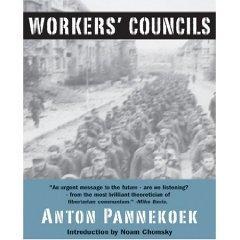
안 톤..판네쿡의..노동자평의회를..한부..구하여..읽어보고..싶습니다..복사본이라도..구할수..없겠는지요..? 010-3920-2416부가 정보
관리 메뉴
본문
구해보겠습니다. 이메일 주소 알려주세요부가 정보