




... at Twickenham film studios, London (Nov 23, 1965) (22.5 MB, mpeg, b&w)
This one is that third promo filmed of I Feel Fine in which The Beatles were
on the set of the first promo eating newspaper wrapped fish and chips.
![[PLAY]](http://seltaeb3.podomatic.com/img/play_button.gif)
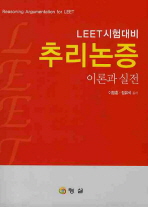
추리논증 이론과 실전(LEET 시험대비) 
 |
 |
| < |

 , 0원 할인)

 교보국민카드 - 5% 상시 할인 | 우리멤버스 카드 - 2,000원 할인
 교보문고-롯데카드 - 최대7 % 할인
 |
||||
|
지금 주문하면 1시간 이후 영업점에서 수령할 수 있습니다. |
||||
 |
||||
| 주문수량 | < |
|
   |





 |
<
바로가기  |


용감한 무식에는 약도 없다.
지난번 섹검 스캔들을 보면서 그렇게 지롤하던 인간들이 그 대안인 로스쿨/메디컬스쿨 제도에 대해서도 반대 개거품 무는 꼴을 보고 있자니
도대체 이 나라 교육이 얼마나 '암기'에 치중돼서 정상적인 추리/논리적 사고를 막는건지 머리 속에 무슨 개념이 있는건지 원...(글쓰는 중에 더 흥분하게 된다)
1. 메디컬 스쿨
학부 졸업 후 대학원 격인 4+4 메디컬 스쿨 제도를 도입한 이유는 보다 전인적인 지식과 소양을 갖춘 이들이 의사가 될 수 있게 하고, 대입 단계에서 (인문계는 법대,) 자연계는 의대로 쏠리는 지나친 입시 과열을 분산하자는 취지에서였다.
그렇다. 이 제도의 비젼을 구체적으로 말하자면, 4년제 화학과/생물학과 학부 정상적으로 졸업한 '전인적인 지식 및 소양 갖춘 대학생'들이 4년제 대학원 더 밟아 의사가 되도록 하자는 것이다.
이 메디컬 스쿨 제도를 공격하는 이들의 '논거'는 이 제도가 돈있는 자들의 돈잔치 놀이터라는 것이다. 그래서 한 개인이 '개천에서 용나는' 계급 상승의 환상이 이 제도 때문에 원천봉쇄되고 있는 자들의 계급 대물림이 계속된다는 것이다.
참으로 웃기는 소리다. 2+4 학부제든 4+4 메디컬 전문대학원 제도든 간에 그 엘리트들이 개인적으로 출세하는 것이 옆에서 구경하는 우리 범부들과 무슨 관계가 있단 말인가?! 무슨 소린가 하면 개천에서 용나는 엘리트 개인의 출세와 의료 서비스 수요자인 우리 같은 일반인들과는 아무 관계가 없단 말이다.
그렇다. 우리는 그냥 의료 서비스 소비자들일 뿐이다. 정작 우리에게 중요한 것은 그저 더 나은('더 친절한' 포함) 의료 서비스를 구매해서 받는 것이다. 그런 면에서 봤을 때 박정희 이래 2+4(예과+본과) 체제 하에서 양육된 기득권 의사 엘리트들의 오만방자함에 오바이트가 쏠린다(반말 지꺼리 찍찍하는 불친절함 포함).
개인을 비난하자는 것이 아니라 그따위 행태에는 구조적 필연성이 있다는 것을 지적하고자 한다. 있는 집 자식들이 공부도 잘해 18-19살에 미래가 나름 보장된 의대에 지원하는 것이 기존 체제이다. 나이 18-19세에 미래를 확정한단 말이다. 그 나이18/19는 의료인으로서 인간에 대한 성찰, 사회에 대한 성찰 같은 것이 기대될 수 있는 나이가 절대 아니다. 지옥같은 오직 서열화 대한민국 대학 입시제도가 18-19세 이전에 자원봉사 등 사회적인 성찰적 활동을 요구하지도 않는다. 그냥 국영수 암기 잘해서, 사명감 이런거 아무 상관없이 성적/돈으로 학부 의대 들어가는 것이다. 그리고 인턴/레지 밟아 목에 힘주고 거들먹거리고 다닌다.
물론 4+4 메디컬스쿨 지원하는 화학과/생물학과 대학 졸업생으로부터도 또한 그런 '완벽한' 사회적 소양, 인간에 대한 성찰 등을 요구할 수 없을 수도 있다. 대학 4년 내내 화학과/생물학과 돈뿌리고 다니면서 개인 입신양명 출세만 지향하고 다니는 인간인들 왜 없겠나?
그래도 나같은, 우리같은 의료 서비스 수요자 입장에서 보면,
18-19살 아무 개념없는 핏뎅이들이 오로지 성적,돈으로 예/본과 밟고 나중에 싸가지 없는 엘리트주의 의료 짓꺼리 하는 꼴을 보는 것보다는 차라리 24-25세의 사회 경험 있는, 기본 대학 지식 쌓은 졸업자들로부터 의료 서비스 받는 게 위험부담risiko이 더 적다. 최소한 남자들 같은 경우 장교가 아니라 100군대가서 뺑이치고 와서 메디컬 스쿨 지원한다.
돈잔치에 대한 비난은 증말 무논리적이다. 기존 기득권 2+4 체제나 현행 4+4 체제나 결국 모두 돈있는 자제들이 가는 코스이다. 아니, 기존 2+4 체제 때에는 서민들의 아들딸들이 의대 예과/본과 진학했는데 4+4 메디컬 대학원 체제 하에서는 돈잔치로 바뀌었다는 말인가? 대한민국에서 그런 적이 어디 한번이라도 있었나? 이런 현실 곡학아세는 정말 아니지 않나?
물론 과거 2+4 체제 하에서 서민들의 아들딸들에게 장학금 혜택 등 지원 제도가 더 잘되어 있었는지는 모르나 과거에 정말 그랬다면 현 4+4 체제 하에서도 장학금 제도를 과거에 준해 확충하면 되지 않가? 상황이 이런데 부분적 조정이 아니라 의치학전문제 자체를 폐지하자는 주장은 '목욕물 버리며 아기까지 같이 버리는' 주장 오류에 다름없다.
본좌의 요지를 다시 정리하면 그렇다. 내 주위 좀 가난한 이들이 2+4 제도 의대에 입학해 계급 상승의 꿈을 이루는 것을 보는 게 관객인 우리와 무슨 상관이 없다. 정작 우리 수요자에게 필요한 것은 '싸가지'있는 의료 서비스이다. 의료 소비자인 본좌가 보기에는 18-19세 핏덩이들이 의사하겠다는 것보다 24-25세 이상 덜떨어진 인간들이 의사 하겠다는 것이 좀더 안전해 보인다.
현 의치학 전문대학원 입시 논구술 면접에서는 현행 건강보험제도 민형화 어떻게 볼 것인가 이런 문제들도 나오고(물론 질문하는 기존 2+4 체제 하는 출제 교수들은 대부분 건강보험폐지/건보 민영화 찬성론자들이겠지만) 학생들은 그런 그와 같은 여러 쟁점들 사전에 준비하고 고민하여 시험에 임한다. 과거 2+4 예/본과에 지원하는 18-19 핏덩이들에게 누가 민영화 같은 것을 문제 삼으며 공부만 하던 핏덩이들 또한 건보 민영화 이런거 고민이나 해보겠나?!(기존 2+4 체제 하에서 전국 11등 하여 서울의대 들어간, 교양있고 점잖아 보이는 우리 사촌 의사형의 사회/인간에 대한 전무한 식견을 잠재적 의료 서비스 소비자로서 정말 개탄하지 않을 수 없다. 그냥 째고 꿰매는거다).
어차리 2+4나 4+4나 돈드는 문제는 거기서 거기고,
논리비약인지 모르겠으나 이웃집 서민 아들이 고3때 공부 열심히 하여 의예과 입학한 후 인생 확뜨는 출세 광경에 옆집 사람으로서 희열을 느낀다면 아예 건보 민영화하여 그 고3 독식하고 확 피게 제대로 함 밀어주자는 것도 어떨까 하는 생각도 해본다.
2. 로스쿨
3. 비즈니스 스쿨(MBA)
Songs the Beatles didn't do: meaning, songs they wrote while the Beatles existed, but which did not appear on official EMI Beatles records. This list is limited to songs that might be considered finished, which we'll define as one of: published; recorded by someone else; registered for copyright; or attempted at EMI for release. Composer credit is shown only where established by publisher or copyright documentation. Comments mention the probable composer in other cases.
This is the morass of any project attempting to list unreleased Beatles songs. Firstly, do you want to call rehearsals and partial, off-the-cuff renditions Beatles versions? And then there's the problem that more Get Back stuff is still leaking out, and who can keep up with it. But I'll toss out a few lists of songs more or less performed. I'll skip the fact that much of "Abbey Road" appears here too. For much more detail, see the book "Drugs, Divorce and a Slipping Image".
Note, on the unreleased "Get Back" albums, "The Walk" is the Jimmy McCracklin hit written by McCracklin--Gorlic, and the opening instrumental sometimes called
others would eventually end up on Beatles solo albums, including
Lennon's "Jealous Guy" (called "Child of Nature" at the time and originally written and rehearsed for the White Album) and "Gimme Some Truth",
Harrison's "All Things Must Pass", "Isn't It a Pity" and "Hear Me Lord", and
McCartney's "Teddy Boy" and "Junk" (originally written for the White Album). Much of the band's attention was focused on extended jams on 12-bar blues as well as a broad range of covers. These included classical pieces such as Samuel Barber's "Adagio for Strings", jazz standards such as "Ain't She Sweet", and an encyclopaedic array of songs from the early rock and roll era such as "Stand By Me", "Words of Love", "Lonely Sea", "Bésame Mucho" by Mexican composer Consuelo Velázquez (a song that was part of The Beatles repertoire in the early days) and "Blue Suede Shoes". Only a handful of these were complete performances; the vast majority were fragmentary renditions with a verse or two of misremembered lyrics. The rehearsals and recording sessions were filmed and formed the basis of the Beatles' film of the same name. A song not included was
Watching Rainbows.
Although most of the songs on any given Beatles album are usually credited to the Lennon/McCartney songwriting team, that description is often misleading, and rarely more so than on The Beatles. With this album, each of the four band members began to showcase the range and depth of his individual songwriting talents, and to display styles that would be carried over to his eventual solo career. Indeed, some songs that the individual Beatles were working on during this period eventually were released on solo albums. These include
Lennon's "Look at Me" and "Child of Nature", eventually reworked as "Jealous Guy";
McCartney's "Junk" and "Teddy Boy"; and
Harrison's "Not Guilty" and "Circles".
Lennon also indulged his love of rock and roll with "Crippled Inside" and "It's So Hard." "Gimme Some Truth", originally heard in the Let It Be sessions, appears on the album with a new bridge. The politically-themed "I Don't Wanna Be a Soldier" closes the first half of Imagine in a cacophonous manner.
Revolution
The Ballad of John and Yoko
Come Together
1969 Cold Turkey
Besides Lennon, this recording features Eric Clapton on lead guitar, Klaus Voormann on bass and Ringo Starr on drums. It was recorded in Abbey Road Studio 2.
1969
"Yer Blues" (Lennon/McCartney) – 4:12
"Cold Turkey" (John Lennon) – 3:34
"Give Peace a Chance" (Lennon/McCartney) – 3:41
1970 John Lennon/Plastic Ono Band
"Look At Me" dates from The Beatles period- Ringo Starr: drums
1971 Imagine
2"Crippled Inside" – 3:47 dobro
5"I Don't Wanna Be a Soldier Mama I Don't Wanna Die" – 6:05 slide
6"Gimme Some Truth" – 3:16 elec
7"Oh My Love" (John Lennon, Yoko Ono) – 2:44 elce
8"How Do You Sleep?" – 5:36 slide
George Harrison – electric guitar (6, 7), slide guitar (5, 8) dobro guitar (2)
1972 Some Time in New York City #2 (live jam) live at the Lyceum Ballroom in London, England on 15 December 1969, for a UNICEF charity concert
Eric Clapton - 'Derek Claptoe': guitar., George Harrison - 'George Harrisong': guitar.
1973 Mind Games
Mind Games (with its "love is the answer" refrain and call to "make love not war") was begun during the Beatles' Let It Be sessions
@
Sour Milk Sea
Badge
"While My Guitar Gently Weeps" – 4:53
"Something" – 3:59
"Here Comes the Sun" – 2:59
1970 All things must pass
Harrison had been accumulating the songs he recorded for the album as far back as
1966; both "The Art of Dying"[1] and "Isn't It a Pity"[2] date from that year. In bootlegged conversation from the Get Back sessions, Harrison revealed that John had rejected "Isn't It a Pity" three years before, and that he (Harrison) had considered offering the song to Frank Sinatra.[2] Harrison picked up several more songs in late 1968 while visiting Bob Dylan and The Band in Woodstock, New York. He and Dylan co-wrote "I'd Have You Anytime" and "Nowhere to Go" (also known as "When Everybody Comes to Town") at this time, and Dylan showed him "I Don't Want to Do It."[3] All three songs were attempted at some point in the sessions for All Things Must Pass, but only "I'd Have You Anytime" made the album.
The January 1969 "Get Back" sessions saw early appearances of several other songs that would be considered for
All Things Must Pass, including the title track,
"Hear Me Lord",
"Isn't It a Pity",
"Let It Down", and
"Window, Window",[4] but nothing came of them at the time. The tense atmosphere fueled another song, "Wah-Wah", which Harrison wrote in the wake of his temporary departure from the band.[5] He began writing "My Sweet Lord" while touring with Delaney & Bonnie in late 1969,[6] and would later utilise their backing group "Friends" as an important part of the All Things Must Pass sound. He made one last detour before beginning work on All Things Must Pass, visiting Dylan while the latter was starting sessions for New Morning in May 1970, learning "If Not For You" and participating in a now-bootlegged session.
Bob Dylan, a close friend of Harrison's, co-wrote "I'd Have You Anytime" with him, while Harrison covered Dylan's "If Not For You", which had been recently released on Dylan's New Morning album.
The album features the talents of Ringo Starr
Let It Down" Written and performed during the Get Back sessions 4:57
It's Johnny's Birthday" (Based upon "Congratulations" - Bill Martin/Phil Coulter) Recorded in August 1970 with Ringo Starr and presented to John Lennon on his 30th birthday
1973 Living in the Material World- Ringo Starr on drums
1974 Dark Horse- Ringo Starr on drums
"Love Comes to Everyone" – 4:36 Guitar intro played by Eric Clapton, who would go on to cover the song on his 2005 album Back Home. Song was performed live only once during Harrison's Japanese tour in December 1991
"Not Guilty" – 3:35 Originally written by Harrison for The Beatles in 1968 for inclusion on The Beatles album. It did not however appear on that album.
1981 Somewhere in England
All Those Years Ago" – 3:45 Harrison's tribute to John Lennon, featuring Ringo Starr on drums, as well as Paul and Linda McCartney and Denny Laine on backing vocals
@
Sentimental Journey (1970)
Beaucoups of Blues (1970)
It Don't Come Easy- producer George Harrison "co-wrote" the song
Back Off Boogaloo- Ringo wrote and composed the song himself and George Harrison produced it.
Ringo" (1973)
"Photograph" (George Harrison/Richard Starkey) – 3:56 Features George Harrison on guitar and harmony vocal #1
"I'm the Greatest" (John Lennon) – 3:21 Featuring Starr, John Lennon on piano and harmony vocal, George Harrison on guitar, Klaus Voormann on bass and Billy Preston on organ
"Sunshine Life For Me (Sail Away Raymond)" (George Harrison) – 2:45 George Harrison on guitar and backing vocals
"You're Sixteen" (Bob Sherman/Dick Sherman) – 2:48 Features Paul McCartney on mouth sax solo and Paul McCartney, Linda McCartney and Harry Nilsson on backing vocals
"Six O'Clock" (Paul McCartney) – 4:06 Features Paul McCartney on piano and synthesizer, as well as backing vocals with Linda McCartney and Klaus Voorman on bass guitar
"You and Me (Babe)" (George Harrison/Mal Evans) – 4:59 Features George Harrison on guitar, arranged by Jack Nitzche
"It Don't Come Easy" (Richard Starkey) - 3:02 Bonus track on the 1991 CD reissue, originally released as a single in 1971.
"You're Sixteen" #1
Goodnight Vienna (1974)
"(It's All Da-Da-Down To) Goodnight Vienna" (John Lennon) – 2:35 Featuring John Lennon on opening count-in and piano and Billy Preston on clavinet.
"All By Myself" (Vini Poncia/Richard Starkey) – 3:21 Featuring John Lennon on guitar
"Only You (And You Alone)" (Buck Ram/Ande Rand) – 3:26 Featuring John Lennon on guitar, Steve Cropper on guitar, Billy Preston on electric piano and Harry Nilsson on backing vocals.
"Goodnight Vienna (Reprise)" (John Lennon) – 1:20 Featuring John Lennon's intro, 'OK, with gusto, boys, with gusto!'
"No No Song"/"Snookeroo" #3
Ringo's Rotogravure (1976)
"Pure Gold" (Paul McCartney) – 3:14 features background vocals by Paul and Linda McCartney
"Cookin' (In the Kitchen Of Love)" (John Lennon) – 3:41 features John Lennon on piano, Dr. John on guitar and organ and Melissa Manchester on backing vocals
"I'll Still Love You" (George Harrison) – 2:57
"This Be Called A Song" (Eric Clapton) – 3:14 features Eric Clapton on guitar and background vocals by Melissa Manchester
Stop and Smell the Roses (1981)
"Private Property" (Paul McCartney) – 2:44 Produced by Paul McCartney - features Paul McCartney on bass and piano, as well as backing vocals with Linda McCartney, Laurence Juber on guitar, Howie Casey on saxophone, and Lloyd Green on pedal steel guitar
"Wrack My Brain" (George Harrison) – 2:21 Produced by George Harrison - features George Harrison on guitar and backing vocals and Ray Cooper on piano, percussion and backing vocals, Herbie Flowers on bass and tuba, Al Kooper on piano and guitar
"Attention" (Paul McCartney) – 3:20 Produced by Paul McCartney - features Paul McCartney on bass and piano, as well as backing vocals with Linda McCartney
Stand by Me
Luccille
Free as a Bird
Real Love
Now and Then
| 노무현의 경제이야기 |
|
|
|
|
노무현 경제에 대한 외국의 평가
해외 유력 신문인 인터네셔널 헤럴드 트리뷴이 아래는 원문입니다.
저는 이 사진을 매우 좋아합니다. 두 분의 눈높이를 한번 보세요. 노인의 순한 눈빛과 그의 노인에 대한 공경의 눈빛이 마주하고 있습니다. 더불어 노인과 그의 악수는 다사다난했던 한 시대를 살아온 두 촌부의 공감을 보여주는 것 같습니다. 전체적으로 이 나라에서 낮은 위치라 여겨지는 서민과 가장 높은 위치에 있던 이의 장벽없는 모습에 괜히 흐믓해집니다. 그래서 전 이 사진을 좋아합니다. 썰매 타시는 노간지 |
http://i33.tinypic.com/25q8b9f.jpg)
http://rapidshare.com/files/168484924/BEATA1__XVID__toAVI.part1.rar
http://rapidshare.com/files/168486867/BEATA1__XVID__toAVI.part2.rar
http://rapidshare.com/files/168488769/BEATA1__XVID__toAVI.part3.rar
http://rapidshare.com/files/168490498/BEATA1__XVID__toAVI.part4.rar
http://rapidshare.com/files/168492110/BEATA1__XVID__toAVI.part5.rar
http://rapidshare.com/files/168494024/BEATA2__XVID__toAVI.part1.rar
http://rapidshare.com/files/168495988/BEATA2__XVID__toAVI.part2.rar
http://rapidshare.com/files/168497900/BEATA2__XVID__toAVI.part3.rar
http://rapidshare.com/files/168499823/BEATA2__XVID__toAVI.part4.rar
http://rapidshare.com/files/168501668/BEATA2__XVID__toAVI.part5.rar
http://rapidshare.com/files/168502565/BEATA2__XVID__toAVI.part6.rar
http://rapidshare.com/files/168504472/BEATA3__XVID__toAVI.part1.rar
http://rapidshare.com/files/168506326/BEATA3__XVID__toAVI.part2.rar
http://rapidshare.com/files/168508281/BEATA3__XVID__toAVI.part3.rar
http://rapidshare.com/files/168510324/BEATA3__XVID__toAVI.part4.rar
http://rapidshare.com/files/168512446/BEATA3__XVID__toAVI.part5.rar
http://rapidshare.com/files/168514293/BEATA3__XVID__toAVI.part6.rar
http://rapidshare.com/files/168516210/BEATA4__XVID__toAVI.part1.rar
http://rapidshare.com/files/168518294/BEATA4__XVID__toAVI.part2.rar
http://rapidshare.com/files/168520335/BEATA4__XVID__toAVI.part3.rar
http://rapidshare.com/files/168522455/BEATA4__XVID__toAVI.part4.rar
http://rapidshare.com/files/168523565/BEATA4__XVID__toAVI.part5.rar
http://rapidshare.com/files/168525610/BEATA5__XVID__toAVI.part1.rar
http://rapidshare.com/files/168528039/BEATA5__XVID__toAVI.part2.rar
http://rapidshare.com/files/168530280/BEATA5__XVID__toAVI.part3.rar
http://rapidshare.com/files/168532837/BEATA5__XVID__toAVI.part4.rar
http://rapidshare.com/files/168535197/BEATA5__XVID__toAVI.part5.rar
http://rapidshare.com/files/168537216/BEATA5__XVID__toAVI.part6.rar
http://rapidshare.com/files/168539507/BEATA6__XVID__toAVI.part1.rar
http://rapidshare.com/files/168541769/BEATA6__XVID__toAVI.part2.rar
http://rapidshare.com/files/168544511/BEATA6__XVID__toAVI.part3.rar
http://rapidshare.com/files/168546949/BEATA6__XVID__toAVI.part4.rar
http://rapidshare.com/files/168549278/BEATA6__XVID__toAVI.part5.rar
http://rapidshare.com/files/168551028/BEATA6__XVID__toAVI.part6.rar
http://rapidshare.com/files/168553515/BEATA7__XVID__toAVI.part1.rar
http://rapidshare.com/files/168555864/BEATA7__XVID__toAVI.part2.rar
http://rapidshare.com/files/168558457/BEATA7__XVID__toAVI.part3.rar
http://rapidshare.com/files/168560708/BEATA7__XVID__toAVI.part4.rar
http://rapidshare.com/files/168563149/BEATA7__XVID__toAVI.part5.rar
http://rapidshare.com/files/168565054/BEATA7__XVID__toAVI.part6.rar
http://rapidshare.com/files/168567274/BEATA8__XVID__toAVI.part1.rar
http://rapidshare.com/files/168569567/BEATA8__XVID__toAVI.part2.rar
http://rapidshare.com/files/168571983/BEATA8__XVID__toAVI.part3.rar
http://rapidshare.com/files/168574151/BEATA8__XVID__toAVI.part4.rar
http://rapidshare.com/files/168574547/BEATA8__XVID__toAVI.part5.rar
http://rapidshare.com/files/168576883/Special_Features.part01.rar
http://rapidshare.com/files/168578861/Special_Features.part02.rar
http://rapidshare.com/files/168580786/Special_Features.part03.rar
http://rapidshare.com/files/168582863/Special_Features.part04.rar
http://rapidshare.com/files/168585204/Special_Features.part05.rar
http://rapidshare.com/files/168587222/Special_Features.part06.rar
http://rapidshare.com/files/168589343/Special_Features.part07.rar
http://rapidshare.com/files/168591567/Special_Features.part08.rar
http://rapidshare.com/files/168593773/Special_Features.part09.rar
http://rapidshare.com/files/168482656/Special_Features.part10.rar
http://www.ihackr.com/torrent-ihackr-download-index-mccartney-rapidshare-links-1.html
http://www.taringa.net/posts/tv-peliculas-series/1192697/%5B3DVDRip%5DThe-McCartney-Years-(1970-2005).html
http://www.zona-musical.com/postt85487.html
http://www.foriegnmoviesddl.com/2009/01/mccartney-years-3-volumes-2007-english.html
http://www.mechodownload.com/forum/music-videos-concerts/71904-mccartney-years-1970-2005-a.html
http://rapidsharedmusic.blogspot.com/2008/08/mccartney-years-1970-2005.html
http://rapidshare.com/files/105825739/paul1.part1.rar
http://rapidshare.com/files/105832816/paul1.part2.rar
http://rapidshare.com/files/105840154/paul1.part3.rar
http://rapidshare.com/files/105847784/paul1.part4.rar
http://rapidshare.com/files/105855747/paul1.part5.rar
http://rapidshare.com/files/105863938/paul1.part6.rar
http://rapidshare.com/files/105866279/paul1.part7.rar
http://rapidshare.com/files/107746876/paul2.part01.rar
http://rapidshare.com/files/107755767/paul2.part02.rar
http://rapidshare.com/files/107764297/paul2.part03.rar
http://rapidshare.com/files/107773099/paul2.part04.rar
http://rapidshare.com/files/107782146/paul2.part05.rar
http://rapidshare.com/files/107791114/paul2.part06.rar
http://rapidshare.com/files/107799130/paul2.part07.rar
http://rapidshare.com/files/107806782/paul2.part08.rar
http://rapidshare.com/files/107807215/paul2.part09.rar
http://rapidshare.com/files/107814266/paul.part01.rar
http://rapidshare.com/files/107836655/paul.part02.rar
http://rapidshare.com/files/107841387/paul.part03.rar
http://rapidshare.com/files/107846073/paul.part04.rar
http://rapidshare.com/files/107850428/paul.part05.rar
http://rapidshare.com/files/107854709/paul.part06.rar
http://rapidshare.com/files/107858610/paul.part07.rar
http://rapidshare.com/files/107914966/paul.part08.rar
http://rapidshare.com/files/107921037/paul.part09.rar
http://rapidshare.com/files/107923394/paul.part10.rar
Code:http://rapidshare.com/users/ACOKQ8
or
Code:
http://rapidshare.com/files/5467054/SGT_PEPPER_27S_LONELY_HEARTS_CLUB_BAND-_LIVE_.MPG
http://rapidshare.com/files/5466961/The_Beatles-Real_Love.mpg
http://rapidshare.com/files/5466932/All_You_Need_Is_Love.mpg
http://rapidshare.com/files/5466661/1963_Royal_Variety_Performance.mpg
http://rapidshare.com/files/5466648/John_Lennon_Imagine.mpeg
http://rapidshare.com/files/5466643/I_Feel_Fine__Sullivan__2765_.mpg
http://rapidshare.com/files/5466642/Paul_McCartney_SNL_Chris_Farley.mpg
http://rapidshare.com/files/5466641/Rain.mpg
http://rapidshare.com/files/5466636/1st_USA_TV_Appearance_Jack_Parr__03-01-64_.mpg
http://rapidshare.com/files/5466594/Paul_McCartnet_Michelle__live_.mpg
http://rapidshare.com/files/5466584/VIDEOS_64_66_VERY_RARE_FOOTAGE.Mpeg
http://rapidshare.com/files/5466569/Swedish_TV_10-24-63.MPG
http://rapidshare.com/files/5466565/Movie_Help_.mpg
http://rapidshare.com/files/5466557/The_ballad_of_John_and_Yoko.mpg
http://rapidshare.com/files/5466539/Revolution.mpg
http://rapidshare.com/files/5466535/Day_Tripper_Paul_McCartney_Intro_5d__5b2.58_5d.mpg
http://rapidshare.com/files/5466505/tv_commercial_1964.avi
http://rapidshare.com/files/5466493/nowhere_man.mpeg
http://rapidshare.com/files/5466483/Help__live_from_Shea_Stadium_1965_.mpg
http://rapidshare.com/files/5466477/Oasis___Paul_Mccartney--Ringo_Star_George_Harrison_Woman__a_TRIBUTE_to_JOH N_LENNON___1_.mpg
http://rapidshare.com/files/5466474/A_Day_In_The_Life.mpg
http://rapidshare.com/files/5466472/STARS_ON_45-Stars_On_Beatles.mpg
http://rapidshare.com/files/5466471/Get_Back.mpg
http://rapidshare.com/files/5466470/Hey_Jude.mpeg
http://rapidshare.com/files/5466469/Hey_Jude.mpg
http://rapidshare.com/files/5466467/Back_In_The_USSR__acoustic_.mpg
http://rapidshare.com/files/5466461/Get_Back.mpg
http://rapidshare.com/files/5466459/The_Beatles.rar
http://rapidshare.com/files/5466458/All_Beatles_Lyrics.chm
http://rapidshare.com/files/5466453/from_me_to_you.mpeg
http://rapidshare.com/files/5466452/We_Can_Work_It_Out.mpg
http://rapidshare.com/files/5466450/I_Feel_Fine__Ed_Sullivan_1965_.mpg
http://rapidshare.com/files/5466449/Lady_madonna.mpg
http://rapidshare.com/files/5466437/Ringo-Monkees-Pizza_Hut__.mpg
http://rapidshare.com/files/5466434/Lucy_In_The_Sky_With_Diamonds.mpg
http://rapidshare.com/files/5466430/1st_Ed_Sullivan_Show.mpg
http://rapidshare.com/files/5466423/Original_TV_Commercial__1964_.avi
http://rapidshare.com/files/5466419/Real_Love.mpg
http://rapidshare.com/files/5466418/Free_As_A_Bird.mpg
http://rapidshare.com/files/5466417/When_I_27m_Sixty_Four.mpg
http://rapidshare.com/files/5466416/Paul_McCartney-Sgt_Pepper_27s_Lonely_Hearts_Club_Band-_live_.mpg
http://rapidshare.com/files/5466413/Live_Love_Me_Do.mpg
http://rapidshare.com/files/5466410/Ringo_Starr_It_don_27t_come_easy.wmv
http://rapidshare.com/files/5466409/I_Saw_Her_Standing_There__live_from_Washington_DC_ 64_.mpg
http://rapidshare.com/files/5466406/The_Beatles_Help_.mpg
http://rapidshare.com/files/5466405/Baby_27s_In_Black.mpg
http://rapidshare.com/files/5466401/news_footage_1964-1966.mpg
http://rapidshare.com/files/5466399/Hey_Bulldog_Live_Recording_Studio.mpg
http://rapidshare.com/files/5466396/Twist___Shout___I_Wanna_Hold_Your_Hand_20.mpg
http://rapidshare.com/files/5466394/John_Lennon_Come_Together.mpg
http://rapidshare.com/files/5466391/MTV_In_My__20Life.mpg
http://rapidshare.com/files/5466389/In_My_Life.mpg
http://rapidshare.com/files/5466388/Hello_Goodbye.mpg
http://rapidshare.com/files/5466384/Please_Mr_Postman.mpg
http://rapidshare.com/files/5466382/Twist_and_Shout.mpg
http://rapidshare.com/files/5466380/Magical_Mystery_Tour_el_Hazard__5banime_5d.mpg
http://rapidshare.com/files/5466379/Penny_Lane.mpg
http://rapidshare.com/files/5466378/I_Dig_a_Pony__1969_Rooftop_Concert_.mpg
http://rapidshare.com/files/5466376/I_Am_The_Walrus.mpg
http://rapidshare.com/files/5466375/One_After_909__Rooftop_Concert_.mpg
http://rapidshare.com/files/5466374/A_Hard_Days_Night__1964_Behind_the_scenes_.mpg
http://rapidshare.com/files/5466373/I_Wanna_Hold_Your_Hand.mpg
http://rapidshare.com/files/5466370/3rd_Ed_Sullivan_Appearance.mpg
http://rapidshare.com/files/5466369/Imagine_John_Lennon__Live_.mpg
http://rapidshare.com/files/5466368/Nowhere_Man__Munich__2766_.mpg
http://rapidshare.com/files/5466366/2nd_Ed_Sullivan.mpg
http://rapidshare.com/files/5465522/Can_27t_Buy_Me_Love.mpg
http://rapidshare.com/files/5465501/The_Cavern_Club_1962.mpg
http://rapidshare.com/files/5465463/Hey_Jude.mpeg
http://rapidshare.com/files/5465442/Live_at_Hollywood_Bowl_1964.mpg
http://rapidshare.com/files/5465420/A_day_in_the_life.mpg
http://rapidshare.com/files/5465419/Lucy_In_The_Sky_With_Diamonds_anime_.mpg
http://rapidshare.com/files/5465246/Get_Back__Live_Rooftop_Concert_.mpg
http://rapidshare.com/files/5465243/Eleanor_Rigby.mpg
http://rapidshare.com/files/5465241/1964_Kansas_City__I_27m_A_Loser__Boys_Shindig.mpg
http://rapidshare.com/files/5465240/Ed_Sullivan_Miami_Show_02_February__16_1964.mpg
http://rapidshare.com/files/5465238/You_27re_Gonna_Lose_That_Girl.mpg
http://rapidshare.com/files/5465237/Washington_Coliseum_Concert_1964_.mpg
http://rapidshare.com/files/5465236/Let_It_Be.mpg
http://rapidshare.com/files/5465234/George_Harrison_Here_Comes_The_Sun__live_with_Ring o_.mpg
http://rapidshare.com/files/5465232/Give_Peace_a_chance__John_Lennon__20.mpg
http://rapidshare.com/files/5465230/Live_NME_at_Wembley_April_11__1965.mpg
http://rapidshare.com/files/5465228/My_Sweet_Lord__George_Harrison_.mpg
http://rapidshare.com/files/5465224/The_End.mpg
http://rapidshare.com/files/5465223/Something.mpg
http://rapidshare.com/files/5464810/Love_Me_Do.mpg
http://rapidshare.com/files/5464559/Strawberry_Fields_Forever.mpg
http://rapidshare.com/files/5464558/From_Me_To_You__Royal_Variety_Show__2763_.mpg
http://rapidshare.com/files/5464544/John_Lennon___Chuck_Berry_Memphis__Mike_Douglas_Sh ow__2772_.mpg
http://rapidshare.com/files/5464499/Misery.mpg
http://rapidshare.com/files/5464491/She_27s_A_Woman__5bLive_Tokyo_1966_5d.mpg
http://rapidshare.com/files/5464485/We_can_work_it_out.mpg
http://rapidshare.com/files/5464480/While_My_Guitar_Gently_Weeps_5bGeorge_Harrison_Eri c_Clapton_Phil_Collins_Ringo_Starr_Live.mpg
http://rapidshare.com/files/5464366/All_You_Need_Is_Love.mpeg
http://rapidshare.com/files/5464363/live_I_Saw_Her_Standing_There_1964__Washington_DC_ .mpg
http://rapidshare.com/files/5464362/Lady_Madonna.mpg
http://rapidshare.com/files/5464358/Superbowl_35_Halftime_Show_Aerosmith_N_Sync_Britne y_Spears_20.mpg
http://rapidshare.com/files/5464357/Two_Of_Us.mpg
http://rapidshare.com/files/5464356/Help_.mpg
http://rapidshare.com/files/5464350/George_Harrison_When_We_Was_Fab.mpeg
http://rapidshare.com/files/5464348/I_27m_Down_Shea_1965.mpeg
http://rapidshare.com/files/5464346/Revolution__Live_David_Frost_Show_.mpg
http://rapidshare.com/files/5464344/Ticket_To_Ride_Shea_Stadium.mpg
http://rapidshare.com/files/5464343/I_27m_A_Loser_and_Boys.mpg
http://rapidshare.com/files/5464342/Live_9-12-65_Ed_Sullivan_Show_6_songs.MPG
http://rapidshare.com/files/5464340/She_Loves_You__1964_Ed_Sullivan_.mpg
http://rapidshare.com/files/5464334/Paperback_Writer.mpg
http://rapidshare.com/files/5464332/George_Harrison___Paul_Simon-Here_Comes_The_Sun_Homeward_Bound_SNL__2776_.mpg
http://rapidshare.com/files/5464330/Yellow_Submarine.MPG
http://rapidshare.com/files/5464328/The_Long_And_Winding_Road.mpg
http://rapidshare.com/files/5464325/Roll_Over_Beethoven_Beatles.mpg
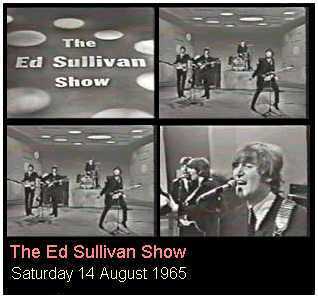
... from the Ed Sullivan show (Aug 14, 1965) (14.2 MB, mpeg, b&w)
The Beatles taped 6 songs for the September 12 Ed Sullivan Show,
including this performance of Help! in which John messes up the lyrics.
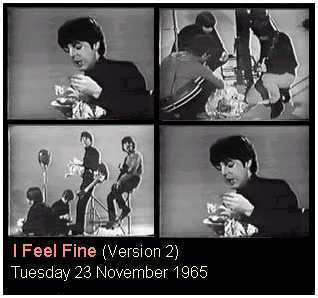
... at Twickenham film studios, London (Nov 23, 1965) (22.5 MB, mpeg, b&w)
This one is that third promo filmed of I Feel Fine in which The Beatles were
on the set of the first promo eating newspaper wrapped fish and chips.
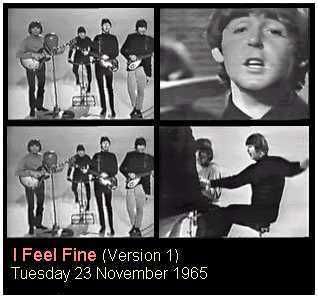
... at Twickenham film studios, London (Nov 23, 1965) (7.27 MB, mpeg, b&w)
Two versions were mimed for TV shows. This one has John, Paul and George wearing turtlenecks while Ringo rides an exercise bike. The other has clips of
The Beatles backstage and in dressing rooms. A third promo was filmed of The Beatles on the set of the first promo eating newspaper wrapped fish and chips.
... at Twickenham film studios, London (Nov 23, 1965) (8.89 MB, mpeg, b&w)
For this one The Beatles were in turtleneck sweaters and overcoats and mimed playing. Ringo stood behind, disinterested in miming his drumming with just sticks. The backdrop was a train ticket blowup. An orchestral version is barely audible in the fadeout at the very end of newer CD issues of the Pink Floyd album The Dark Side of the Moon. Probably a mistake in remastering: coincidentally both groups were well-known patrons of Abbey Road Studios.
... at Twickenham film studios, London (Nov 23, 1965) (3.99 MB, wmv, b&w)
A combination of three different takes: 1) wearing their Shea Stadium jackets and turtlenecks. Train and plane facades are in the background and foreground and Ringo saws out part of a train window; 2) in suits and ties, on a construction site and 3) similar to the second one except for Ringo's actions. They are dressed in suits and ties and mime the song in their standard performance look.
... at Twickenham film studios, London (Nov 23, 1965) (3.74 MB, wmv, b&w) This clip is a combination of four different versions they made: 1) wearing turtlenecks and jackets, John playing the organ and making faces and whistling at the camera, Ringo looking completely bored and never smiled and George sitting down half way through on the drum stand; 2) wearing their Shea Stadium outfits; 3) in suits and ties and 4) that is almost the same as the 3rd except for the opening with a still of John with a sunflower over his eye.
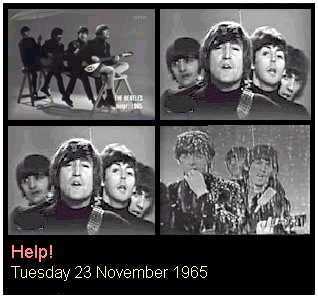
... at Twickenham film studios, London (Nov 23, 1965) (7.62 MB, mpeg, b&w)
That day The Beatles mimed some versions of some of their last songs for TV shows such as U.S.'s "Hullabaloo", BBC's "Top Of The Pops" and "Thank Your Lucky Stars". This version of Help! has The Beatles sitting on a sawhorse, all holding instruments except Ringo who holds an umbrella to shield them from 'snow', which was actually confetti. They wear turtlenecks and jackets.
... at different locations while filming Help! (Spring 1965) (31.4 MB, wmv, colour) This footage shows The Beatles at several exotic foreign locations (the Bahamas, Switzerland) while they were filming Help!. They can be seen with the crew and Richard Lester, among others. Afterwards they were hesitant to begin another film project, and indeed Help! was their last full-length scripted theatrical film.
... at Twickenham film studios, London (April 22, 1965) (22.9 MB, mpeg, b&w)
Among the film's original working titles were 'Beatles Phase II' and, what would have been Walter Shenson's suggested title, 'Eight Arms To Hold You'. The Beatles said the film was inspired by the Marx Brothers' classic Duck Soup; it was also directly satirical of the James Bond series of films. The Beatles did not particularly enjoy the filming of the movie, nor were they overly pleased with the end product. John said in 1970 they felt "like extras in their own movie".
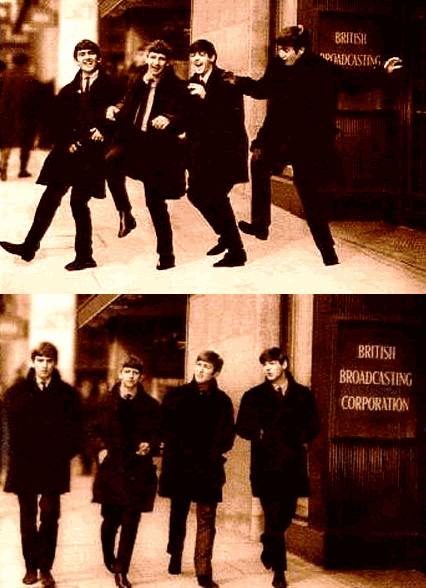
During these 41 days this second place has had almost 6,000 visits and more than 2,500 downloads and some may say "and what?" and I would tell you that for me that has been, again, another great surprise so "thank you for being so wonderful!" ...
... but we haven't arrived yet! ... this was only the second step ...
... so I would invite you to come with me to the third part of this journey ...
... here: http://seltaeb3.podomatic.com
P.S. PLEASE, BE PATIENT DOWNLOADING THESE FILES, IF YOU CAN'T DOWNLOAD THEM BECAUSE OF BANDWIDTH PROBLEMS TRY AGAIN
IN A FEW DAYS: IT WILL RESET TO ZERO EVERY MONTH . THANK YOU!
![[PLAY]](http://seltaeb2.podomatic.com/img/play_button.gif)
... from the Yellow Submarine film (July 17, 1968) (2.32 MB, wmv, colour)
It was recorded during sessions for the single Lady Madonna, and one of the few Beatles song to revolve around a piano riff. During the recording, Paul started to bark without warning. The next lines (initially intended as "Hey Bullfrog") were changed mid-song to "Hey Bulldog". This served as the song's title. The song itself was recorded for the Yellow Submarine film, but initially appeared only in European theatrical prints. It was restored for a 1999 re-release.
... at Balmoral Island & Cabbage Beach (Feb 1965) (1.55 MB, wmv, colour)
The Beatles filmed on Balmoral Island in the Bahamas miming to Another Girl and on Cabbage Beach on Paradise Island the next day. Ringo commented in The Beatles Anthology that they were in The Bahamas for the hot weather scenes and it was rather cold. The track was recorded on February 15, 1965, with the guitar outro overdubbed on February 16. It is worth noting that this is the first Beatles song in which McCartney played lead guitar, in addition to his usual bass.
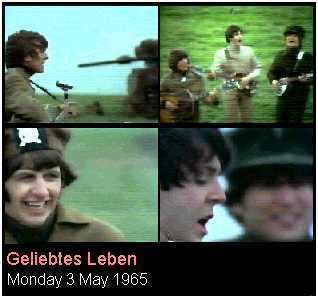
... at Geliebtes Leben (May 3, 1965) (1.83 MB, wmv, colour)
This is the second George Harrison song The Beatles recorded (on February 15 and February 16, 1965) and released, after a two album-long hiatus from the songwriter. The song is a simple, melancholy number, with a unique guitar sound achieved by Harrison's first recorded use of a tone pedal. The confessional lyrics are commonly thought to be about Harrison's relationship with Pattie Boyd, whom he had met in March 1964 while filming A Hard Day's Night.
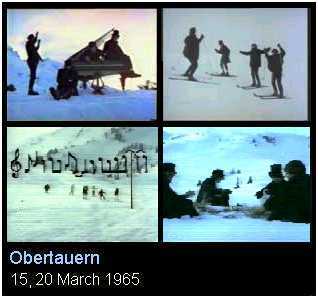
... in Obertauern, Austrian Alps (March 15-20, 1965) (2.32 MB, wmv, color)
The actual inspiration of the song is cloudy: John passing his driving test? a girl walking out of his life? a train ticket to Ryde? a special ticket given to prostitutes in Hamburg that showed they had a clean bill of health? ... The lead guitar breaks are by Paul (the first time he played lead guitar on a Beatles record -though it is believed that he played the guitar solo in the outro on Another Girl). After the breakup, Lennon proudly claimed that it was the first heavy metal song of all time; given the droning bassline, repeating drums, and loaded guitar lines.
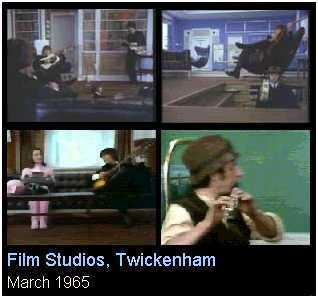
... from the Help! film (March 1965) (1.63 MB, wmv, colour)
In the film, at the opening of the song, the head of the 'Indian cult', Leo McKern, appears from a manhole cover in the middle of Ailsa Avenue, London, where parts of the film were shot. He stays there for the whole song, which The Beatles play in John Lennon's flat. They are watched by 'Ahme', played by Eleanor Bron, and at the end of the song, George passes out after Ahme produces a giant needle for Ringo, who is wearing the ring the cult want.
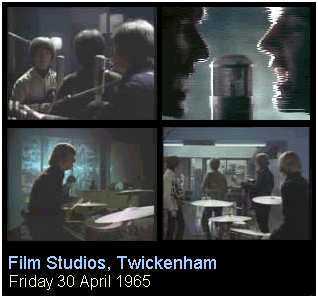
... at Twickenham film studios, London (April 30, 1965) (1.75 MB, wmv, colour)
Most of the time of that day was spent filming the You're Going To Lose That Girl 'recording session': The Beatles appeared singing it in the recording studio, for the film. It can be considered as part 2 of She Loves You. Both feature the singer giving a friend advice about a particular girl, however, this theme is taken one step further. Instead of friendly advice, the song is clearly a threat: if the friend in question does not take care of his girl, the singer most certainly will.
... at Twickenham film studios, London (April 22, 1965) (1.81 MB, wmv, colour)
Lennon wrote the lyrics (April 4th) to express his stress coming from the quick rise to a massive level of success for The Beatles. Since Lennon's feelings of insecurity were incongruous with the band's image of confidence, Lennon felt it was nearly impossible for the fans to understand the origin of the song. In 1970, Lennon said that because of its honesty it was one of his favorites among the songs he wrote, but he wished they had recorded it at a slower tempo.
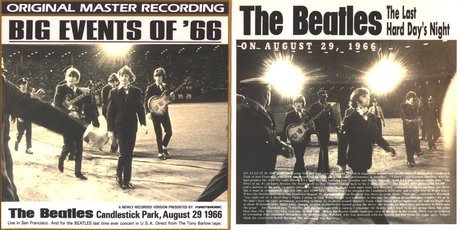
... at Candlestick Park, San Francisco (Aug 29, 1966) (25.0 MB, zipped files)
Today is the 40th anniversary of The Beatles' last public 'paid' performance and the 47th of George's first appearance with The Quarrymen. The concert recordings were made on a cassette recorder because of a request by Paul.
Long Tall Sally was their last song and it is curious because they were closing everywhere else with Paul's I'm Down. According to the author Wiener they supposedly started In My Life, then stopped and left the stage (see comments).
... at Scala Theatre, London (March 31, 1964) (1.97 MB, wmv, b&w)
The Beatles were filmed miming their songs for the film. Phil Collins was in the audience. They were inspired to write She Loves You after a concert at the Majestic Ballroom in Newcastle and it was one of the five Beatles' songs which held the top five positions in the American charts, still an unchallenged record. It also remains their best-selling single in the United Kingdom today and it was the first time Lennon's name had taken precedence over McCartney in the credits.
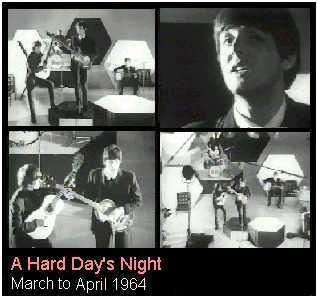
... at Twickenham film studios, London (Spring 1964) (1.93 MB, wmv, b&w)
This was one of the first pop songs with a title that starts in mid-sentence. Paul was pleased with himself that he came up with this clever idea. It was mainly written by McCartney, though Lennon claimed in an interview with Playboy, that his major contribution was the "middle eight" section: "A love like ours, Could never die, As long as I, Have you near me." John played acoustic guitar, Paul bass, George acoustic lead Ramirez guitar and claves and Ringo played bongos.
... at Twickenham film studios, London (Spring 1964) (1.59 MB, wmv, b&w)
Written by Lennon, it was said that John didn't really like it, so it was given to George to sing in the film. At this time, George's writings were not accepted by John and Paul and were hardly if ever used on any recording. John believed that George's somewhat simple vocal delivery conveyed the mood of the song perfectly. This was their first song recorded on a Sunday recording session.
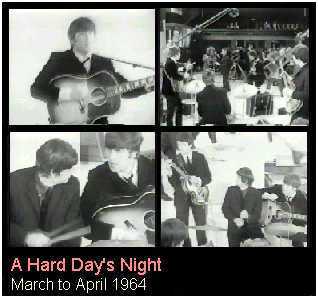
... at Twickenham film studios, London (Spring 1964) (1.78 MB, wmv, b&w)
Mainly written by John, the song is notable primarily for its unusual structure, which includes an unrepeated introductory section followed by sequential verse sections, each having a slightly expanded form, but with no obvious chorus or bridge section, a two-part harmony by John & Paul and intricate chord changes.
... Thornbury Playing Fields, Isleworth (April 23, 1964) (1.73 MB, wmv, b&w)
The sequence was filmed at Thornbury Playing Fields, Isleworth, Hounslow, Middlesex. John left as soon as it was finished and he went to a luncheon in London where he read his poem 'I Sat Be Lonely'. Therefore he was not around for the scene where the man admonishes them. Approximately at 1 pm, the shooting was done and they left. It was composed and recorded in Paris and it was also the only occasion that a Beatles song was recorded outside of Britain.
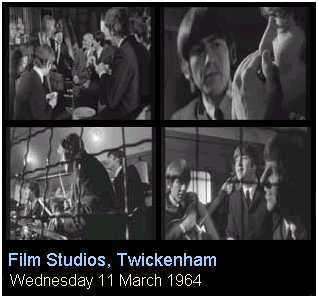
... at Twickenham film studios (March 11, 1964) (1.97 MB, wmv, b&w)
This is the baggage car sequence in which they are playing cards and lip-synching to I Should Have Known Better. This is one of the first tracks on which we heard Harrison's 12-string electric Rickenbacker guitar (alongside many other cuts on A Hard Day's Night LP). Later The Byrds would make it their signature instrument.
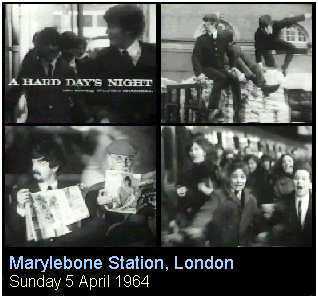
... at Boston Place & Marylebone Station (April 5, 1964) (1.88 MB, wmv, b&w)
Opening sequence of the film. Its strange title, originated from something said by Ringo, was the inspiration for the title of the movie, according to Lennon (some disagree). John dashed off the song in one night and it took them less than 3 hours to polish it for its final release, featuring a prominent and unique opening chord played by Harrison (subject of contention) and ending with Harrison's guitar-playing fading out, the first time The Beatles had used such a technique.
... a look at the rest of the Let It Be film (the first hour or so) here:
http://www.youtube.com/watch?v=mWnt0m-z7OA&search=The
http://www.youtube.com/watch?v=B0kOOVecgmU&search=The
http://www.youtube.com/watch?v=nlXKUKp72to&search=The
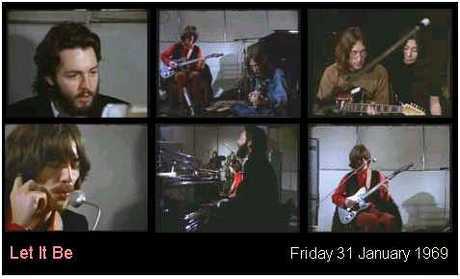
... at the Apple Studios, London (Jan 31, 1969) (54.3 MB, mpeg, colour)
Paul, upset over The Beatles pending breakup, claims his mother, Mary, came to him in a dream saying: "Let it be." After Take 22, Paul said they should change the tempo a bit. The April 1, 1970 dub was the band's last 'recording session'. This was the first Beatles record to be released in the USSR (see comments).
... at the Apple Studios, London (Jan 31, 1969) (35.6 MB, mpeg, colour)
Paul originally wrote the song at his farm in Scotland, inspired by the growing tension between The Beatles at the time and recorded a quick demo version of the song sometime in September of 1968. Lirically somewhat ambiguous, the 'long and winding road' sometimes claimed to have been inspired by a 31-mile winding road in Scotland, running along the east coast of Kintyre into Campbeltown, and part of the 82-mile drive from Lochgilphead (see comments).
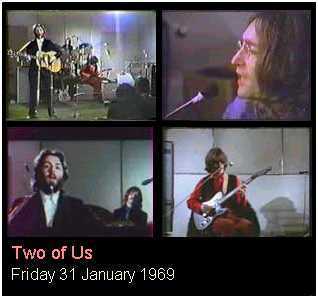
... at the Apple Studios, London (Jan 31, 1969) (34.3 MB, mpeg, colour)
Composed by Paul (although John claimed to have written it in a 1980 interview with David Sheff) it originally began as a rocker with a strong Peggy Sue drum beat but it lost its rock leanings as Paul worked out the song and it became a more introspective song. For Linda, though it sounds at times as if it is addressing John, whose relationship with Paul was tense at that time (see comments).
... at the Twickenham and Apple Studios (January 1969) (7.01 MB, wmv, colour)
This clip was made utilising Michael Lindsay-Hogg's film work. It features a combination of Twickenham filming and Apple recording sessions. Some footage is from the actual day when the song was recorded. It seems that it was meant to be included, as part of the extras, in a future release of Let It Be in DVD.
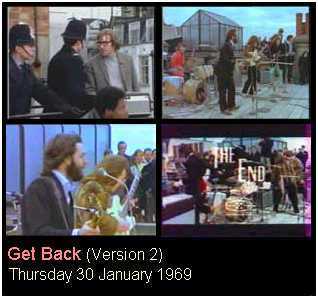
... at the Apple Studios rooftop, London (Jan 30, 1969) (33.6 MB, mpeg, colour)
The third rooftop version is the Beatle's last song of their last public performance. The song almost breaks down but lurches to a finish, with Paul's ad-libs and John's famous statement. The Anthology and the Let It Be film are the only publicly available true recordings, with the lurching version and the closing ad-libs.
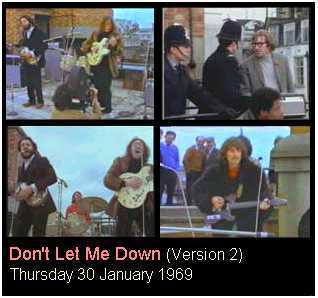
... at the Apple Studios rooftop, London (Jan 30, 1969) (8.87 MB, wmv, colour)
Don't Let Me Down was recorded live on 28 January and played twice during the Rooftop Concert. Here is a combination of shots of The Beatles playing the song. The sound comes from the original studio recording released as the B-side to Get Back, so John can not be heard changing the line he forgot during the concert.
... at the Apple Studios rooftop, London (Jan 30, 1969) (37.7 MB, mpeg, colour)
Before it began John asked for the words, so an assistant can be seen kneeling before him with the lyrics attached to a clipboard. John would later comment that he thought the song was one of the worst he had ever written. Written for his soon-to-be wife, Yoko Ono, and featured a multitude of strange phrases strung together as well as the culmination of each verse, "All I want is you".
... at the Apple Studios rooftop, London (Jan 30, 1969) (28.3 MB, mpeg, colour)
One After 909 was written by John before The Beatles' days but was not officially released until it was included on the 1970 album Let It Be. The recording of this happened during a session at Abbey Road Studios in 1963 and was included on a compilation of takes published in 1995 as Anthology 1. The song ends with John sarcastically reciting a line of the 1913 standard Danny Boy.
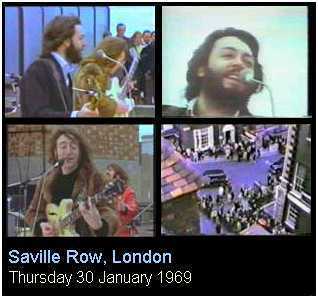
... at the Apple Studios rooftop, London (Jan 30, 1969) (2.54 MB, wmv, colour)
This was actually three unfinished songs strung together: Paul's "I've Got a Feeling" and John's "Everybody Had a Hard Year", with the main guitar riff coming from John's unfinished "Watching Rainbows." John had actually had a very hard year: he had divorced and was estranged from his son, Yoko Ono had a miscarriage, he was arrested for drug possession and his money was dwindling.
... at the Apple Studios rooftop (Jan 30, 1969) (32.5 MB, mpeg, colour)
Don't Let Me Down was the B-side to Get Back and when the single was issued another colour promotional clip was distributed to TV stations. The song was recorded live (with Billy Preston playing the keyboard) just minutes after the completion of Get Back on 28 January. Here is their first performance from the Rooftop Concert. John can be heard forgeting one of the lines in the middle.
... at the Apple Studios rooftop (Jan 30, 1969) (42.8 MB, mpeg, colour)
When Get Back was issued as a single one colour promotional clip was distibuted to TV stations. Although it did not contain any footage from the actual studio recording, it was synchronised to that version, and it presented material different from that included in Let It Be (the film has a well-matched edit of the first two Get Back versions). This clip is from the rooftop performance (see comments).
... at the Apple Recording Studios rooftop (Jan 30, 1969) (10.3 MB, mp3)
The historical Rooftop Concert which turned out being their last public performance. The police stopped it short. During a meeting on Sunday 26 January the idea was raised that the group give an unannounced live performance the following Thursday on the roof of their own office building. Many claim to have originated the rooftop idea, which suggests that it was warmly received by all. It was 37 & 1/2 years ago yesterday (see comments).
... at the Apple Recording Studios rooftop (Jan 30, 1969) (23.8 MB, mp3)
The historical Rooftop Concert which turned out being their last public performance. The police stopped it short. During a meeting on Sunday 26 January the idea was raised that the group give an unannounced live performance the following Thursday on the roof of their own office building. Many claim to have originated the rooftop idea, which suggests that it was warmly received by all. It was 37 & 1/2 years ago today (see comments).
... at the Johanneshov's Isstadion (July 28, 1964) (4.59 MB, wmv, b&w)
Excerpts from their performances of I Saw Her Standing There and Twist And Shout at the Johanneshov's Isstadion (an ice hockey arena). An elevator was supposed to bring The Beatles down to the stage, but it broke down with them on it for 5 minutes. During the show John And Paul suffered an electric discharge when they touched their ungrounded microphones while playing Long Tall Sally.
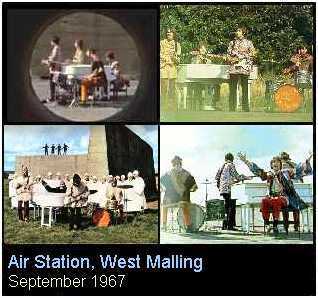
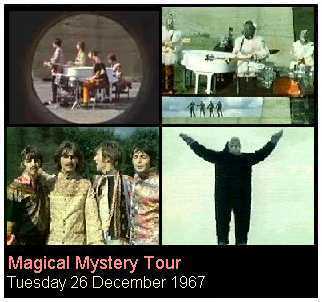
... from the Magical Mystery Tour film (Dec 26, 1967) (54.6 MB, mpeg, colour)
An interesting factor to the music is that all the chords used are major chords or 7th chords, and all the 'musical' letters of the alphabet are so used. The song ends with a descending progression of A7, G7, F7, E7, D7, C7, and B7, repeated until the end. The unusual monologue buried in the mix towards the end is actually a few lines of Shakespeare's King Lear (Act IV, Scene VI), which were added to the song direct from an AM radio receiving the broadcast of the play.
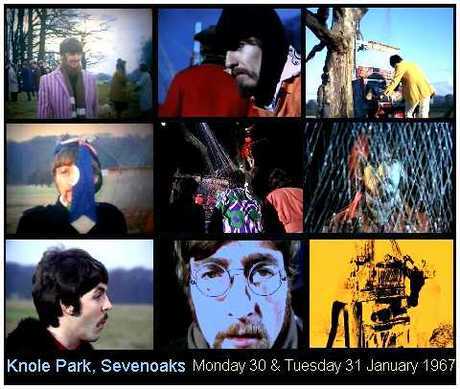
... at Knole Park, Sevenoaks (Jan 30 & 31, 1967) (39.3 MB, mpeg, b&w)
It was debuted on the Top of the Pops on February 9, 1967. It was released in both color and in black & white. Widely considered to be one of the group's best recordings, it is also one of the defining works of the psychedelic rock genre. Brian Wilson claimed that this song was partially responsible for the collapse of the Beach Boys' legendary unfinished album SMiLE. It also gave its name to the Strawberry Fields Memorial in Central Park, near the site of Lennon's assassination.
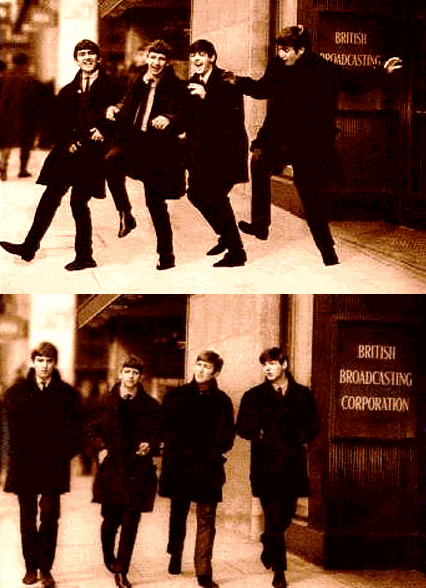
During these 33 days this place has had 8,000 visits and more than 4,000 downloads and some may say "and what?" and I would tell you that for me
that has been a great surprise so "thank you for being so wonderful!" ...
... but we haven't arrived yet! ... this was only the first step ...
... so I would invite you to come with me to the second part of this journey ...
... here: http://seltaeb2.podomatic.com
P.S. PLEASE, BE PATIENT DOWNLOADING THESE FILES, IF YOU CAN'T DOWNLOAD THEM BECAUSE OF BANDWIDTH PROBLEMS TRY AGAIN
IN A FEW DAYS: IT WILL RESET TO ZERO EVERY MONTH . THANK YOU!
![[PLAY]](http://seltaeb.podomatic.com/img/play_button.gif)
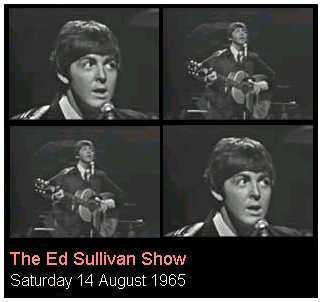
... from the Ed Sullivan Show (Aug 14, 1965) (18.5 MB, mpeg, black & white).
The Beatles taped 6 songs for the September 12th Ed Sullivan Show. This appearance included the classic performance by Paul when he stood solo in the spotlight and sang a version of Yesterday (with a pre-taped track of 3 violins).
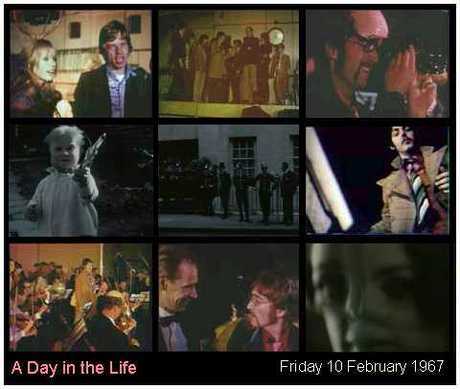
... at EMI Studio One, London (Feb 10, 1967) (11.1 MB, mpeg, colour).
The orchestral part was recorded with McCartney and Martin conducting a 40-piece orchestra. The session was filmed to be used in a TV special, however, the film was never released, although portions of it can be seen in this promo film. Reflecting The Beatles' taste for experimentation and avant garde, the orchestra players were decked out in formal dress for the film, but also asked to wear a "fancy dress" piece such as red noses or fake stick-on nipples.
... from the Anthology TV documentary (Jan 1967) (5.50 MB, wmv, colour).
The released version is an edit of two takes. They recorded two versions: the first one was basic instrumentation including keyboard, guitars and drums. Some weeks later, John had opted for a much more complex arrangement. The most distintive instrument was the one that produced the flute-like sound (played by Paul) in the introduction: a Mellotron. The Beatles were one of the first rock bands to acquire one and this is believed to be the first use of it on a recording.
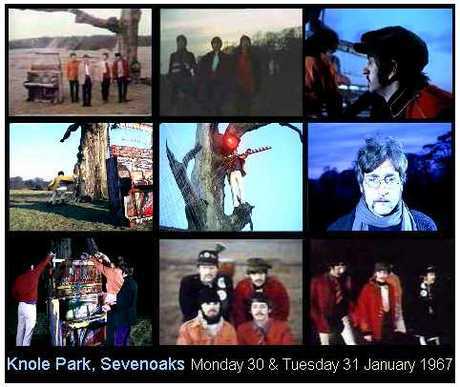
... at Knole Park, Sevenoaks (Jan 30 & 31, 1967) (2.57 MB, wmv, colour).
This prom film is one of the first conceptual music videos, featuring reverse film effects, stop motion animation, jump cuts from daytime to nighttime and The Beatles playing, pouring paint over and smashing an upright piano. The location is easy to find, being on one of the main roads through the park with a tree. John began writing the song in late 1966, in Almeria, Spain. The title referred to the Salvation Army orphanage in Liverpool, where he used to play.
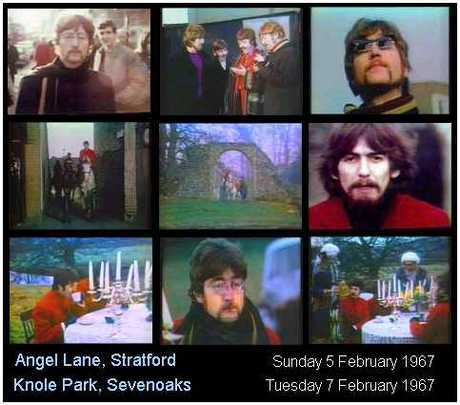
... at Angel Lane and Knole Park, London (Feb 1967) (30.1 MB, mpeg, colour).
The song's title is derived from the name of a street in Liverpool, which was named after a wealthy 18th century slave ship owner. This promotional film was not filmed at Penny Lane -The Beatles were reluctant to travel to Liverpool- and so the street scenes were actually filmed in and around Angel Lane in London's East End. The outdoor scenes were filmed at Knole Park in Sevenoaks. The solo was played by a piccolo trumpet (thought to be the first use of it in pop music).
... from the Magical Mystery Tour film (July 17, 1968) (3.33 MB, wmv, colour).
It is one of The Beatles' most striking and effective experimental songs from the psychedelic period. Lennon wrote most of the song on separate acid trips combining 3 separate songs he had been working on: the 1st was inspired by hearing a police siren, the 2nd was a short rhyme about him sitting in his garden and the 3rd was a nonsense lyric about sitting on a corn flake. The Walrus is a reference to the one from Lewis Carroll's poem The Walrus And The Carpenter.
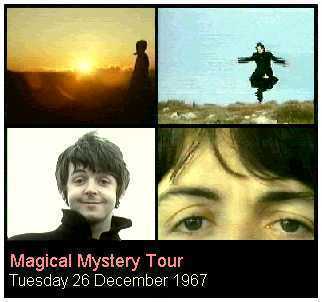
... from the Magical Mystery Tour film (Dec 26, 1967) (2.15 MB, wmv, colour).
This song appeared in a scene filmed on Monday 30 and Tuesday 31 October, with Paul running around on hills in Nice, France. It is about a man who is considered a fool by others, but whose foolish demeanor is actually an indication of wisdom. Some have speculated that the man was The Beatles' guru, Maharishi Mahesh Yogui, however, the song was based on a Paul's experience in London.
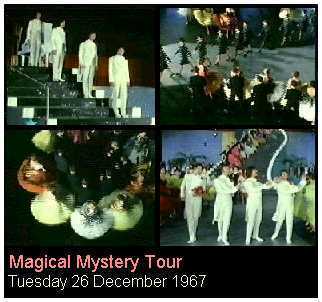
... from the Magical Mystery Tour film (Dec 26, 1967) (2.02 MB, wmv, colour).
The song appeared in the last part of the film in an elaborate, old-fashioned segment that has The Beatles in white tuxedoes performing a (rather poorly synchronized) dance number at a fancy dress ball. The song was originally composed with the use of continuous drum rolls by Ringo giving the impression of a funeral march. This version was later scratched in favor of a more fluid one.
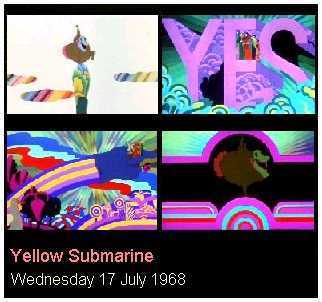
... from the Yellow Submarine film (July 17, 1968) (3.17 MB, wmv, colour).
The version of George's It's All Too Much that appeared in the film itself is slightly different and contained a lyric that was cut from the album version: "Nice to have the time to take this opportunity/Time for me to look at you and you to look at me." The Beatles themselves were not enthusiastic in participating in a motion picture at the time, however, they, impressed after seeing the finished film, did agree to make a cameo appearance here, in the final scene of the film.
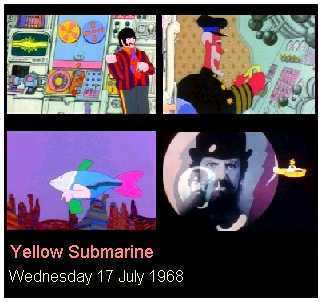
... from the Yellow Submarine film (July 17, 1968) (1.58 MB, wmv, colour).
While The Beatles were in India studying Transcendental Meditation, they sang a different version of the song changing the words "E F G H I J, I Love You" to "E F G H I Jai Guru Dev" in honor of the Maharishi Mahesh Yogi. Paul wrote the verses/refrain, John the middle-eight and it was performed in a skiffle style. The lyrics are very simple; football fans in the UK have sung the song during matches.
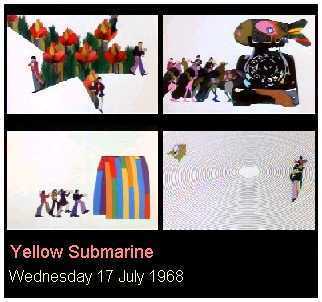
... from the Yellow Submarine film (July 17, 1968) (2.31 MB, wmv, colour).
On their way to save Pepperland, The Beatles met Jeremy Hillary Boob, Ph. D., a strange little man who lived in an empty Nowhere and spoke in rhyme so they sang this song to him. Jeremy realized how empty and lonely his life was so Ringo offered to take him Somewhere. Jeremy helped them to defeat the Blue Meanies. John claimed that he himself was the subject of the song. He wrote it after wracking his brain in desperation for hours, trying to come up with a song.
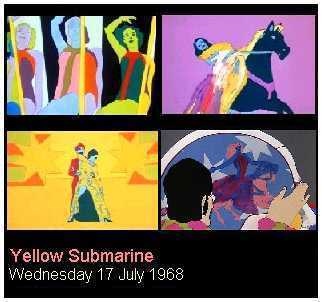
... from the Yellow Submarine film (July 17, 1968) (2.21 MB, wmv, colour).
When they were passing through the foothills of the Headlands (Sea Of Heads) they get separated from the submarine and John sang this song, featuring image-laden verses which present an overtly psychedelic travelogue. This, as well as the initials of the title and the dreamlike-quality of the melody, has led many to speculate that it was written in reference to LSD. The Beatles denied it. However, it inspired the name of an anthropological find: an old female hominid.
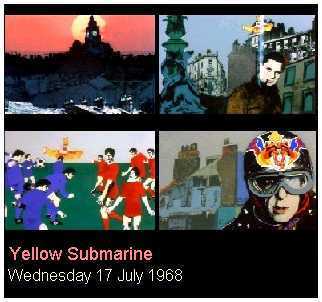
... from the Yellow Submarine film (July 17, 1968) (2.03 MB, wmv, colour).
The combination of still black and white pics of Liverpool that "can be a lonely place on a Saturday night, and this is only Thursday morning" with the color pictures of its citizens, "all the lonely people, where did they all come from?" with the "saddest music in the world" is heartbreaking. The orchestra sounds like a horror film soundtrack, and Eleanor Rigby is cinematic, and it is about horror.
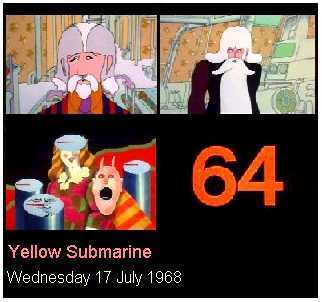
... from the Yellow Submarine film (July 17, 1968) (2.07 MB, wmv, colour).
This clip belongs to the Sea Of Time sequence, where The Beatles go forward and backward in time. Although it involves themes of aging, it was one of the first songs Paul wrote (John provided the grandchildren's names: Vera, Chuck and Dave), dating back from his days with The Quarrymen. Sir Paul McCartney turned 64 years of age four weeks ago, on June 18, 2006. Ironically, he separated from his wife, Heather Mills just one month before his 64th birthday.
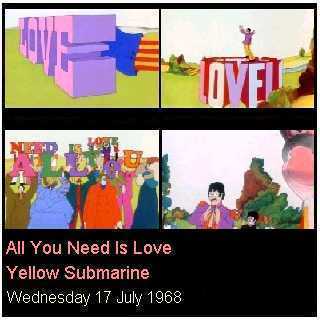
... from the Yellow Submarine film (July 17, 1968) (2.00 MB, wmv, colour).
The animation of Yellow Submarine has sometimes falsely been attributed to the famous psychedelic pop art artist of the era Peter Max. The film's artwork was in fact overseen by Heinz Edelmann. Edelmann, along with his contemporary Milton Glaser, pioneered the psychedelic style for which Max would later become famous, but according to Edelmann and producer Al Brodax, Max had nothing to do with the production of the film. Here is the All You Need Is Love scene.
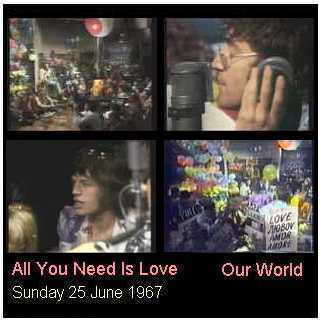
... from the Anthology documentary (June 25, 1967) (34.8 MB, mpeg, colour).
Recorded in black and white, when The Beatles' segment was featured in The Anthology TV documentary it was painstakingly colourised using photos taken at the time as a guide. Attending -among many others- was Mick Jagger, sat on the floor, wearing a jacket with psychedelic eyes painted, puffing on a joint in front of several millions of people ... and he was up in court in 2 days on drug charges!
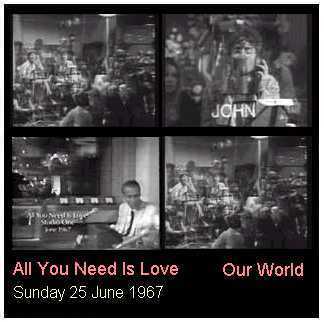
... from the Our World TV programme (June 25, 1967) (17.9 MB, wmv, b&w). Our World was the first ever live global television link, broadcast via satellite to 26 countries and watched by about 400 million people and now it is most famous for the segment starring The Beatles. They broadcast a live set singing All You Need Is Love, for which they were seated on stools, accompanied by a small orchestra and many friends, who sang along. It was done after one rehearsal take.
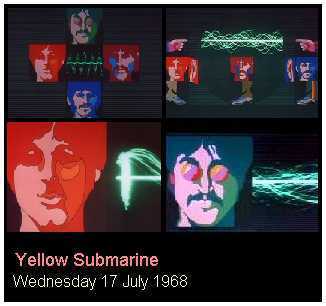
... from the Yellow Submarine film (July 17, 1968) (2.25 MB, wmv, colour).
Yellow Submarine was a 1968 animated film based on the music of The Beatles. This is a scene from the 'Sea Of Science' sequence of the film that was not as heavily animated as some of the others: the majority of the scene was 'super-imposed' against an actual oscilloscope display. This is a George Harrison song, featuring unusual instrumentation, including distorted trumpets, a reverbed pipe organ, chimes and a glockenspiel. Some instruments are backwards.
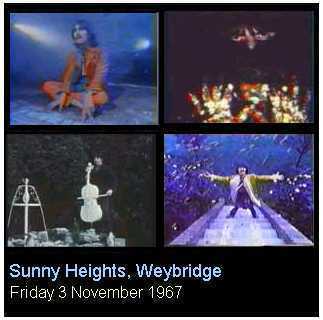
... at Sunny Heights, Weybridge (Nov 3, 1967) (2.70 MB, wmv, colour).
Magical Mystery Tour was a psychedelic film by The Beatles for the BBC-TV. Much of it was improvised (the actors were urged to make up their own characters) and filmed in September and October. It includes musical sequences for several songs. George shooted the sequence for Blue Jay Way the last filming day.
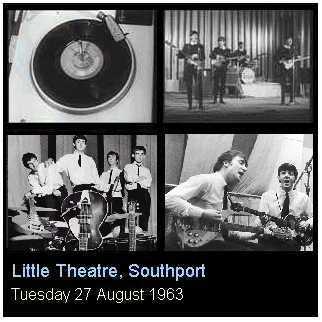
... at The Little Theatre, Southport (Aug 27, 1963) (20.7 MB, mpeg, b&w).
So yesterday was the 49th anniversary of the day John met Paul and here is their first McCartney/Lennon released song. This clip includes footage from the BBC-TV documentary The Mersey Sound. The Beatles mimed their released version of the song for the documentary but this was not used. They were also filmed playing Twist And Shout (one slightly slower version) and She Loves You (only the last one was originally broadcasted, on Oct 9 - John's 23rd birthday).
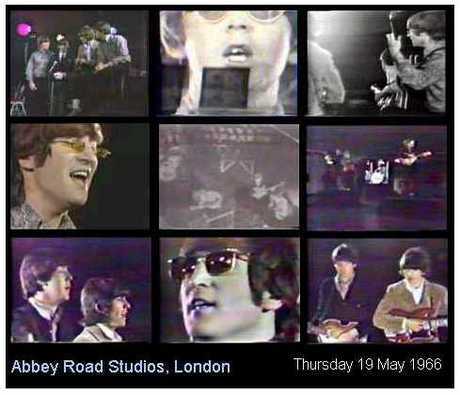
... at EMI Studio One, London (May 19, 1966) (21.0 MB, wmv, colour)
The Beatles made their own promo videos for their singles mainly because of time constraints on their part: there were too many people asking them to perform live on their shows. The videos presented here were aired on June 05, 1966, in the Ed Sullivan Show. Ringo films a special introduction for the films of each song. The others stood or sat on a piano next to him in the studio.
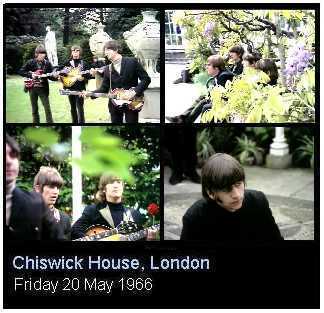
... at The Chiswick House, London (May 20, 1966) (20.8 MB, mpeg, colour).
The Beatles took the genre of promotional videos to new heights with their groundbreaking films for Strawberry Fields Forever and Penny Lane in 1967, but they began with these other two in 1966. They shot four promotional videos for Paperback Writer (two in color intended for the USA and two in black and white for the UK). This is a color film of them lip-syncing or just sitting in a garden.
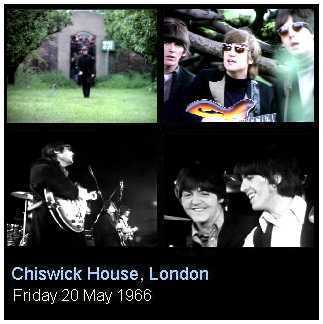
... in the gardens and conservatory of The Chiswick House and at EMI Studio One, London (May 19 & 20, 1966) (51.4 MB, mpeg, colour and black & white).
Did The Beatles invent MTV? Paperback Writer and Rain were the first conceptual promos aired on TV. The idea was to distribute them for broadcast on TV variety shows in other countries. By the time they stopped touring in late 1966, they used these films to, in effect, tour for them. Let's go backwards!
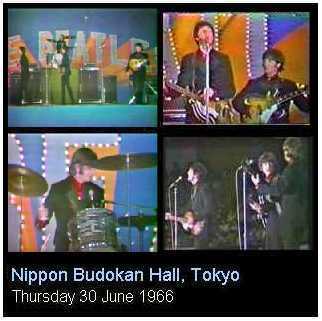
... at The Budokan Hall, Tokyo (June 30, 1966) (28.5 MB, mpeg, colour).
The Beatles' first concert in Japan started at 18:35 and was recorded on video using 3 color TV-cam and 3 monochrome TV-cam. They wore dark green suits instead of the light striped suits seen the next day. This is their performance of She's A Woman and you can see how Paul's microphone was swing and why Brian Epstein did not allow this take. It seems that Brian brought the light-suit version's master tape to England, so there's only dark-suit version left in Japan.
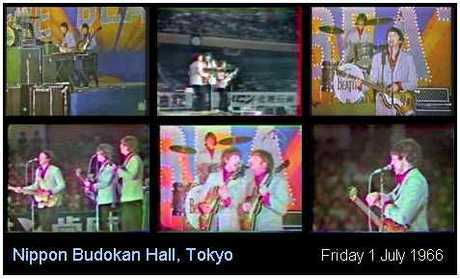
... at The Budokan Hall, Tokyo (July 01, 1966) (17.1 MB, wmv, colour).
This is the complete afternoon concert with The Beatles wearing grey suits. The day before they were recorded on video by NTV, but Paul's microphone was in bad condition (swing left and right), so Brian Epstein wanted to re-record it the next day. In the morning of this concert day Paul and John escaped from the hotel: Paul went to the imperial palace garden with Mal Evans and John went to the Oriental Market and Asahi Garaley at Harajuku. It was 40 years ago yesterday!
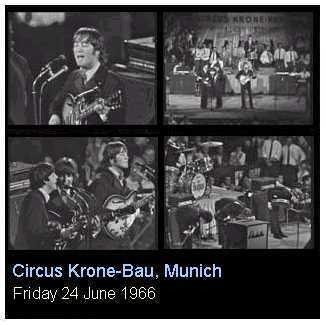
... at The Circus Krone-Bau, Munich (June 24, 1966) (20.9 MB, mpeg, b&w). 40 years before this podcast was born The Beatles started their tour in Germany being their first concert at the Circus Krone-Bau. This is their performance of Nowhere Man, about 9 & 1/2 weeks before their last concert tour appearance ever. Hours before the concert, Munich police discover a ticket falsification and later in the day it was reported that, their Hamburg pal, Klaus Voormann may replace Jack Bruce in Manfred Mann. Also George Martin married his wife, Judy.
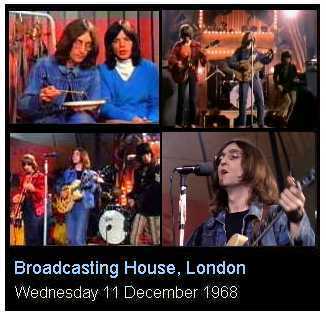
... at The Roundhouse Theatre, London (Dec 1968) (52.1, MB mpeg, colour).
The Rolling Stones TV colour special included guest performances by Jethro Tull, The Who, Marianne Faithfull, Taj Mahal and John Lennon & Yoko Ono backed by Eric Clapton (lead guitar), Keith Richards (switching to bass), Mitch Mitchell (drums) and a violinist - Ivry Gitlist. This is The Dirty Mac's version of Yer Blues.
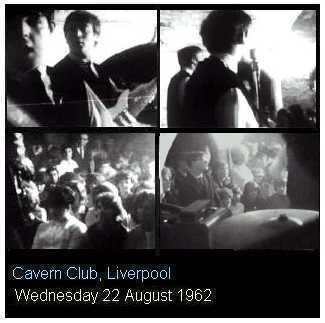
... at The Cavern Club, Liverpool (Aug 22, 1962) (4.47 MB, wmv, black & white).
Unsatisfied with the audio from the August film, Granada TV sent a recording crew back to The Cavern (Sept 5) to re-record The Beatles' night time performance with the intention to dub the recording onto the film. This is a collage of the alternate shots set to that audio of Kansas City/Hey! Hey! Hey!.
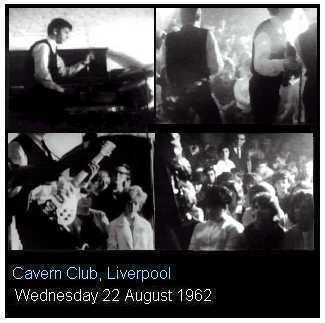
... in Liverpool (Aug 22, 1962) (7.16 MB, wmv, black & white).
The Beatles were filmed playing Kansas City/Hey, Hey, Hey, Hey and this is what is seen in the alternate clips but the audio was lost. All the alternate shots that have become publicly available are silent but it is apparent other songs are being performed. Some speculate that Money (That's All I Want) was one of them.
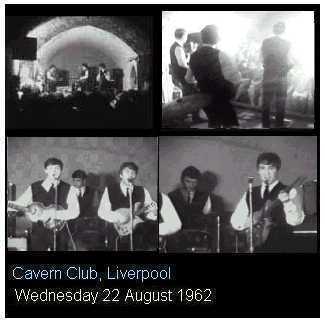
... at The Cavern Club, Liverpool (Aug 22, 1962) (5.28 MB, wmv, black & white).
Several additional alternate camera angle shots were edited into the Some Other Guy performance as this footage shows. It is from a single camera shot and, with the exception of a brief edit, is unbroken. Bob Wooler announcing "It's The Beatles!" is another one of the slight differences, but we still can hear the male audience member shouting "We want Pete!" and then John replying "Yeah".
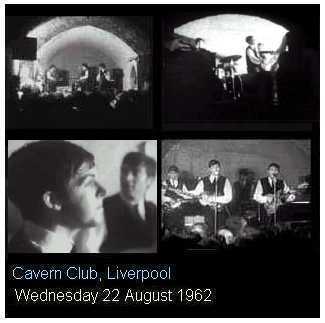
... at The Cavern Club, Liverpool (Aug 22, 1962) (20.9 MB, mpeg, b&w).
"At this midday session at The Cavern, we proudly present The Beatles!".
During the lunchtime show they were filmed by Granada TV for the Know The North programme, but this was not shown until a year later, during the Beatlemania, on Scene At 6:30 (Nov 06, 1963). Some say this is the first filming of them but not exactly. At least, this is the first tape featuring Ringo on drums.
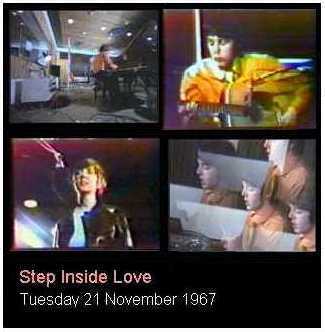
... at Chappell Studios, London (Nov 21, 1967) (55.14 MB, mpeg, colour).
This session was filmed during the Paul McCartney's demo of the theme for
Cilla Black’s BBC TV series and was used in the promo for the song, featuring
the finished version, however here you can listen to that demo made this day.
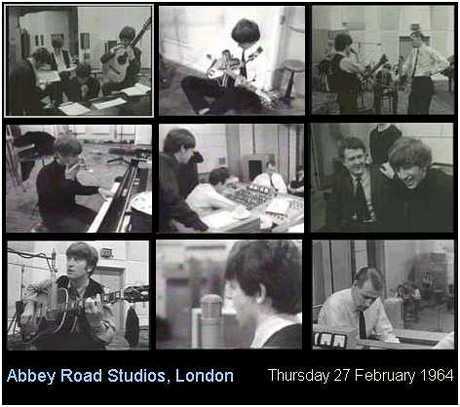
... at EMI Studio Two, London (Feb 27, 1964) (11.58 MB, mpeg, black & white). This was a silent film of them working and enjoying themselves while recording And I Love Her. It was used in numerous documentaries including The Making Of A Hard Day's Night. The song featuring here is Misery, from their first LP.
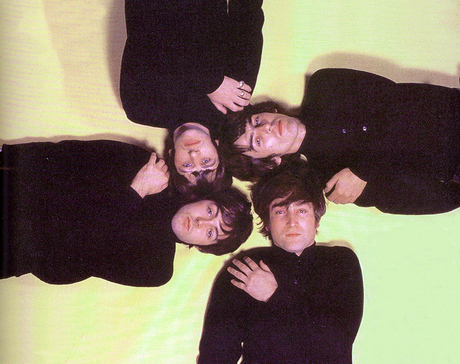
... I FEEL FINE, Take 1 (mp3) at Studio Two, EMI Studios, London (Oct 18, 1964).
I Feel Fine, a John Lennon composition, holds the distinction, at least according to Lennon himself, as being the first record to make deliberate use of the dreaded phenomenon known as feedback. From the beginning, the song adorned its distinctive feedback introduction, achieved by Paul plucking the A note on his bass with John picking up the feedback through his guitar.
This first take is played by The Beatles in a different key from the released version, in the key of A at this point, a whole tone higher than the commercially released version in G. It features a raw Lennon vocal that, although rough in places, is still interesting to hear. The overall playing is choppy, almost sloppy in places.
The take breaks down at the solo break ...
... but two of us still got a long and winding road stretching out ahead ... and that other one is you! ... so take your ticket to ride and let's get on our way back home!
P.S. This is a place to share some music and videos ... but what's more: to share good feelings! So everybody is very welcome! Without your comments it has not too much sense. What have you got to say?!
P.P.S. Don't forget to visit the other parts:
http://seltaeb2.podomatic.com/
http://seltaeb3.podomatic.com/
Clips about ... well, you already know! (1st part)
| Become a Fan | View Fans |
 |
kpsp <kpsp> |
 |
Pop Rocks <Pop Rocks> |
 |
www.StreetPerspective.com <www.StreetPerspective.com> |
 |
dub <dub> |
 |
Dave Rabbit <Dave Rabbit> |
 |
MR <MR> |
 |
Joy <Joy> |
 |
The Luxury Tribe <The Luxury Tribe> |
 |
Danger Zone Show <Danger Zone Show> |
 |
Brian <Brian> |
 |
Jared <Jared> |
 |
One Day... <One Day...> |
 |
Scott and Pam <Scott and Pam> |
| |
Dave Rabbit <Dave Rabbit> |
 |
dj Sigi <dj Sigi> |
| |
www.StreetPerspective.com <www.StreetPerspective.com> |
 |
David <David> |
 |
FOOD IS NOT LOVE! <FOOD IS NOT LOVE!> |
 |
Bret Harold Hart <Bret Harold Hart> |
 |
Awachu <Awachu> |
http://www.happyend.co.kr/sub000/Study.aspx?LeftTabId=12
협의이혼(합의이혼) 일때 위자료, 재산분할은 어떻게 하나요? |
|---|
질문자인사 감사합니다.
 |
||
 위자료란? 위자료란? |
||
 |
||
|
||
|
||
| 위자료의 산정기준 |
||
|
||
|
||
|
||
| 재산분할이란 |
||
|
||
|
||
|
||
| 부부공동재산이란? |
||
|
||
|
||
|
||
| 재산분할의 기준 |
||
|
||
|
||
출처 : 해피엔드 이혼상담
야간집회=폭력화” “평화적 촛불집회 많아”
한겨레 | 입력 2009.03.12 20:00 | 수정 2009.03.12 23:10
야간집회 허용되면 큰 혼란" - "과잉규제로 전과자 양산"
오마이뉴스 | 입력 2009.03.12 21:34
연합뉴스 | 입력 2009.03.12 15:19 | 수정 2009.03.12 15:38 | 누가 봤을까? 30대 남성, 광주


|
|||||||||
|
기사입력 2009-03-10 오전 9:38:39


 |
| ▲ 미국 의료제도의 끔찍한 현실을 고발한 영화 <식코>. 분명히 실패한 이 미국의 의료제도를 모방하려는 움직임이 최근 국내에서 진행 중이다. ⓒ프레시안 |
| <프레시안>은 앞으로 '복지국가소사이어티'의 칼럼을 공동 게재합니다. 복지국가소사이어티 회원이 돌아가며 쓰는 각 분야의 깊이 있는 칼럼을 <프레시안>을 통해 만날 수 있습니다. (☞복지국가소사이어티 홈페이지 바로 가기) |








댓글 목록
관리 메뉴
본문
안녕하세요.ㅋ아직도 나의 홈페이지,카페,블로그 홍보를 하는데 고민이세요?
이메일 수집기,게시판 추출기,카페 발송기,쪽지 등록기,블로그 댓글 등록기,이메일 발송기,전화번호 DB 개발 및 판매 - 포스트웨이
저희 "포스트웨이"에서 문제을 해결하세요.
각종 광고 프로그램(이메일,블로그,카페,댓글 등록기)이 여러분의 광고에 큰 도움이 되어 드립니다.
저렴하면서 확실한 광고로 저비용으로 최대한 효과을 누려보세요!!
지금 당장 야후,다음,구글 검색창에 " 포 스 트 웨 이 " 라고 검색하세요.
포스트웨이 트위터 주소: http://twitter.com/postway
부가 정보
관리 메뉴
본문
게시판관리자님 대단히 죄송합니다부가 정보