


공지사항
-
- '노란봉투'캠페인/국제연대..
- no chr.!
53개의 게시물을 찾았습니다.

Now, not even 24 hours after my last contribution about this issue, the US administration made it clear that they don't want even to think about bilateral talks with the DPRK(actually it was clear from the beginning that they will reject this kind of "offer"..). ``You don't initiate talks by threatening to launch an ICBM(inter-continantal ballistic missile),'' Bolton, the U.S. envoy to the U.N. said.
And finally some US ex-politicians are calling now for military strikes against DPRK's missile sites(please see the last two articles).
Just a short while ago AP reported following:
China Concerned Over N. Korea Missile Test
China issued its strongest statement of concern yet Thursday over a possible North Korean long-range missile launch, while Pyongyang warned of possible clashes in the skies as it accused U.S. spy planes of repeated illegal intrusions.
Beijing is the North's last major ally and key benefactor, and Washington has urged China to press the North to back down on its potential missile test.
``We are very concerned about the current situation,'' Jiang Yu, a Chinese Foreign Ministry official, said at a regular briefing in Beijing. ``We hope all parties can do more in the interest of regional peace and stability.''
Jiang said China would ``continue to make constructive efforts.''
President Bush praised China on Wednesday for ``taking responsibility in dealing with North Korea.''
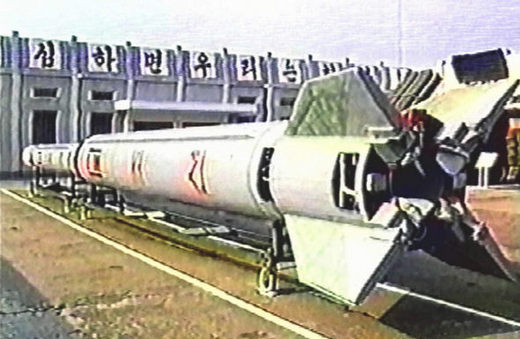
Worries over a potential North Korean launch have grown in recent weeks following reports of activity at the North's launch site on its northeastern coast, where U.S. officials say a Taepodong-2 missile - believed capable of reaching the United States - is possibly being fueled.
Read the full article here:
http://www.guardian.co.uk/worldlatest/story/0,,-5903911,00.html
And the semi-official S.K. newsagency Yonhap published this:
N. Korea's next step draws keen attention
As the United States turned town North Korea's repeated appeals for direct talks over a possible missile test, Pyongyang's next move remains unpredictable, analysts here say.
They say North Korea appears to be in dilemma over whether to go ahead with the missile launch in the face of strong warnings from the U.S. and Japan.
U.S. officials have stuck to a firm stance against any bilateral talks with North Korea outside of the Beijing-based six-nation talks on Pyongyang's nuclear program.
Speaking to Yonhap News Agency earlier this week, Han Song-ryol, deputy head of the North's mission to the United Nations, said his country has a right to own a ballistic missile and test it.
"We are aware of the U.S. concerns about our missile test-launch. So our position is that we should resolve the issue through negotiations," he said. It was the highest-profile response from North Korea on the recent reports of its preparations for the launch of the so-called Taepodong-2, which is said to be able to fly as far as the western United States.
Read the entire stuff here:
http://english.yna.co.kr/Engnews/20060622/610000000020060622161806E5.html
IHT/AP:
Japan makes moves to monitor North Korea
Washington Post published today following article:
Former Defense Officials Urge U.S. Strike on North Korean Missile Site
Former defense secretary William J. Perry has called on President Bush to launch a preemptive strike against the long-range ballistic missile that U.S. intelligence analysts say North Korea is preparing to launch.
In an opinion article(*) that appears in today's Washington Post, Perry and former assistant defense secretary Ashton B. Carter argue that if North Korea continues launch preparations, Bush should immediately declare that the United States will destroy the missile before it can be fired.
Perry and Carter suggest using a cruise missile launched from a submarine and carrying a high-explosive warhead. "The effect on the Taepodong would be devastating," they write, using the name of the Korean missile. "The multi-story, thin-skinned missile filled with high-energy fuel is itself explosive -- the U.S. airstrike would puncture the missile and probably cause it to explode. The carefully engineered test bed for North Korea's nascent nuclear missile force would be destroyed."
As President Bill Clinton's defense secretary, Perry oversaw preparation for airstrikes on North Korean nuclear facilities in 1994, an attack that was never carried out. He has remained deeply involved in Korean policy issues and is widely respected in national-security circles, especially among senior military officers. He has been a critic of the Bush administration's approach to North Korea.
"We believe diplomacy might have precluded the current situation," Perry and Carter said. "But diplomacy has failed, and we cannot sit by and let this deadly threat mature."
Perry and Carter say that such a strike "undoubtedly carries risk" but that there would be no damage to North Korea beyond the missile galley. They argue that the unproven U.S. missile-defense system might not be able to shoot down a missile.
Meanwhile, there were some signs that South Korea, where officials have expressed skepticism over U.S. intelligence regarding an imminent missile launch, might be willing to step up pressure on the North. Yesterday, Kim Dae Jung, the former South Korean president, postponed a much-lauded visit next week to the North Korean capital, Pyongyang, because of the rising tensions.
"Because of the unforeseen situation, it has become difficult" for Kim to visit North Korea, Jeong Se Hyun, a former top aide to Kim, told reporters.
In addition, South Korea's unification minister, Lee Jong-Seok, was widely quoted in the country's press as suggesting that continued investment and humanitarian aid to North Korea might be curbed if Pyongyang conducts a missile test. In a meeting with opposition leaders from South Korea's Grand National Party, which has criticized the administration of President Roh Moo Hyun for being soft on North Korea, Lee was quoted by the Korea Times as saying Seoul "will not pretend as if nothing has happened in the event of North Korea test-firing a missile."
Also yesterday, the U.S. ambassador to Japan reiterated that "all options are on the table" with regard to North Korea.
Asked whether the United States would attempt to shoot down the North Korean missile if launched, J. Thomas Schieffer warned in an interview that "we have greater technical means of tracking it than we had in the past, and we have options that we have not had in the past."
http://www.washingtonpost.com/wp-dyn/content/article/2006/06/21/AR2006062101838.html
* If Necessary, Strike and Destroy
North Korea Cannot Be Allowed to Test This Missile
By Ashton B. Carter and William J. Perry
North Korean technicians are reportedly in the final stages of fueling a long-range ballistic missile that some experts estimate can deliver a deadly payload to the United States. The last time North Korea tested such a missile, in 1998, it sent a shock wave around the world, but especially to the United States and Japan, both of which North Korea regards as archenemies. They recognized immediately that a missile of this type makes no sense as a weapon unless it is intended for delivery of a nuclear warhead.
A year later North Korea agreed to a moratorium on further launches, which it upheld -- until now. But there is a critical difference between now and 1998. Today North Korea openly boasts of its nuclear deterrent, has obtained six to eight bombs' worth of plutonium since 2003 and is plunging ahead to make more in its Yongbyon reactor. The six-party talks aimed at containing North Korea's weapons of mass destruction have collapsed.
Should the United States allow a country openly hostile to it and armed with nuclear weapons to perfect an intercontinental ballistic missile capable of delivering nuclear weapons to U.S. soil? We believe not. The Bush administration has unwisely ballyhooed the doctrine of "preemption," which all previous presidents have sustained as an option rather than a dogma. It has applied the doctrine to Iraq, where the intelligence pointed to a threat from weapons of mass destruction that was much smaller than the risk North Korea poses. (The actual threat from Saddam Hussein was, we now know, even smaller than believed at the time of the invasion.) But intervening before mortal threats to U.S. security can develop is surely a prudent policy.
Therefore, if North Korea persists in its launch preparations, the United States should immediately make clear its intention to strike and destroy the North Korean Taepodong missile before it can be launched. This could be accomplished, for example, by a cruise missile launched from a submarine carrying a high-explosive warhead. The blast would be similar to the one that killed terrorist leader Abu Musab al-Zarqawi in Iraq. But the effect on the Taepodong would be devastating. The multi-story, thin-skinned missile filled with high-energy fuel is itself explosive -- the U.S. airstrike would puncture the missile and probably cause it to explode. The carefully engineered test bed for North Korea's nascent nuclear missile force would be destroyed, and its attempt to retrogress to Cold War threats thwarted. There would be no damage to North Korea outside the immediate vicinity of the missile gantry.
The U.S. military has announced that it has placed some of the new missile defense interceptors deployed in Alaska and California on alert. In theory, the antiballistic missile system might succeed in smashing into the Taepodong payload as it hurtled through space after the missile booster burned out. But waiting until North Korea's ICBM is launched to interdict it is risky. First, by the time the payload was intercepted, North Korean engineers would already have obtained much of the precious flight test data they are seeking, which they could use to make a whole arsenal of missiles, hiding and protecting them from more U.S. strikes in the maze of tunnels they have dug throughout their mountainous country. Second, the U.S. defensive interceptor could reach the target only if it was flying on a test trajectory that took it into the range of the U.S. defense. Third, the U.S. system is unproven against North Korean missiles and has had an uneven record in its flight tests. A failed attempt at interception could undermine whatever deterrent value our missile defense may have.
We should not conceal our determination to strike the Taepodong if North Korea refuses to drain the fuel out and take it back to the warehouse. When they learn of it, our South Korean allies will surely not support this ultimatum -- indeed they will vigorously oppose it. The United States should accordingly make clear to the North that the South will play no role in the attack, which can be carried out entirely with U.S. forces and without use of South Korean territory. South Korea has worked hard to counter North Korea's 50-year menacing of its own country, through both military defense and negotiations, and the United States has stood with the South throughout. South Koreans should understand that U.S. territory is now also being threatened, and we must respond. Japan is likely to welcome the action but will also not lend open support or assistance. China and Russia will be shocked that North Korea's recklessness and the failure of the six-party talks have brought things to such a pass, but they will not defend North Korea.
In addition to warning our allies and partners of our determination to take out the Taepodong before it can be launched, we should warn the North Koreans. There is nothing they could do with such warning to defend the bulky, vulnerable missile on its launch pad, but they could evacuate personnel who might otherwise be harmed. The United States should emphasize that the strike, if mounted, would not be an attack on the entire country, or even its military, but only on the missile that North Korea pledged not to launch -- one designed to carry nuclear weapons. We should sharply warn North Korea against further escalation.
North Korea could respond to U.S. resolve by taking the drastic step of threatening all-out war on the Korean Peninsula. But it is unlikely to act on that threat. Why attack South Korea, which has been working to improve North-South relations (sometimes at odds with the United States) and which was openly opposing the U.S. action? An invasion of South Korea would bring about the certain end of Kim Jong Il's regime within a few bloody weeks of war, as surely he knows. Though war is unlikely, it would be prudent for the United States to enhance deterrence by introducing U.S. air and naval forces into the region at the same time it made its threat to strike the Taepodong. If North Korea opted for such a suicidal course, these extra forces would make its defeat swifter and less costly in lives -- American, South Korean and North Korean.
This is a hard measure for President Bush to take. It undoubtedly carries risk. But the risk of continuing inaction in the face of North Korea's race to threaten this country would be greater. Creative diplomacy might have avoided the need to choose between these two unattractive alternatives. Indeed, in earlier years the two of us were directly involved in negotiations with North Korea, coupled with military planning, to prevent just such an outcome. We believe diplomacy might have precluded the current situation. But diplomacy has failed, and we cannot sit by and let this deadly threat mature. A successful Taepodong launch, unopposed by the United States, its intended victim, would only embolden North Korea even further. The result would be more nuclear warheads atop more and more missiles.
Ashton B. Carter was assistant secretary of defense under President Bill Clinton and William J. Perry was secretary of defense. The writers, who conducted the North Korea policy review while in government, are now professors at Harvard and Stanford, respectively.
http://www.washingtonpost.com/wp-dyn/content/article/2006/06/21/AR2006062101518.html


INTERVIEW WITH PRACHANDA (by Kishor Nepal, 6.20)
Excerpts of a recent interview with Chairman of the Communist Party of Nepal (Maoist), Prachanda alias Pushpa Kamal Dahal:
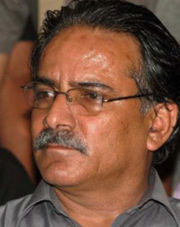
Well, in my opinion this interview is a very important statement and we should "study" it very well and check out what comes as next.. More about it, I'll write in the next days(btw, I have some problems with it..).


Latest news, comments and analysis
about the missile "madness"

First of all: the f.. missile is still in its hole!
But of course - no wonder - KJ Kim's trip to P.Y. is cancelled as one of the first(foreseeable) results of the latest developments.
Meanwhile - of course it was also pedictable - the S.K. govt is threatening the DPRK with the stop of("additional") economic and humanitarian help(Yonhap, Korea Times).
And the US administration's position: "All options are still on the table", a.k.a. everything can be happen, incl. a military option(just watch CNN's stuff쟯n the end of my contribution..).
And finally, of course also foreseeable: the DPRK is offering the US administration bilateral negotiations to solve the "missile problem"(on the other side the DPRK said that it has all rights to launch a satellite..).
IHT published in the last two days following articles:
North Korea's very bad idea (NYT)
South Korea's ex-leader won't visit North
U.S. Readies System For Missile Detection? (Washington Post)
Use Against N. Korean Launch Discounted
The U.S. military yesterday moved ships into position off the coast of North Korea to detect the launch of any long-range ballistic missiles and prepared its new, unproven missile-interception system to attempt a response if necessary.
Please read the full article here:
http://www.washingtonpost.com/wp-dyn/content/article/2006/06/20/AR2006062001446.html
The latest comment published y'day in Asia Times(HK/China) you can read here:
Pyongyang will shoot itself in the foot(harrharr, finally a kind of surprising..)
Before y'day the same magazine published following analysis:
There's method in the missile madness
..and some backgrounds about the DPRK's missile development program and export:
And finally here you can watch the latest contribution in CNN Intl. TV program(6.21):
North Korea's plan to launch a long-range missile prompts U.S. concern
And last but not least the S.K. "left-liberal" daily Hangyeore wrote this y'day:
Expert says N.K. missile could carry nuclear payload 12,000 km
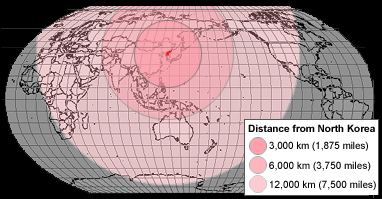
(..oops, what a great idea!!)
Yesterday evening IAF aircraft attacks car carrying al-Aqsa Martyrs' Brigades members in Gaza's Jabalya refugee camp. But once again three Palestinian children killed, two of them brother and sister; another 15 people wounded..

And so the escalation between the Palestinan "resistance" groups and the Israeli military is reaching a new stage..
Today's Ynet/Yedioth Ahronot reported in its morning edition following dangerously developments:
Fatah declares war on Sderot
Al-Aqsa Martyrs’ Brigades vows to avenge botched IAF air strike which killed three Palestinian children while targeting top al-Aqsa member Imad Hamad, who planned to infiltrate suicide bombers from Sinai. ‘Zioinsts won’t have peace on our land,’ group says
The al-Aqsa Martyrs’ Brigades, Fatah’s military wing, called on all its active cells to declare a retaliatory alert following the Israel Air Force strike on northern Gaza Tuesday, which targeted al-Aqsa operatives but killed three Palestinian children.
"We call on all our fighters to act and hit the enemy so that it hurts, in every place, so that it knows that the blood of our martyrs is dear. We declare war on Sderot and on all the Zionist settlements. The Zionists won’t have peace on our land,” an announcement stated.
Please read the full article here(it includes also two links to background information about the killing of three children by IAF yesterday..):
http://www.ynetnews.com/articles/0,7340,L-3265401,00.html
The Isreali so-called "left-liberal" daily Haaretz reported today following:
Al-Aqsa Martyrs' Brigades urges renewed attacks on Israel
The Al-Aqsa Martyrs' Brigades threatened Wednesday to strike at targets throughout in Israel, and urged all other militant groups to renew their terror attacks.
The group's statement came in response to a failed assassination attempt by the Israel Air Force in Gaza City on Tuesday evening, which killed three Palestinian children. Two of the children, aged five and six, were brother and sister; the third was a 16-year-old boy..
http://www.haaretz.com/hasen/spages/729271.html
Just a half hour ago Ynet reported this:
'Peretz must resign'
Arab MKs slam defense minister over killing of children in IAF strike in Gaza. 'Peretz wants to build his political career on bodies of Palestinian children,' MK Zahalka charges. MK Tibi calls on Peretz to halt targeted killings..
http://www.ynetnews.com/articles/0,7340,L-3265579,00.html
PS:
It's now about eight hours later and the intl. public got this(actually not really) surprising news:
Gaza: 1 killed, 9 wounded in IDF strike
One Palestinian woman killed, nine people wounded during Israel Air Force attack on Khan Younis house; among wounded three members of same family; extent of injuries unknown at this time. Palestinians say missile was meant to strike vehicle...
http://www.ynetnews.com/articles/0,7340,L-3265784,00.html
..oops(again, just one hour later, 9 pm CET, 4 am KST) this f.. sh.. must be updated:
Gaza: 2 killed in IDF strike
Tragic mistake: Palestinian brother and sister killed, several others injured during Israel Air Force attack on Khan Younis house. Army officials say missile targeted vehicle carrying terror cell members
Two people killed and eight wounded, including 3 children, when Israel Air Force strike in Khan Younis misses targeted Popular Resistance Committee terrorists, hits family eating dinner in their home..
http://www.ynetnews.com/articles/0,7340,L-3265784,00.html

Haaretz reported following:
Two civilians killed in IAF missile strike on Gaza
Two Palestinian civilians were killed and 14 others - all members of the same family - were wounded in an Israel Air Force strike in the southern Gaza Strip on Wednesday evening.
The attack comes a day after three children were killed in an IAF strike in Gaza City that targeted members of Fatah's military wing. It is the third time in one month that IAF strikes in Gaza have resulted in civilian fatalities, and brings the total of Palestinian civilian deaths to 14.
http://www.haaretz.com/hasen/spages/729271.html

Wow.. it seems that since a while the IAF is using only blind or at least eye-handicapped personal in its combat helicopters..(mi-anh hae-yo.. I know this is not funny!)
In my opinion someone in the Israeli military is going crazy and want the finally confrontation, or whatever.. Actually I can't find no words anymore for this latest developments..

And the latest news, reported nearly at the same time when Ynet updated the last Israeli war crime in Khan Younis, was/is this:
Hamas performs about-turn on Israeli state
(The Guardian)
· Document recognises Israel's right to exist
· Shift away from founding goal of an Islamic state
In a bitter struggle for power, Hamas is bowing to an ultimatum from the Palestinian president, Mahmoud Abbas, to endorse the document drawn up by Palestinian security prisoners in Israeli jails, or face a national referendum on the issue that could see the Islamist group stripped of power if it loses.
But final agreement on the paper, designed to end international sanctions against the Hamas government that have crippled the Palestinian economy, has been slowed by wrangling over a national unity administration and the question of who speaks for the Palestinians.
Yasser Abed Rabbo, a member of the Palestine Liberation Organisation's executive committee and a lead negotiator on the prisoners' document, said Hamas had agreed to sections which call for a negotiated and final agreement with Israel to establish a Palestinian state on the territories occupied in 1967, including East Jerusalem.
"Hamas is prepared to accept those parts of the document because they think it is a way to get rid of a lot of its problems with the international community. That's why it will accept all the document eventually," he said.
Hamas, facing a deep internal split over recognition of the Jewish state, declined to discuss the negotiations in detail. If it formally approves the entire document, it will represent a significant shift from its founding goal of replacing Israel with an Islamic state and its more recent position of agreeing a long-term ceasefire, over a generation or more, if a Palestinian state is formed on the occupied territories but without formally recognising the Jewish state.
Mr Abed Rabbo said he expected an agreement in the coming days, but that important differences still had to be settled, particularly over the document's call for the formation of a national unity government.
He described that as "the major issue that will determine the fate of two nations for decades" because a unity administration, built around a common policy of negotiations with Israel, would be the only way to combat its plans to unilaterally impose its final borders and annex parts of the occupied territories.
More immediately this was also the only way to restore foreign aid. But Mr Abed Rabbo added it would be a mistake to see the approval of the prisoners' document as sufficient, in itself, to end international sanctions against the Palestinian Authority. "The document calls for the foundation of a national unity government as the basis of a new programme that will approach the world," he said.
"But the document is part of a package. It should be accompanied by an agreement on policies for a new government. The document won't change conditions and relations on its own."
Mr Abed Rabbo said the July 26 referendum would be called off if there was agreement on the document, but that a ballot could be held later if Hamas blocked the formation of a new government or failed to agree on a negotiations policy.
Abdullah Abdullah, a Fatah MP and chairman of the parliamentary political committee, said other differences remained over the document, including Fatah's insistence that the PLO continues to be recognised as the sole representative of the Palestinian people in negotiations with Israel, and that all existing agreements between the PLO and Israel be recognised.
Israel has dismissed the prisoners' document as changing little because, among other things, it advocates continued resistance. But a complete renunciation of violence is unlikely to come while Israeli attacks continue to claim the lives of innocent Palestinians.
Earlier today, a women was killed and six children injured in an Israeli missile attack in Gaza. On Tuesday, an Israeli air force rocket killed three children, two boys aged five and 16, and a seven-year-old girl. In both cases, Israel said it was targeting militants who escaped injury.
Israel has killed 13 civilians, most of them children, in four air strikes this month. It is also probably responsible for the killing of a family of seven during a shell barrage against a Gaza beach two weeks ago.
http://www.guardian.co.uk/israel/Story/0,,1802862,00.html
Forget it!! I can't believe it.. (aeh~ at least not today anymore..)

While the international media was/is putting the DPRK's missile issue on its headlines - for example on CNN Intl. it was/is the top story ..
North Korea Moves Closer to Missile Test
North Korea has finished loading fuel into a long-range ballistic missile, a Bush administration official said Monday as signs continued that the reclusive communist state(*) will soon test a weapon that could reach the United States.. (Guardian, AP)
More nations warn North Korea against launching missile (IHT)
...the S.K. media is, once again, trying to play down the issue:
Korea Times Tuesday's edition will publish following:
Seoul Calm Over NK Missile Issue
North Korea does not appear to be at the stage of test-firing its long-range missile in a day or two, despite recent news reports, as few concrete signs indicating an imminent launch have been detected, sources in Seoul said Monday.
Some foreign news services reported over the weekend that North Korea seems to have finished fueling a long-range ballistic missile increasing the possibility it will go ahead with its first important test-launch in eight years...
South Korea has not yet concluded whether the projectile North Korea plans to launch is a military-purpose missile or a civilian-purpose satellite...
(the entire article you can read here:
http://times.hankooki.com/lpage/200606/kt2006061917113210440.htm)
Opps, perhaps following will be a kind of un-sensitively(harrharr, I'm un-sensitively!! everyone knows..)...
Just my(possibly stupid) idea, but it might be a likely scenario in the coming days:
Soon the DPRK will launch the Daepodong No. 2. Of course the Daepodong is just a "missile to launch a satellite to bring the latest song, praising the peaceful unification between the South and the North",..blabla.. "to the space"..
The US Navy will shoot it down and KIm Jeong-il will blame the USA for attacking the DPRK's efforts for their(of course peaceful) space program.. blabla.. (well, once again, this is just my idea..).
..................................
^^what a SURPRISE:
‘N. Korea Visit May Be Postponed’
Former President Kim Dae-jung's scheduled trip to Pyongyang later this month may be delayed due to tensions over North Korea's alleged move to test-fire a long-range missile and Pyongyang's lukewarm attitude toward the trip...
..................................
`Launch may be a satellite'
There is not enough evidence to conclude that a test launch allegedly prepared by North Korea was for military purposes, it was reported in Seoul yesterday.
The Seoul government is said to be keeping in check the possibility that the projectile could be a satellite instead of a ballistic missile, based on the location of the launch pad and type of fuel.
http://www.koreaherald.co.kr/SITE/data/html_dir/2006/06/20/200606200005.asp
* Of course N.K. has nothing to do with communism..
BTW: There was no communist state in the past.. and there will be no communist state in the future! Because communism means a classless society, without state, nation, borders, (ruling)political parties, police, military..
IN CONCERT
2006.3.11
REVOLUTIONARY PROPAGANDA
BY USING THE TOOLS OF THE CLASS ENEMY^^
연영석同志 홈페이지:
Following - in my point of few - interesting article about the latest developments in Nepal, especially after last Friday's summit between the representatives of the SPA and CPN(M), was published in today's Asia Times(HK/China):
Nepal makes way for the comrades
Fridays are fateful, if not eventful, days in Nepal. Five years ago, on June 1, 2001, a mysterious shootout took place in the palace claiming the lives of 10 royal victims, including King Birendra, Queen Aishwarya and Crown Prince Dipendra. The person who was the country's prime minister at that time (coincidentally, he holds the same position now), Girija Prasad Koirala, later said that he gets jittery on the eve of every Friday.
As if to prove him prophetic, the current king, Gyanendra, has taken a series of adventurous steps on Fridays. In 2002, it was on Friday, October 4, when he announced the dismissal of an elected government, sparking a major constitutional crisis leading to political instability and upheaval in Nepal. And almost all
subsequent measures he took to consolidate the powers unconstitutionally seized failed, compelling him to bow to people power this April.
His first public proclamation to this effect also came on a Friday - April 21. Four days later, Gyanendra made another proclamation leaving himself at the mercy of a parliament he himself had revived after a gap of four years. Very swiftly it stripped him of all powers, perks and privileges and converted him into a person whose property and income are taxable. Observers had to wait until last Friday to find out whether or not Gyanendra even retained the status of Nepal's head of state when he was allowed to receive credentials from newly arrived ambassadors from Thailand and South Korea.
But last Friday's extraordinary spectacle was witnessed elsewhere in Kathmandu - at Baluwatar, the official residence of the prime minister, 2 kilometers from the royal palace. And the host of the show, considered providential by mainstream leaders, was none other than the octogenarian Koirala. Despite frail health, he received the top Maoist leader Pushpa Kamal Dahal, also known as Prachanda, and held "summit-level" talks with him for more than an hour.
The news that the man who has commanded the bloody insurgency in the country for 10 years had entered Baluwatar spread like a wildfire. Some of the local radio stations interrupted regular programs to churn out whatever they could gather from reporters who had braved summer heat standing outside the main entrance to the prime minister's residence. They were part of a 300-strong crowd of fellow reporters and photographers, both Nepalis and foreigners, who remained more interested in "Comrade Prachanda" than in the possible outcome of parleys being held inside the residence compound.
The reason was obvious - he was somebody who had led a "People's War" that claimed more than 13,000 lives and made tens of thousands invalids, several hundred thousand displaced and a large number of children orphaned. Destruction of public and private property worth billions of rupees is something that needs to be calculated separately.
A formal meeting between Koirala and Prachanda was not unexpected, but few had any idea that such an event could be organized suddenly, and without public knowledge. As it became clear within hours, Krishna Prasad Sitaula, the interior minister, had picked up Prachanda in the early morning hours from the outskirts of Pokhara, a tourist town in the west, and brought him to the capital using a chartered helicopter. Sitaula then escorted him from the airport to the place where Koirala greeted him, his wife and his comrade-in-arms, Baburam Bhattarai. It indeed was a sensational development. (Sitaula once again extended the same courtesy to Prachanda the following morning by accompanying him to an undisclosed location in the far-western hill district of Doti.)
At the end of day, the elusive Maoist leader finally appeared before the media. His appearance displayed an aura of confidence and his expressions conveyed a message that this could be a person who believes in action.
"He appeared like a leader with vision, and a person who is highly unlikely to deceive the peace-seeking people of Nepal," Sundarmani Dixit, a medical doctor and civil-society activist, told a radio interviewer after a short, separate meeting with Prachanda.
What came out at the press conference, attended by all important personalities except Prime Minister Koirala (for health reasons), has now become a matter of intense political debate. While there is unanimity of view that a joint statement would send a strong message to the public that the country is heading toward a democratic process that is irreversible, murmurs of discontent and disgruntlement over the eight-point agreement signed by the leaders of the Seven Party Alliance (SPA) and the top rebel leader is getting louder day by day.
A perception is developing in the Nepalese political landscape that SPA leaders yielded too much to the Maoists without obtaining even an assurance that they would renounce violence or hand in weapons before they could be invited to join a new interim government. The Friday agreement stipulates that the present interim government would be replaced by another interim setup; the parliament that was restored at the end of April would be dissolved, and the present constitution (promulgated in 1990 and substantially altered through parliamentary declaration of May 18, 2006, on provisions relating to the monarchy) be scrapped to make room for an interim constitution to be announced in a month.
These arrangements, argue some dissenting leaders, make all the changes announced after the April 24 proclamation meaningless. Their contention is that while the Maoists' support during the pro-democracy movement this year was crucial, they should not have been allowed to dictate the terms. Does one Maoist party carry weight equal to the weight of seven other parties combined?
In reciprocation, the Maoists have consented to dismantle what they have been calling "people's governments" at all levels - central, district and village. The other Maoist concession is for placing their weapons and fighters under United Nations supervision. But these are not substantial gestures. Local Maoist governments are very much similar to local units of other political parties. And the issue of UN supervision of weapons and fighters is irrelevant, if not outright objectionable.
"How convincing is the contention of assigning the legal status the state army enjoys to a band of fighters who were terrorists until cases against them were withdrawn recently?" asked Govinda Raj Joshi, a central committee member of the Nepali Congress, the political party headed by Prime Minister Koirala, when approached for his reaction. Joshi was once minister of home affairs.
Joshi is one of those politicians who tend to think that the entry of Prachanda and his comrades into state power through the upcoming interim government amounts in essence to a Maoist takeover of Nepal. Western diplomats also see these prospects as worrying. Neighbors and Nepal's influential friends abroad do not see any sense in dissolving the existing parliament without a ready-made substitute for it. That Maoists openly espouse a republican agenda has also become a matter of concern to those who are in favor of retaining monarchy in a "ceremonial form". Then there is the Nepali intelligentsia, which refuses to accept a Maoist dictatorship in the place of an autocratic monarchy.
To the Maoist leadership, this is an alarmist view. And Prachanda used his maiden press conference to assure the public that he and members of the party he heads, the Communist Party of Nepal (Maoist), have come out in the open for good. They do not intend to return to the jungle. They have begun opening offices in different districts and areas across the country, with women's and students' wings providing an additional support base to the party, which plans to run a campaign aggressively ahead of the polls for a Constituent Assembly (CA). That the CA is needed to draw a new constitution for Nepal has already been agreed upon. Once the new constitution, to be written and issued by the people's representatives, is ready the country is to hold new parliamentary elections.
In an interview with Asia Times Online, Dev Gurung, a senior central committee member of the CPN (Maoist), contended that the Maoists' decision to join competitive politics in a peaceful manner is genuine and irrevocable. When asked about the basis to believe that the current round of negotiations with the government would not fail like two previous rounds (in 2001 and 2003), Gurung, who is one of three members of the Maoist team holding talks with the government team led by Sitaula, offered this explanation: "There were royal governments in the past, and their representatives always rejected our proposition for a Constituent Assembly. The atmosphere has undergone a sea change now, with the SPA agreeing to elections for a Constituent Assembly. In fact, there is no competition between us and SPA now, as both sides are working to make the current transition phase as smooth as possible. Competition and rivalry may come once the country gets a new constitution and a new parliament.
"We are committed to retain and respect full democratic rights," Gurung said.
According to Gurung, his party would tolerate public criticism, including those made against the party supremo, Prachanda. In reply to a question about an incident in which the head of an association of Maoist victims was shot dead in cold blood when he led a demonstration that burned an effigy of Prachanda, Gurung expressed regrets over such incidents and also for the death of innocent civilians, and said incidents that happened during the insurgency would not be repeated.
What do the Maoists want in the new political configuration? According to Gurung, his party's objective is to make Nepal a democratic country with a civilized society. It should have room for all of Nepal's ethnic and regional groups, developing a federal structure if necessary.
All the things that make Nepal a semi-feudal and semi-colonial country should be done away with. The institution of monarchy and the unequal treaty of 1950 between India and Nepal are examples of such a legacy. In addition to this, the 1,800km border between Nepal and India should not be left "open" (unregulated) forever.
Maoists are critical of those democracies, particularly the United States and India, that did not extend their support to Nepal's pro-democratic movement. Gurung expressed surprise about the pro-king policy followed by them in the initial phase. And he singled out US Ambassador James Moriarty for his meddlesome role. India's policy remained ambivalent up to a point, as some of the politicians in New Delhi found the status quo expedient compared with a setup formed and owned by the people of Nepal. China, he said, at least remained neutral. The Chinese media refrain from using the word "Maoist"; they usually allude to "anti-government guerrillas".
If elected to power, according to Gurung, his party would adopt an economic policy that could transform the present subsistence-level agricultural economy into an industrial one. Nepal must not be allowed to remain a captive market for Indian products. Gurung said there was absolutely no truth to the rumor that his party's policy is to end private ownership of land and other properties. What the party seeks, he clarified, is to remove grounds for the exploitation of poor and marginalized communities by affluent and influential groups.
Outwardly, despite differences in their approach to some of the issues at hand, Maoists and SPA partners are committed to work for democracy and the democratic process. But elements of mutual suspicion lurk just beneath the surface. At the press conference on Friday, the Maoist supremo said he was not out of woods yet, as far as conspiracies are concerned. He criticized the Nepalese army, which remained loyal to the king with a "royal" tag attached to its name until recently; he also cited a road accident resulting in the death of a charismatic communist leader, Madan Bhandari, 13 years ago.
Bhandari, a firebrand nationalist, was general secretary of a mainline but moderate communist party, and he and his traveling colleague died when their jeep skidded down a mountainous highway and plunged into the Narayani River in the central hills. At first, it was accepted as a road accident, but the incident later attracted a conspiratorial dimension. The jeep driver, who survived the accident, was shot dead in broad daylight in a Kathmandu suburb by unidentified gunmen. The case remains unsolved.
Political parties associated with the SPA too have their doubts about Maoists and their maneuvers. From the SPA's standpoint, the Maoists still are not a trustworthy, responsible political party. Their whole exercise could be a window-dressing, in essence a move to buy time to regroup so that they could launch another phase of guerrilla warfare to accomplish their goal of one-party rule in Nepal.
Their cadres, particularly in the countryside, have not stopped killings, abductions and extortions. Nobody knows for sure whether they have indeed closed their training camps and shelters in far-flung, isolated districts. They have not made any pledge to respond to public complaints about hundreds of people who have disappeared in Maoist camps. What about the state of relationship Prachanda conceded Maoists had with the palace? The press conference was told that all channels of contacts and communications were severed after Gyanendra imposed direct rule on Nepal on February 1, 2005. But can his words be taken at their face value? Doubts persist, at least among political analysts.
Kathmandu is in a state of flux, and New Delhi and Washington are watchful. A Maoist takeover of Nepal, a buffer zone between two Asian giants, could be destabilizing for the whole of South Asia. In spite of their growing contacts and the resultant thaw with China and Pakistan, Indians are quite unlikely to see Nepali Maoists in power as anyone other than China's friendly forces at their doorstep. Conversely, China would be highly sensitive to prospects of an Indian military presence in Nepal, which shares borders with Tibet. Chinese reactions to activities associated with "Free Tibet" campaigns, inspired and often funded by Western powers, have always been strong. A Chinese response to extreme situations remains unpredictable.
What is the way out, then? A viable course is to let Nepal grow as a democratic country with a vibrant civil society. No country with a competitive political process and with a government adopting policies and programs that are transparent can be a security threat to its neighbors or world peace.
If left-wing parties in India can take part in competitive politics, take power in some states and be an influential factor in the national parliament in New Delhi, why can't their Nepalese counterparts be encouraged to synchronize their activities to emerging trends and aspirations?
Nepal's chances of coming out of present phase uncertainty largely depend on the help it receives from its immediate neighbors and friends. And this help has to be in the form of helping Nepalis to help themselves.
"Keeping in view ... experiences with Sri Lanka and Bangladesh, it is better that we keep away from the internal affairs of that country," said S Sudhakar Reddy, a member of the Indian parliament, after a visit to Nepal last month.
Hindu nationalists in secular India, too, need to realize that while Nepalis might remain keen to retain the character of a religion followed by the majority, they definitely are not in favor of giving Nepal the look of a theocratic state. The king of Nepal, even if he survives the ongoing whirlwind, cannot be a pope for Hindus.
http://www.atimes.com/atimes/South_Asia/HF20Df01.html
PS:
Please keep in mind that Asia Times is "just" a bourgeois magazine, nothing more and nothing less..
..국제 뉴스, 反戰, DPRK news.. or whatever..
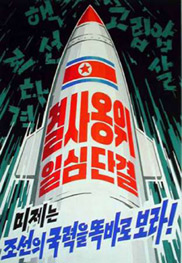
Actually yesterday in the afternoon the people of the DPRK should celebrate huge fireworks:
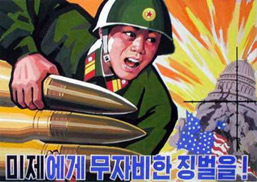
Pyongyang may fire missile on Sunday: reports
(Yonhap, 6.18)
The North Korean government has ordered its people to hoist the country's national flag and watch a state message on television at 2 p.m. on Sunday, a move possibly linked with Pyongyang's missile activities, a Japanese newspaper said.
Citing unnamed Japanese government sources, the Sankei Shimbun reported Sunday that the reclusive communist state's leadership gave the instructions amid a series of reports of its readiness to test-fire a long-range ballistic missile.
http://english.yna.co.kr/Engnews/20060618/410100000020060618092211E0.html
| 北, 오후2시 국기게양...대국민 메시지 청취 지시 |
| 외신들 대포동 2호 발사 관련 가능성 제기 |
민중의 소리
But oops.. - how boring - nothing was happen until now!
But better to be a little more seriously..
Just short time ago, the intl.(of course bourgeois) media - especially from Europe and the US - was warning that a possible N.K. long-range missle test will take place soon.
The S.K. media was writing that THEY have no evidence about this kind of plans by the DPRK, not at all.
Just a few days later, during 6.15 celebrations in Gwangju S.K. officials wanted to warn, according to S.K. media, the North to test a Daepodong missile(^^since when the DPRK is impressed by warnings from outside, especially from the South??).
And now since about at least two days the S.K. govt. is "very concerned" about a planned missle test..
But on the other side, at the same time the S.K. govt. is telling the natl. and intl. audience
that only supporting the N.K. economy and securing the stability there is bringing forward peace, reconciliation and(hopefully soon) unification on the peninsula(so Roh to a group of S. K. military leaders).
Hey, its very funny/interesting that both articles - about the "warning" during 6.15 celebration and yesterday’s speech by Roh to a audience of S.K. military leaders – are disappeared since a short while on the home page of K. Times...^^
Meanwhile the intl. media is a kind of alarmed about the latest developments on the missile test areal in the DPRK:
N. Korea Gets Reminder on Missile Freeze (AP, 6.18)
Japan warns N. Korea against missile test (IHT, AFP, 6.18)
Japan warns N Korea on missile test (Al Jazeera, 6.18)
In the so-called S.K. "left" daily Hangyeore you can read this stuff:
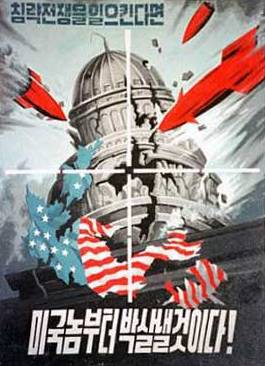
NEPAL - A NEW STEP FORWARD
TO PEOPLES DEMOCRACY
Now it seems to be official: the first time since long, long time, a non-reactionary peoples movement won its important success:
As I wrote y'day the first round of negotiations between the SPA and the CPN-M were successful! It's just a great(better said a first, perhaps just fragile) victory toward to a movement for another world, a world without exploiation and oppression!!
But don't forget that we(for example communists) can win everything, but if we are "stupid" enough(it means we will repead all the 'mistakes' from the past), we also can lose everything - and then forever. Our enemies are just waiting for our next 'mistakes'..
Now the international progessive movements are in the obligation to support the current and following developments in solidarity - even in critically solidarity! It means that we have the duty to shout out if we are thinking that something goes wrong there, if our comrades are beginning with the same('gentle' said) 'mistakes' what we did since - let's say - 1917.
OK, here the facts..
The Eight-point SPA-CPN(M) agreement(eKantipur)
The Eight-point agreement reached between the seven-party alliance and CPN-Maoist following summit talks between the two sides at the Prime Minister’s residence at Baluwatar on Friday (June 16, 2006) is as follows (Unofficial Translation)
1. Effectively and honestly implement the 12-point understanding reached between the SPA and Maoists in November last year and the 25-point Ceasefire Code of Conduct signed between the SPA government and CPN-Maoist on May 26 this year
2. Commitment to democratic norms and values including competitive multi-party system, civic liberties, fundamental rights, human rights, press freedom, and the concept of rule of law and Carry out each other’s activities in a peaceful manner
3. Request the United Nations to help in the monitoring and management of the armies and arms of both government and Maoist sides for a free and fair election to the Constituent Assembly
4.Guarantee the democratic rights achieved through the 1990 Popular Movement and the recent historic People’s Movement; draft an interim constitution based on the 12-point understanding and the ceasefire Code of Conduct; form an interim government accordingly; announce the dates for constituent assembly elections; dissolve the House of Representatives through consensus after making alternative arrangement; dissolve the People’s Governments of CPN-Maoist
5. Decide issues of national interests having long-term effects through consensus
6. Guarantee the fundamental right of the Nepali people to participate in the constituent assembly elections without any fear, influence, threat and violence. Invite international observation and monitoring during the elections as per the need
7. Bring about a forward-looking restructuring of the state so as to resolve the class-based, racial, regional and gender-based problems through constituent assembly elections. Transform the ceasefire between the Nepal Government and CPN-Maoist into permanent peace by focusing on democracy, peace, prosperity, forward-looking change and the country’s independence, sovereignty and pride, and express commitment to resolve the problem through talks
8. The government and Maoist talks teams have been directed to accomplish all tasks related to above-mentioned points without any delay
http://www.kantipuronline.com/kolnews.php?&nid=76803
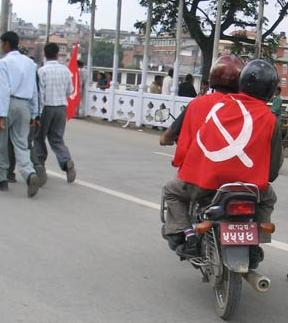
The Guardian wrote this yesterday:
After a decade of fighting, Nepal's Maoist rebels embrace government
· Coalition signals end of conflict that killed 13,000
· Secret negotiations lead to agreement on elections
The announcement, which appears to herald the end of a bloody internal war, came at a joint news conference in Kathmandu. "A new interim constitution will be prepared within three weeks and then the new interim government will be formed," the Maoist leader Pushpa Kamal Dahal, better known by his nom de guerre Prachanda, told reporters.
Please read the full article here:
http://www.guardian.co.uk/international/story/0,,1799696,00.html
Maoists to Join Nepal's Government: Rebel Leader's Decision Hailed as 'Breakthrough' for Peace
(Washington Post)
Maoists agree to join Nepalese government
(IHT/NYT)
Nepal power sharing deal hailed
BBC NEWS

최근 덧글 목록