공지사항
-
- '노란봉투'캠페인/국제연대..
- no chr.!
39개의 게시물을 찾았습니다.
LATEST NEWS
Just few minutes ago CNN/AP reported following:
N. Korea agrees to return to 6-party nuke talks
North Korea agreed Tuesday to rejoin six-nation nuclear disarmament talks in a surprise diplomatic breakthrough three weeks after the communist regime conducted its first known atomic test, the Chinese government said.
Chinese, U.S. and North Korean envoys to the negotiations held a day of unpublicized talks in Beijing during which North Korea agreed to return to the larger six-nation talks on its nuclear programs, the Chinese Foreign Ministry said.
"The three parties agreed to resume the six-party talks at the earliest convenient time," the Chinese statement said.
The agreement is one of the first signs of easing tensions since North Korea conducted the underground detonation on October 9, defying warnings from both the United States and Japan, and its staunchest ally, China.
If the six-party talks resume, it would mark a diplomatic victory for Beijing, which in the wake of the test had argued against punishing North Korea too harshly, in order to leave open a path for diplomacy.
"We hope it's true," White House press secretary Tony Snow told NBC's "Today" show. "It would be very good news."
South Korea welcomed the North Korean agreement.
"The government hopes that the six-party talks will resume at an early date as agreed and that an agreement will be reached on how to implement" a prior accord under which Pyongyang pledged to abandon its nuclear program, South Korean Foreign Ministry spokesman Choo Kyu-ho said.
Seoul also has been trying to strike a delicate balance in punishing the North for its nuclear test; seeking to avoid aggravating its volatile neighbor while imposing sanctions according to an unanimous U.N. Security Council resolution.
The U.N. resolution calls for a ban on the sale of major arms to Pyongyang and inspection of cargo entering and leaving the country. It also calls for the freezing of assets of businesses supplying North Korea's nuclear and ballistic weapons programs, as well as restrictions on sales of luxury goods and travel bans on North Korean officials.
The six-nation arms talks were last held in November 2005, where no progress was made on implementing the September 2005 agreement where the North pledged to abandon its nuclear program in exchange for security guarantees and aid.
Just after that agreement, the North had demanded a nuclear reactor for power -- a request that was quickly rejected by the other sides at the talks.
However, the North then argued that it wouldn't return to the negotiations until the U.S. desisted from a campaign to sever it from the international financial system for Pyongyang's alleged complicity in counterfeiting and money laundering to sell weapons of mass destruction. The North viewed those measures as proof of Washington's "hostile" policy against it and thinly veiled desire for regime change
The U.S. refused and said the issue was unrelated. To try and press its case, the North launched a series of missile in July -- including a long-range model believed capable of reaching parts of the U.S.
A U.N. committee has been determining how to implement the sanctions over the atomic test, measures banning the North's weapons trade.
Washington has been seeking to gather support for the sanctions, and getting the North's top two trading partners -- China and South Korea -- to pressure the regime.
North Korea is believed to have enough radioactive material to make about a half-dozen bombs, but estimates vary due to limited intelligence about its nuclear program.
The apparent North Korean agreement followed a day of typically bellicose rhetoric from Pyongyang.
North Korea claimed that the United States, "scared" by the North's nuclear test, conducted some 200 spy flights over the communist country during October.
"The ... aerial espionage underscores the need for the army and the people of the (North Korea) to bolster the war deterrent for self-defense in every way to foil the U.S. imperialists' moves for a war of aggression," the North's official Korean Central News Agency said.
North Korea also warned South Korea on Tuesday against participating in a U.S.-led international drive to stop and search ships carrying weapons of mass destruction, saying involvement would bring about unspecified "catastrophic consequences."
The warning released by Pyongyang's official news agency came as South Korea is considering whether to fully participate in the U.S.-led Proliferation Security Initiative aimed at interdicting shipments of weapons of mass destruction and other suspected cargo.
Seoul has been reluctant to take full part in the initiative out of concern it may anger North Korea and complicate efforts to resolve the international standoff.
Instead, it has sent observers to drills and attended briefings.
http://edition.cnn.com/2006/WORLD/asiapcf/10/31/nkorea.ap/index.html
中、朝、美六方會談團長在北京舉行非正式會晤 (中華人民共和國外交部)
Just let's wait and see what will
bring the near future!!(*)
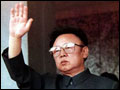
* Because, as you know, the "Dear Leader" likes to make strange surprises!!


IHT published yesterday following article:
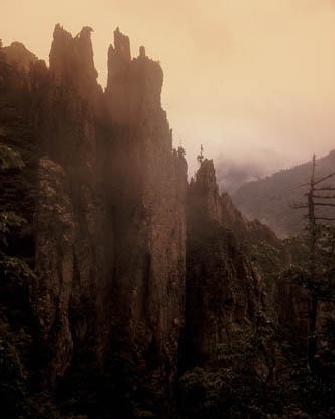
The lure of Korea's magic mountain
Visiting this fabled North Korean mountain was not an easy decision for Kim Chung Soo and his wife, Nam Sang Ja. Twenty-two people from their village in central South Korea had each paid 240,000 won a month in advance to book a day trip last week, but after North Korea conducted a nuclear test on Oct. 9, 14 of the tourists canceled.
"Our children said, 'Father, don't go there. It's dangerous,'" Kim, 66, said with a laugh. Around the couple, a chattering crowd of visitors marveled and digital cameras flashed at the mountain's famed Nine Dragons Waterfall, which an ancient poet described as "10,000 bushels of pearls cascading from the heavens."
"This is not a place you can come everyday," Kim said. "So my wife and I thought, Let's go. Why does a Korean have to be afraid of visiting a Korean mountain?"
Each week, despite tensions over North Korea's nuclear test and U.S. assertions that such tours are channeling precious cash to the communist regime, thousands of South Koreans travel to this tourist resort carved out of the foothills of Mount Kumgang, just beyond the east coast border of the two Koreas.
The 3,280-hectare, or 8,200-acre, zone is the only part of the North that South Koreans can visit freely. The trip is not only a sojourn into a mountain whose waterfalls and autumn foliage have inspired Korean poets and painters for centuries. It offers a peek into a country stuck in a bygone era, where red-and- white slogans everywhere exhort people to "Defend Great General Kim Jong Il, Lodestar of the 21st Century, with our lives," while his hungry people brace themselves for UN sanctions.
For Kim Jong Il, the mountain has proved as precious as its namesake - Kumgang means diamond in Korean - bringing $452 million in tourist fees since the tours began in 1998. His regime also received a lump sum of $450 million from Hyundai, the South Korean conglomerate, for the rights to Mount Kumgang tourism and other inter-Korean economic projects, as well as $400 million invested in hotels, piers and roads in the mountain resort.
Now with Washington determined to cut off all sources of financing for the North's weapons programs, the tour has become a focal point in a U.S.- South Korean dispute over how to change the North's behavior. In Seoul last week, Christopher Hill, the U.S. assistant secretary of state, said the tours were "designed to give money to the North Korean authorities."
Seoul, however, is keeping the tours going. Tourism - and the incentives it provides - is one of the few remaining tools of influence that South Korea maintains over the North. It also is a linchpin in South Korea's painstakingly built policy of encouraging the North to open up to the outside world - the so- called Sunshine Policy.
"We started our tours hoping that we could help build trust and ease tensions between the two Koreas and serve as a catalyst for reunification," said Chang Hwan Bin, senior vice president of Hyundai-Asian, an arm of the Hyundai conglomerate that runs the tour. "But this winter is going to become a very difficult time for us."
Since 1998, Hyundai has attracted 1.36 million visitors. It pays from $30 to $80 to the North for each tourist it brings. After years of losses, the tour business posted its first annual profit last year, at 14 billion won, or $15 million, thanks partly to South Korean government subsidies for students and teachers who take the tour during the winter vacation.
But after the North's launching of missiles in July and its nuclear test, thousands of people canceled their trips. Now the average number of tourists stands at 20,000 a month, half the figure the company had hoped for and barely enough to break even. Then came another blow last week: Under pressure at home and abroad to implement UN sanctions more vigorously, Seoul said it would probably end the subsidies.
There is a growing recognition in South Korea that the Sunshine Policy "has not worked and it's time to recalibrate that policy," said Peter Beck, an analyst with the International Crisis Group in Seoul. But South Korea also fears that terminating the Mount Kumgang project will drive the North deeper into isolation and raise tensions.
"At this rate of 20,000 tourists a month, we pay about $1 million a month to the North in tourist fees," Chang said. "But keeping the door open with the North is worth the money. It took us 50 years to come this far. If we shut the door now, it will be more difficult to open it again."
To get to Mount Kumgang, tourists travel on a Hyundai-built road across the no-man's land that has divided the two Koreas for six decades, and enter a zone sealed off from the rest of North Korea by steel fences and soldiers.
They check into Hyundai-run hotels, bask in a hot spring, watch a North Korean acrobatic show and shop at duty-free Hyundai stores packed with Western liquor and North Korean "Paradise" cigarettes and dried mushrooms.
In the hotel's karaoke bar served by communist women(*), southern capitalists belt out American pop songs and Western whiskey flows.
Improved lifestyles in this part of North Korea highlight how contact with capitalists has already reaped rewards - or at least how much the regime is trying to polish its image for visitors. Villagers' clothes were more colorful than before. Some houses were freshly painted.
A few years ago, when Northern villagers on the road saw a convoy of South Korean tourist buses, they would drop their bags and hide behind trees to avoid contact. Now they go about their lives hardly noticing the buses.
"It would be really regrettable if the South succumbs to U.S. pressure and ends the tour," said Park Myong Nam, a North Korean tourism official.
A highlight of the trip is a hike up the mountain's Nine Dragons Valley. The route is dotted with granite monuments celebrating each spot where Kim Jong Il's late father, President Kim Il Sung, stopped for a rest during his "historic" hike in 1947.
Communist minders - part tour guides, part propagandists - guard the monuments. They are eager to propagate the official line on why North Korea was pursuing a nuclear arsenal, and to gather information from this rare contact with free-speaking South Koreans.
On a visit last week, the minders asked what had resulted from Secretary of State Condoleezza Rice's trip to Asia last week to try to work out how to implement UN sanctions against the North. South Korean tourists gathered to watch them speak.
"We are not afraid of sanctions," said Kim Nam Sook, a minder in her 20s. "We have lived with them for decades and survived them. They are nothing new to us."
Up the valley, Kim Keum Chul, who wore a Mao-style "people's suit," told South Koreans "not to worry about the nuclear test but to thank the North for building a strong deterrent against war on the Korean Peninsula."
http://www.iht.com/articles/2006/10/30/news/mount.php
(*) since when the North Koreans have something to do with COMMUNISM???
First of all: yesterday I wrote about "division of labor in the process of SK's support for (the rulers in) the DPRK".
So, in my opinion, the cops should arrest them all - including the entire government, SK capitalists/the main supporters of the opposition GNP... - for supporting the enemy(harrharr)... And if it's not possible(^^) everyone who was/is accused/denounced or sentenced under the N"S"L should be released immediately!!!
국가보안법 박살내자!
Anyway, here you can read the latest developments in the so-called NK spy case:
Spy Suspects in Hunger Strike (K.Times)
Group may have revealed state secrets to N. Korea (K.Herald)
DLP challenges spy investigation
JoongAng Ilbo published following idiotic "editorial":
Spy case may destroy party
Amid the tensions caused by the recent North Korean nuclear test and the increasing concerns about national security, an incident in which people who participated in past student movements have now been involved in a possible case of espionage involving the North is truly shocking. According to authorities, former officials of the Democratic Labor Party are currently under investigation on possible charges of spying. In addition, a current senior official of the party is linked to the incident.
Since the former Kim Dae-jung administration, when our ideological armor started to crumble, the news that security authorities had caught a spy was really "news." There was always the belief that people linked to the North were trying to shake the South's foundations. Nevertheless, the security authorities just stood by, doing nothing. In the end, our concerns have become reality.
The current incident bears special meaning. Most of the people that are suspected of spying activities were involved in student movements during the mid-'80s. During the '80s and '90s college campuses were flooded with the North's Juche ideology, a virus that heavily infected college students. A student faction, a splinter organization of the so-called National Liberation group, that adhered to this particular ideology studied and worshipped the ideology, and argued for the withdrawal of U.S. forces.
That National Liberation group infiltrated various student organizations' leadership. Many of those who were educated by these student organizations and took part in student movements initiated by these organizations became players in key parts of the Roh administration. Security authorities have to find out what connections the suspects have with officials in political and power circles, and also who took part in the student movement in the '80s.
The recent incident has revealed that former and current officials of the Democratic Labor Party are involved in this case. This is an issue that could become a death sentence for the Democratic Labor Party. The party itself has staged protests in front of the National Intelligence Service arguing that the case is fabricated. Protesters also argued for the abolishment of the National Security Law. How can one argue that the incident was fabricated under an administration such as the current one?
No political party can exist outside national security. The Democratic Labor Party has to reflect upon itself, find the internal "red" part and apologize to the people.
http://joongangdaily.joins.com/200610/26/200610262153022379900090109011.html
Some independent voices about the "spy case" you can check out here:
(Kotaji)
N. Korean spy case starting to get real interesting
(The Marmot's Hole, incl. about 40 comments)
And finally please read following:
Use of National Security Law increases (Hankyoreh)
This we can call a real division of labor in the process of SK's support for (the rulers in) the DPRK:
While allegedly some individuals in SK are/were supporting the "intelligence" apparatus of the DPRK (read about the latest developments here: Two More Arrested on Espionage Charges / Court agrees to detain 5 as spy inquiry continues / DLP official held in spy probe), the ruling (capitalist) class in SK is supporting the ruling economically and militarily elite in NK - KWP/KPA - by "donating" huge amounts of cash (millions of US$ since 2000!!). Here you can read about one - of many other - example (if we can/want to believe this report):
N.K. Party ‘Takes 60 Percent of Kaesong Wages’ (Chosun Ilbo, 10.23)
More than half the salaries paid to North Koreans working at the inter-Korean Kaesong Industrial Park go to the North Korean Workers’ Party, a document written by a team in charge of inter-Korean economic cooperation at the Ministry of Commerce, Industry and Energy shows. The team reported to the unification minister.
Grand National Party lawmaker Kim Gi-hyeon made the document public on Sunday. According to the memo, US$30 out of the monthly pay of $57.50 goes to the Workers’ Party. With $17.50 spent on insurance and other costs, North Korean workers at the complex are left with only $10 a month.
The Unification Ministry has publicly claimed that workers get $66 on average, with 30 percent spent on benefit packages of workers, like housing and medial expenses, and 70 percent going to the workers. A Unification Ministry official on Sunday denied the report. “It is the first I’ve heard about $30 going to the party,” he said. “How could the Industry Ministry know about something that the Unification Ministry didn’t know? We have no idea.”
http://english.chosun.com/w21data/html/news/200610/200610230015.html
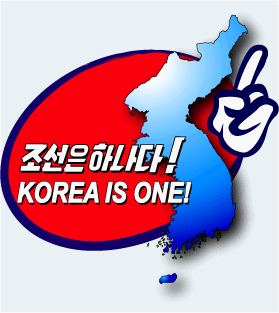
Well, it seems that KOREA IS already ONE! ..aeh I mean from the view of the S. Koreans (ahe, I mean some S. Koreans, hopefully not all!!??), while the North frequently/regularly is threatening the South with a "Sea of Blood", alternatively "Sea of Fire", and finally just a "Bowl of Ash" will remain...^^
^^
이주노동자문화제
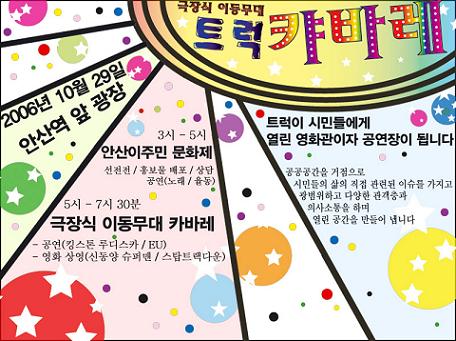
단속추방 중단, 노동비자 쟁취를 위한 21번째 안산이주노동자문화제
장소 - 안산역 앞
시간 - 오후 4시
안산이주노동자문화제집행위
조선민주주의인민공화국
NORTH KOREA
"PARADISE OF THE
WORKING CLASS"..
..or - perhaps - only for the rulers (in the KWP/KPA)?
Following article was published yesterday in the German (of course bourgeois) magazine Der Spiegel (www.spiegel.de):
KIM JONG IL GOES SHOPPING
Another Toy for the Gluttonous Dictator
North Korean dictator Kim Jong Il isn't just playing around with his country's latest products, atom bombs, anymore. He also has a penchant for high-quality German goods.
The order came as a big surprise to the sales staff at the all-terrain vehicle manufacturer Kässbohrer Geländefahrzeuge in Laupheim, Germany. In fact, they thought it was a joke at first. But the customer, who had mailed the request from an address in the Italian capital, was deadly serious. He wrote that he wanted to buy the Model 100, the smallest of Kässbohrer's PistenBully special-purpose vehicles, but with one modification: it had to come with a Mercedes Benz engine. The customer was an official at the North Korean embassy in Rome.
What on earth did communist dictator Kim Jong Il's poverty-stricken realm want with a German-made snow groomer? With whom exactly did the despot plan to go sledding?
The southern German company delivered the snow groomer in June 2003, and the customer promptly paid the purchase price of €98,000. Finally, a German shipping company transported the vehicle to a region of North Korea near the Chinese border, where snow is plentiful. Kässbohrer's mechanic arrived a few days later. The German company takes its service seriously.
In freezing temperatures, and under the watchful eyes of military guards, the German mechanic assembled the huge, caterpillar-like device and then taught the slope attendant how to drive the monster. "It was a hard trip for him," says one of the mechanic's coworkers.
Hardship is a relative term, especially when one considers that the North Korean people spend their lives staggering from one famine to the next. But while bad economic management routinely leads to humanitarian disasters, the diminutive dictator and his sybaritic entourage of obedient party officials have been living it up with imported Western luxury and entertainment goods for years, including the expensive equipment for their very own ski resort.
But in the wake of North Korea's underground test detonation of a nuclear bomb a few weeks ago, the country's unscrupulous leadership can expect to be running into a few obstacles if it hopes to continue enjoying its decadent lifestyle. A few days after the explosion, the United Nations Security Council imposed financial sanctions and an embargo on luxury goods.
The ban on luxury goods is intended to hit the dictator where it hurts, cutting off supply channels to feed Kim's seemingly boundless gluttony. As his personal chef revealed in a book about his experiences working for Kim, the dictator with the predilection for platform shoes and oversized sunglasses had no qualms about spending $15,000 on sea urchins.
A broad interpretation of the term "luxury goods" will not only affect Swiss luxury watchmakers, but also quite a few German companies. That's because Germany is one of North Korea's seven most important trading partners. In 2005 Germany exported goods worth about €51 million to the reclusive leader's realm -- not a huge sum for the Germans, but certainly a lot for North Korea.
A glance at foreign trade statistics shows that German exports to North Korea are no longer limited to mundane pumps, milling machines and electric motors. The list now includes everything from cases of beer, whisky, gin, vodka and Mosel white wine to strollers, handmade glasses, grand pianos and violins, even Christmas tree decorations, chandeliers and sculptures. Indeed, orders for well over €1 million are routinely posted under the categories of "oil paintings, water colors, pastel drawings" and "carousels, swing sets and shooting galleries."
Is all of this for Kim? Or is some of it intended for his entourage and foreign diplomats? Could the rest be going to Chinese who use their porous border with North Korea to circumvent their own high taxes on imports? Hardly anyone in Germany would venture to answer these sensitive questions. Even experts at the Hamburg-based German Asia-Pacific Business Association have refused to comment on the issue. In fact, the organization has yet to release its latest report on North Korea.
But Hans-Joachim Schnitger, a businessman from the northern German port city of Bremen, is more than happy to discuss his activities in Kim's Korea. His company, Helia, supplies goods to diplomats worldwide. This May, Helia began supplying merchandise to a recently opened Euroshop in Pyongyang, where affluent North Koreans use their hard currency to buy imported goods, including "their favorites, German products like cheese and processed meats," says Schnitger. Name brand cognacs are also available, starting at €30.
"We received an inquiry from the North Korean embassy in Berlin in December 2004," says Schnitger. Then the North Koreans even sent over an official to inspect the Bremen company's facilities. Schnitger has high hopes of expanding his business with the North Koreans. "They are very nice people," he says, praising his new trading partners. "Besides, they have a wonderful golf course and a very nice clubhouse in Pyongyang."
Like most German exporters, Schnitger uses Müller + Partner, a freight forwarding company based in the central German city of Fulda, to ship his products to the North Korean capital. The company's agent in Pyongyang is a former employee of North Korea's foreign trade ministry. Industry insiders say Müller's current contacts are the result of close relationships in the past between the North Koreans and the former East German foreign trade organization. When asked about historical ties, one of the company's directors claimed that he had "no knowledge of previous operations," nor was he willing to discuss the content of current shipments to Pyongyang.
Müller also shipped Kässbohrer's PistenBully. But the North Korean government opted to go with an Austrian lift manufacturer, Doppelmayr, when it came time to order the equipment for the ski resort's chair lifts.
According to Ekkehard Assmann, Doppelmayr's director of marketing, "the military was there and helped out in the construction work." That's the nice thing about dictatorships: there are always plenty of willing workers.
PS:
According to the Swiss Watch Industry Association the DPRK imported between 1995 and 2004 for US$ 24,000,000 (luxury) watches from Switzerland.^^
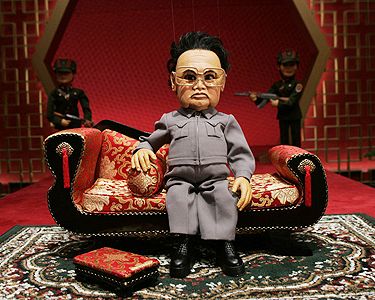
S. KOREA MUST ABOLISH
NATIONAL"SECUTITY"LAW!! (*)
Following was reported in the latest editions of SK newspapers:
Politicians held for contacting North's agent (JoongAng Ilbo)
Democratic Labor Party deputy among 5 persons now in custody
Seoul prosecutors and the National Intelligence Service said yesterday they had arrested a senior official of the Democratic Labor Party on charges of contacting a North Korean agent during a visit to China.
His arrest and that of one other suspect were a significant enlargement of an investigation into 1980s-era student activists. So far, at least five people, including incumbent and former officials of the left-wing political party, are in the prosecution's sights.
Sources at the prosecution said the five could eventually be charged with espionage, but it appears that the authorities do not yet have sufficient evidence to accuse them formally of that crime. For the present, those in custody have been charged with unauthorized contacts with a North Korean.
Investigators from the Seoul Central District Public Prosecutors Office and the intelligence agency raided the home of Lee Jeong-hun, a former central committee member of the Democratic Labor Party, on Tuesday and detained him for alleged violations of the National Security Law. Yesterday, the prosecution said it had applied for warrants to extend his detention and to keep two other activists arrested at the same time, Jang Min-ho and Sohn Jong-mok, in custody. Prosecutors said all three visited China in March for meetings with a North Korean agent. Mr. Sohn and Mr. Jang also allegedly traveled to North Korea via China without South Korean government authorization.
Yesterday, the investigation widened with the arrest of Choi Gi-yeong, deputy secretary general of the Democratic Labor Party, and another activist. They were also charged with contacting a North Korean agent in China.
"We obtained the arrest warrants early in the morning and took Mr. Choi into custody at his home," Ahn Chang-ho, a prosecutor in charge of the case, said yesterday. "The National Intelligence Service is currently questioning Mr. Choi."
The pair allegedly accompanied Mr. Lee when he contacted the North Korean spy, the prosecution said, adding that the investigation would focus on the possibility that they had received instructions from the agent and engaged in "anti-government activities" after returning to this country. Such activities would also support an espionage charge.
Mr. Jang, a 44-year-old game developer and former student activist, was accused of working under the North's orders for more than a decade. After dropping out of Sung Kyun Kwan University in Seoul during his sophomore year, prosecutors said, he went to the United States and was a pro-North Korean activist there. Officials added that he is believed to have visited North Korea three times since the mid-1980s.
During the raid at Mr. Jang's home, investigators reportedly seized documents with instructions on how to contact and report to a North Korean agent. The prosecution said Mr. Jang admitted to some of the charges and waived his right to a court hearing on a detention warrant.
The Seoul Central District Court heard the cases for warrants yesterday against Mr. Lee and Mr. Sohn. Mr. Lee contended he was in China on business and had received no instructions from North Korean agents. "This is a Roh administration conspiracy to suppress civic movements and to create instability," he complained.
Mr. Lee, a history graduate of Korea University, was a well-known student activist. He was arrested in 1985 for leading the occupation of American Cultural Center in central Seoul. He was also convicted in 2000 of trying to enter North Korea by sea.
The Democratic Labor Party complained in a statement yesterday that the arrests were "clear political oppression" of the party. It demanded the release of all those arrested, accused the spy agency of fabricating evidence in a conspiracy to maintain its influence and demanded the repeal of the National Security Law.
http://joongangdaily.joins.com/200610/26/200610262221584239900090209021.html
About the same case the "left"-liberal daily Hankyoreh wrote following article:
3 arrested for allegedly meeting N.K. agent in China
Korea Herald published this:
Probe of pro-N.K. activists widens
In K. Times it's the "top" story:
Spy Scandal Shakes Labor Party
Dong-A Ilbo:
Activists Arrested for North Contacts
And last but not least the extreme conservative Chosun Ilbo:
Prominent 386ers Help for Espionage
* ..but unfortunately, even likely the majority(??) of the S. Koreans is against N"S"L, there is - (just) in my opinion - no real mass movement to struggle against N"S"L.
PS:
Already 4 years ago I finished one of my articles about N"S"L (on Base21, the former English section of Jinbonet) like that: "Last weekend around 450 people protested against the NSL. This in a city with over 10 million inhabitants, in a country with nearly 50 million citizens. If this is the beginning of a movement it could be good. But if this is the whole movement, in 50 years we'll still have the lovely NSL."("The struggle against the National Security Law needs a peoples' movement").

While K. Times reported today that..
.. Seoul to Draw Up Sanctions on North ..
..the DPRK(leadership) promised a funny future:
DPRK tell SK sanctions could mean war (CNN/Reuters)
North Korea warned South Korea on Wednesday against joining U.S.-led sanctions against Pyongyang and said it would take action after any such move by Seoul.
South Korea's participation in sanctions would be seen as a serious provocation leading to a "crisis of war" on the Korean peninsula, a North Korean spokesman for the Committee for the Peaceful Reunification of the Fatherland said in a statement carried by the official KCNA news agency..
http://edition.cnn.com/2006/WORLD/asiapcf/10/25/korea.threat.reut/index.html
But actually it's no problem, because..
Seoul develops 1,000-km cruise missile (K. Herald, 10.25)

That's really great! Because, if the DPRK is attacking SK, then SK - as retaliation - can attack China, Japan or Vladivostok(^^). Well, just move on!!
Adolf - I'm sitting in my Bunker
Adolf Hitler's last hours in the Fuehrerbunker.
"Adolf, du alte Nazi-sau, kapitulier doch endlich! Du Sau!"
Here you can watch the stuff in original German:
http://www.youtube.com/watch?v=PfiI4nAdnXU
The French(^^) version you can watch here:
http://www.youtube.com/watch?v=YOq-Fm5Qs9c&search=Walter%20Moers%20Adolf
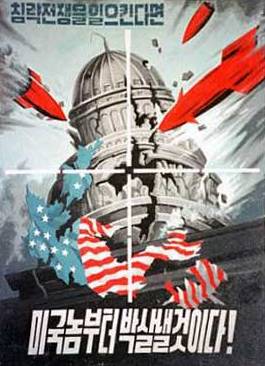
Now, likely, it's clear..
No North Korean apology, China says (IHT, 10.24)
Kim Jong Il of North Korea did not apologize for his regime's nuclear test, the Chinese Foreign Ministry said Tuesday, and added that there was no guarantee the reclusive state would not detonate another weapon.
South Korean media reported last week that Kim had expressed regret for the Oct. 9 test during a visit last week by Tang Jiaxuan, a Chinese special envoy who was carrying a message from President Hu Jintao.
But a ministry spokesman, Liu Jianchao, said at a news briefing Tuesday: "These reports are certainly not accurate. We haven't heard any information that Kim Jong Il apologized for the test." He also said the North Koreans told Tang's delegation that "it did not have a plan to carry out a second test."
But Liu added that Tang had reported the North had signaled that, "if it faces pressure," it reserved the "right to take further actions." Liu did not say whether Kim or other North Korean officials had made that comment.
Also Tuesday, Ban Ki Moon, the South Korean foreign minister who will take over as secretary general of the United Nations in January, said Seoul fully backed the sanctions that have been agreed upon by the Security Council.
South Korea has not specified what it plans to do to be in accord with the resolution, which calls on the world to prevent Pyongyang from continuing its weapons trade. Washington has urged Seoul to join an anti-proliferation initiative and to take steps to make its projects with the North more transparent.
Ban said Seoul was still reviewing its policies "to bring them closer in line" with the UN resolution. He was scheduled to go to Beijing on Friday for meetings with Hu, Tang and Foreign Minister Li Zhaoxing.
While the North has continued to rail against the United States, a South Korean lawmaker said Tuesday that the regime was amenable to returning to international nuclear talks if Washington showed a willingness to resolve a dispute over the North's alleged counterfeiting and money laundering.
Washington is trying to cut off the North's access to international banking as punishment for alleged counterfeiting of U.S. dollars and other illegal activity. Pyongyang has denied the charges and boycotted six-nation talks on its nuclear program until the crackdown is ended.
Representative Choi Sung of South Korea's governing Uri Party said he met with a "key North Korean official" in Beijing on Sunday. He declined to identify him. After the meeting, Choi suggested that the United States present the North with evidence of its alleged financial activities so it can punish those responsible. He said the North Korean official had said his country could then return to the talks "even if the issue is not completely resolved."...
http://www.iht.com/articles/2006/10/24/news/nuke.php
The Guardian (UK) wrote following:
China: N Korea did not apologise
Kim Jong-il has reserved the right to escalate the nuclear crisis, China said today, refuting earlier reports that the North Korean leader apologised for this month’s atomic weapons test..

최근 덧글 목록