공지사항
-
- '노란봉투'캠페인/국제연대..
- no chr.!
39개의 게시물을 찾았습니다.
FOWARD TO A NEW ROUND OF ESCALATION!!
While KNCA/KCTV yesterday - the first time for the audience in the DPRK(and of course all over the world) - denounced officially the UNSC sanctions as a DECLARATION OF WAR AGAINST THE DPRK, the US administration said today that any new nuclear test by NK would be a belligerent act, so the German daily Der Tagesspiegel.
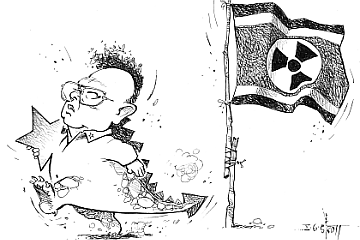
Harrharr, how "funny"..(today's German daily Berliner Zeitung)
Here a short summary of the latest news/reports by int'l agencies:
KCNA: "UN sanctions tantamount to declaration of war"
Responding to adoption of international measures against it, the DPRK says will 'mercilessly strike' if its sovereignty is violated. 'We resolutely condemn and totally reject the UN Security Council resolution,' Foreign Ministry says in statement
The UN sanctions against NK for its nuclear test are a "declaration of war", and NK will "deal merciless blows" if the nation's sovereignty is violated, the North's central government said Tuesday in its first response to the UN measures.
DPRK's Foreign Ministry said in a statement carried by the official Korean Central News Agency and aired in the Korean Central TV(KCTV) that the country wants "peace but is not afraid of war."
The North "vehemently denounces the resolution, a product of the US hostile policy toward (NK) and totally refutes it," the statement said.
"The resolution cannot be construed otherwise than a declaration of a war" against the North, it said.
The country warned that if anyone used the UN resolution to infringe on the country's sovereignty, "It will deal merciless blows at him through strong actions."
The U.N. Sanctions, passed Saturday, bans the sale of major arms to the North and orders the inspection of cargo to and from the country. It also calls for the freezing of assets of business supplying the North's nuclear and ballistic weapons programs.
The DPRK "will closely follow the future US Attitude and take corresponding measures," the statement said, without specifying what those measures would be.
Second nuclear test?
On Monday, US television networks reported that US spy satellites have detected suspicious vehicle and people activity near the site of North Korea's nuclear test that may signal preparations for another test.
US officials said they could not be certain of what the North Koreans were doing in the area, but the activity there could be preparations for a second nuclear blast, NBC and ABC said.
In Seoul, a South Korean government official told Reuters on Tuesday: "The government is aware of signs related to North Korea's possible second nuclear test. We cannot exclude the possibility of a second test."
"The United States would not be surprised if North Korea attempts a second nuclear test in order to be provocative," the US administration said today.
White House spokesman T. Snow would not discuss US Intelligence but said, “Well, let me put it this way. The North Koreans have made no secret of their desire to be provocative. The first test, while nuclear, did have a low yield and perhaps it would not be unreasonable to expect that the North Koreans would like to try to something again.”, Reuters reported today.
US nuclear envoy Ch. Hill said on today that any more nuclear tests by North Korea would be considered a belligerent act.
"We would all regard a second test as a belligerent answer on North Korea 's part to the international community," he told reporters after talks in the South Korean capital with his Russian and South Korean counterparts.
Another strange/significant development: "..on Monday, Chinese soldiers were seen continuing their work to build a barbed wire and concrete fence along parts of its border with North Korea. China has been constructing wire fences 2.5-4 meters tall amid speculation that China is taking measures to prepare for a possible influx of refugees should the North Korean regime collapse.", Asia Times(China/HK) reported today.
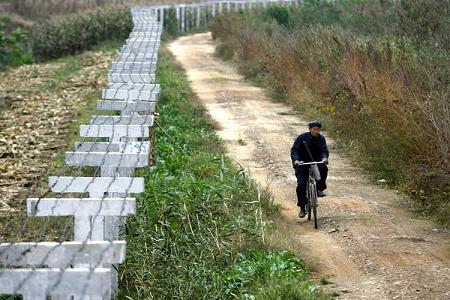
BTW: it would be the first time ever(after about 2,500 years common history) that between China and Korea(resp. the historic Korean states) a real border line is/was created!!
Here's the full text of KCNA's "news" about NK's foreign ministry's remarks on the UNSC resolution:
DPRK Foreign Ministry Spokesman Totally Refutes UNSC "Resolution"
More about the latest developments you can read here:
N Korea 'may do new nuclear test' (The Guardian, UK)
N. Korea may have plans for 2nd test (IHT)
Along border, China’s cash transfers to N.K. suspended (Hankyoreh, SK)
China pulls its punches on North Korea (Asia Times)
"N.Korea wants 2nd nuke test" (CNN): Ha, perhaps after tomorrow C. Rice and the Japanese FM will visit SK.. This would be a "real good" date for NK to conduct the next nuclear test!!!
Already yesterday the German (bourgeois) magazine Der Spiegel published following article:
The New North Korea
Absurdistan with the Bomb
What does North Korea's leader Kim Jong Il want? By testing a nuclear weapon, the enigmatic dictator has angered his closest ally China and shifted the Asian balance of power. But the country may just be lashing out in paranoia.
North Korean propaganda may refer to the communist state as a worker's paradise, but conditions this winter are unlikely to be particularly heavenly for people living there. The temperature in a lot of apartments will barely get past 10 degrees Celsius (50 degrees Fahrenheit), some houses don't even have glass in the windows and few have central heating. In the coal-rich north of the country meanwhile, emaciated children with blackened, aged faces dig mine shafts with their bare hands and old women drag themselves into the mountains in a desperate search for anything edible. Some are so weak that they sit apathetically on the side of the road, next to bundles of twigs, leaves and roots. The state system for distributing meat, rice and vegetables collapsed long ago.
The 600 kilometer train journey from the northern border to the North Korean capital of Pyongyang often takes 60 hours. There are neither enough train engines nor enough fuel. Railway workers in the respective provinces often end up "borrowing" the trains for their own transport needs. And it's not a good idea to fall sick in this strange empire, which is officially still ruled by a dead president -- the "Eternal President," Kim Il Sung, who died in 1994. Because of the lack of medication, doctors are increasingly forced to operate on patients without anesthetic -- or to not operate at all. Broken bones are rarely put in casts.
But despite this misery, this drained and poverty-stricken country managed to pull off the extraordinary last week: On Monday morning the beloved "Dear Leader" Kim Jong Il apparently set off an atomic bomb in a tunnel in the province of North Hamgyong -- just a few hundred kilometers from China, Russia and South Korea. According to North Korea's propaganda machine, this was an achievement only made possible thanks to homegrown wisdom and technology. The claim, though, is not entirely true: North Korean scientists were trained in the former Soviet Union, Russians built the reactor in Yongbyon, and it is thought that the centrifuges necessary to enrich the uranium used in the explosion come from Pakistan.
Size matters
It appears to have been a relatively small explosion with a yield of less than a kiloton -- the atom bomb in Hiroshima in the summer of 1945 measured 15 kilotons. Now, scientists the world over have to carefully evaluate their seismic data to determine exactly what sort of explosion took place -- and whether it was originally meant to be much larger.
Just how far North Korea's nuclear weapons program has really come -- and just what is going on in the secret atomic base of Yongbyon, located some 100 kilometers from Pyongyang -- remains an open question. Neither the CIA nor the secret services from Russia and China seem to know. And the Vienna-based International Atomic Energy Agency has had no access to the facility since 2003, when North Korea stepped out of the Nuclear Non-Proliferation Treaty.
One of the last experts to have seen Yongbyon in operation described to SPIEGEL what the situation was like at the end of 2002: "It's a massive site, with lots of very competent scientists -- on the one hand. But then there was a strange contradiction: We asked to see two buildings which we had not been allowed to inspect. After a great deal of hesitation the doors were opened. The scientists were using one hall to secretly distill Vodka. In the other they were producing cooking spoons out of aluminum. At the time, these things weren't available in North Korea. On the black market the goods could be sold, and provided an extra source of income for the scientists."
North Korea must be the only nuclear power in the world which is so poor that its top scientists are forced to spend their free time making kitchen utensils. It is not Kim Jong Il's megalomania nor his obsession with sovereignty which makes this regime so dangerous. Rather, it's the country's failures and weaknesses.
Iran is also on the way to joining the club of nuclear nations. President Mahmoud Ahmadinejad claims -- a benign smile on his lips -- that his country is only interested in the civil use of nuclear energy. North Korea and its dictator are different. Kim Jong Il is determined to build the bomb, and doesn't shy away from threatening the US along the way. America already has sanctions in place against North Korea and is now looking to up the pressure with a UN resolution -- in order, or so Kim suspects, to bring about the regime's collapse.
But the nuclear weapons test is also an affront to China, which acts as North Korea's protector and has helped the country survive so far. Which is why Beijing's reaction at the moment is hardly any different to that of America. With North Korea dangerously lashing out, China is hardly in the mood to guarantee the country's safety.
The fall of the Soviet empire appears to have had no impact on this part of Asia. Since 1953, when the country was divided between north and south, the region has stood absolutely still politically. 1953 was also the turning point when Taiwan and South Korea were brought permanently into the American sphere of influence, and China became Asia's first atomic power.
New arms race
But October 9 could well change a few things, and Kim's bomb has the potential to shake up international relations in the region. South Korea and Japan could now start feeling the urge to develop nuclear weapons. The economic superpower China, which sees itself as the supervising force of the world's largest continent, is now surrounded by four nuclear states: India, Pakistan, Russia and North Korea. And what about Taiwan? The lesson of the Iraq war is that atomic weapons are a deterrent and a guarantee of national sovereignty. But will communist China, which calls for Taiwan to be reunited with the mainland, allow that?
America is the anti-communist force to be reckoned with in Asia. About six months ago, the US signed an agreement with the nuclear power India, and has also entered into a shaky alliance with Pakistan. But in recent years, the US has been looking on helplessly at Kim's theatrics. Just like with Iran's Ahmadinejad, the only reason he is able to get away with such a performance is because America is weakened by the fiasco in Iraq.
The result is that what amounts to an autistic regime possesses a weapon that can wipe out whole cities and millions of people. Kim is an enigmatic leader in platform shoes with a weakness for Hollywood. The world has no idea whether he is acting rationally or if he is simply mad -- especially when he says things like "if we lose, I'll destroy the world."
The bomb has allowed Kim to get the attention he thinks he deserves. In Tokyo, newspapers published special supplements focusing on the situation and television stations interrupted their normal schedules with regular news updates. Some channels showed pictures of Hiroshima and Nagasaki to remind people of the tragedy of August 1945. Other programs interviewed the elderly parents of Megumi Yokata, who was abducted at the age of 13 and taken to North Korea -- a case symbolic for the inhumane system which Kim Jong Il inherited from his father.
In Seoul meanwhile, just half an hour's car drive from the 38th parallel demarcation line between North and South Korea, angry protests erupted onto the streets. A Cold War atmosphere hung over the city, with enraged passers-by burning North Korean flags. The nation-wide joy at the nomination of South Korean Foreign Minister Ban Ki-moon as the new general secretary of the United Nations soon vanished. South Korea's so-called sunshine policy towards North Korea, where the per capita income is 20 times below that of the capitalist state, was originally conceived to slowly prepare the way for reunification. For now, this policy is consigned to the trash can.
As for China, as long as North Korea only thumbed its nose at America, Beijing could afford to ignore it. But now Kim is also starting to lead China up the garden path, and that doesn't sit well with Beijing. China's foreign ministry described the test as "disgraceful." The media reported extensively about how angry China's leaders were, and in various chat forums people were actually allowed to criticize North Korea, a practice usually regarded by the Chinese government as sacrilegious. "No wonder North Korea is bankrupt," wrote one author, Ye Yonglie, in his blog. "Atomic bombs are expensive."
North Korea "can either have a future or it can have these weapons," said Christopher Hill, the American negotiator at the recent six party talks which convened to discuss North Korea's atomic ambitions. But unlike the case of Iran, there is no talk as yet of military intervention. In Washington recently -- especially with the congressional elections a mere three weeks away -- there has been a feeling of "confrontation fatigue." The Pentagon has even withdrawn 30,000 US soldiers from South Korea and sent them to Iraq.
"The United States of America doesn't have any intention to attack North Korea or to invade North Korea," said US Secretary of State Condoleezza Rice bluntly last week. The White House let it be known that simply possessing the bomb will not necessarily be regarded as a serious threat -- but passing it on to terrorists will. It looks as though President George W. Bush is using the issue to steer policy towards a new doctrine. If North Korea, Iran or another country smuggles the bomb, or parts of it, to al-Qaida, there will be a price to pay. But only then.
Last week, the UN Security Council began discussing sanctions against North Korea. The 13 wide-ranging measures included travel restrictions for high-ranking Pyongyang officials, an embargo on luxury goods (which would only affect the nomenclature: at the beginning of the 1990s Kim Jong II was thought to be Hennessy Cognac's most important private customer), and above all restrictions for ships and airplanes carrying technology into South Korea.
But how can this surreal regime actually be punished any more? The measure which has hit Kim hardest so far was North Korea's exclusion from the international foreign currency markets -- a sanction levied by the US treasury on Sept. 23, 2005. That was four days after a joint declaration, in which America and North Korea agreed that as soon as Kim gives up his nuclear program, both sides would "guarantee sovereignty and normalize relations." Kim, who tends towards paranoia anyway, saw this series of events as definitive proof that the US were simply pushing for regime change in North Korea. Washington on the other hand claimed the timing was pure coincidence.
No collapse but definite deterioration
But the "KFR," or the "Kim Family Regime" as American officers in South Korea call the North, is now suffering from a severe dollar shortage. Millions are lost through drug trafficking, counterfeiting and money laundering. According to South Korean and Chinese experts, who have the best insight into the shadowy empire, North Korea may not on the brink of collapse, but there are increasing signs of deterioration. Kim depends on a small elite which can either prop him up or bring about his downfall. In North Korea this elite is mainly made up of the generals who enjoy the preferential treatment they in the form of luxury goods such as cars and DVD players -- paid for in hard currency.
With 1.1 million soldiers, statistically the country has the fourth largest army in the world. That sounds impressive, but it isn't. The army's equipment is pathetic and their conventional weapons outdated. Because fuel is in such short supply, fighter pilots are only allowed to fly for two hours a month. Food rations are so meager that whole units live off cabbage and other vegetables. The troops are grumbling but given Kim's ingenious spy system, revolt is hardly an option.
In fact there is not much of a state this regime is capable of building up. Dictator Kim has just one dream left: being unassailable and self-assertive thanks to the atomic bomb. "Totalitarian regimes close to demise are apt to get panicky and do rash things. The weaker North Korea gets, the more dangerous it becomes," writes Korea expert Robert Kaplan in the American magazine Atlantic Monthly.
The last emperor?
So what will happen if the Kim Family Regime collapses? According to American experts, North Korea's potential for anarchy is every bit as great as that of Iraq -- and the danger of weapons of mass destruction turning up in North Korea is much larger. Apart from the bomb, Pyongyang also has a terrifying arsenal of chemical and biological weapons.
Kim has what Saddam didn't have.
China and South Korea are the least interested in the collapse of North Korea. Should that happen, a large chunk of the 23 million people living in North Korea would head south, and another group would take the northern route over the rivers Tumen and Yalu into China. There is a good chance that North Korea would soon be empty.
But for the US, which has 30,000 soldiers stationed on the 38th parallel, the situation would be a nightmare. "The regime in Pyongyang could collapse without necessarily its army corps and brigades collapsing," Colonel David Maxwell, chief of staff of US Special Operations in South Korea, told the Atlantic Monthly. "So we might have to mount a relief operation at the same time that we'd be conducting combat ops. If there is anybody in the UN who thinks it will just be a matter of feeding people, they're smoking dope."
Indeed, since the nuclear test, America is being forced to rely on Chinese goodwill more than ever -- and on China's ability to prevent anarchy in North Korea. According to secret service reports, China has thousands of defectors from North Korea on standby, ready to quickly infiltrate the country if necessary. The aim? To set up a Beijing-friendly regime. China is also interested in taking over the economically important area around the Tumen River, the region where most of North Korea's natural resources can be found -- such as graphite and brown coal -- as well as a number of harbors.
For years now the Chinese leadership has been setting an economic example for Kim. It is no coincidence that, during one of his secret state visits to China, Kim visited the stock market in Shanghai, the computer firm Lenovo and the southern special economic zone of Shenzhen. Kim gave in, slightly. He has allowed a private market to open in Pyongyang, although it is only open two hours a day. More than ever, China has to support Kim's regime with rice, fertilizer, oil and diesel. South Korea regularly exports food and cement. But when famine or natural catastrophe strikes, the West steps in.
Just how this Absurdistan runs internally is hidden from the outside world. All we know about Kim is that he is passionate about films. His adoration for Elizabeth Taylor is notorious and he apparently can't get enough of James Bond. It is said that there is a documentary about "the Last Days of the Ceauºescus" which he watches repeatedly. Nobody knows, though, what Dear Leader is still capable of.
The starving and freezing North Koreans are light-years away from Kim's world. They are fighting for sheer survival. Their neediness has forced them to develop other talents: Pensioners breed pigs and chickens on their balconies, farmers trade rice, cabbage and eggs on the small street markets, people set up soup kitchens in the their flats. The cause of this misery, according to Kim's propaganda machine, is not Kim himself, his regime or the planned economy. It is the fault of the Americans, he says, who want nothing more than to wipe this hard-working and peace-loving people from the face of the earth.


A really "new" idea:
WAR
Korea Times wrote today following:
US Reviews War Plan on N. Korea
The United States is mapping out a new theater war plan on the Korean Peninsula aimed at striking weapons of mass destruction in North Korea, reports said yesterday, citing an unidentified defense expert in Canada.
The U.S. move comes after North Korea’s proclaimed nuclear bomb test on Oct. 9.
According to the report, the United States is revising OPLAN 5027-3, the joint contingency plan with South Korea formulated in 2003, to neutralize Pyongyang’s nuclear capability with overwhelming support from the U.S. Air Force.
South Korea’s Joint Chiefs of Staff (JCS) declined to comment on the report.
Under the envisaged plan, U.S. combat aircraft and bombers, such as F-117A Stealth Bombers and F-15E fighters, are to conduct a ``surgical strike’’ on major weapons of mass destruction (WMD) facilities and training sites in the North instead of ground forces advancing into the North, the report said.
OPLAN 5027, drawn up by the ROK-U.S. Combined Forces Command (CFC), aims to deter North Korean forces armed with conventional weapons, but lacks specific action plans to cope with a nuclear war.
Washington is committed to dispatching some 690,000 troops with 1,600 aircraft and 160 ships to the peninsula within 90 days after a war breaks out, according to the plan.
Since Pyongyang’s nuclear test, the South Korean military has also stepped up preparations for a possible nuclear war on the peninsula.
Sources at the JCS said last week that Seoul is reviewing plans to revise the OPLAN 5027 to address North Korea’s missile and nuclear threats.
The JCS has submitted two reports to Defense Minister Yoon Kwang-ung since Oct. 3 when Pyongyang announced its plan to conduct a nuclear test, they said.
http://times.hankooki.com/lpage/nation/200610/kt2006101618301111990.htm
To learn more about OPLAN 5027-3, please check out this:
http://www.globalsecurity.org/military/ops/oplan-5027-3.htm
Wow, there are also other "great" ideas to solve the problems on the K. Peninsula:
Seoul Can Build A-Bombs Within 1 Year
*****
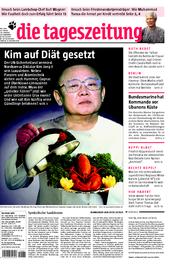
Today's frontpage of the
German daily TAZ
Here some of the latest news and reports about the issue:
Top Japanese police official warns possible terror attacks by N. Korea
Japan must watch out for possible terror attacks and sabotage by North Korea in reponse to Tokyo's sanctions against the communist state over its claimed nuclear test, a top Japanese policemen said Monday.
"There are concerns that North Korea may launch a large scale terrorist attacks or sly and heinous activities in retaliation to (Japan's) additional sanctions," Deputy Director General Hiroto Yoshimura of the National Police Agency said. (AP)
North Korea return to 6-way talks won’t end sanctions
US Ambassador to Japan Thomas Schieffer said on Monday a return by North Korea to stalled six-party talks on its nuclear program would not be sufficient to end United Nations sanctions.
“A return to six-party talks kind of doesn’t do it,” Schieffer said. “You have to come to the six-party talks and agree on how you are going to implement the September 19 agreement. (Reuters)
Please check out also the latest reports/articles on Asia Times (It's business as usual across the Yalu, Pyongyang and the 'p' word)
Beijing takes steps to shore up its border with North Korea (IHT/NYT)
China inspects N.K. cargo (K. Herald)
After the vote, U.S. works on enforcement (JoongAng Ilbo)
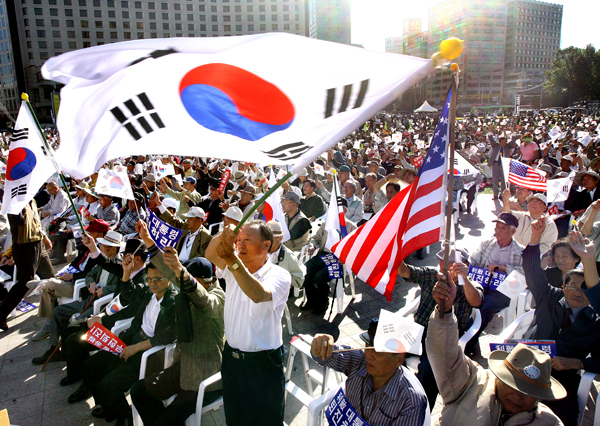
One of the "most important" results of NK's nuclear test: In SK many of the old reactionary rats try now to come out from their dirty holes:
A group of 17 former South Korean defense ministers and war veterans last week issued a statement calling on the government to ask the U.S. military to re-deploy tactical nuclear weapons.., SK media reported.
THANKS TO THE "DEAR LEADER"!

PS
The latest news after the yesterday's UNSC resolution on the DPRK:
U.S. Vows to Keep Pressure on N. Korea (AP)
North Korea must abandon its nuclear weapons program or face even more pressure from the Bush administration, U.S. ambassador to the United Nations said Sunday.
If North Korea continues along the path of building a nuclear arsenal, the United States will ``ratchet up the pressure, make it clear that their international isolation is only going to increase and we're going to make it, to the extent we can, impossible for them to continue the program,'' John Bolton said.
While administration officials have said the U.S. has no intention of invading or attacking North Korea, Bolton reaffirmed that Bush ``never takes the military option off the table. But he has said more times than we can count, he wants a peaceful and diplomatic solution.''
Bush is sending Secretary of State Condoleezza Rice to Asia this week on a diplomatic mission to consult with allies in the region.
Bolton said the U.S. will do everything possible to ensure that North Korea is unable to procure the ``materials and technology and equipment they need to continue these programs.''
The United Nations on Saturday passed a U.S.-sponsored resolution demanding that North Korea abandon its nuclear weapons program and ordering all countries to prevent the communist nation from importing or exporting any material for weapons of mass destruction or ballistic missiles.
The resolution calls on all countries to inspect cargo leaving and arriving in North Korea to prevent any illegal trafficking in unconventional weapons or ballistic missiles. But China, the North's closest ally and largest trading partner, said it would not carry out any searches.
``There's not much more multilateral or bilateral diplomacy we can imagine here and we're putting pressure on North Korea. The real question is what North Korea is going to do,'' Bolton said on NBC's ``Meet the Press.''
http://www.guardian.co.uk/worldlatest/story/0,,-6148880,00.html
Enforcing N. Korea Sanctions May Be Tough
The U.N. Security Council unanimously approved tough sanctions against North Korea for its claimed nuclear test, but divisions over how to enforce them signaled that implemenation may not be easy.
One of the biggest differences was over a call on countries to inspect cargo leaving and arriving in North Korea to prevent any illegal trafficking in unconventional weapons or ballistic missiles.
The final resolution was softened from language authorizing searches, but was still unacceptable to China - the North's closest ally and largest trading partner - which said it would not carry out any searches.
Japan and Australia promised Sunday to immediately enforce the sanctions and said they were considering imposing harsher penalties of their own. South Korea also pledged to implement the measures but gave no details on how it would do so.
The Security Council already had to overcome sharp divisions to approve the sanctions Saturday.
The U.S-sponsored resolution demands North Korea eliminate all its nuclear weapons but expressly rules out military action against the country, a demand by the Russians and Chinese.
The resolution orders all countries to prevent North Korea from importing or exporting any material for weapons of mass destruction or ballistic missiles. It orders nations to freeze assets of people or businesses connected to these programs, and ban the individuals from traveling.
North Korea immediately rejected the resolution, and its U.N. ambassador walked out of the council chamber after accusing its members of a ``gangster-like'' action which neglects the nuclear threat posed by the United States.
Australian Foreign Minister Alexander Downer welcomed the U.N. resolution Sunday as ``surprisingly tough'' and said his country was considering stronger measures of its own.
Japanese Prime Minister Shinzo Abe said Japan was also considering additional sanctions against North Korea, following its move Friday to ban trade with the North and close its ports to North Korean ships. Foreign Minister Taro Aso said Japan could support U.S. forces inspecting cargo in an out of the North, though he did not give details, Kyodo News Agency reported.
China is uncomfortable with the possibility of the U.S. inderdicting ships near its coasts, though Bolton has said he expects most inspections would be performed at ports. China reiterated it wouldn't conduct any inspections and called for caution.
``China strongly urges the countries concerned to adopt a prudent and responsible attitude in this regard and refrain from taking any provocative steps that may intensify the tensions,'' China's U.N. Ambassador Wang Guangya said.
South Korea, which taken a conciliatory approach to the North and provided its neighbor with massive amounts of aid, said it will honor the U.N. resolution but did not elaborate on its plans for inspections.
South Korea's Unification Ministry, which handles inter-Korean affairs, indicated the sanctions would not affect a tourism venture and a joint industrial complex in the North, saying the ``projects have nothing to do with the weapons of mass destruction program.''
Critics have urged the South Korean government to halt the two projects, saying that funds may be diverted for the North's nuclear weapons program.
The Security Council condemned the nuclear test that North Korea said it conducted Oct. 9. It demanded that North Korea immediately return to six-nation talks aimed at persuading Pyongyang to dismantle its weapons program without precondition.
Bolton told reporters Saturday the next step is to start working on implementing the resolution.
``Hopefully on saner reflections perhaps they'll begin to accept that if they don't change course, the only future for them is continued isolation,'' he said.
In a measure aimed at North Korea's tiny elite, the resolution also bans the sale of luxury goods to the country. The North's reclusive leader, Kim Jong Il, is known for his love of cognac and lobster and collection of thousands of bottles of vintage French wine.
To meet Russian and Chinese concerns, the Americans eliminated a complete ban on the sale of conventional weapons. Instead, the resolution limits the embargo to major hardware such as tanks, warships, combat aircraft and missiles.
The U.S. and other nations trying to persuade the North to give up its atomic program continued a flurry of high-level diplomatic visits, including a trip to Asia by Secretary of State Condoleezza Rice meant to present a unified front to North Korea.
Russian Deputy Foreign Minister Alexander Alexeyev, who visited North Korea last week arrived in South Korea on Sunday. The chief U.S. envoy to the six-nation talks, Christopher Hill, will visit Japan on Monday, the U.S. Embassy in Tokyo said.
Pyongyang has boycotted the six-nation talks for the past 13 months to protest financial measures imposed by Washington for alleged counterfeiting and money-laundering.
http://www.guardian.co.uk/worldlatest/story/0,,-6148825,00.html
Excerpts of an interview made by the Nepalese (bourgeois) eKantipur Daily with Chairman of the Communist Party of Nepal (Maoist), Pushpa Kamal Dahal (a.k.a. Prachanda), taken on the eve of the much-hyped October 8 Summit Talks between his party and the ruling seven-party alliance:
Q. Will the CPN-M be participating in the October 8 talks?
Prachanda: There is no certainty as to the question of participation in the talks. Interactions to this end are going on with the parties, but nothing is confirmed yet.
Q. So what is the reality then?
Prachanda: We haven't been able to agree on the way forward. What we feel is that the 12-point understanding against the feudal autocracy was aimed against the excesses of the then Royal Army and the present Nepal army. The 8-point understanding was the result of an attempt to move forward with the 12-point understanding. But since then the seven-party government has deviated from the spirit of these historical understandings.
Q. Could you cite some examples of the deviation?
Prachanda: The way in which the letter to the UN was written, with the intention of separating the Maoist army from its arms, contrary to the initial agreement of managing both armies and their arms in the same manner and calling the UN for monitoring, is the most potent example of this deviation. This is a very dangerous thing. This was an attack on the spirit of the April movement. The political outlet the eight- and 12-point understandings had promised was effectively blocked for us. Our greatest objection is to this very issue.
Q. And yet, after all the dispute, you are still in the talks. Sometimes your relationship with Prime Minister Girija Prasad Koirala looks cold and sometimes warm. You look extremely optimistic as soon as you step into Baluwatar. And a couple of weeks later you again look hopeless. What kind of spell has the PM cast over you? Or is it the other way round?
Prachanda: This no spell. This time around too we have made it clear that we will neither head back to the jungle, nor will we leave the negotiating table. A power centre seems to be in a hurry to detach us from the dialogue process. But we are not willing to be detached. Issues like restructuring of the state, constituent assembly, democratic republic-- issues which were raised through the sacrifice of thousands of lives during the people’s war—have today become national slogans. Because, these issues have fallen within our rights, within our responsibilities.
Q. What kind of environment marks the informal talks between you and the PM? It seems there is lot of love and affection between you two?
Prachanda: Frankly, the two of us have always been at odds ever since our first meeting four and a half years ago. And yet, the country's overall situation compels such interactions between us.
Q. Hasn’t the goodwill between two of you increased in these four years?
Prachanda: There have been occasions where this did happen. During the forging of the 12-point understanding, this goodwill had gone up tremendously. Similarly, the rigors that went into the formation of the eight-point understanding had shown the courage Girija Babu had displayed. Because our agreement on dissolving the parliament and forming a new (interim) government definitely enhanced our mutual respect for each other. But later, the manner in which the letter to the UN was written arose our suspicion. The kind of political stability that was needed in him was missing. After that, the way he spoke in public let down the masses. We were also disappointed by his comments. Despite all those agreements, he couldn't stand by his words.
Q. But there is still some hope, isn’t there?
Prachanda: Let’s not say there is no hope. The talks are going on because there is still some hope left. But then, the kind of a sea of good feelings you are hinting at is not there. At some points, the situation demands it; at others, it is genuine goodwill.
Q. But there's no bitterness?
Prachanda: There isn’t. I think he (Koirala) has the role of a very important character. Despite the apparent barriers, he is very important for a political outlet in Nepal. And I believe that at this point, he stands at a crossroads—one that will determine whether he will be remembered as a great hero or a villain. The way I see it, at this point, he teeters on the brink. Looking at his recent activities and comments, the people are worried that he might be becoming a villain instead of a hero. He stands on the edge—he can slip and fall any time.
Q. Will you put forward this very thing during the October 8 talks?
Prachanda: Not only on October 8, let me frankly tell you that I am going to meet him (Koirala) in a very short while. I will tell him the same thing in this meeting also.
People may think that we (Prachanda and Koirala) have reached some secret agreements during our meetings. Last time also, I had flatly told him "Girijababu, our role has come to a very critical point. You are in such an important place. If you still side with the repressive elements of the royal army, it will be a really bad thing in history. If you move forward as directed by the 12-point and eight-point understandings, you will become the main character in history. I will also have a role, but that will be only a supporting role." I have clearly told him that he will become the main character. I have told him to stick to the role of that historic character. I meet him again and again to remind him of this.
Q. These days the SPA leaders say that you (Maoists) are interested more in another mass movement than in the ongoing peace process. What do you say?
Prachanda: We want a peaceful exit to the crisis. We have come up to here with the same intent. After forming the government, the seven parties are getting closer to the structures of the old regime. This makes us worry that a peaceful solution to the crisis may not be possible. Therefore we have said that the preparation for another popular movement should not be abandoned because the SPA government may eventually decide to take the side of the feudal elements.
Q. What is the possibility for such a movement?
Prachanda: It's quite possible. We haven't said that we will break the ceasefire and walk out of the talks. It's our assertion that if the SPA government goes against the spirit of the April movement that created a new history then the same people who took part in the April movement will stand up for the new uprising.
Q. Now it seems both you and the SPA need each other. You need the SPA's support to balance the international situation. And they need your support and participation to keep the national politics in balance. But instead of consolidating your ties, both of you seem to be blaming each other?
Prachanda: We had said in the very beginning that whoever will try to go against the earlier agreements between us (SPA, Maoists) will be betraying the Nepali people. We have told even Girijababu (PM Koirala) that the seven parties are now quarrelling over the same agreements. But they raise the issue of donations and all.
Q. What if the issue of monarchy is decided through a constituent assembly?
Prachanda: We don't have any objection to this idea if there is a consensus on other issues. Because the 12-point and eight-point understanding were reached to make the constituent assembly possible. But we are talking about holding a referendum (to decide the fate of monarchy) because we think this is more democratic. The elected representatives of the constituent assembly will draft the new constitution. And it will be more democratic if all the people are given a direct chance to decide the issue of monarchy.
Q. But it is the UML's proposal, isn't it?
Prachanda: Certainly, this proposal was put forward by the UML. But during the course of discussion, we thought that it is more democratic and therefore we agreed on this proposal. But we haven't made the referendum issue a precondition.
But the prime minister is saying many elements will get a chance to become active in a referendum. This risk will be there in the constituent assembly elections as well. Both processes (constituent assembly and referendum) face this risk.
Q. It seems both the SPA and the Maoist leaders have not been able to understand the people's desperation. Don't you feel you may de-link yourselves from the people's feeling?
Prachanda: Definitely. But the situation is not the same for the two sides. Because they (SPA leaders) are now in the government and have become MPs and ministers. But we have a compulsion of moving forward in a different way. During the Dashain holidays, I visited Sindhupalchowk, Tatopani, Naubise, Daman of Makwanpur and Pokhara. I also experienced the cable car journey and visited Mankamana as well this time. In my experience, the people are desperate and are agitated within.
Q. Don't the obstacles seen in the peace-talks increase the people's desperation?
Prachanda: Kishor ji, I don't think this (situation) will last long. We are also intensely preparing for the talks. In case the talks fail, we feel that we will have to take certain steps to address the people's desperation. You will know about these steps after a week. Let's keep it a secret for now!
Q. How optimistic are you about the October 8 Summit Talks?
Prachanda: I am not very optimistic.
Q. Is there any possibility that the talks will not go ahead?
Prachanda: I do see that possibility. But the possibility that the talks will be held is also there. Shortly, I am going to put my things to Girijababu in black and white.
Q. There is also this rumour that the talks will be deferred for a week?
Prachanda: That's not true. We want to hold the talks on October 8. But we don't want the gathering of the leaders on October 8 to look like a Gaijatra. The Nepali people desperately want a positive conclusion; they are hoping for the country to take a clear direction. If that is not fulfilled, there is no point in holding the talks. We don't think it's necessary to sit for talks just to conclude that no conclusion could be drawn.
Q. It's not that the talks will have to continue if the October 8 talks do not take place, or is it?
Prachanda: It's not like that. We don't say to postpone the talks to leave the talks process or to break it. What we have said is let's take some more time to prepare for the talks if the homework done so far is not enough. Otherwise, the leaders gather and the gathering gets much publicity but nothing comes out at the end-- this will only send out a negative message. In reality, our emphasis is on reaching a consensus. If that does not happen, we will take a big decision for the people within a few days. The people are in a huge uncertainty for the past four months; we won't let this situation to continue. We are ready to make another sacrifice from our side for the sake of the country. We won't let a situation come where the Nepali people could blame us.
Q. Could that sacrifice be remaining silent on the issue of monarchy?
Prachanda: No, not that. We may walk out by handing over everything to the seven parties. Let us just go to the people. We can move ahead with this much right. Then the seven parties can do whatever they want; we may say that constituent assembly is enough for us.
Q. Mr Chairman, it seems you are very disappointed. These expressions of yours indicate that you feel weary and tired?
Prachanda: The people are desperate for peace; I am concerned that if that desperation is not addressed in time, there will be another danger. What you see as disappointment in my expressions is definitely not disappointment. Yes, it may be the reflection of my concern. It could be a reflection of my agitated mind. The people should not be left un-addressed for a long time. Last year also, we had declared a three-month-long unilateral truce. Now, the seven parties are preoccupied with their own things even as the royalists are looking for a role again. The people feel suffocated. What we say is we should even be ready to make some sacrifices for a way-out. It's not disappointment.
Q. That way-out could be reached on October 8 itself?
Prachanda: May be, may be not.
Q. You mean the October 8 talks may not be held at all?
Prachanda: Yes, it may not be.
http://www.kantipuronline.com/interview.php?&nid=87989
Yesterday nearly all German newspapers/news agencies reported about following "unfortunate incident" (so officials where the "incident" was happen):
NEO-NAZIS IN GERMANY
Student Forced to Wear Anti-Semitic Sign (Der Spiegel, 10.13)
In an incident that recalls 1930s-era Nazi Germany, a high-school student in Eastern Germany was forced to wear an anti-Semitic sign in the school yard. "In this town I'm the biggest swine because of the Jewish friends of mine," the sign read.
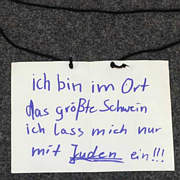
"Awful," Armin Friedrichs, chief of police for the Eastern German region of Jerichower Land, said on Thursday. "I've never seen anything like it in my whole life."
Friedrichs was referring to a shocking incident which took place in the schoolyard of a secondary school in Parey, a small town in the state of Saxony Anhalt. A 16-year-old pupil was seen parading around the yard with a sign hung around his neck. "In this town I'm the biggest swine / because of the Jewish friends of mine," ("Ich bin im Ort das grösste Schwein / ich lasse mich nur mit Juden ein") the sign read.
A teacher at the school noticed the incident and immediately called the police. Three youths, aged between 15 and 16, are being investigated for allegedly forcing the pupil to wear the sign. Charges of coercion may result, and prosecutors are investigating to determine whether further charges may apply. Investigators are also considering an alternative explanation involving the youth completing a test of courage.
The sign's message recalls Nazi-era Germany after Hitler and his party took over power in 1933 -- and particularly the 1935 Nuremberg racial purity laws, which prohibited Germans from having sexual relations with Jews. Women who slept with Jewish men were often forced to parade through town wearing signs bearing such slogans. A well-known picture of a woman wearing such a sign appears in German school books and may be the source for Thursday's incident.
"In this way, the NSDAP and SA publicly humiliated people after they took over power in 1933," said Saxony Anhalt's Interior Minister Holger Hövelmann. "It is appalling that adolescents in our country think that they can do such a thing today." The minister promised that the investigation would be thoroughly investigated.
The incident marks only the most recent racist episode in Eastern Germany this year. Last month, the African-German football player Gerald Asamoah, who has played for the German national team in the past, was the victim of racist insults at a game in Rostock. During the recent state election campaigns in Mecklenburg-Lower Pomerania and in Berlin, candidates from both the center-left Social Democrats and the center-right Christian Democrats were attacked by neo-Nazis. The neo-Nazi National Democratic Party of Germany (NPD) won 7.3 percent of the vote.
Also on Thursday, the right-extremist lawyer Jürgen Rieger was convicted of threatening a journalist and has to pay a penalty of €1,600. He told the journalist: "When the Heisenhof burns, you're going to burn too. I'm going to lay you on the grill and roast you slowly."
It's the second bit of bad news for Rieger this week. He had been trying to buy a hotel in the center Delmenhorst, a small town not far from Bremen, in order to establish a neo-Nazi training center. Last Thursday, however, the city came to an agreement with the current owner of the hotel. The city has agreed to pay €3 million for the property -- €400,000 less than Rieger was offering. The contract, however, has not yet been finalized.
It seems that the U.N.S.C. will decide tomorrow the new sanctions against the DPRK (Deal closer on N Korea sanctions - please remember: "UN sanctions=declaration of war!!", so NK's leadership).
Here's the full text of the new draft U.N. Security Council Resolution on North Korea:
The Security Council,
Recalling its previous relevant resolutions, including resolution 825 (1993), resolution 1540 (2004) and, in particular, resolution 1695 (2006), as well as the statement of its President of 6 October 2006 (S/PRST/2006/41),
Reaffirming that proliferation of nuclear, chemical and biological weapons, as well as their means of delivery, constitutes a threat to international peace and security,
Expressing the gravest concern at the claim by the Democratic People's Republic of Korea (DPRK) that it has conducted a test of a nuclear weapon on 9 October 2006, and at the challenge such a test constitutes to the Treaty on the Non-Proliferation of Nuclear Weapons and to international efforts aimed at strengthening the global regime of non-proliferation of nuclear weapons, and the danger it poses to peace and stability in the region and beyond,
Expressing its firm conviction that the international regime on the non-proliferation of nuclear weapons should be maintained and recalling that the DPRK cannot have the status of a nuclear-weapon state in accordance with the Treaty on the Non-Proliferation of Nuclear Weapons,
Deploring the DPRK's announcement of withdrawal from the Treaty on the Non-Proliferation of Nuclear Weapons and its pursuit of nuclear weapons,
Deploring further that the DPRK has refused to return to the Six-Party talks without precondition,
Endorsing the Joint Statement issued on 19 September 2005 by China, the DPRK, Japan, the Republic of Korea, the Russian Federation and the United States,
Underlining the importance that the DPRK respond to other security and humanitarian concerns of the international community,
Expressing profound concern that the test claimed by the DPRK has generated increased tension in the region and beyond, and determining therefore that there is a clear threat to international peace and security,
Acting under Chapter VII of the Charter of the United Nations, and taking measures under its Article 41,
1. Condemns the nuclear test proclaimed by the DPRK on 9 October 2006 in flagrant disregard of its relevant resolutions, in particular resolution 1695(2006), as well as of the statement of its President of 6 October 2006 (S/PRST/2006/41), including that such a test would bring universal condemnation of the international community and would represent a clear threat to international peace and security;
2. Demands that the DPRK not conduct any further nuclear test or launch of a ballistic missile;
3. Demands that the DPRK immediately retract its announcement of withdrawal from the Treaty on the Non-Proliferation of Nuclear Weapons;
4. Demands further that the DPRK return to the Treaty on the Non-Proliferation of Nuclear Weapons and International Atomic Energy Agency (IAEA) safeguards, and underlines the need for all States Parties to the Treaty on the Non-Proliferation of Nuclear Weapons to continue to comply with their Treaty obligations;
5. Decides that the DPRK shall suspend all activities related to its ballistic missile programme and in this context re-establish its pre-existing commitments to a moratorium on missile launching;
6. Decides that the DPRK shall eliminate its nuclear weapons and nuclear programme in a complete, verifiable and irreversible manner, shall act strictly in accordance with the obligations applicable to parties under the Treaty on the Non-Proliferation of Nuclear Weapons and the terms and conditions of its International Atomic Energy Agency (IAEA) Safeguards Agreement (IAEA INFCIRC/403) and shall provide the IAEA transparency measures extending beyond these requirements, including such access to individuals, documentation, equipments and facilities as may be required and deemed necessary by the IAEA;
7. Decides also that the DPRK shall eliminate its other weapons of mass destruction and ballistic missile programs in a complete, verifiable and irreversible manner;
8. Decides that:
(a) all Member States shall prevent the direct or indirect supply, sale or transfer to the DPRK, through their territories or by their nationals, or using their flag vessels or aircraft, and whether or not originating in their territories, of:
(i) any battle tank, armoured combat vehicles, large calibre artillery systems, combat aircraft, attack helicopters, warships, missiles or missile systems as defined for the purpose of the United Nations Register on Conventional Arms, or related materiel;
(ii) all items, materials, equipment, goods and technology as set out in the lists in document S/2006/. to this resolution or covered by relevant multilateral treaties and arrangements, as well as other items, materials, equipment, goods and technology, determined by the Security Council or the Committee established by paragraph 12 below (the Committee), which could contribute to DPRK's nuclear-related, ballistic missile-related or other weapons of mass destruction-related programmes, in addition to any such domestic measures on the basis of their national control lists or of a jointly established list;
(iii) luxury goods;
(b) the DPRK shall cease the export of all items covered in sub-paragraphs (a)(i) and (a)(ii) above and that all Member States shall prohibit the procurement of such items from the DPRK or by their nationals, or using their flagged vessels or aircraft, and whether or not originating in the territory of the DPRK;
(c) all Member States shall prevent any transfers to the DPRK by their nationals or from their territories, or from the DPRK by its nationals or from its territory, of technical training, advice, services or assistance related to the provision, manufacture, maintenance or use of the items in subparagraphs (a)(i) and (a)(ii) above;
(d) all Member States shall, in accordance with their respective legal processes, freeze immediately the funds, other financial assets and economic resources which are on their territories at the date of the adoption of this resolution or at any time thereafter, that are owned or controlled, directly or indirectly, by the persons or entities designated by the Committee or by the Security Council as being engaged in or providing support for, including through other illicit means, DPRK's nuclear related, other weapons of mass destruction related and ballistic missile related programmes, or by persons or entities acting on their behalf or at their direction, and ensure that any funds, financial assets or economic resources are prevented from being made available by their nationals or by any persons or entities within their territories, to or for the benefit of such persons or entities, in addition to any such domestic measures on the basis of a determination by their own national authorities;
(e) all Member States shall take the necessary steps to prevent the entry into or transit through their territories of the persons designated by the Committee or by the Security Council as being responsible for, including through supporting or promoting, DPRK policies in relations to the DPRK's nuclear related, ballistic missile related and other weapons of mass destruction related programmes, together with their family members, provided that nothing in this paragraph shall oblige a state to refuse its own nationals entry into its territory, in addition to any such domestic measures on the basis of a determination by their own national authorities;
(f) all Member States shall take, in accordance with their national authorities and legislation, and consistent with international law, cooperative action including through inspection of cargo to and from the DPRK, as necessary, to ensure compliance with the requirements of this paragraph, in particular to prevent illicit trafficking in nuclear, chemical or biological weapons, their means of delivery and related materials;
9. Decides that the provisions of paragraph 8 (d) above do not apply to financial or other assets or resources that have been determined by relevant States:
(a) to be necessary for basic expenses, including payment for foodstuffs, rent or mortgage, medicines and medical treatment, taxes, insurance premiums, and public utility charges, or exclusively for payment of reasonable professional fees and reimbursement of incurred expenses associated with the provision of legal services, or fees or service charges, in accordance with national laws, for routine holding or maintenance of frozen funds, other financial assets and economic resources, after notification by the relevant States to the Committee of the intention to authorize, where appropriate, access to such funds, other financial assets and economic resources and in the absence of a negative decision by the Committee within five working days of such notification;
(b) to be necessary for extraordinary expenses, provided that such determination has been notified by the relevant States to the Committee and has been approved by the Committee, or
(c) to be subject of a judicial, administrative or arbitral lien or judgment, in which case the funds, other financial assets and economic resources may be used to satisfy that lien or judgement provided that the lien or judgement was entered prior to the date of the present resolution, is not for the benefit of a person referred to in paragraph 8(d) above or an individual or entity identified by the Security Council or the Committee, and has been notified by the relevant States to the Committee;
10. Decides that the measures imposed by paragraph 8(e) above shall not apply where the Committee determines on a case by case basis that such travel is justified on the grounds of humanitarian need, including religious obligations, or where the Committee concludes that an exemption would otherwise further the objectives of the present resolution;
11. Calls upon all Member States to report to the Security Council within thirty days of the adoption of this resolution on the steps they have taken with a view to implementing effectively the provisions of paragraph 8 above;
12. Decides to establish, in accordance with rule 28 of its provisional rules of procedure, a Committee of the Security Council consisting of all the members of the Council, to undertake to following tasks:
a) to seek from all States, in particular those producing or possessing the items, materials, equipment, goods and technology referred to in paragraph 8(a) above, information regarding the actions taken by them to implement effectively the measures imposed by paragraphs 8 above of this resolution and whatever further information it may consider useful in this regard;
b) to examine and take appropriate action on information regarding alleged violations of measures imposed by paragraph 8 of this resolution;
c) to consider and decide upon requests for exemptions set out in paragraphs 9 and 10 above;
d) to determine additional items, materials, equipment, goods and technology to be specified for the purpose of paragraph 8(a)(ii) above;
e) to designate additional individuals and entities subject to the measures imposed by paragraphs 8(d) and 8(e) above;
f) to promulgate guidelines as may be necessary to facilitate the implementation of the measures imposed by this resolution;
g) to report at least every 90 days to the Security Council on its work, with its observations and recommendations, in particular on ways to strengthen the effectiveness of the measures imposed by paragraphs 8 above;
13. Welcomes and encourages further the efforts by all States concerned to intensify their diplomatic efforts, to refrain from any actions that might aggravate tension and to facilitate the early resumption of the Six-Party Talks, with a view to the expeditious implementation of the Joint Statement issued on 19 September 2005 by China, the DPRK, Japan, the Republic of Korea, the Russian Federation and the United States, to achieve the verifiable denuclearization of the Korean Peninsula and to maintain peace and stability on the Korean Peninsula and in north-east Asia;
14. Calls upon the DPRK to return immediately to the Six-Party Talks without precondition and to work towards the expeditious implementation of Joint Statement issued on 19 September 2005 by China, the DPRK, Japan, the Republic of Korea, the Russian Federation and the United States;
15. Affirms that it shall keep DPRK's actions under continuous review and that it shall be prepared to review the appropriateness of the measures contained in paragraph 8 above, including the strengthening, modification, suspension or lifting of the measures, as may be needed at that time in light of the DPRK's compliance with the provisions of the resolution;
16. Underlines that further decisions will be required, should additional measures be necessary;
17. Decides to remain actively seized of the matter.
*****
More about the issue, please check out here:
U.S. Hopes for Vote on N.Korea Sanctions (AP)
http://www.guardian.co.uk/worldlatest/story/0,,-6145198,00.html
Movement to sanction North Korea gets backing (IHT)
NK sanctions talks heat up (CNN)
UN Security Council Gives Nod to N.Korea Sanctions (Chosun Ilbo)
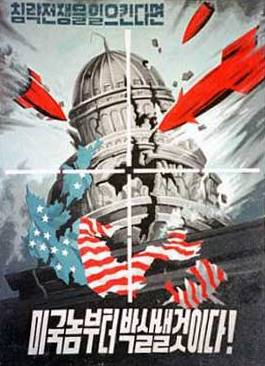
DPRK's (likely *) nuclear test: latest news, reports.. more threats and speculations
SANCTIONS = DECLARATION OF WAR
..New York and Tokyo will be blazed
We never speak empty words!
(o-tone DPRK officials)
Only few hours ago the German (bourgeois, but usually serious) SPIEGEL online headlined:
S. Korea is preparing for possible nuclear attack
..and DailyNK "completed":
If Nuke Bombed on Yongsan, 1.25 Million People Would Die
..of course such kind of stuff is just b.. sh..!
But there were also some more serious articles published in the last hours/days:
N Korea vows sanctions reprisals (Guardian)
Japan bans all trade with N Korea
U.S. pushes new UN resolution on North Korea (AP/IHT)
Can sanctions hurt the regime? (IHT, 10.11)
Time plays into Pyongyang's hands (Asia Times)
N.K. warns of 'physical' reaction to sanctions (Korea Herald)
South Korean troops told to be ready (JoongAng Ilbo)
The S. Korean "left-liberal" daily Hankyoreh published y'day following
[Interview] N.K. diplomat says, ‘We had no options’
Korea Times, today once again, is participating on speculations:
‘North Korea Will Test H-Bomb’
http://times.hankooki.com/lpage/nation/200610/kt2006101217510111990.htm
*****
Last but not least we already should keep in our mind what KCNA is teaching us today:
Philosophy on Arms
The successful advance of the Korean revolution is firmly guaranteed by the great Songun politics, the philosophy on arms. The arms philosophy is a unique one advanced by Kim Jong Il, Songun commander of Mt. Paektu, with the viewpoint on the arms that the arms are the permanent companion and comrade of the revolutionaries.
The philosophy is based on the principle that the revolution for the independence of the popular masses is initiated, advanced and accomplished by force of arms.
If they want to make a revolution, the popular masses should not only be awakened to rise up but also firmly take rifles in their hands.
This is because the reactionary exploiting classes, counter-revolutionary forces, violate and restrict the independence of the people in reliance upon the counter-revolutionary violence.
The path for the revolution is explored by the people only when they make a breach in the counter-revolutionary violence by force of arms.
The arms also play an important role in the whole period of progressing and carrying out the revolution.
It is a serious lesson of the history left by the former socialist countries. A party, with millions of party members, ceased to exist as it failed to seize the army and some countries had socialism collapsed as they weakened military strength.
The arms philosophy also includes the principle that the army is precisely the party, state and people.
The party, the general staff of the revolution and the guiding force, can ensure its leading position under the protection of the army and demonstrate its invincible might.
A party with a long history and tradition met its tragic end in the consequence of "depoliticizing" the army and neglecting ideological work within it. But the Workers' Party of Korea has made a victorious advance of the revolution by seizing the army under difficult conditions. These instances contrastingly show that the party with powerful revolutionary armed forces is invincible.
The revolutionary army and the people's government share the destiny with each other proceeding from the commonness of their characters and basic mission. The independent and creative life of the people is unthinkable apart from a strong army.
The unique philosophy on arms of Korea testifies to its correctness and vitality in the revolution thanks to the Songun politics based on the philosophy.
(Blablabla.., but the problem is, that they mean it serious, very serious!!)
* Several scientists, for example in France and Germany, are saying that if DPRK's test wasn't a fake event, at least it was a failure.
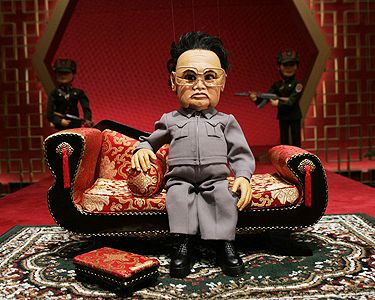
LUNATICS OF ALL COUNTRIES, UNITE!! (*)
While even the ruling "communist" parties in China and Vietnam, for example,
were/are condemning NK's (likely) nuclear test, only one "communist" party with some int'l influence - the Communist Party of the Philippines - welcomed this shit:
PRESS RELEASE
Information Bureau
Communist Party of the Philippines
CPP congratulates DPRK for nuke breakthrough
October 10, 2006
The Communist Party of the Philippines (CPP) today congratulated the people and government of the Democratic People's Republic for successfully and safely carrying out its first-ever nuclear test and hailed the successful test as a “militant assertion of national sovereignty and the right of an independent country to develop its own powerful self-reliant defense capability amidst constant efforts by the US to impose its imperialist hegemony over the world, maintain its monopoly of nuclear weapons along with a few other powerful countries, and subvert the sovereign will of the DPRK.”
Yesterday, the DPRK government announced that it has successfully carried out an underground test of its nuclear weapons, developed after four decades of painstaking self-reliant efforts, “with 100% of sheer indigenous wisdom and technology… under secure conditions… at a stirring time when all the people of the country are making a great leap forward in the building of a great, prosperous, powerful socialist nation.” There were no reports of radiation leak from the test site. The announcement was met expectedly, however, with condemnation by the US government which called the test a “provocative act threatening international peace and stability.”
“The Filipino people and their revolutionary movement regard the DPRK nuclear test as a significant positive development in the effort of freedom-loving peoples the world over to challenge the US imposition of Pax Americana over the world, break the US and other big imperialist powers’ monopoly over nuclear weapons, and compel the world’s peoples to kneel before its hegemonic power,” said CPP spokesperson Gregorio “Ka Roger” Rosal.
“Now, in the face of the DPRK's advance in scientific and technical knowhow with nuclear power, the US is significantly deterred from threatening and carrying out military strikes against the DPRK. The US is afraid that it can no longer try to bully the DPRK,” said Rosal. With the success of its first-ever nuclear weapons test, North Korea becomes the ninth country in the world to have nuclear weapons, along with the United States, Russia, France, China, Britain, India, Pakistan and Israel.
“Of course, US imperialism and other imperialist powers and their client states will condemn the DPRK’s nuclear breakthrough which broke their monopoly of nuclear weapons and confronts the imperialist-imposed pacifism that oppress and cause great hardships on the countries and peoples of the world,” said Rosal.
The CPP also regard the development of the DPRK's nuclear capability as an important breakthrough in fulfilling its energy requirements and further boosting its economic potential, aside from developing its capability to defend its national sovereignty.
“Contrary to imperialist propaganda, the strengthening of the nuclear capability of the DPRK does not pose a threat to other nations' sovereignty and to genuine world peace. In the past, the DPRK has shown respect for the independence of other countries in the same way that it wants the US to respect the sovereign will of the DPRK. The development of nuclear capability in the hands of independent countries that persist in the fight against US hegemonism and aggression realistically deters the US from using its nuclear weapons and military might to attack these countries, and is thus a positive factor in our common striving for genuine peace in the world,” added Rosal.
Reference:
Marco Valbuena
Media Officer
Cellphone Numbers: 09179776392 :: 09282242061
E-mail:cppmedia@gmail.com
http://www.philippinerevolution.net/cgi-bin/statements/releases.pl?refer=kr;date=061010;language=eng
...and this kind of "communists", self-declared "progressives" are surprised that the majority of the "ordinary" people - everywhere - are disgusted from the idea of (such kind of) "progress"/"socialism"/"communism"!
* mi-anh hae-yo/I'm really sorry!! ^^
What was the aim of NK's yesterday's (likely) nuclear test?
According to the SK semi-official news agency Yonhap a NK gov't official said that the main aim was to push the world, especially the US to start talks with the DPRK.
Now instead to talk WITH the DPRK the world is talking ABOUT the DPRK and its "Dear Leader"(DL) Kim Jong-il. And the world is talking not positively about it, not really..
I really would like to know what NK diplomats/employees of DPRK's embassies, for example in Germany, are thinking about their leadership - especially the DL - in the home country when they had to see the today's front pages of many newspapers..
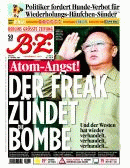
"The freak ignites the bomb"
BZ, Berlin's main yellow press newspaper
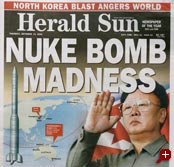
Australia

China/HK

Germany
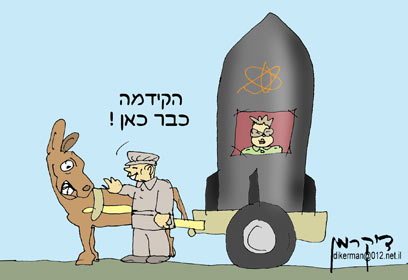
"The progress is already here"
Yedioth Ahronoth, Israel
PS:
The news about NK's (likely) nuclear test have also some serious impacts in SK:
"It ruined my and my friends lunch", Park Un-joo, 22, Korea Univ. student (Chosun Ilbo, 10.9)
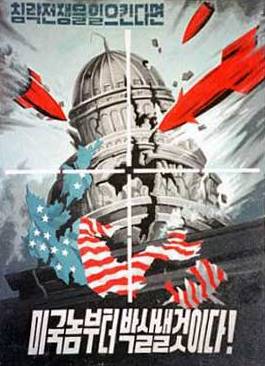
Oops~ it seems that y'day I was a little to hasty to congratulate..
Only about 10 hours after I wrote my last "contribution" here... THEY DID IT!
Today in the morning - usually after I get up I have my breakfast(커피와 담배) and I check the latest news: at first on a German web site, after this Yonhap and then Yedioth Ahronoth, Haaretz and Al Jazeera.. - I had to found out that Kim Jong-il recovered and was now able to direct the nuclear test(f.. him!!!).
So KCNA was able to announce following this morning:
"The field of scientific research in the DPRK [Democratic People's Republic of Korea] successfully conducted an underground nuclear test under secure conditions on October 9, 2006, at a stirring time when all the people of the country are making a great leap forward in the building of a great, prosperous, powerful socialist nation.
"It has been confirmed that there was no such danger from radioactive emission in the course of the nuclear test, as it was carried out under scientific consideration and careful calculation.
"The nuclear test was conducted with indigenous wisdom and technology, 100 per cent.
"It marks a historic event as it greatly encouraged and pleased the KPA [Korean People's Army] and people that have wished to have powerful self-reliant defence capability.
"It will contribute to defending the peace and stability on the Korean Peninsula and in the area around it."
Of course all around the world everyone is extremely outraged (about this situation, created now by the DPRK) ... except in S. Korea, especially on the "left" side there(anti-war, civil right, environment, political movement).
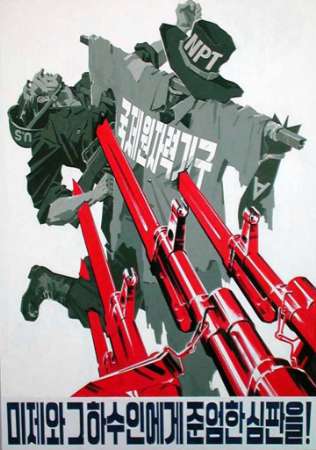
PS:
Int'l news agencies/newspapers are writing this about the issue:
N. Korea's move threatens stability (IHT/NYT)
UN action against N Korea sought (Al Jazeera)
'We should be congratulated' (Yedioth Ahronoth, Israel)
N. Korean test wake up call for South Koreans
North Korea nuclear test
shocks world, stirs fears (Philippine Daily Inquirer)
Kim Jong Il Shocks the World (Der Spiegel, Germany)
The exclusive club of nuclear powers has a new member: North Korea. With his nuclear test, dictator Kim Jong Il has sent a strong message to the international community. American and Chinese efforts to contain his isolated regime have failed.
Early Monday morning in a mine, the North Korean army tested a nuclear warhead with the strength of 550 tons of TNT. North Korean leader Kim Jong Il and his generals are sure they have now added the decisive instrument of power to its arsenal. The logic of the regime in Pyongyang? Only the bomb can protect the country from the Americans, who have never before in history attacked a nuclear power.
Kim Jong Il's regime is using this show of strength to force the Americans to the negotiating table. The goal is a peace treaty, followed by the withdrawal of US-troops from the Korean peninsula and a generous economic aid package for the starving rogue state.
China, North Korea's closest ally, seems to have been informed just prior to the detonation. Some 350 members of the Chinese Communist Party's Central Committee are currently in the capital Beijing for a meeting designed to pave the way for the next party convention. The leadership in Beijing responded immediately to the alarming announcement.
China objected to the test in unusually harsh terms, calling it a "brazen" act of defiance. North Korea has disregarded the international community by undertaking the nuclear test, Beijing said, further warning its neighbor to abstain from any "activities that could worsen the situation." That the paranoid and secretive regime in Pyongyang has acquired the bomb is highly troubling to China. A nuclear-armed North Korea upsets the balance of power in East Asia and beyond.
China is now surrounded by nuclear powers to the west (India and Pakistan) and to the east (North Korea). The Japanese are also expected to become more vocal in their demand for a nuclear arsenal. In fact, the newly-elected Japanese Prime Minister Shinzo Abe announced on Monday that his country plans to expand its military capacity in cooperation with the United States.
The relationship between the comrades in Beijing and Pyongyang, who in a 1961 treaty swore to each other eternal loyalty, has long since cooled off. Kim Jong Il provoked the Chinese in the fall of 2005 when he decided to boycott the six party talks, which China had organized. The talks were to involve China, North and South Korea, the United States, Russia and Japan.
China has summoned Kim back to the negotiating table, but it is questionable whether the six-party talks even make sense any more. The talks were originally designed to dissuade North Korea's leadership from pursuing its nuclear ambitions. With the bomb in hand, North Korea's military would hardly allow it to be negotiated back out of its arsenal.
Admittedly, testing a nuclear warhead is not the same as mounting it onto a missile and launching it over the ocean. The North Koreans still appear to be far from that capability.
China loses face, America has failed
But politically, the Chinese have lost face. All diplomatic, financial and rhetorical attempts to dissuade North Korean from pursuing its nuclear ambitions have utterly failed.
The Americans, too, stand before the ruins of their failed strategy. They have rejected direct talks with Kim because they don't trust him. The six party talks were supposed to help integrate North Korea into the international community, alas to no avail. As a result, Washington's rhetoric is becoming more bellicose: "The United States condemns this provocative act," US President George Bush said on Monday. "The transfer of nuclear weapons or material by North Korea to states or non-state entities would be considered a grave threat to the United States and we would hold North Korea fully accountable for consequences of such action."
Despite the harsh reprisals, one cannot help but wonder what trump card the Americans still have up their sleeve that could bring Pyongyang to reason. Perhaps North Korea's nuclear armament could have been avoided had Washington engaged in direct talks with Kim Jong Il's people, thereby granting them the international recognition they crave.
The international community will most likely react to North Korea's provocation with economic sanctions. It is unlikely that this will help: China will only participate in the sanctions for a little while, if at all, only to then continue its support of North Korea.
Beijing is simply not interested in toppling Kim's regime. Especially not when it is sitting on an atomic bomb.

덧글 목록
관리 메뉴
본문
East German neo nazis? Hmm... after 40 years of socialism and 15 years of democracy... That's bad. Now, let's take a look to where the North Koreans are... http://www.rjkoehler.com/2006/10/15/must-read-north-korea-the-inheritors-of-the-hirohito-spirit/Now, that's worse than worse... Anyone wants a unification with those guys within the next 250 years? Better give the fuckers to China.
부가 정보
관리 메뉴
본문
"better to give the fuckers.." yeah, and deport them all to the border to afghanistan!!^^anyway.. I know about NK's nationalism and even existing racism!! I made my own experiences there(with racist statements by NK officials..)!
부가 정보