공지사항
-
- '노란봉투'캠페인/국제연대..
- no chr.!
39개의 게시물을 찾았습니다.
Following interview with the Palestine foreign minister was published before y'day in the German magazine Der Spiegel:
INTERVIEW WITH PALESTINIAN FOREIGN MINISTER
"We Will Never Recognize Israel"
Mahmoud al-Zahar, foreign minister of the Palestinian Authority's Hamas-led government, says a big majority of Hamas supports the struggle against Israel despite recent conciliatory comments from Hamas officials about a possible indirect recognition of Israel and an end to violence.
Mahmoud al-Zahar says a big majority of militant group Hamas backs continued resistance against Israel, which he likens to the Nazis occupying France in World War II.
SPIEGEL: Do you really want to let the talks with President Abbas about a national unity government fail?
ZAHAR: We have accepted the paper on the establishment of a national unity government. It was Abbas' Fatah Party that first agreed to it and then changed its mind a few days later. We are ready to establish a provisional Palestinian state in the 1967 borders and to call for a ceasefire.
SPIEGEL: But you reject a two state solution?
ZAHAR: We will never recognize Israel. The Zionists have occupied our land like the Nazis did with France during the Second World War. Israel is a foreign element in the Middle East. Why don't the Jews establish their state in Europe?
SPIEGEL: Your Deputy Prime Minister, Nasser al-Shaer, views that differently. He thinks that an indirect recognition of Israel, as the Saudi-Arabian initiative of 2002 suggests, is possible.
ZAHAR: This is his personal opinion and not the position of the government.
SPIEGEL: Criticism even comes from the government spokesman. Ghazi Hamad questions the violent "resistance" against Israel.
ZAHAR: In this point, the spokesman of the government does not represent the government.
SPIEGEL: Is there an internal struggle within Hamas?
ZAHAR: There are different opinions. But the big majority supports the resistance. The kidnapping of the Israeli soldier was the only way to release our brothers and sisters who are detained in Israel.
SPIEGEL: Western mediators say Israel would have been ready for an exchange deal. But Iran is said to have paid Hamas $50 million in order to torpedo the deal.
ZAHAR: This is Zionist propaganda. Israeli Prime Minister Olmert is the one who is preventing a deal. I call on the family of the kidnapped soldier to pressure their government to do everything possible to release their son.


CLASS WAR ON
"HONEYMOON ISLAND"
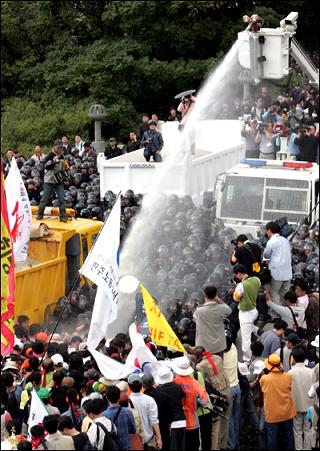
Jeju-do: Protests against US-SK FTA Session
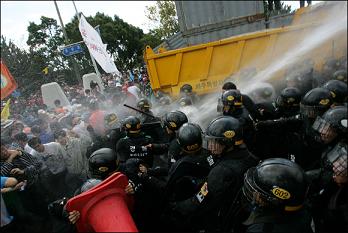
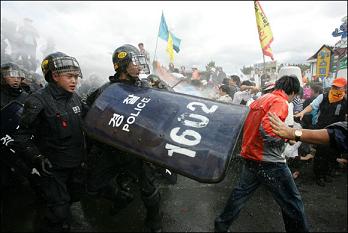
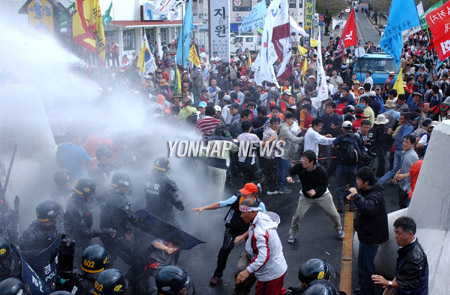
Related articles you can read here:
Bumpy S. Korea-U.S. FTA talks make headway: S. Korean official (Yonhap)
US Offers No FTA Perks to Korea (K. Times)
"전용철, 홍덕표, 하중근 그리고 또 오늘..." (VoP, incl. 6 videos)
[한미FTA 제주 투쟁 24일] 투쟁단, 촛불집회로 하루 마무리
http://www.voiceofpeople.org/new/2006102453558.html
Some more pics about the protest you can see here:
조선민주주의인민공화국
NORTH KOREA
"PARADISE OF THE
WORKING CLASS"..
(*)
..but, if we want to believe following articles, perhaps not longer anymore.
‘Coup Possible in Pyongyang’ (K. Times, 10.23)
A ``Beijing-friendly palace coup’’ may happen in North Korea to drive out the North’s ``dear leader’’ Kim Jong-il, a U.S. weekly magazine reported in its latest issue.
Chinese officials used to ``scoff’’ at the idea of effecting Chinese-style regime change in the Stalinist state, but an ``unprecedented debate’’ has taken place over Beijing’s North Korea policies, Newsweek said in its Oct. 30 issue.
Mentioning the stoppage of financial transfers and food exports to North Korea, the magazine backed the possibility of a coup.
Four major Chinese banks halted financial transfers to North Korea last Friday, and China decreased food exports to the isolated regime by two-thirds, the weekly said.
``Among some close advisers to the government, the idea of a Beijing-friendly palace coup has gained new currency,’’ the report said. ``China certainly has the means.’’
The means is the 11,000 barrels of oil China offers the reclusive state every day _ accounting for over 70 percent of Pyongyang’s total energy supply, the magazine said.
Chinese officials have said that they want Pyongyang to return to the six-party talks on its nuclear disarmament, but some scholars, angry at Kim’s recalcitrance, are asking for the government to pull the oil plug instead, the report said.
A former U.S. Pentagon official and Korea watcher said in an interview with Newsweek that the likely pool of moderate North Koreans who could succeed Kim includes Sinophile military officers and technocrats. ``They have come to believe that Chinese-style economic reforms will help transform North Korea,’’ he said.
As for post-Kim Jong-il scenarios, the report said, ``China would prefer North Korea to maintain a friendly, ideally socialist, buffer state on its periphery, which could keep U.S. soldiers based in South Korea at arm’s length.’’
http://times.hankooki.com/lpage/nation/200610/kt2006102317384311990.htm
Here's what K. Times quoted:
China's Reaction: Tightening the Screws
Would Beijing dump Kim? It's certainly not likely, but ...
(Newsweek)
Once upon a time Beijing officials and scholars would have scoffed at the idea of effecting Chinese-style regime change in Pyongyang. But in the wake of Kim's nuke test, an unprecedented debate has broken out over Beijing's North Korea policies. Last Friday four major Chinese banks stopped making financial transfers to North Korea—a tactic that could quickly pinch a weak economy that relies on China as a link to the international financial system. And this year China has reduced food exports to Pyongyang by two thirds. "I've never seen the Chinese leadership so resolved to be tougher towards North Korea," says Zhu Feng, head of Peking University's international-security program.
Among some close advisers to the government, the idea of a Beijing-friendly palace coup has gained new currency. China certainly has the means: it provides 11,000 barrels of oil to North Korea every day, accounting for more than 70 percent of Pyongyang's total energy supply. Beijing stopped oil deliveries for three days in early 2003 to pressure Pyongyang to join the Six-Party Talks. (Later Chinese apparatchiks insisted there had been a mechanical malfunction.) Chinese authorities insist they want Kim to return to the talks again, but some scholars, furious at Kim's recalcitrance, are calling on their government to pull the oil plug instead. "Chinese diplomacy has been a failure," says Prof. Zhang Liangui, a foreign-policy analyst at the influential Central Party School. "To not stop oil [deliveries] would be baffling from a moral point of view."
According to a former U.S. Pentagon official and Korea watcher, who requested anonymity because of the sensitivity of the topic, the likely pool of moderate North Koreans who could succeed Kim includes Sinophile military officers and technocrats who have come to believe that Chinese-style economic reforms will help transform North Korea. The presence in China of high-level defectors, including military officers, has sparked rumors of a Beijing supported "Chrysanthemum group" who could be the backbone of a new regime, the source says, though "the Chinese never talk about it." South Korean experts on the North recall similar, albeit "theoretical" talk of a Chinese shadow cabinet in 2003-2004.
A successful coup, while farfetched, would ease Beijing's fears of anarchy and a flood of refugees on its border. But the crucial question is how the interests of China diverge from the United States' and South Korea's when it comes to post-Kim scenarios. Beijing would prefer to maintain a friendly, ideally socialist, buffer state on its periphery, which could keep U.S. soldiers based in South Korea at arm's length. Seoul isn't seeking instant reunification with the North, either—too expensive—but South Korean strategists may want to move troops into the North to prevent its being absorbed by China. Replacing Kim might not be any easier than dealing with him now.
http://www.msnbc.msn.com/id/15365945/site/newsweek/
*****
First of all these kind of theoretic considerations are not really new. Since several years some political analysts are debating this kind of possible future for the DPRK.
But in my opinion this will not be practicable, not really.
Why?
A DPRK with "Chinese-style economic reforms" will become very soon a capitalist (at least economical) society. China(PRC), even the ruling party is a "communist" party, is a capitalist society. And nothing different North Korea will be.
But there is a big difference between the PRC and NK. There is only one China(just forget in the moment Taiwan). The PRC, even in the late 1970s, even after years of Culture Revolution, was a huge, powerful country with a lot of own natural resources.
On the other side the PRC had, even in the time of the Great Leap and the Culture Rev., strong relationships to the oversea Chinese community(S.E. Asia, USA..). And especially from this community the first investments("hard" currency, know-how..) in the new econimic reforms in the late 1970s were coming. But this investors had only economic intentions, no politically.
For a NK with "Chinese-style economic reforms" the most potentially investors will come from S. Korea. But in this process - of course the country MUST/WILL open its borders(i.e. also the entire society) to the outside world, especially to the South -
the southern "brothers and sisters" will try to influence NK also politically.
Finally, like in the case of Germany in 1989/90, after the collapse of the East German ruling system(the so-called "Material Existing Socialsm"), there will be no necessity for two capitalist Korean states!!
BTW: According to many political analysts/experts(and so on..) for the PRC the main obstacle for a - of course - peaceful re-unification of the Koreas is the presence of USFK on the peninsula (because they worry that after the unification this shit, i.e. USFK, will be moved to the Yalujiang/Amnok-gang).
As I know, nearly everyone in SK wants the unification.. So the first thing to prepare for the re-unification should be the struggle against the presence of USFK in SK. JUST KICK THEM OUT! NOW(ahe~ or at least tomorrow)!!
* according to the NK propaganda^^
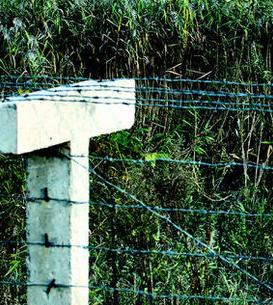
Following article was already published yesterday in NYT/IHT:
Tension and desperation on the China-Korea line
North Korea's porous 1,400-kilometer border with China is its lifeline to the outside world. About 39 percent of its trade last year was with China, which, critically, supplies it with 80 to 90 percent of its oil. Trafficking in money transfers and human beings also flourishes.
By contrast, the North's border with Russia is 18 kilometers long, or 11 miles, and heavily guarded, and the 240-kilometer-long Demilitarized Zone with South Korea has hundreds of thousands of soldiers on each side.
Until now, the North's ships have regularly visited Japan, from which relatives sent cash and goods, but North Korea's nuclear test was expected to end that trade.
For China, the bottom line is to erect the right number of fences, as it did last week along the border city of Dandong. Build too few and you invite instability in China. Build too many and North Korea collapses.
A collapse is something Beijing does not want, and why it is lukewarm toward harsh United Nations sanctions. A collapse might send more North Koreans into China than the 100,000 to 300,000 estimated to have flooded the border during the North's great famine in the mid- to late-1990s. (Paradoxically, the famine also opened trade links when local North Korean groups formed to barter raw materials for Chinese grain.)
The end of the North Korean state could also bring reunification of the Korean Peninsula under America's ally South Korea, another development Beijing does not want.
Also, the border itself could be put into question. In recent years, South Korea has challenged China over the legacy of Koguryo, an ancient Korean kingdom whose rule extended into present-day China. The region is home to hundreds of thousands of ethnic- Korean Chinese who might be sympathetic to a reunified Korea making territorial claims.
http://www.iht.com/articles/2006/10/22/news/border.php
Yesterday irregular workers took the streets of Seoul to demand the same status like "ordinary" workers: working contracts, same payment, better working conditions..
Between 1000 and 2000 workers participated on the rally and demo.(BTW: There are about 8,000,000 irregular workers in S.K.!!)
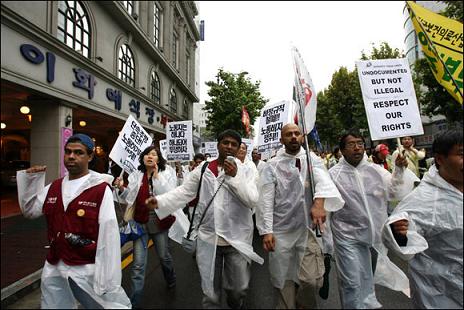
Also some representatives of MTU joined the event (사진: 민중의소리)
For more about it(in Korean) please check out here:
http://www.voiceofpeople.org/new/2006102253436.html
http://www.newscham.net/news/view.php?board=news&id=37714
Following interesting report was published in y'day's NYT/IHT (of course the article just reflects the bourgeois point of view^^):
A year later, France fears renewed unrest
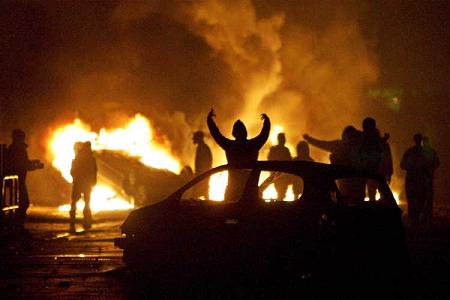
Last year's mass riots in France
(I wrote about it here: http://blog.jinbo.net/CINA/?pid=322 )
When the call came about a car burglary in this raw suburb north of Paris one night last weekend, three officers in a patrol car rushed over, only to find themselves surrounded by 30 youths in hoods throwing rocks and swinging bats and metal bars.
Neither tear gas nor stun guns stopped the assault. Only when reinforcements arrived did the siege end. One officer was left with broken teeth and in need of 30 stitches to his face.
The attack was rough but not unique. In the past three weeks alone, three similar assaults on the police have occurred in these suburbs that a year ago were aflame with the rage of unemployed, undereducated youths, most of them the offspring of Arab and African immigrants.
In fact, with the anniversary of those riots approaching in the coming week, spiking statistics for violent crime across the area tell a grim tale of promises unkept and attention unpaid. Residents and experts say that fault lines run even deeper than before and that widespread violence could flare up again at any moment.
"Tension is rising very dramatically," said Patrice Ribeiro, the deputy head of the Synergie-Officiers police union. "There is the will to kill."
The anger of the young is reflected in the music popular in the suburbs. In her latest album, the female rap singer Diam's accuses Interior Minister Nicholas Sarkozy of being a "demagogue" and the police of hypocrisy. The rapper Booba proclaims that "Maybe it would be better to burn Sarko's car," while Alibi Montana, another rapper, warns Sarkozy, "Keep going like that and you're going to get done."
Next Friday is the one-year anniversary of the electrocution death of two teenagers as - rumor had it - they were running from the police in the Paris suburb of Clichy-sous-Bois.
The tragedy triggered three weeks of violence in which rioters throughout France torched cars, trashed businesses and ambushed police officers and firefighters, plunging the country into what President Jacques Chirac called "a profound malaise."
Last month, a leaked law enforcement memo warned of a "climate of impunity" in Seine-Saint-Denis, the notorious district north of Paris, where clusters of suburbs like Clichy-sous- Bois and Epinay-sur-Seine are located.
It reported a 23 percent increase in violent robberies and a 14 percent increase in assaults in the district of 1.5 million people in the first half of 2006, complaining that young, inexperienced police officers were overwhelmed and that the court system was lax. Only one of 85 juveniles arrested during the unrest had been jailed, it added.
In all of France, according to the Ministry of Interior, 480 incidents of violence against the police were recorded in September, a 30 percent increase from the month before.
On the other side of the debate, however, local officials and residents are disheartened that the shock of the unrest last year did not trigger a coherent plan to create more jobs, better housing and education and more social services - or even to raise the consciousness of the citizenry.
"Ours is a population that truly has been abandoned to its sad fate," said Claude Dilain, the mayor of Clichy- sous-Bois and a local pediatrician who recently wrote a book about the plight of his town.
"French society wants the poor to be squeezed into ghettos rather than have them living right next door. It says, 'Put the poor out there in the suburbs, but avoid violence at all costs so that all goes well and we don't have to talk about them anymore.' Our people feel betrayed. All the conditions are there for it to blow up again."
Clichy-sous-Bois is worse off than many other suburbs. It has no local police station, no movie theater, no swimming pool, no unemployment office, no child welfare agency, no metro or inter- urban train into the city.
For even some of the most crime-ridden suburbs, it is a 20-minute ride into central Paris; for Clichy-sous-Bois, depending on whether there is space on the bus, it can take an hour and a half. Unemployment is at 24 percent, and much higher among young people. Thirty-five percent of the population consists of foreigners, many non- French-speaking. The town's only municipal gymnasium and sports center was burned during the unrest last year.
When Nadia Boudaoud, a 27-year-old part-time educator, was asked why her family moved from Clichy-sous-Bois two years ago, she gave three reasons: the noise, the garbage and the rats.
But on the same evening that young people were attacking the police in Epinay-sur-Seine a few dozen kilometers away, Clichy-sous-Bois's only cultural space held the kind of special event they have in places like Paris: the opening of an ambitious photo exhibit about daily life in the town of 23,000 people.
The exhibit featured the works of a dozen world-renowned photographers, including Marc Riboud, William Klein and Sarah Moon, who mingled with hundreds of local residents. Visitors were met at the entrance with a long white panel bearing the photos of the two teenage electrocution victims, Bouna Traore, 15, and Zyed Benna, 17.
The one disappointment of the evening, Dilain said, is that not one French official showed up. "It is symptomatic of the absence of interest in us," he said. "I'm ashamed for France."
Indeed, interviews with residents and officials in several suburbs ringing Paris in recent weeks made it clear that many are convinced that the government's main interest in them is to maintain security in advance of the presidential election next spring.
Sarkozy, the front-runner for the nomination of the governing center- right party, has staked his reputation on an uncompromising attitude toward young offenders. But his increase in the number of police officers in the suburbs - many of them from far-away parts of France - has meant more harassment and random searches of young people, fueling complaints of unfairness.
Not to be outdone, the front-runner for the Socialist Party, Ségolène Royal, has offered her own proposals to curb youth violence, including military-led training programs to deal with young offenders and parenting school for parents of unruly primary school children.
Clearly, the French favor a tough line on security issues. According to an Ifop poll for Le Figaro published last month, 77 percent said that the judicial system was not harsh enough against young offenders.
After the unrest last fall, the government announced measures to improve life in the suburbs, including extra funds for housing, schools and neighborhood associations, and counseling and job training for unemployed youths. None have gone very far.
New legislation promoting the "equality of chances" passed with much fanfare last March largely has been ineffectual. An initiative to create blue- collar apprenticeships for teenagers from the age of 14, has been criticized for removing children from the universal educational system at early an age.
Another law aimed at curbing illegal immigration - and deporting youthful offenders - ignored the fact that most suburban youth are French, and a law to spur youth employment was abandoned following massive street demonstrations against it last spring.
The government said this week that it needed more "experimentation" before implementing the law requiring corporations with more than 50 employees to use anonymous résumés aimed at curbing discrimination against job-seekers with foreign-sounding names from troubled neighborhoods.
In any case, many young job-seekers and community activists consider the initiative gimmicky, even humiliating.
"We have to fight discrimination - not disguise differences as if differences are a crime," said Samir Mihi, a founder of ACLEFEU, an association created in Clichy-sous-Bois to promote the suburbs.
In an exercise that aims to celebrate the identity of the applicant, APC, another organization, has created a project - the videotaped résumé - that trains job-seekers how to sell themselves on camera.
At a training and taping session in the Paris suburb of Nanterre this week, Mariama Goudyaby, 33, said that she has been looking for a job as a receptionist for six months, but has been turned down 15 times.
"When I come, they see, 'she is black,'" she said. "And then they say, 'We've already found somebody.'" With the video, she said defiantly, "You like me; it's me. You don't like me, too bad."
Certainly, there have been changes since last year, though many of them seem symbolic or cosmetic.
The television channel TF1, for example, assigned Harry Roselmack, a 33- year-old black journalist of French Caribbean descent, to anchor the main evening news for six weeks this summer, the first time a Frenchman of color has served in that role. He became an overnight sex symbol and national hero.
The Henry IV public high school, one of the best in Paris, in September recruited thirty students from underprivileged backgrounds for its preparatory program that feeds some of France's most elite universities.
Marking anniversaries is deeply embedded in French tradition, so a number of events are scheduled in the run-up to Oct. 27. At a town meeting in the suburb of Aulnay-sous-Bois on Wednesday, some speakers worried aloud about the street chatter they are hearing from young people about how best to "celebrate" it.
"The most violent of them think of it in terms of a celebration," said Franck Cannarozzo, a deputy mayor of Aulnay- sous-Bois. "For them last year was a victory over authority."
But for a 25-year-old man who lives in Clichy-sous-Bois and asks to be called Karim, the day will be one of mourning, not celebration. Karim had been showing the two teenagers how to play a new video game in the basement of his building the night before they were electrocuted.
"It is the anniversary," he said, "of a death."
http://www.iht.com/articles/2006/10/20/news/france.php
..that I missunderstood your demand to give up my plan for a nuclear test." This, possibly, yesterday said the "Dear Leader" Kim Jong-il to his Chinese visitor in Pyeongyang.
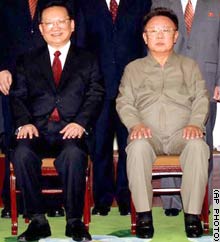
The "Dear Leader" looks not happy
anymore, not really!!^^
"Kim Jong-il has apologized to China and reassured his powerful neighbour that he has no plans to conduct further nuclear tests," according to reports today that suggest the DPRK leader is backing down in the face of unprecedented pressure from a historic ally.
Many news agencies now are expecting a return of NK to the "six-party talks" soon.
Ha, just wait, watch and see!! (Until now nobody really knows what Kim was saying..) (*)
For more about the latest developments please check out here:
N.Korea: No plan for 2nd nuke test (CNN)
N Korea backs off second test (Guardian)
Chinese and U.S. urge North Korea to talk (IHT/NYT)
President Hu meets with Rice (Xinhua)
N.Korea ‘Ready to Talk if U.S. Lifts Sanctions’ (Chosun Ilbo)
PS:
Only few hours after the Chinese delegation left PY the NK leadership ordered 100,000 people on Pyeongyang's Kim Il-sung-Square to celebrate the "great victory over the US-Imperialsm", i.e. the successful nuclear test.(**)
So what's now? Sorry or happy? Or sorry AND happy? ..???
Meanwhile, according to the German Spiegel online(it quoted AP), the former SK president Kim Dae-jung warned the int'l community about a possible military attack by the DPRK in the process of the UNSC sanktions against NK.
* Washington Post wrote later: '"There wasn't anything particularly surprising" about Kim's message, Rice said, suggesting the reports that Kim promised a halt in testing were also inaccurate.'
** KCNA "reported" following:
Servicepersons and Pyongyangites Hail Successful Nuclear Test
丹東/신의주
Dandong and Sinuiju - two cities on the border between the P.R. China and N. Korea
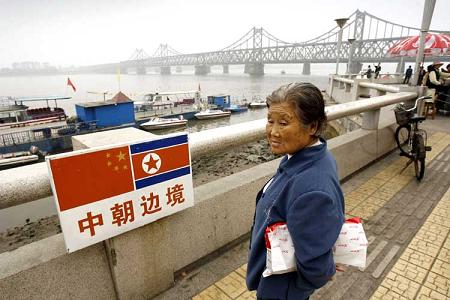
From the Friendship Bridge to the Line of Divorce
The Chinese border city of Dandong is North Korea's most important gateway to the outside world. Now, though, the booming metropolis will become a litmus test to determine China's commitment to UN sanctions.
Trucks wait in a rumbling line to cross the bridge over the Yalu River. They're fully loaded as they cross the river into North Korea -- the semi-trailers, though, tend to be empty on the return run back to China. The poor, isolated country simply doesn't have much to offer in return for the electronic goods, hardware, fruit, clothes, oil and grain China exports to North Korea. The goods are unloaded as soon as they cross the river -- North Korean trucks carry them further into the country.
The remote border crossing, which hosts a lion's share of the commerce between China and North Korea -- which amounted to some $500 million last year -- has hardly received much of the world's attention in the past. But that may soon change. The sanctions passed by the UN Security Council against North Korea Saturday -- in response to the country's apparent testing of a nuclear bomb just over a week ago -- will also have to be enforced here. Indeed, one of the most pressing political questions currently facing the world will have to be settled in the border town of Dandong: How serious is Beijing about reprimanding its tiny neighbor and its leader Kim Jong Il?
For the time being, China is still in step with the world community. Controls along the border will be tightened in accord with the Security Council resolution. But trade with North Korea can be profitable -- and it's in China's economic interest to let it flourish.
The largest border city in China lies just over the Yalu River from the tiny Stalinist nation -- a booming economic metropolis just opposite profound and bitter poverty. The North Korean town is called Sinuiju. Every day in Sinuiju, people gather anxiously waiting for Chinese trucks and trains to make their way across the border. Indeed, without Chinese imports the troubles in North Korea would be even worse.
Dandong Booms, the Metropolis Gleams
Trade across the Yalu has a long tradition going back at least to the 14th century Ming Dynasty. Back then, the economic relationship was roughly eye-to-eye. Now Kim Jong Il's regime in Pyongyang relies on the grace and favor of rulers in Beijing, both politically and economically. Imports from China keep North Korea's wobbly Stalinist regime intact -- exports in the other direction amount to little more than a trickle.
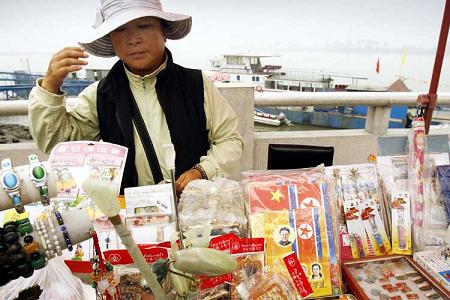
Chinese street vendor in Dandong selling DPRK trash
It's a good deal for China. North Korea's elite is not just eager to buy but loyal because their isolated government has no choice but to deal with Chinese businessmen. Dandong, in particular, holds a near-monopoly on trade with North Korea and the last few years have been good for the city and its 2.4 million residents. Countless industrial firms have moved to town: machinery, paper and textiles are now produced in Dandong. Modern skyscrapers and Korean restaurants line the riverbank and chic businesses have crowded the city center.
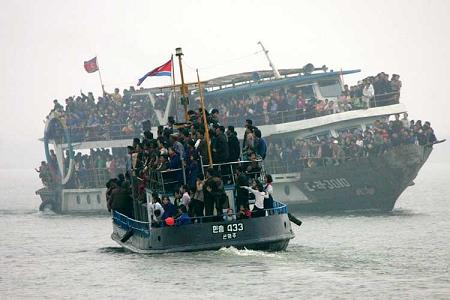
NK riverboat on Yalu/Amnok-gang
Sinuiju turns off the power at night
Chinese tourists are also coming to Dandong. Just like the "Wall tourists" in pre-1989 Berlin, they want a glimpse of North Korea from across the water. The excursion includes a boat tour right up close to the other shore, for a souvenir snapshot -- and there are plenty of telescopes on the bank available for those afraid of the water. But there isn't much to see on the other side besides a rusty old Ferris wheel. Sometimes one can spot North Korean kids playing in the sand, red Communist youth scarves wrapped around their necks. Some visitors venture out onto the old bridge across the Yalu River that was destroyed by US fighter planes in the Korean War. The bridge is passable to the halfway point, where a small museum commemorates the battles. Traders sell souvenirs in the form of North Korean postal stamps and memorabilia of North Korea's founding president, Kim Il Sung.
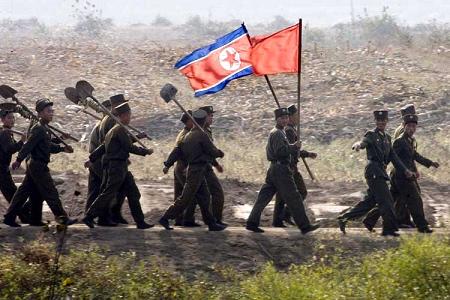
KPA border guard unit
A wholly different picture emerges on the other side of the river. There, in Sinuiju, people look at the flashy Dandong with great envy. Every night, the Chinese city shines bright. But North Korea's Shinuiju is pitch-dark due to a chronic power shortage. Very few are granted visas to cross the river into China -- many make their way across anyway, under cover of darkness.
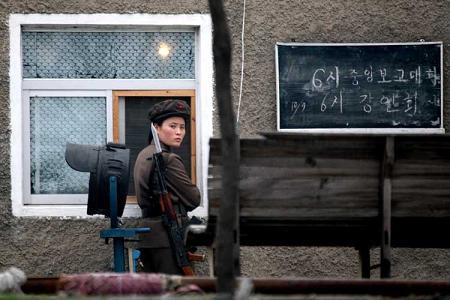
NK "happiness"..
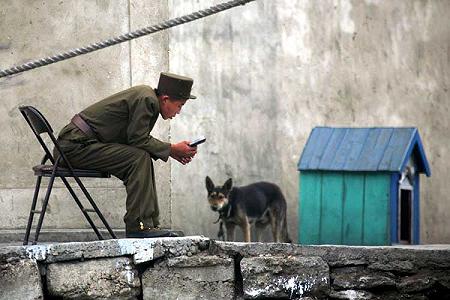
..on the other side of Yalu/Amnok-gang
Smuggling has flourished in recent years and Chinese border officials are in the habit of turning a blind eye to the illegal trade. Indeed, it is this illegal trade which leads many in the US government to doubt China's commitment to enforcing the UN sanctions. China has committed itself to prevent trade in luxury goods -- a provision aimed at North Korea's tiny elite -- and goods that could be useful to a nuclear weapons program.
A historic bulwark against refugees
China's main priority, though, has been to prevent cross-border traffic of an entirely different nature. Many North Koreans are interested in more than just a bit of trade with China -- rather they often want to leave the misery of their poverty-stricken country completely behind them. Tens of thousands have already crossed the border and China is interested in stemming the flow.
Indeed, at almost precisely the same time as the Security Council voted in favor of sanctions, Chinese authorities began constructing a 20-kilometer long barbed wire fence. It's the first time China has erected a physical barrier to keep North Koreans out.
China's justification: A mass exodus from North Korea could further destabilize the volatile neighbor. The political and financial ramifications would be fatal for the region. But the bulwark comes at just the right time for China. A stampede out of North Korea is the nightmare scenario for Beijing -- but eminently possible. Especially if the sanctions are too tough or if North Korea's conflict with the US and the world escalates.
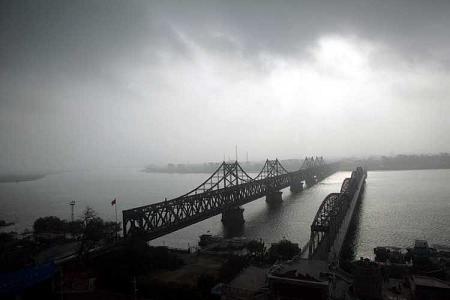
The Friendship Bridge between Dandong and Sinuiju
More about the current developments on the PRC/DPRK relationship you can read here:
!!! China to set action on North Norea (IHT/NYT, 10.19)
China pulls its punches on North Korea (Asia Times)
조선민주주의인민공화국
NORTH KOREA
THE "PARADISE OF THE
WORKING CLASS" (*)
Since long time I'm struggling with myself to write something more deepening about the "DPR"K, or better what I'm thinking about it.
I think that now I'm ready to begin..
The idea I got in the beginning of the year after i read following b.. sh.. by Kim In-shik, a Da-hamkke activist, later "Chief Policymaker" in DLP: "I believe that North Korea is fundamentally exactly the same sort of exploitative and repressive society as South Korea." (**)
OK, let's start just with some impressions by photographes (about the "DPR"K):
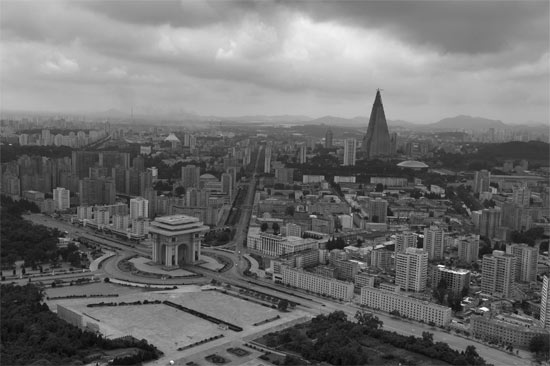
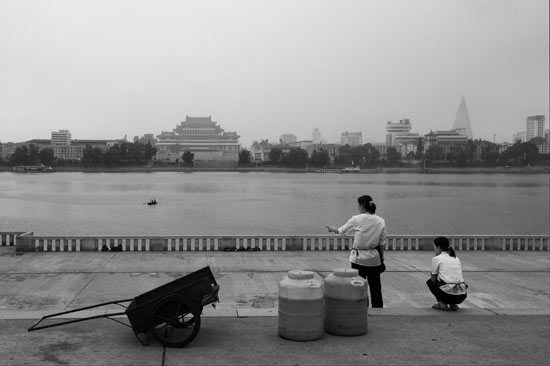
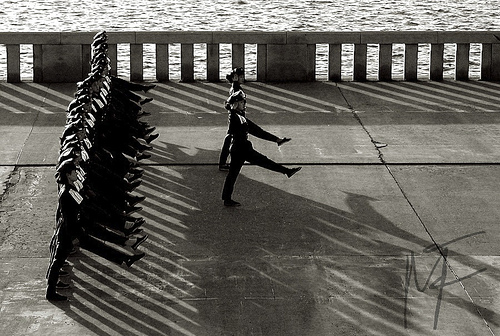
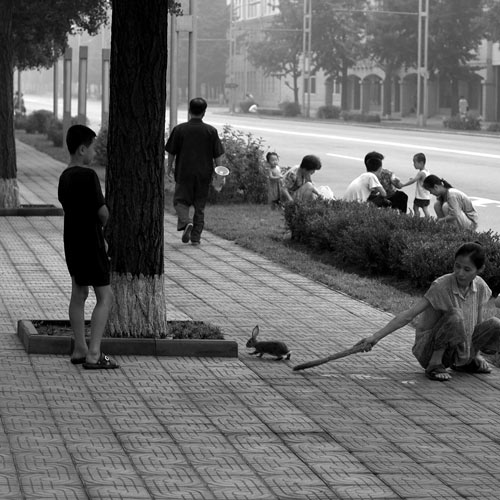
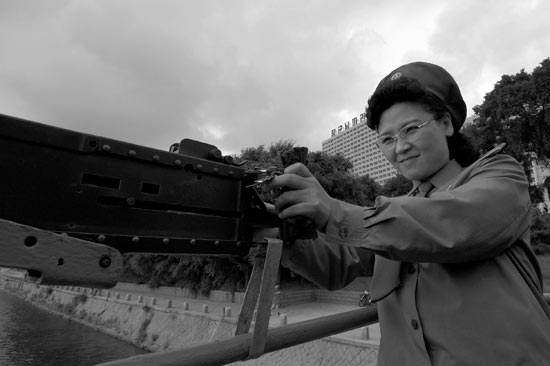
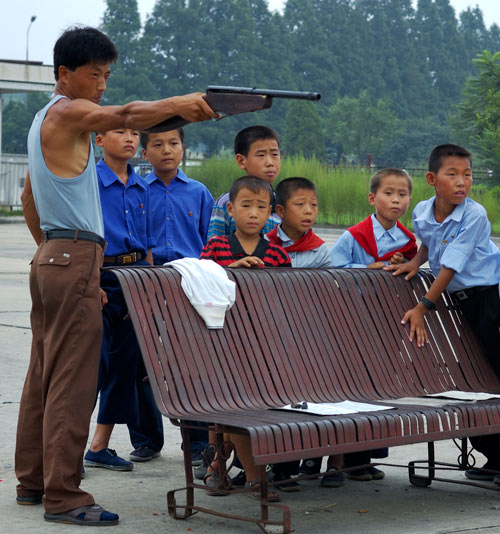
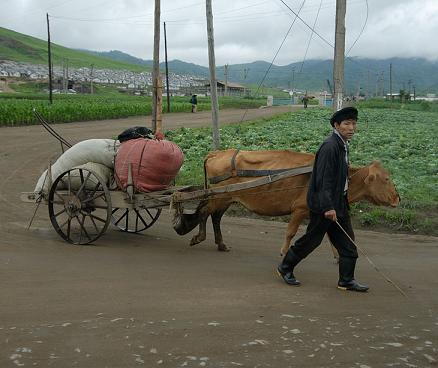
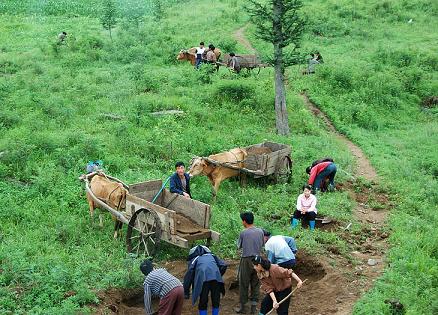
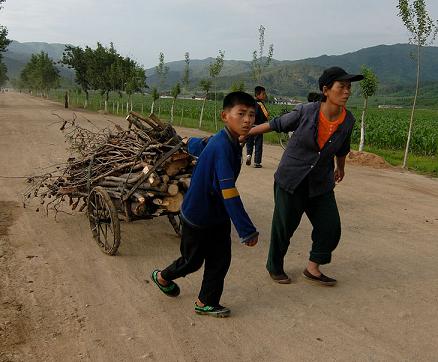
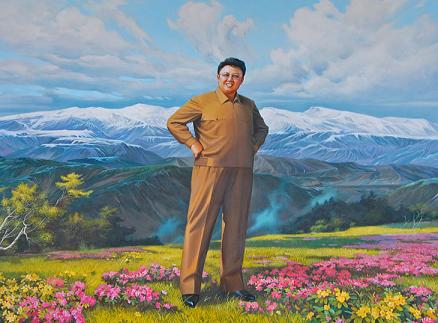
* Aeh~ only according to the NK propaganda
** Really, I can't believe that he(or Da-hamkke/DLP) mean this serious!!
Da-hamkke/All together:
DLP:
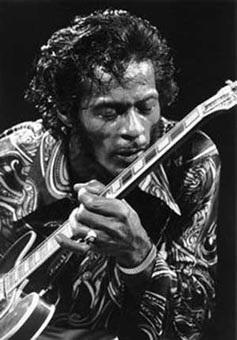
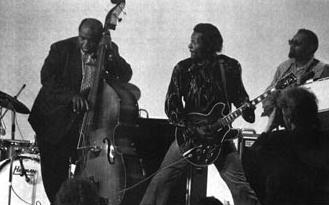
Today, exactly 80 years ago, Chuck Berry - the "Inventor of Rock 'n' Roll", so a German daily newspaper - was born in St. Louis, USA.
Chuck Berry is an immensely influential figure, and one of the pioneers of rock & roll music. Cub Koda wrote, "Of all the early breakthrough rock & roll artists, none is more important to the development of the music than Chuck Berry. He is its greatest songwriter, the main shaper of its instrumental voice, one of its greatest guitarists, and one of its greatest performers."
John Lennon was more succinct: "If you tried to give rock and roll another name, you might call it 'Chuck Berry' ." (wikipedia)
For more please check out:
http://en.wikipedia.org/wiki/Chuck_Berry

덧글 목록
관리 메뉴
본문
In the sentence that you quoted from Kim In-sik I think the key word is 'fundamentally' - he is not saying that the two societies are the same but that the mode of production is the same - capitalism. In other words it is divided into a class that owns the means of production (bureaucracy) and one that does not (workers) and its economy is driven by the logic of competition and capital accumulation. Just because a country is poor, totalitarian and militaristic does not mean it cannot be capitalist. Of course I'm sure that Kim In-sik wouldn't deny that South and North Korean societies are different in many other ways, but his point is a polemical one against he NL people who say that North Korea is a socialist society.By the way Kim In-sik did not win the position of chief policy-maker, but got about 17 percent of the vote.
부가 정보
관리 메뉴
본문
"..fundamentally exactly.."(*), according to your contribution(last january).. But later(perhaps tomorrow) more about it!!* "I believe that North Korea is fundamentally exactly the same sort of exploitative and repressive society as South Korea."
부가 정보