최근 글 목록
-
- 김상철, 개헌 논의 유감
- minik
- 2005
-
- 민언련 유감 - 카우치 성기...
- minik
- 2005
-
- 안수찬, 헌법과 인권
- minik
- 2005
-
- 투기자본감시센터 방문
- minik
- 2005
-
- 이주헌, '정보통신 2등국가'...
- minik
- 2005
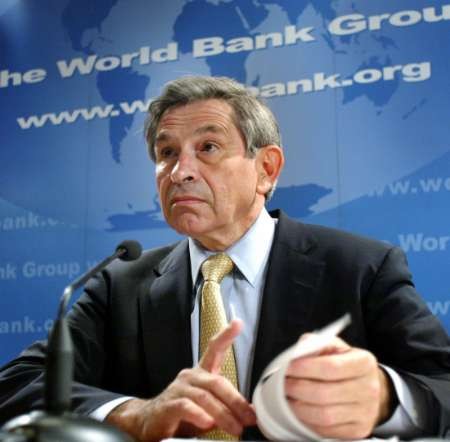
【워싱턴=로이터/뉴시스】 폴 울포위츠 신임 세계은행 총재가 7일(현지시간) 미국 워싱턴 세계은행 본부에서 기자회견을 하고 있다. [로이터 2005-06-08 11:17]
59년 전 세계은행, 정확히는 국제부흥개발은행이 발족했다. 글로벌 익스체인지의 캐빈 대나허가 "50년이면 충분하다"고 외친지도 10년이 지났고, 2000년 4월 워싱턴의 세계은행 반대 시위로부터도 5년이 지나, 최근엔 잦아드는 감마저 있다. 그러나, 폴 월포위츠 같은 네오콘이 총재로 임명된 사실에서 확인되듯이, 개혁은 외면당하고 있다. 이제 60년, 충분함을 넘어 지겹지 않나?
글로벌 익스체인지, <왜 세계은행은 개혁되어져야 하며 우리는 어떻게 할 수 있나?> ...
Why the World Bank Must Be Reformed and How We Can Do It
왜 세계은행은 개혁되어져야 하며 우리는 어떻게 할 수 있나?
1. The globalization of market forces, vigorously promoted by the World Bank, creates greater inequality. Over the past 30 years the globalization of the economy-led by the World Bank, the International Monetary Fund and transnational corporations-has proceeded at a quickening pace. These institutions have pressured governments to remove barriers to the cross-border flows of money and products. Advances in telecommunications and computer technology have made it possible for trillions of dollars in finance capital to zoom around the world, 24 hours a day, searching for the highest rate of interest.
This globalization of market forces has greatly increased inequality. Just 150 years ago there was not great inequality between the standards of living of people in the global north and those in Africa, Asia and Latin America. Now the richest 20 percent of the world's population receives 83% of the world's income, while the poorest 60% of the world's people receive just 5.6% of the world's income. The richest 20% of the world's population in northern industrial countries uses 70% of the world's energy, 75% of the world's metals, 85% of the world's wood, 60% of the world's food, and produces about 75% of the world's environmental pollution.
1. 세계은행이 정열적으로 추진한 시장의 힘의 지구화는 더 큰 불평등을 창조한다. 세계은행과 IMF, 초국적 기업 등에 의해 주도된 지난 30년간의 경제적 지구화는 점점 빠른 속도로 진행되고 있다. 이 기관들은 돈과 상품의 초국경적 유통을 가로막는 장벽을 제거하도록 각 국 정부에 압력을 넣고 있다. 통신과 컴퓨터 기술에서의 진보 덕분에 수조 달러의 자본이 하루 24시간 내내 최고의 이율을 찾아 세계를 샅샅이 훑는 것이 가능해지고 있다.
이같은 시장의 힘의 지구화는 불평등을 엄청나게 증가시켰다. 단지 150년 전에 지구 북반구 사람들의 표준적 삶은 아프리카, 아시아, 남미 사람들과 그렇게 큰 차이가 나지 않았다. 지금 세계의 가장 부유한 20%가 세계 소득의 83%를 차지하고 있는 반면, 하위 60%는 단지 5.6%만을 받고 있다. 북반구의 산업 국가들의 가장 부유한 20%가 전 세계 에너지의 70%, 전 세계 나무의 85%, 전 세계 식량의 60%를 사용하고, 전 세계 환경 오염의 75%를 생산한다.
2. The World Bank is wrong in arguing that economic growth will solve the problems we face. World Bank officials keep reassuring us that if we can just get economic growth rates high enough, these problems will be solved. We regularly hear the refain, "a rising tide floats all boats." But for those who don't own boats or have leaky boats, a rising tide means greater inequality between them and the more fortunate. The data shows that during a period of significant growth in world trade (1960 to 1989), global inequality got significantly worse: the ratio between the richest 20% and poorest 20% of the world population went from 30 to 1 to 59 to 1. We should also remember that unrestrained growth is the ideology of the cancer cell.
2. 경제 성장이 우리가 직면한 문제들을 해결할 것이라고 주장한다는 점이 세계은행의 잘못 중 하나이다. 세계은행 관료들은 우리가 충분히 높은 경제성장률만 확보할 수 있다면 이 문제들이 해결될 것이라고 우리를 쇠뇌시키기를 계속한다. 우리는 "밀물이 차오르면 모든 보트가 물에 뜬다"는 후렴구를 규칙적으로 듣고 있다. 그러나 배가 없거나 물이 새는 배를 가진 사람들에게 물이 차오른다는 사실은 더 부유한 사람들과 그들 사이의 불평등이 더욱 커진다는 것을 뜻한다. 통계에 따르면, 세계 무역에서 빛나는 성장의 시기였던 1960년부터 1989년까지 지구적 불평등 또한 눈에 띄게 나빠졌다. 상위 20%와 하위 20% 사이의 비율은 30대 1에서 59대 1로 변화했다. 또한 우리는 무제한적 성장이란 암세포의 이데올로기라는 점을 기억해야만 한다.
3. The real function of institutions such as the World Bank is not to promote "development" but rather to integrate the ruling elites of third world countries into the global system of rewards and punishments. Because direct colonial control of the third world is no longer tolerated, northern elites need an indirect way to control policies implemented by third world governments. By getting the elites onto a debt treadmill and promising them new cash if they implement policies written in Washington, the World Bank can effectively control third world policies. You can see the effects right next door in Mexico. For more than a decade, Mexican elites have followed the "Washington consensus" of policy reforms designed by the World Bank. This has created some billionaires, yet for most of the 85 million Mexican people life is more difficult now than it was ten or twenty years ago. If the ruling PRI party did not control the police and military, its blatant corruption and disastrous economic policies would not be tolerated for long.
3. 세계은행 같은 기관들의 진정한 기능은 "발전"을 증진하는 것이 아니라, 제3세계 국가들의 지배 엘리트들을 전지구적 보상과 처벌 체계에 통합시키는 것이다. 제3세계에 대한 직접적인 식민 지배가 더 이상 용납되지 않기 때문에, 북반구 엘리트들은 제3세계 정부들이 수행하는 정책을 간접적으로 통제할 방법을 필요로 한다. 부채의 챗바퀴 위에 제3세계 엘리트들을 세워놓고 그들이 워싱턴의 정책을 따른다면 새로이 현금을 주겠다고 약속함으로써, 세계은행은 제3세계 국가들의 정책을 효과적으로 통제할 수 있다. 바로 이웃인 멕시코에서 그 결과를 볼 수 있다. 10년 이상의 기간 동안 멕시코 엘리트들은 세계은행에 의해 디자인된 개혁 정책인 "워싱턴 컨센서스"를 따랐다. 이것이 몇 명의 억만장자를 창조했지만, 8천5백만의 멕시코인들 대다수의 삶은 10년이나 20년 전보다 더 어려워졌다. 여당인 PRI가 경찰과 군을 통제하지 않았다면, 노골적인 부패와 끔찍한 경제 정책들이 그렇게 오랫동안 용납되지 않았을 것이다.
4. Evidence from many countries shows that the policies promoted by the World Bank are disastrous. Whether you look at poor countries such as Somalia, Rwanda and Mozambique or well- endowed countries such as Ghana, Brazil and the Philippines, the policies pushed by the World Bank have worsened conditions for the majority. Evidence from dozens of countries under World Bank tutelage shows a similar pattern: structural adjustment policies may help countries pay off their foreign debts and may create some millionaires but the majority of the population suffers lower wages, reduced social services and less democratic access to the policy-making process.
4. 세계은행이 밀어붙인 정책들이 끔찍했다는 것을 보여주는 증거가 많은 나라에서 발견된다. 소말리와, 르완다, 모잠비크 같은 빈국에서든, 가나, 브라질, 필리핀 같은 자원 부국에서든, 세계은행이 추진한 정책들은 대다수 사람들의 삶의 조건을 악화시켰다. 세계은행의 감독 하에 있는 수십 개 국가들에서 유사한 양상들이 나타난다. 구조 조정 정책은 대외 부채를 지불하는데 도움이 되고 백만장자들을 만들어내기도 하지만, 대다수 사람들은 더 낮은 임금, 감소된 사회복지, 의사결정에 대한 민주적 접근 기회의 약화 등으로 고통받는다.
5. The World Bank's emphasis on expanding exports has been disastrous for the environment. As part of the standard structural adjustment package, the World Bank encourages countries to expand their exports so they will have more hard currency (dollars, yen) to make payments on their foreign debts. But this leads countries to overexploit their natural resources. They cut down their forests, which contributes to the greenhouse effect. They pump chemicals onto their land to produce export crops such as coffee, tea and tobacco, thus poisoning their land and water. They rip minerals out of the ground at a frantic pace, endangering human lives and the environment in the process. They overfish coastal and international waters, depleting a resource of the global commons.
5. 세계은행이 수출 확대를 강조하는 것은 환경에 대한 재앙이다. 세계은행은, 표준적인 구조조정 패키지의 일부로, 각 국가들이 그들의 대외 부채를 갚을 경화(硬貨)를 더 많이 획득할 수 있도록 수출을 확대하라고 부추긴다. 그러나 이는 그 나라들이 자연 자원을 남획하게 만든다. 각 국가는 숲을 베어내는데, 이는 온실 효과에 기여한다. 또 그 나라들은 커피나 차, 담배 같은 수출용 작물을 생산하기 위해 토양에 화학 물질들을 뿌리는데, 이로 인해 땅과 물이 오염된다. 또 그 나라들은 미친 듯한 속도로 땅 속에서 광물을 추출해내는데, 그 과정에서 인간의 삶과 환경은 위협받는다. 그 나라들은 연안과 대양의 물고기들을 남획함으로써, 전지구적 공유재산의 원천을 고갈시킨다.
6. The "free market" economic model being pushed on third world governments is not one the industrial countries used to develop themselves. All the wealthy countries-the USA, Japan, Germany, England, France and the recent success stories such as Taiwan and South Korea-used a heavily state-interventionist model that had government play a strong role in directing investment, managing trade and subsidizing chosen sectors of the economy. The United States was in many ways the "mother country" of protectionism, showing other wealthy countries how to do it. Would we have a big electronics industry or nuclear power industry were it not for the massive government subsidy program called the Pentagon?
6. 제3세계 정부에 강요되는 "자유시장" 경제 모델은 산업국가들이 그들 스스로를 발전시키는데 사용한 모델이 아니다. 미국, 일본, 독일, 영국, 프랑스, 그리고 최근의 성공담의 주역인 대만과 한국 등 모든 부유한 국가들은, 정부가 투자 지시와 무역 관리, 특정 경제 분야에 대한 보조금 지급 등의 강력한 역할을 하는 국가 개입주의 모델을 매우 큰 비중으로 사용했다. 미국은 다른 부국들에 본을 보여준 보호주의의 모국이다. 펜타곤이라는 이름의 대량 정부 보조 프로그램이 없었다면 거대 전력 산업 혹은 핵발전 산업을 갖고 있을까?
7. Globalization-from-above is being rejected and millions of people all over the world are struggling to build globalization-from-below. Globalization-from-above is controlled by wealthy elites and driven by a hunger for more wealth and power. But there is another form of globalization made up of grassroots alliances of human rights activists, trade unions, women's organizations, environmental coalitions and farmers organizations. This people-centered form of globalization does not have the amount of money or guns possessed by the elites but it does have moral authority. Just think about the contrast between the dominant system's focus on greed and our focus on meeting human needs. This alternative vision calls for more openness and accountability by institutions such as the World Bank and transnational corporations. It calls for raising wages, health and safety standards in the third world to bring them up to first world levels, rather than driving first world standards downward. It calls for stewardship of natural resources that will preserve something of the environment for our grandhcildren to enjoy. It seeks to redefine self- interest so that it is more in line with the common interest of humanity. The problem confronting us is how to get the leaders of the World Bank to listen to our demands for reform.
7. 위로부터의 지구화는 기각되고 있으며 전세계 수백만의 사람들이 아래로부터의 지구화를 건설하기 위해 투쟁하고 있다. 부유한 엘리트들이 위로부터의 지구화를 통제하고, 더 많은 부와 권력에 대한 굶주림이 그것을 추동한다. 그러나 인권 활동가들, 노동조합들, 여성운동 조직들, 환경단체들과 농민 조직들 같은 풀뿌리의 동맹으로 구성되는 또다른 형태의 지구화가 있다. 이 민중중심적 지구화는 엘리트들이 소유한 많은 돈이나 총이 도덕적 권위만을 갖는다. 탐욕에 대한 지배 시스템의 초점과 인간적 필요 충족에 대한 우리의 초점의 극명한 대조를 생각해보라. 이 대안적 비전은 세계은행이나 초국적 기업들 같은 기관들에게 더 많은 개방성과 책임성을 요구한다. 제1세계의 기준 아래로 전락하지 않고 그 수준으로 올라갈 수 있도록 임금 인상과 제3세계에서의 건강 및 안전 기준 등을 요구한다. 또한 우리 자손들이 환경의 일부를 누릴 수 있도록 천연 자원을 보존할 책무를 요구한다. 그것은 인류의 공동 이익과 일치할 수 있도록 자기 이익을 재정의할 것을 추구한다. 우리가 그 문제에 맞서는 것은 세계은행의 리더들이 우리의 개혁 요구에 귀를 기울이게 하는 방법이다.
An Easy Way to Pressure the World Bank for Change
세계은행이 변화하게 압력을 넣는 손쉬운 방법
The World Bank gets most of its capital by selling bonds to wealthy investors. If we could pressure large institutional funds (e.g., university endowments and state worker pension funds) to stop buying World Bank bonds as a way to protest the Bank's destructive policies, we could exert serious pressure on the Bank.
Just think about the huge impact the divestment campaign had on South Africa's white minority rulers during the closing days of apartheid. The divestment struggle also raised a key question: who controls how capital is invested and why isn't it a more democratic process?
Many institutions such as universities and retirement funds purchase bonds issued by the World Bank. The name appearing on the bonds will be the World Bank's formal name: International Bank for Reconstruction and Development. These are fixed rate securities which are sold by underwriters such as Goldman Sachs, Fidelity, First Boston, Credit Suisse and many Japanese banks. The bonds pay a good rate of return and are considered safe investments because they usually carry a triple-A rating. They are not officially insured by the U.S. government but, as one bond trader told us, the U.S. government would not stand by and let the World Bank default on its bonds. In other words, the U.S. taxpayer is the ultimate insurer of these bonds-just as we were forced to bail out the Wall Street speculators and Mexican financiers during Mexico's crash in early 1995.
세계은행은 그 자본의 대부분을 부유한 투자국가들에게 채권을 팔아서 마련한다. 세계은행의 파괴적 정책에 저항하는 한 방식으로, 우리가 (대학 기부금이나 주 노동자 연금 같은) 거대 기관 투자가들로 하여금 세계은행 채권 구입을 중단하도록 압력을 넣을 수 있다면, 우리는 세계은행에 중대한 압력을 행사할 수 있게 된다.
아파르헤이트가 끝날 무렵 동안 매각 운동이 남아공의 소수 백인 지배자들에게 미친 거대한 영향에 관해 생각해보라. 이 매각 투쟁은 핵심적 의문을 떠오르게 했다. 자본이 어떻게 투자되는지를 누가 통제하는가, 그리고 왜 그것이 더 민주적인 과정이 되지 못하나?
대학과 퇴직연금 같은 많은 기관들은 세계은행이 발행한 채권을 구매한다. 채권에 나타난 이름은 세계은행의 공식 명칭 : 국제부흥개발은행일 것이다. 이는 골드만삭스, 피델리티, 퍼스트 보스턴, Credit Suisse, 그리고 많은 일본 은행들 같은 보증인들에 의해 팔리는 고정 비율 증건이다. 그 채권은 회수율이 높고 그들이 대개 트리플 A 등급을 갖기 때문에 안전한 투자로 고려되어진다. 그들은 공식적으로는 미국 정부에 의해 발행되지 않지만 어떤 채권 거래인이 우리에게 말했듯이 미국 정부는 방관하지 않을 것이며, 세계은행이 그 채권들에 대해 채무불이행하지 않도록 할 것이다. 다시 말하면, 1995년 초반 멕시코 위기 동안 월스트리트 투기꾼들과 멕시코 자본가들에게 긴급 융자하도록 강요받았듯이, 미국 납세자들은 이 채권들의 궁극적 보증인이다.
출처 : 글로벌 익스체인지 웹사이트
http://www.globalexchange.org/campaigns/wbimf/reformWorldBank.html


최근 댓글 목록