사이드바 영역으로 건너뛰기

게시물에서 찾기코뮤니스트좌파

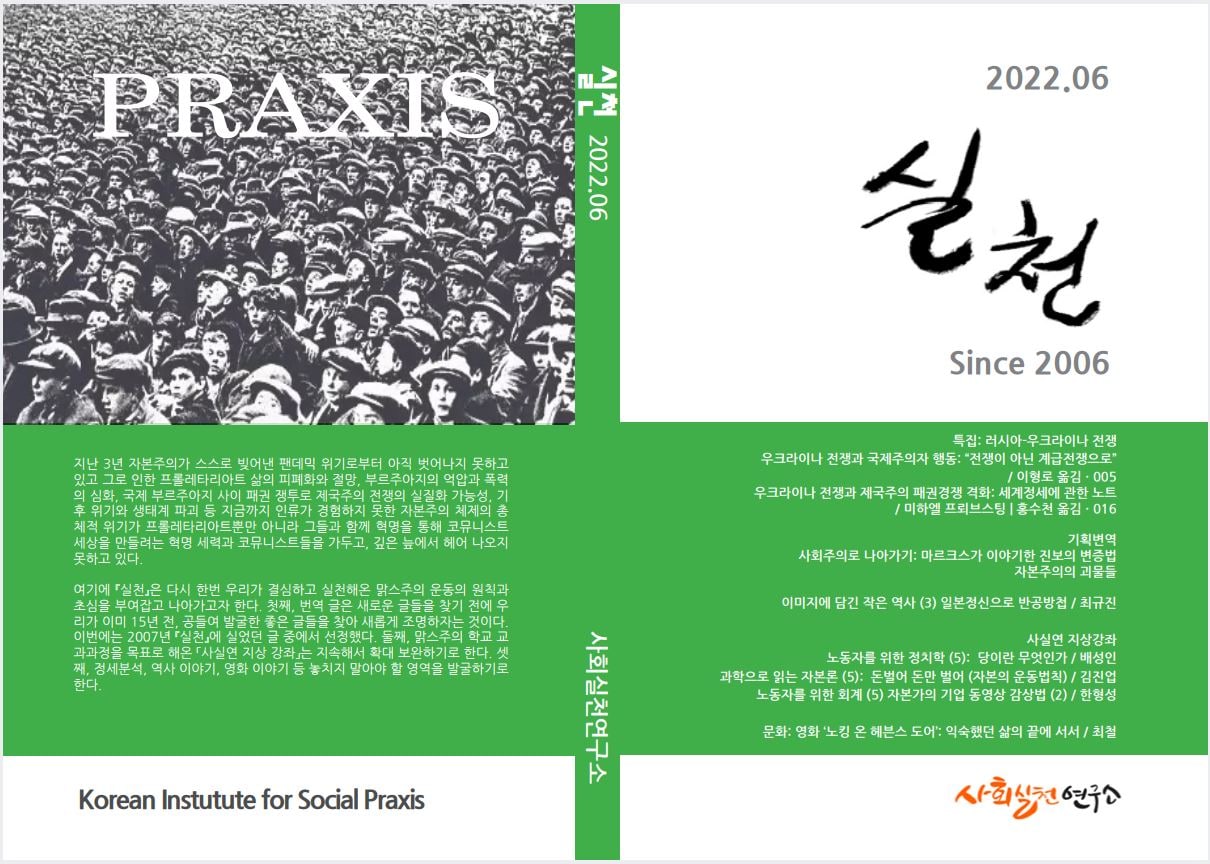
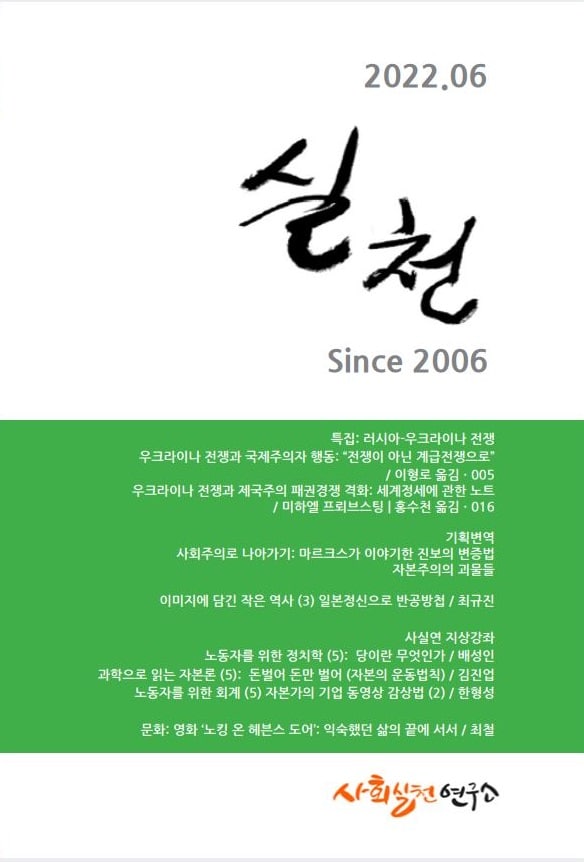
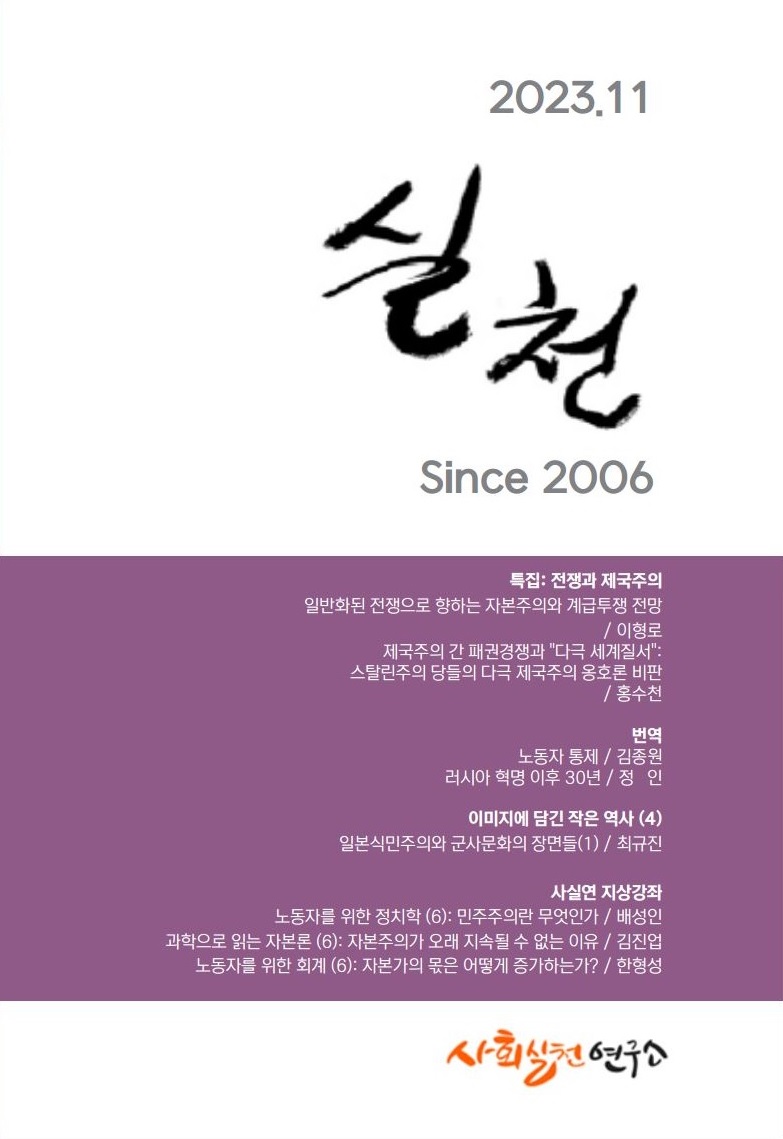
「실천」 복간 6호가 나왔습니다.


사용자 삽입 이미지


「실천」 복간 6호


□ 권두언
우리는 누구이며 무엇을 할 것인가  / 오세철 


□ 특집: 전쟁과 제국주의 
일반화된 전쟁으로 향하는 자본주의와 계급투쟁 전망  / 이형로
제국주의 간 패권경쟁과 "다극 세계질서": 스탈린주의 당들의 다극 제국주의 옹호론 비판  / 홍수천 


□ 번역
노동자 통제  / 김종원 
러시아혁명 이후 30년  / 정 인


□ 이미지에 담긴 작은 역사(4)
일본식민주의와 군사문화의 장면들(1): 예비병정과 남자교련  / 최규진 


□ 사실연 지상강좌
노동자를 위한 정치학(6) 민주주의란 무엇인가 / 배성인 
과학으로 읽는 자본론(6) 자본주의가 오래 지속될 수 없는 이유 장기이윤율저하법칙  / 김진업
노동자를 위한 회계(6) 자본가의 몫은 어떻게 증가하는가  / 한형성 


"이른바 사회주의 붕괴 이후 30여 년 동안의 역사에 우리가 얻은 교훈은 남한의 특수성을 인정하면서도 세계자본주의 체제의 증폭된 모순과 격화되는 계급투쟁을 노동자 관점에서 분석하는 것이다. 노동운동의 미래를 전망하는 총체적이고 종합적인 연구와 실천이 절실하다. 우리가 보았던 세상과 그 자본주의 체제를 혁명적으로 폐절시키고 자유로운 인간이 연합하는 코뮤니스트 사회건설이라는 혁명적 맑스주의자의 전망과 역사적 과제는 지금도 변함이 없다. 나아가 최근 몇 년 동안 우리가 심각하게 경험한 팬데믹, 기후 위기, 일반화된 세계 제국주의 전쟁의 가능성 등이 자본주의의 막다른 골목을 보여주고 있다."  (권두언 중에서)


발행 : 사회실천연구소
가격 : 15,000원


구입문의 :  sopractice@daum.net
전 화 : 070-4178-1073
팩 스 : 02-749-1073

진보블로그 공감 버튼트위터로 리트윗하기페이스북에 공유하기딜리셔스에 북마크

「실천」 복간 5호 : 원칙과 초심을 다시 한번 부여잡으며

권두언

원칙과 초심을 다시 한번 부여잡으며

 5호전.jpg


3년 전 권두언은 맑스주의 복원과 코뮤니스트 세상을 위하여라는 제목으로 실천 복간 2호를 맑스주의 특집으로 펴낸 바 있다그 글은 이렇게 시작한다. “2017년은 러시아혁명 100주년이 되는 해였고, 2018년은 맑스 탄생 200주년이 되는 해이다그리고 2019년은 코민테른 100주년이 되는 해이다공교롭게도 혁명혁명이론과 혁명조직 건설의 역사가 연속적으로 연결되는 의미가 있어 사회실천연구소 회원을 포함한 동지들은 혁명운동 평가와 전망이라는 모임을 만들어 공부하고 토론하는 활동을 지속해 왔다.” 그런데 우리는 과연 얼마나 그 활동에 충실했는가를 스스로 묻고 겸허하게 반성할 필요가 있다.


지난 3년 자본주의가 스스로 빚어낸 팬데믹 위기로부터 아직 벗어나지 못하고 있고 그로 인한 프롤레타리아트 삶의 피폐화와 절망부르주아지의 억압과 폭력의 심화국제 부르주아지 사이 패권 쟁투로 제국주의 전쟁의 실질화 가능성기후 위기와 생태계 파괴 등 지금까지 인류가 경험하지 못한 자본주의 체제의 총체적 위기가 프롤레타리아트뿐만 아니라 그들과 함께 혁명을 통해 코뮤니스트 세상을 만들려는 혁명 세력과 코뮤니스트들을 가두고깊은 늪에서 헤어 나오지 못하고 있다.


여기에 실천은 다시 한번 우리가 결심하고 실천해온 맑스주의 운동의 원칙과 초심을 부여잡고 나아가고자 한다첫째번역 글은 새로운 글들을 찾기 전에 우리가 이미 15년 전공들여 발굴한 좋은 글들을 찾아 새롭게 조명하자는 것이다이번에는 2007년 실천에 실었던 글 중에서 선정했다둘째맑스주의 학교 교과과정을 목표로 해온 사실연 지상 강좌는 지속해서 확대 보완하기로 한다셋째정세분석역사 이야기영화 이야기 등 놓치지 말아야 할 영역을 발굴하기로 한다.


2007년 2월호와 3월호에서 역사 유물론에 실린 글들로 파레쉬 차토파디야이(Paresh Chattopadhyay)의 사회주의로 나아가기맑스가 이야기한 진보의 변증법과 스티브 샤비로(Steve Shaviro)의 자본주의의 괴물들을 선정했다첫 번째 글은 낡은 사회의 혁명적 변혁을 통한 인간사회의 전사에서부터 인류의 역사를 향한 이행이다여기서 인류의 진보는 일종의 모순적 운동즉 부정성의 변증법이 전개된 것이며” 이 글은 자본이 자신의 내적 모순을 통하여 자기 붕괴 조건과 함께 자유로운 개인들의 연합을 건설하는 조건들을 만들어 낸다는 맑스의 핵심 명제를 논의하고 있다두 번째 글은 이윤율 저하의 경향게으름뱅이 나방야수의 얼굴을 가진 자본주의 그리고 죽은 노동의 시작을 이야기하면서 죽었을 때조차 그들은(좀비약탈과 맹목적인 소비의 의식을 꾸준히 거행한다좀비는 제1세계와 제3세계 사이를 배회하면서 아울러 노동과 게으름소외된 생산과 눈에 띄는 소비 사이를 떠돌아다니고 있다고 비유한다.


사실연 지상 강좌가 다섯 번째 계속된다세 동지의 글은 다음과 같다다른 회원도 이 지상 강좌에 참여하여 맑스 학교의 강의안을 준비했으면 하는 바람이다김진업은 돈 벌어 돈만 벌어(자본의 운동법칙)”배성인은 당이란 무엇인가그리고 한형성은 자본가 기업 동영상 감상법손익계산서로 연재를 이어가고 있다.


그리고 최규진은 이미지에 담긴 작은 역사일본 정신으로 반공·방첩을”, 홍수천은 세계정세에 관한 노트에서 우크라이나 전쟁과 제국주의 패권 경쟁의 격화라는 번역 글을이형로는 우크라이나 전쟁과 국제주의자 행동전쟁이 아닌 계급전쟁으로그리고 최철은 영화 보고 상상하기에서 노킹 온 해븐스 도어(Knockin' On Heaven's Door)-1997년 -익숙했던 삶의 끝에 서서-’를 전하고 있다.


다시 한번 사회실천연구소와 실천은 맑스주의 운동의 끈을 놓지 않겠다는 굳은 다짐을 모든 동지에게 전한다.


2022년 6

사회실천연구소를 대신하여

오세철 드림

진보블로그 공감 버튼트위터로 리트윗하기페이스북에 공유하기딜리셔스에 북마크

『실천』 복간 5호가 발간되었습니다!

『실천』 복간 5호가 발간되었습니다!
 
5호.jpg
 
"지난 3년 자본주의가 스스로 빚어낸 팬데믹 위기로부터 아직 벗어나지 못하고 있고 그로 인한 프롤레타리아트 삶의 피폐화와 절망, 부르주아지의 억압과 폭력의 심화, 국제 부르주아지 사이 패권 쟁투로 제국주의 전쟁의 실질화 가능성, 기후 위기와 생태계 파괴 등 지금까지 인류가 경험하지 못한 자본주의 체제의 총체적 위기가 프롤레타리아트뿐만 아니라 그들과 함께 혁명을 통해 코뮤니스트 세상을 만들려는 혁명 세력과 코뮤니스트들을 가두고, 깊은 늪에서 헤어 나오지 못하고 있다. 
 
여기에 『실천』은 다시 한번 우리가 결심하고 실천해온 맑스주의 운동의 원칙과 초심을 부여잡고 나아가고자 한다. 첫째, 번역 글은 새로운 글들을 찾기 전에 우리가 이미 15년 전, 공들여 발굴한 좋은 글들을 찾아 새롭게 조명하자는 것이다. 이번에는 2007년 『실천』에 실었던 글 중에서 선정했다. 둘째, 맑스주의 학교 교과과정을 목표로 해온 「사실연 지상 강좌」는 지속해서 확대 보완하기로 한다. 셋째, 정세분석, 역사 이야기, 영화 이야기 등 놓치지 말아야 할 영역을 발굴하기로 한다."  - 권두언 중에서 
 
 
『실천』 복간 5호
 
 
차 례
 
권두언
원칙과 초심을 다시 한번 부여잡으며  / 오세철 
 
특집: 러시아-우크라이나 전쟁
우크라이나 전쟁과 국제주의자 행동: “전쟁이 아닌 계급전쟁으로”  / 이형로 옮김 
우크라이나 전쟁과 제국주의 패권경쟁 격화: 세계정세에 관한 노트  / 미하엘 프뢰브스팅|홍수천 옮김  
 
기획번역: 
사회주의로 나아가기: 마르크스가 이야기한 진보의 변증법  / 파레쉬 차토파디야 슈미트|김온지 감수 
자본주의의 괴물들  / 스티브 샤비로|황동하 감수
 
그림판
이미지에 담긴 작은 역사 (3): 일본정신으로 반공방첩  / 최규진 
 
사실연 지상강좌 
노동자를 위한 정치학 (4): 당이란 무엇인가  / 배성인
과학으로 읽는 자본론 (5): 돈벌어 돈만 벌어 (자본의 운동법칙)  / 김진업 
노동자를 위한 회계 (5) 노동자도 알아야 할 자본가의 기업 동영상 감상법  / 한형성 
 
문화
영화 ‘노킹 온 헤븐스 도어’: 익숙했던 삶의 끝에 서서  / 최철 
 
 
▶가격 : 15,000원
▶구입문의 : sopractice@jinbo.net
▶발행 : 사회실천연구소
진보블로그 공감 버튼트위터로 리트윗하기페이스북에 공유하기딜리셔스에 북마크

[공산주의좌파 이론 연재 1] 제1부 공산주의좌파 역사 (1) 독일 공산주의좌파 역사

<출처> http://communistleft.jinbo.net/xe/index.php?mid=cl_bd_05&document_srl=178693


[공산주의좌파 이론 연재 1]


제1부 공산주의좌파 역사


(1) 독일 공산주의좌파 역사


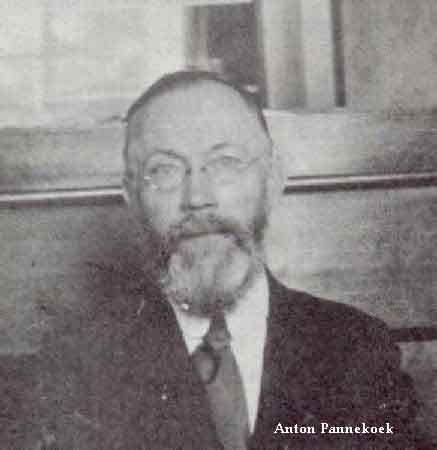
혁명의 해 : 판네쿡과 유럽 공산주의의 형성, 1917-1919 1)


맑스주의를 위한 투쟁 : 판네쿡과 러시아 혁명


1917~1919년 사이 판네쿡의 활동은 극적인 세계적 사건의 배경과 대비해야 한다. 1914년 전 유럽에서의 혁명은 결단한 소수집단의 헌신적인 교리와 꿈으로 이루어졌다. 1919년까지 혁명적 분위기는 전 유럽을 휩쓸었다. 1917년 볼셰비키 혁명과 1918년 독일 혁명은 판네쿡이 그의 생애의 과거 20년을 헌신했던 세계 프롤레타리아트 혁명의 시작을 알리는 것 같았다.


다른 대부분의 혁명적 좌파와 같이 판네쿡은 볼셰비즘과 러시아 혁명의 열광적 지지자였다. 1917년 2월 혁명의 시작으로부터 판네쿡은 혁명과정의 뉴스를 따라 추적하고 유럽 사회주의 운동을 위한 그 의미를 분석했다. 차르가 무너지고 며칠 후 판네쿡은 2월 혁명이 “계급 의식적 프롤레타리아트 혁명이 아니라 전쟁으로부터 나온 최초의 위대한 민중운동”이라고 주장했다. 판네쿡은 러시아에서 프롤레타리아트 혁명이 아직 무르익지 않았다고 보았다.


그러나 판네쿡의 주요관심은 초기 시기에도 혁명의 중요한 역할을 한 프롤레타리아 평의회 체계, 즉 소비에트에 있었다. 1917년 이전에 판네쿡과 혁명적 좌파는 노동계급이 혁명을 실현하는 기구형식을 모호하고 일반화된 용어로 설명했었다. 트로츠키도 1905년 혁명의 역사를 광범위하게 토론했지만, 1905년 러시아의 소비에트에 대해서 어떤 관심도 기울이지 않았다. 그러나 판네쿡은 2월 혁명의 궤적을 추적하면서 혁명발전을 위한 새로운 평의회기구의 중요성을 놓치지 않았다. 평의회는 공격적 혁명과정의 전술적 도구일 뿐 아니라 미래의 사회주의 사회의 재조직을 위한 맹아라고 보았다.


2월 혁명과 10월 혁명 기간 판네쿡은 레닌과 볼셰비키에 대한 전적인 연대를 표시했다. 미래 혁명의 경로에 대한 예후에서 판네쿡은 종전의 입장을 뒤집고 러시아가 “유사-맑스주의 교조주의의 형태로 사회주의를 위하여 무르익지 않았다”는 멘셰비키의 주장을 비난했다. 룩셈부르크 같은 볼셰비즘에 대해 다른 비판자와 달리, 이 시기 동안 판네쿡은 당 조직에 대한 레닌의 실제적 견해에 동조하였다. 볼셰비키에 대한 판네쿡의 확신은 그들이 혁명적 계급투쟁을 수행함에 비타협적 헌신을 하는데 기반을 두고 있었다. 볼셰비키의 힘은 조직구조에 있지 않고, 공격적 전투력과 맑스주의 원칙에 대한 확고한 헌신이라고 계속해서 강조했다. 굶주림에 대한 자발적 항의를 강력한 혁명적 대중운동으로 끌어올린 그들의 자질이라고 보았다. 그는 사회주의를 위한 “성숙”은 “투쟁과 권력을 향한 프롤레타리아트의 성숙”에 의해 상당 정도 결정된다는 것을 볼셰비키가 충분히 이해했다고 보았다
 
판네쿡에게 볼셰비키의 투쟁은 유럽 전역에서 천천히 일어나는 새로운 사회주의의 핵심본질이었다. 러시아 혁명에 대한 판네쿡의 관심은 세계혁명이라는 더 넓은 과정 사이의 관계 그리고 사회의 프롤레타리아트 재조직화의 모델을 나타내는 것에 주로 초점이 있었다. 그러나 이러한 초기 시기에도 판네쿡은 러시아의 프롤레타리아트가 서구에서 투쟁하는 조건과 다르다는 것을 강조했다. 러시아에서의 핵심요인이 차르에 대한 부르주아의 반대와 농민의 불만이었다면, 독일과 기타 서유럽의 경우는 혁명이 완전한 프롤레타리아 성격이지만 동시에 노동자들은 사민주의로부터 정신적으로 스스로 해방되고, 의회와 노조투쟁의 기나긴 유산으로부터 해방되는 것이었다.


정치적 삶의 새로운 형식을 위하여 : 브레멘 좌파와 독일 혁명


1917년은 전쟁의 피로가 최고조에 오르자 러시아에서뿐만 아니라 서유럽에서도 격정의 해였다. 민중적 불만이 러시아의 역사적 사건 때문에 고조된 독일만큼 위기에 처한 나라는 없었다. 브레멘에서는 러시아 혁명의 발발이 혁명적 좌파의 상황에 즉각적인 영향을 미쳤다. 2월 혁명이 나자, 브레멘 경찰은 보고서에서 “행동파 혁명적 좌파 소집단은 노동계급에 대한 강력한 영향력과 잠재적 혁명의 위험한 존재”라고 표현했다. 러시아 혁명 영향의 가장 최초의 직접적인 표현은 1917년 3월 31일 나타났는데, 수천 명의 브레멘 부두 조선 노동자가 러시아 혁명과의 연대와 전쟁 지속에 항의하기 위해 자발적으로 일손을 놓고 시 중앙으로 행진한 사건이었다.


러시아 혁명은 또한 1917년 봄 동안 미래에 채택할 조직형식에 관한 브레멘 좌파들 내부의 토론에 강력한 자극을 주었다. SPD(독일사민당)로부터 좌파의 축출은 이 문제를 더 시급하게 만들었다. 판네쿡의 관점에서 브레멘 좌파의 당과 노조 조직의 옛 형식은 새롭고 직접적인 계급도구가 기대되는 혁명적 투쟁에는 적합하지 않다고 보았다. 그들이 그린 새로운 조직 형식의 모델은 미국의 IWW(세계산업노동자연맹)2)에 대부분 영감을 얻었다. IWW(세계산업노동자연맹)와 친숙하게 된 것은 첫째, 전쟁 전까지 IWW(세계산업노동자연맹)를 편집한 함부르크 혁명적 좌파 지도자가 Fritz Wolffheim(후리츠 울프하임) 이었고, 두 번째는 함부르크 항에 독일어판 문헌을 배포한 미국 IWW(세계산업노동자연맹) 선원의 활동 때문이었다.


1917년 3월 Wolffheim(울프하임)은 당과 노조의 기능을 통합하는 새로운 “단일 조직”의 설립을 「Arbeiterpolitik」에 제청했다. 자본주의의 집중화되고 카르텔화되는 경향에 효과적으로 맞서는 방법은 자발적인 공장수준의 조직적 그물망 주위에 구조화된 지역적인 계급 운동밖에 없다는 가설에 근거하고 있었다. 이 견해는 그와 토론하기 위해 함부르크로 여행 온 Knief3)에 의해 즉각 채택되었다.


새로운 조직구조에 대한 브레멘 좌파의 추구는 1917년 4월 독일 전역에서 일어난 자발적 파업과 일치했고 그로부터 더욱 강화되었다. 파업은 생활조건의 악화에 대한 반응이었지만 혁명적 기질은 여러 곳에서 보이게 되었다. 라이프치히에서는 파업을 조정하기 위한 노동자평의회가 구성됐는데 이는 독일에서 나타난 최초의 노동자평의회였다. 파업투쟁은 주로 현장 활동가운동으로 나타났지만, 점차 노동계급의 자기 조직화와 참여로 나아갔다. 노조지도부의 파업에 대한 간섭을 막기 위하여 노동자들은 개별공장과 산업지역으로부터 파견된 대표들의 조정망을 형성하여 옛 노조지도부를 대체하였다. 옛날 지도자 대신 노동자들은 노동자위원회에서 현장대표를 선출했다. 이러한 위원회로부터 그다음 해 독일 전역에 걸쳐 일어난 노동자평의회의 맹아적 구조가 생겨났다.


브레멘에서는 이러한 운동의 정치적 성격이 주로 좌파에 의해 결정되었다. 10여 년 넘는 정치투쟁기간 동안 좌파는 1917~1919년의 투쟁에서 중추적 임무를 수행한 대규모 산업공장에서의 현장 전투파 조직을 발전시켰다.


4월 파업으로 고무받고 ‘단일’ 조직형식의 기초를 희망하면서, 브레멘 좌파는 1917년 6월, 7월 또 다른 파업과 시위를 일으키는 데 역할을 하였다. 좌파에 대한 정부의 물리력이 동원되자 Knief는 체포를 피해 지하로 들어갈 수밖에 없었다. 판네쿡과 협력하기 위해 네덜란드로 가려다가 마음을 바꿔 베를린에서 활동하기로 했다.


베를린에서 그는 새로운 혁명적 좌파 조직을 건설하려고 하였다. 7월까지 새로운 조직 결성을 제안하기 위하여 전 독일의 수많은 좌파집단으로부터 실행위원회를 구성하려고 했다. 이러한 소집은 프롤레타리아 조직에 대한 판네쿡과 브레멘 좌파의 개념과 일치하는 것이었는데, “새로운 지도자당”이 아니고 “정치적 삶의 새로운 형식을 만들어가는” 완전히 새로운 조직건설의 필요성이었다.


이러한 소집요구에 1917년 8월 26일 13명의 대표가 비밀리에 베를린에 모여 ISD(독일국제사회주의자)의 창립대회를 한다. 여기서 “국제”라는 말은 ISD(독일국제사회주의자)가 “발전될 제3인터”와 현존하는 찌머발트 좌파의 회원임을 밝히는 의미였다. 내부구조로 보면 ISD(독일국제사회주의자)는 “단일조직”이며 자발적인 지방공장, 지역 및 업종의 분권화된 망을 건설하는 것이었다.


임박한 혁명투쟁에 대한 ISD(독일국제사회주의자)의 믿음은 두 번째 자주적 파업이 1918년 1월에 일어나자 더욱 강화되었다. 이 사건은 1월 28일 베를린에서 40만 명의 금속노동자가 거리로 나오면서 시작되었다. 즉각 공장 대표가 선출되고 400명의 노동자평의회가 만들어졌다. 이때는 요구가 ‘평화협상에서의 노동자 참여’였다. 며칠 사이에 파업은 백만이 넘는 노동자를 포괄했으며 그 시기까지 독일에서의 민중적 불만이 표현된 것 중 가장 큰 것이었다. 브레멘에서는 ISD(독일국제사회주의자)가 수천 조선노동자의 파업을 조정하는 역할을 했는데, 그 파업은 부두에서 2주간의 군대점거로 진압되었다.


이러한 파업은 분명히 독일노동계급 사이에 급진적 반전경향이 자리 잡고 전쟁 전 정치적 통일의 분위기는 급속하게 사라지고 있음을 보여줬다. 노동계급 행동의 심각한 반발 없이 8개월이 지나갔지만, 경제조건과 군사상황은 꾸준히 악화되기 시작했다. 9월 초와 10월 초의 주요 패배를 뒤이은 군사상황의 악화는 더는 숨길 수 없었고 국가의 분위기는 변하기 시작했다.

사진1.JPG


혁명은 1918년 11월 4일 Kiel(키일)에서의 해군반란으로 시작되었고 독일 전역으로 눈사태처럼 번져 나갔다. 이 사건의 초기 과정은 판네쿡과 독일 좌파의 관점을 입증하는 것처럼 보였다. 독일혁명의 형식은 거의 그들의 예측과 같았다. 주로 자발적 성격을 띤 대중행동과 대중파업이었고, 기구 형식도 노동자평의회와 병사평의회였다. 11월 초 며칠 동안 1만 개 넘는 평의회가 모든 작업장과 부대에서 선출되었고 권력은 잠정적으로 그들 손에 있었다. 러시아 혁명에서의 평의회(소비에트)가 조직 형식으로 평의회의 사상을 선전하는데 주요한 역할을 한 것이 분명하지만, 그것은 지난 2년 동안 독일노동자의 경험보다는 덜 중요한 것이었다. 평의회와 정부에서의 주요세력이 된 SPD(독일사민당) 역할 때문에, 옛 국가의 몰락과 노동자평의회 체제의 발전 모두 러시아보다 독일에서는 덜 급진적 과정이었다.


브레멘에서는 혁명이 수천 명 부두 및 조선노동자들의 파업으로 1918년 11월 4일 시작되었다. 그리고 Kiel(키일)의 혁명적 선원들은 지역 군대의 무장해제를 도착한 이틀 후 완수하였다. 같은 날 도시 노동자평의회를 위한 선거가 부두와 공장에서 있었다. 평의회는 180명 노동자와 병사로 구성되었는데 USPD(독일독립사회민주당)와 ISD(독일국제사회주의자)의 회원이었다. USPD(독일독립사회민주당)의 지부장인 Henke가 의장으로 선출되었다. 평의회의 첫 번째 행동은 기존 시를 해산하고 시청에 붉은 기를 다는 것이었다. 동시에 ISD(독일국제사회주의자)가 주요 세력이 된 공장과 부두에 지역 평의회를 건설하는 것이었다.
 
ISD(독일국제사회주의자)는 혁명 자체에는 제한된 역할만 수행했지만, 당은 결정적으로 움직일 준비가 되어 있었다. 이전의 USPD(독일독립사회민주당)와 공장 전투파 사이의 통제를 통하여, ISD(독일국제사회주의자)는 혁명적 주도권을 장악할 위치에 있었다. 혁명 초기 동안 ISD(독일국제사회주의자)는 전략적 입장을 요약하는 두 가지 주요 표어를 채택했다. “모든 권력을 평의회로!”, “부르주아지로부터 프롤레타리아 혁명으로!”가 그것이다. 이 주제는 판네쿡에 의한 이론적 초점이 되었다.


독일 혁명의 직접적 참여자는 아니지만, 판네쿡은 ISD(독일국제사회주의자)의 전략적 관점을 정교화하는데 중심적 역할을 수행했다. 11월, 12월의 중요한 시기 동안 판네쿡의 상황에 대한 이론적 분석은 Arbeiter Politik에 정기적으로 실렸으며 사실 Knief를 포함한 다른 기고자들보다 더 많았다. 일반적 상황에 대한 판네쿡의 평가는 11월 혁명이 부르주아혁명이라는 가정에 근거하고 있는데, 이는 국가권력의 옛 기구가 그대로 온존해 있지만, 프롤레타리아가 부르주아 목적을 수행하게 되어있었기 때문이다. 이 시점에서 그는 퉁명스럽게 말한다. “프롤레타리아는 스스로 자랑할 이유가 없다. 그 임무의 조그만 부분만이 성취되었을 뿐이다.” 그러나 판네쿡은 스스로 자랑할 프롤레타리아혁명으로의 이행은 전체로서의 계급을 일으키는 평의회 틀 내에서 행동하는 노동계급의 적극적 소수의 노력을 통해서만 가능하다는 것이었다. 동시에 판네쿡은 순수한 프롤레타리아기구가 아니라는 근거로 평의회에 비판 없이 의존하는 것을 경계했다. 주요임무는 사회주의를 향한 전면적 서곡으로 프롤레타리아의 명확화와 의식의 도구로 봉사해야 한다는 것이다.


혁명적 행동계획의 추적을 시도하면서 판네쿡은 전쟁기간 동안 그랬던 것처럼 프롤레타리아 권력의 진정한 형식을 건설하는 첫 번째 단계로 전쟁 전 사회주의운동의 정치와 완전한 단절을 할 필요가 있다고 강조했다. 그가 보기에 SPD(독일사민당)는 전쟁기간에 더욱 “혁명적 프롤레타리아와 사회주의의 적”이 되었다. SPD(독일사민당)에 대해서는 덜 적대적이었지만, 판네쿡은 그것도 사회주의 변혁의 도구로서 거부했다. 판네쿡은 USPD(독일독립사회민주당) 열망 속에 있는 국가사회주의 유형은 “노예의 가장 최악의 형태”를 표현한다고 경고했다.


혁명을 급진화하려는 ISD(독일국제사회주의자)의 시도는 혁명 때문에 자유로운 몸이 된 후 11월 18일 브레멘으로 돌아온(뮤니히에서 1월 활동 때문에 체포된) Knief에 의해 고무되었다. 중앙 노동자평의회 모임에 예기치 않게 극적으로 나타난 그는 브레멘 좌파의 공격적 전투성을 사로잡는 말로 시작했다. “이 순간 중요한 문제는 권력의 전복이다.” 그는 브레멘 노동계급을 동원하는 운동을 시작했다.


이 운동은 노동자 및 병사평의회가 혁명적 기관이 되어야 함을 요구하는 ISD(독일국제사회주의자) 주도의 시위 파업과 함께 11월 27일 시작되었다. 이틀 후 Knief는 중앙 노동자평의회 모임에서 일련의 요구를 제시하는 2만 노동자 시위를 이끌었다. 그 요구는 ①평의회 체제에 기반을 둔 프롤레타리아독재의 확립 ②모든 비프롤레타리아 요소의 제거 (사회애국주의를 포함한) ③노동자의 즉각적 무장과 부르주아지의 무장해제 ④Bürgerzeitung의 통제를 중앙 평의회로의 이전이었다.


공격적 혁명에 대한 헌신과 함께 ISD(독일국제사회주의자)는 그 이름을 IKD(독일국제공산주의자)로 11월 23일 바꿨다. 이론사업에 Arbeiter Politik을 보완하기 위하여 IKD(독일국제공산주의자)는 폭넓은 전국, 지역 배포망을 갖게 된 그리고 독일 전역에 걸쳐 IKD(독일국제공산주의자)의 견해를 전파할 수 있는 일간 선동지 Der Kommunist(코뮤니스트)를 창간했다.


IKD(독일국제공산주의자)의 강력한 힘에도 불구하고, 혁명 후 처음 몇 주는 브레멘에서 급진적 효과를 거두지 못했다. 중앙 노동자평의회도 독일의 다른 시 정부가 당면한 문제에 부딪혔고 혼란스런 정치상황이 해결될 때까지 시간 벌기에 급급했다. 옛 시 행정구조는 중앙 노동자평의회의 감독하에 기능하기 시작했다. 관리들은 병사평의회로부터 축출됐지만, 군대의 저항은 적군의 구성을 방해했다. 평의회는 일상 업무에 능동적이고 목적의식적이었지만 혁명 초기 몇 주간 독일 곳곳에서 일어난 평의회와 달리 행동보다는 분위기에 의존했다.


IKD(독일국제공산주의자)는 브레멘 노동계급을 동원하는데 추동력을 강화함으로써 11월의 질서정연한 혁명과정을 12월에는 평의회 역할의 보다 급진적 개념을 발전시켰다. 12월 12일 노동자 및 병사평의회는 하루 후에 풀어주려고 부르주아 인질을 체포했다. 12월 21일 평의회는 Bürgerzeitung을 접수하고 그를 USPD(독일독립사회민주당)에 넘겼다. 12월 24일 평의회는 국회의원 선거를 지지하지 않고 평의회체제 지지를 재확인했다. 5일 후에는 IKD(독일국제공산주의자)와 USPD(독일독립사회민주당) 성원에게 무기를 지급했다. 힘겨루기의 첫 번째 시험은 이틀 후 75보병연대가 브레멘에 돌아올 때였다. Freikorps(자유군단)4)가 형성된다는 두려움으로 무장 노동자와 혁명군은 보병연대를 포위하고 무장해제를 시켰다.


이러한 일련의 사건은 브레멘에서 일어났지만, 독일 혁명은 점차 두 적대 진영으로 양극화되었다. 상반되는 표어, 즉 의회냐 평의회체계인가라는 상징 표현의 이러한 갈등은 독일 혁명에 대한 근본적 해석의 차이에 기반을 둔 투쟁이었다. 권력을 장악한 직후 프리드리히 에베르트가 이끄는 SPD(독일사민당) 주도의 임시정부는 옛 정권의 기구와 동맹을 맺고 평의회 권력을 침해하기 위해 빠르게 움직였으며 혁명을 좌파에게 몰아가길 바랐던 세력을 분산시켰다. 이러한 세력의 연합은 노동조합주의를 정당화하고 평의회를 격하시키는 노조와 사용자 사이의 Stinnes-Legien 협약5)(11월 15일)으로 제도화되었다. 더욱 중요한 것은 새로운 국가의 독일 관료들의 권위를 보장한 Ebert-Groener 협정6)(11월 10일)이었다. 혁명의 미래 진로는 임시정부가 국가의 최종 정치형태를 결정하기 위하여 제헌의회에 개입할 준비를 했을 때 명확해졌다. 이것이 정부의 구조를 비프롤레타리아 사회계급의 수중에 들어가게 한다는 걸 깨달은 좌파는 평의회체제에만 기반을 둔 정부를 요구하기 시작했다. 12월 16일 노동자 및 병사평의회의 전국대회까지, 평의회 권력이 이름뿐 이라는 것이 명확해졌다. 25만 노동자와 병사가 평의회체제를 찬성하면서 베를린 거리에서 시위했지만, 대회를 주도한 SPD(독일사민당)는 그 결과가 예견된 결론임을 확신했다. 12월 19일 중요한 투표가 있었을 때, 대표들은 평의회 권력은 과도기적이고 따라서 미래 의회에 넘길 것을 선언했다.
 사진2.JPG  


혁명의 혼란스런 처음 몇 주간 IKD(독일국제공산주의자)와 스파르타쿠스그룹7) 사이의 단결 부족은 좌파를 무겁게 짓눌렀고 혁명으로 나아가는 미래의 전망을 어둡게 했다. 이 시기 동안 판네쿡은 특히 좌파 통일의 중요성을 강조하는 고통을 겪었다. 사건의 속도가 순간순간 달라지고 반혁명적 경향이 강화되기 시작했을 때, IKD(독일국제공산주의자)와 스파르타쿠스그룹은 가까워지기 시작했다. 12월 5일 IKD(독일국제공산주의자)는 스파르타쿠스그룹이 어떠한 행동을 하여도 그를 지지한다고 발표했다. 12월 16일 스파르타쿠스그룹이 좌파를 통일시키는 의식적 단계로 간주한 룩셈부르크의 제안을 발간했다. 이 시기 동안 칼 라덱은 두 집단 사이의 차이를 중재하는 시도를 하기 위해 볼셰비키의 파견자로 모스크바로부터 베를린으로 돌아왔다. 공식적 통합과정은 새로운 공산당의 창립대회를 여는 12월 24일 IKD(독일국제공산주의자)의 전국대회에 스파르타쿠스그룹이 개입하는 제안이었다. 통합의 마지막 걸림돌은 스파르타쿠스 그룹이 USPD(독일독립사회민주당)로부터 철수할 의사를 천명하는 12월 29일에 제거되었다.


공식적으로 KPD(독일공산당)의 창립대회는 12월 3일부터 1919년 1월 1일 사이에 베를린에서 개최되었다. 벌어진 토론을 보면 독일 공산주의의 두 흐름 사이의 전망에 대한 근본적 차이가 해소되지 않았음을 보여 주었다. 주요 분화지점은 새로운 조직의 성격이었다. 스파르타쿠스그룹은 중앙집권화된 조직을 요구하지만 IKD(독일국제공산주의자)는 새로운 당이 모든 공산주의 지향 집단의 느슨한 연맹이 되어야 한다는 입장을 재천명했다. 판네쿡의 관점에 따라 IKD(독일국제공산주의자)는 당 조직의 진정한 기반이 “내부 목적 통일과 결합한 개별집단의 외적 독립”이라는 공식으로 요약된 “정신적 통일” 이여야 한다고 주장했다. IKD(독일국제공산주의자)는 또한 지방조직은 당과 노조기능을 결합한 “단일조직”이라고 요구했다. 이 문제는 공산주의자가 기존 노조연맹에 참여해야 하는가의 문제와 관련되어 있었다. IKD(독일국제공산주의자)는 노동자평의회 틀 내에서 생동하는 “단일조직”에 의해 노조기능이 수행되어야 한다고 보았다. 이러한 입장은 다수의 유능한 스파르타쿠스 지역 지도자의 지지를 받았다. 심각한 논쟁을 피하고자 룩셈부르크는 이 문제와 관련 문제를 특별위원회에서 다룰 것을 제안했다. 그러나 대회에서 가장 논쟁적인 문제는 다가오는 국회의원 선거에 참여하는 것이었다. 스파르타쿠스 지도부를 대신하여 Paul Levi가 선동의 가능성을 근거로 참여를 정당화했다. 오토 륄레(Otto Ruhle)는 의회에 대항하는 대중운동을 조직하는 것이 진정한 임무라는 입장을 재천명했다. 이때 룩셈부르크나 리프크네히트 모두 성원들을 좌지우지할 수 없었으며 결국 참여 반대 안이 65대 23이라는 압도적인 비율로 통과되었다.


KPD(독일공산당)의 힘의 첫 번째 검증은 창설된 지 며칠 만에 왔다. 프러시아 정부가 경찰청장 자리에서 스파르타쿠스그룹에 동정적인 Emil Eichorn의 직위해제를 시도한 1919년 1월 4일 발생한 스파르타쿠스 봉기였다. 이에 대응하여 USPD(독일독립사회민주당)는 1월 5일 대중시위를 조직했는데 예기치 않게 70만 명이 참여했고 일련의 건물점거가 이어졌다. KPD(독일공산당)는 미성숙한 행동의 두려움 때문에 처음에는 주저했지만, 대규모 동원과 전투적 분위기에 지배당해 권력투쟁을 조정하는 혁명위원회 조직을 도왔다. 거리 투쟁에서는 집회에 참여한 소수만이 전투에 참가했고 일주일 시기에 정부의 공권력이 동원되어 봉기는 분쇄되었다. 마지막 타격은 룩셈부르크와 리프크네히트가 체포되고 잔인하게 살해된 1월 15일에 있었다.8)
 
사진3.JPG


브레멘에서는 평의회공화국이 3주간 권력을 장악하는 다른 경로로 진행되었다. 이러한 행동은 베를린 사건이 2차 혁명의 시작이라는 가정에 근거한 비극적 오해의 부분이었다. 그러나 이러한 권력 장악 배후에는 평의회와 공공모임에서 평의회 권력의 형식을 선언할 필요에 대하여 좌파에 의한 수 주간의 토론이 있었다. 맹장 수술에 이은 합병증으로 천천히 죽어가는 Knief가 권력 장악에 반대하는 충고를 했지만 처음 결정된 전기는 되돌릴 수는 없었다. 치밀하게 계획되지 못한 행동은 1월 10일에 시작되었는데, 이는 노조사무실 점거로 나아간, 단일 조직에 의한 노조 대체를 요구하는 KPD(독일공산당)가 조직한 시위였다. 이러한 행동은 브레멘 사회주의공화국을 극적으로 선포한 시청 앞에서 무장시위로 확대되었다.


“부르주아 민주주의와 의회주의는 이제 과거의 역사임을 선언한다. 이 시간부터 평의회가 지배한다.” 새로운 평의회공화국을 이끌기 위해 Henke를 의장으로 하는 KPD(독일공산당), USPD(독일독립사회민주당) 그리고 병사평의회 대표로 구성된 인민위원회 평의회가 창설되었다. 그들의 행동이 사회주의혁명의 모델이라고 믿으면서, 평의회는 독일의 다른 지역에 혁명 활동을 조정하는 대표를 파견했다.


평의회공화국의 존재는 처음부터 위태로웠다. 처음 3주간은 좌파의 힘을 보여주는 시위와 사회혁명에 대한 광범위한 지지가 있었지만, 지역 조건은 사회경제적 개혁조치를 취하게 했고 새로운 정부구조는 대체로 문서 상의 체제에 불과했다. 첫 번째 대결은 1월 14일 SPD(독일사민당)의 강권으로 일부 군부대가 군 무장해제 시도에 항의하는 반란을 일으켰을 때였다. 그들은 도시 주요지점을 장악하고 노동자들도 무장해제 시키려고 Weser 부두로 나아가기 시작했다. 몇 시간 거리투쟁 이후 무기를 소지하는 타협안에 군인들이 동의하게 된다. 공화국의 존재가 순간적으로 안전했지만 어려움은 더욱 커지기 시작했다. 가장 심각한 문제는 KPD(독일공산당)가 총파업을 벌였을 때 지방금융기관에 의한 신용보이콧이었다. 며칠 동안 간헐적 거리투쟁이 일어났다. 이 시점에서 공화국은 만족할만한 출구를 찾기 위하여 선거에 참여할 것을 선언했다. 1월 25일 SPD(독일사민당)의 내무장관인 Noske(노스케)는 중앙정부의 권위를 보여주는 수단으로 브레멘 봉기를 무력으로 분쇄하겠다고 발표했다. 이틀 후 그는 Freikorps(자유군단) 연대에게 브레멘으로 행진하여 임시정부를 세우라고 명령했다. 도시 탈환의 전투는 2월 3일 시작하여 많은 사상자를 내고 그 다음 날까지 계속됐다. 마지막 타격은 좌파의 주요 거점인 Weser 부두가 2월 5일 점령됨으로써 끝났다. 유혈의 패배 이후 평의회는 해산되고 새로운 SPD(독일사민당) 지배의 임시정부가 들어섰다. 패배와 사기 저하에도 불구하고 KPD(독일공산당)와 브레멘 노동계급은 4월 2주간의 총파업을 포함한 저항을 1919년 동안 계속했다.
 
사진4.JPG


독일 좌파의 명백한 패배는 제2혁명의 가능성에 대한 판네쿡의 믿음을 파괴하지 못했다. 1919년 1월 2일 비극적 사건을 놓고 판네쿡은 좌파의 패배가 혁명투쟁의 전 시기에서 “조그만 사건”에 불과하다고 평가했다. 판네쿡이 결단코 반대했던 1월 공격은 권력투쟁이 아니라 11월 혁명에 의해 형성된 권력 지위를 위한 투쟁이라고 보았다. 판네쿡은 혁명이 새로운 권력지위의 정복으로 나가거나 11월 정복한 지위의 체면상실로 나아간다고 주장했다. 판네쿡은 독일 부르주아지가 상당한 군사력을 지니고 있기 때문에 힘의 전면적 검증을 하는 데는 무르익지 않았다고 보았다. 그러나 판네쿡에게 중요한 것은 독일 노동계급 준비의 실재 상태였다. 그에 따르면, 노동자는 투쟁할 준비와 기꺼움이 있지만, 위로부터의 요청이 오기를 기다리고 옛 사민주의자들에게 귀를 기울인다는 것이다. 스파르타쿠스그룹이 독립파에서 분리할 때 노동자들은 상황을 더 잘 이해했지만 성급하게 행동하지 않았다고 보았다. “사회애국주의자와 같이 동일한 전제에 근거한 통찰력과 이해”를 독립파가 가졌다는 사실에 의해, 혁명적 실천과 관련이 없는 “혁명적 애국주의”의 죄를 지었다고 비난했다. 판네쿡은 “사회주의 혁명의 최악의 걸림돌”이 된 전쟁 전 그들의 교리였다고 결론지었다. 그러나 판네쿡이 명확히 하는 데 실패한 것은 왜 노동자가 옛 교리와 조직에 집착하고 새로운 사상으로 그들을 실천적으로 승리하게 하는데 정확히 무엇이 이루어져야 하는 가였다.


판네쿡의 실용주의적 생각은 프롤레타리아가 공장평의회를 건설하는 전술로만 공격성을 다시 찾을 수 있다는 가설에 근거하고 있다. 판네쿡이 계속 강조한 것은 프롤레타리아가 평의회의 의식고양 능력을 통하여 모든 형태의 군사력을 견뎌낼 수 있는 내적인 힘을 얻을 수 있다는 것이었다. 판네쿡은 당이 조정과 선전의 필수불가결한 도구로 보았지만, 미래의 전략과 행동에 대한 중요한 토론은 평의회 안에서 일어나야 하고 노동자는 혁명적 변혁에 필요한 “실천적 통찰력의 통일”을 얻을 수 있다고 보았다. 평의회의 새로운 요소에도 불구하고 혁명을 위한 판네쿡의 공식은 본질에서 변하지 않았다. “독일에서의 공산주의의 성장은 공산주의 사상의 성장, 권력획득의 의지, 그리고 혁명을 위한 준비의 성장이다.”


목적에서 패배하고 기존 질서에 대한 반대로 강화된 독일 좌파는 새로운 상황에서 그들의 입장을 새롭게 정립할 정치적 과제에 직면했다. KPD(독일공산당)와 브레멘 좌파에게 1919년은 무엇보다 자기규정의 해였다. 1월 공격이 노동계급을 급진화 시키고 사회혁명을 이룩하는데 무능력을 드러냈지만, 그들의 패배는 독일에서 시민의 투쟁을 종식한 것은 아니었다. 1919년의 나머지는 위기일발의 분위기를 창출하는 기대상황과 생활조건의 악화에 의한 일반적인 불안과 산발적인 봉기로 특징지을 수 있다. 뮈니히에서는 새로운 평의회 공화국이 선언되고 4월 3주간 권력을 장악했다. 소요를 잠재우기 위해 군대가 함브르그, 라이프치히, 할레, 브룬스비크와 루르에 파견되었다. 베를린에서는 선원이 이끄는 총파업이 있었지만, 대량 처형으로 진압되었다. 1919년 동안 거의 5천 번의 파업이 독일 안에서 일어났다. 이러한 발전은 판네쿡이 주요 참여자였던 독일 공산주의운동 내에서 전술논쟁의 시급성에 대한 관심을 불러일으켰다.


1월, 2월 사건의 공동참여에도 불구하고 IKD(독일국제공산주의자)와 스파르타쿠스그룹 사이의 융화는 쉽게 이루어지지 않았다. KPD(독일공산당) 창당대회에서 두 집단을 갈라놓은 차이는 베를린에서의 KPD(독일공산당) 제1차 전당대회(6월)에서 다시 나타났다. 갈등의 첫 번째 그림자는 룩셈부르크와 리프크네히트의 사망 이후 KPD(독일공산당)의 지도자로 내정된 Paul Levi가 브레멘과 함브르그 조직의 규율부족을 공격할 때 드리워졌다. KPD(독일공산당)의 패배에 좌파가 책임이 있고 당의 첫 번째 과업은 중앙집권화로 권위를 회복하는 것이라고 Levi는 보았다. 동시에 Levi는 KPD(독일공산당)가 고립을 벗어나는 길은 좌파를 버리고 USPD(독일독립사회민주당)의 80만 성원을 받아들이는 일이라고 보았다.


IKD(독일국제공산주의자)는 혁명의 사회주의 단계로의 이행은 제2인터의 정치와 완전히 절연하고 노동계급 조직의 새로운 형식에 근거할 때만 가능하다는 판네쿡의 입장을 고집스럽게 고수하고 있었다. 1919년 여름, 가을 동안 혁명조직 문제에 대한 새로운 토론이 브레멘과 함브르그의 내부 당을 지배했다. 이 토론을 통하여 옛 IKD(독일국제공산주의자)는 당이 “단일조직”과 평의회체제를 선전하는데 헌신하는 분권화된 협의체가 되어야 함을 더 확인하게 되었다. 이러한 견해는 평의회체제가 확립되면 당은 스스로 해소할 책임이 있다는 가정과 직접 연결되었다. 이러한 주제는 Levi 와 그들의 차이를 개관한 판네쿡의 계획에 요약되었고 1919년 8월 KPD(독일공산당) 제2차 당 대회에서 열띤 논쟁의 초점이 되었다.


이 당 대회 이후 레비는 좌익반대파에 대해 전면적 공격을 시작했다. 브레멘, 함브르그, 베를린에 강력한 거점이 있을 뿐 아니라 KPD(독일공산당) 지역 지부에 사실상 상당한 힘을 가지고 있었기 때문에 이러한 과정은 쉬운 일이 아니었다. 레비는 그 당시 베를린 감옥에 있었지만 Zentrale의 입장의 이론적 정당화를 해온 칼 라덱의 도움을 받았다. 모스크바에 있는 동안 라덱은 볼셰비키의 결단성에 깊이 감명을 받았고 중앙집권적인 당 조직의 지지자였다. 레비와 같이 라덱도 KPD(독일공산당)가 USPD(독일독립사회민주당)를 이기므로 그리고 기존하는 노조운동 내에 활동함으로써 고립을 피할 수 있다는 결론을 내렸다.


이때까지 10월 24일에 열릴 하이델베르그 당 대회가 힘겨루기의 결정적 검증이 된다는 것이 명확해졌다. 레비와 Zentrale는 반대파를 생디칼리스트로 비난하고 당 업무에 “가장 엄격한 중앙집권주의”를 요구하는 당 정책의 지침서를 준비했다. 이 지침서는 사실 최후통첩이었다. 왜냐하면, 이를 따르지 않으면 출당된다는 것을 명시했기 때문이다.


당 대회는 처음부터 레비에 의해 통제되었다. 대표 다수는 지명되었고 대회소집이 당규에 따른 것인지도 의심스러웠다. 절차도 토론이나 민주적 절차를 따르지 않는 조건에서 진행되었다. 33대18로 지침서가 통과되자 레비는 반대표를 던진 대표를 출당시키려고 움직였다. 반대파의 주요 인물인 Wolftheim은 독일에 두 개의 공산주의당이 있다고 선언했다.


하이델베르크에서의 축출과 함께 독일 공산주의 첫 번째 시기는 종말을 고했다. 독일공산주의의 두 흐름 사이의 차이는 전술에 대한 단순한 차이보다 더 깊다는 것이 명백해졌고 공산주의 개념에 대한 근본적 차이를 노정 시켰다. 이러한 사건 이후 판네쿡은 다음 해 봄에 나타날 새로운 조직의 성격을 규정하는 데 핵심역할을 할 독일 혁명의 실패를 이론적으로 성찰하기 시작했다.


<주>


1. Gerber의 박사 학위 논문 「Anton Pannekoek and The Socialism of Worker's Self-Emancipation, 1873-1960」의 제9장 “Years of Revolution : Pannekoek and The Formation of European Communism, 1917-1919"를 각주와 인용문을 빼고 번역하였음.


2. 1905년 조직된 미국 최초의 전국적 산업별 노동조합 연합체. 전 노동자의 산업별 조직화, 자본주의 제도 폐지를 목적으로 하는 혁명적 노동조합 운동의 확립을 위하여 결집하였으나 제1차 세계대전 중의 반전(反戰) 활동으로 말미암아 탄압을 받았다. 


3. Johann Knief (1880-1919), teacher, member of the SPD from 1906, editor on the Bremer Bürgerzeitung from 1911 until 1916. He was a founding member of the ‘Linksradikale’, and later of the IKD(독일국제공산주의자), and edited Arbeiterpolitik, where he worked with Radek. Knief, alias Peter Unruh, was imprisoned by the government for revolutionary activity in January 1918.


4. 자유군단(Freikorps)은 제1차 세계 대전 종전 후 제대 군인 및 우익 장교들에 의해 독일에서 조직된 극우 의용병 단체로 주로 좌익 세력과 시가전에서 전투를 벌였으며, 지휘관은 독일 사회민주당 정치인인 구스타프 노스케였다. 이들은 독일 공산당의 칼 리프크네히트와 로자 룩셈부르크가 이끄는 좌익 혁명 단체인 스파르타쿠스단을 괴멸시켰다. 자유군단은 전쟁 당시 자신들이 입던 군복과 철모, 무기로 무장하였으며, 예비역 및 현역 장교들이 지휘하였다. 나치 돌격대의 초기 지휘관들과 에른스트 룀도 자유군단 출신이었다. 이들 자유군단 구성원들은 자유군단이 해체되면서 기존 우익계 정당의 폭력 조직에 가담하는 경우가 많았다. 나치 돌격대 역시 그들을 받아들였다.


5.‘슈틴네스-레기엔 협약’ - 자유노동총연맹의 의장 레기엔(Carl Legien)이 제철 기업가인 슈틴네스(Hugo Stinnes)와 협정을 체결, 하루 8시간 노동일 제도를 도입하고 ‘황색 노조’(어용노조)에 대한 기업가들의 지원을 중단하는 등의 내용.


6. 에베르트 당시 대통령과 육군 참모총장 빌헬름 그뢰너 장군 간에 맺어진 조약으로 군부는 바이마르 공화국이 유지되도록 하되, SPD정권은 군부에 간섭하지 않는다는 것을 골자로 한 협정.


7. 제1차 세계대전 중이던 1916년부터 1918년까지 독일에서 활동한 사회주의 혁명단체. 독일 사회민주당(SPD) 내의 카를 리프크네히트(Karl Liebknecht), 로자 룩셈부르크(Rosa Luxemburg), 클라라 체트킨(Clara Zetkin), 프란츠 메링(Franz Mehring) 등이 사회민주당을 탈당해 결성했다. 이들은 독일의 전쟁 수행에 협력하고 전쟁 기간 중 계급 투쟁을 중지하려 한 사회민주당의 정책에 반대해 전쟁 반대와 사회주의 혁명의 수행을 강력히 주장했다. 스파르타쿠스단이라는 이름은 1916년 1월부터 이들이 발행한 비합법 기관지 <스파르타쿠스브리페>(Spartakusbriefe•스파르타쿠스서신)에서 비롯됐다. 1917년 결성된 독립사회민주당에 참가해 노동자들의 단결된 힘을 바탕으로 사회주의 혁명을 완수하려 했다. 1918년 12월 30일부터 1919년 1월 1일까지 전당 대회를 열어 독일공산당으로 이름을 바꿨다. 단원들은 12월부터 시위를 조직하고 주동해 1919년 1월 베를린에서 소위 스파르타쿠스 혁명을 일으켰으나 실패했다. 같은 해 1월 15일 로자 룩셈부르크와 카를 리프크네히트는 베를린 경찰과 연계돼 있던 자유군단(Freikorps)에게 체포되어 살해됐다.


8. 1918년 11/12월, “사회주의 소비에트 정치”(독립사회민주당)냐 아니면 “의회주의”(독일사회민주당)냐 라는 대안을 놓고 진행된 논쟁이 노동자운동의 분열로 이어진다. 1919년 1월 5일 독립사회민주당은 독일사회민주당과의 공동행동에서 철수한다. 혁명 지도자들, 스파르타쿠스 연맹, 독립사회민주민당은 대중시위를 촉구한다.
같은 날 베를린에서는 무장 노동자들이 주요 신문사 건물을 점거한다. 이 중 하나가 독일사회민주당 기관지 “포어베르츠”(Vorwärts/전진) 및 독일사회민주당 제국정당 학교가 자리한 “린덴하우스”(Lindenhaus)다. “포어베르츠”는 유난히도 다수파 독일사회민주당이 완고하게 견지하던  “함구와 질서”(Ruhe-und-Ordnung)의 노선을 선전했다.
1월 11일 프리드리히 에베르트와 구스타브 노스케가 이끄는 독일사회민주당 지도부는 반격의 장치를 마련하고, 이를 위해서 역사의 뒷전으로 물러간 황제의 군부를 불러 원조를 구한다. 특히 “포르베르츠” 건물을 둘러싼 전투가 치열했다. 심한 폭격을 받은 점거 노동자들은 결국 6명으로 구성된 대표단을 백기를 들게 해서 적군 사령관에게 보낸다. 대표단의 목적은 '안전한 철수'를 협상하는 것이었다. 그러나 6명 협상 대표단은 인근 용기병 병영으로 이송되었다. 한 명은 무조건 항복하라는 요구와 함께 돌려보내고, 나머지 5명은 학대를 받고 총살된다. 나중에 이 자리(베를린 메링광장)에서 나치즘이 일어난 것은 옛 세력(황제)과 결탁하고 혁명을 죽인 독일사회민주당의 원죄에 있다.


*글 이해를 돕기 위한 간단 연표


1905년 러시아 혁명 발생 소비에트 출현. 로자 대중파업론 작성
1907년 레닌 [12년] 논문집 발표 1902년에 쓴 [무엇을 할 것인가] 자기비판
1914년 제1차 세계대전 발생 -> 제2인터내셔널, 제국주의 전쟁 찬성
1915년 찌머발트 좌파 결성 (레닌, 판네쿡)
1917년 10월 러시아 혁명 발생
1918년 11월 독일 혁명 발생, 대중파업과 평의회(레떼) 운동 나타남.
1918년 12월 말 독일공산당 결성. [로자 룩셈부르크 스파르타쿠스 동맹+ 브레멘 좌파(판네쿡, 호르터, 륄레)]
1919년 1월 총선 독일 사민당 집권
1919년 1월 독일공산당 무장봉기(스파르타쿠스 봉기) -> 독일사민당 진압(룩셈부르크 암살당함)
1919년 10월 독일사민당 노동자평의회를 대신하는 제헌의회 제안, 노동자평의회를 합법적 공장평의회로 전화(독일판 노사정 위원회- > 이것이 발전해서 국제연맹 산하의 국제노동기구) -> 바이마르 헌법. 제헌의회 참여 독일공산당 내부 논쟁. 파울 레비가 -> 브레멘 좌파 축출
1919년 레닌 제3인터내셔널 창립, 2개의 독일 공산당이 코민테른 지부가 되는 격임.
1920년~1923년 독일 혁명 발발(독일경제 붕괴, 독일사민당과 그 기반인 노조 대중 신뢰 상실 -> 노동자평의회 재개)
1920년 4월 독일 공산주의노동자당 KAPD 창립(호르터 주도하에 창당) 공장조직과 Workers Union.
1920년 2월 독일 노동자총연합 AAUD 창립(공장조직의 연대) 오토륄레 주도.
1920년 6월 레닌 [좌익소아병 : 공산주의에서 유아적 무질서] 팸플릿 작성 -> 이 팸플릿을 계기로 코민테른 전 세계 지부 볼셰비키화.
1920년 12월 독일 공산당, 레닌과 코민테른 지원으로 독립사민당과 통합 -> 통일독일공산당 (VKAPD)
*독일사민당내 당내 분파가 독립사민당임 : 1917년 룩셈부르크 주도 독일사민당 좌파 + 카우츠키가 주도한 독일사민당 중앙파
1922년 카우츠키 독일 사민당 복당 -> 제2 인터내셔널; 사회주의인터내셔널이라고 불림
1926년 독일 노동자평의회 운동 쇠락, KAPD와 AAUD-E 유명무실화됨
1927년 호르터 사망
1929년 세계 대공황
1933년 나치 집권


진보블로그 공감 버튼트위터로 리트윗하기페이스북에 공유하기딜리셔스에 북마크

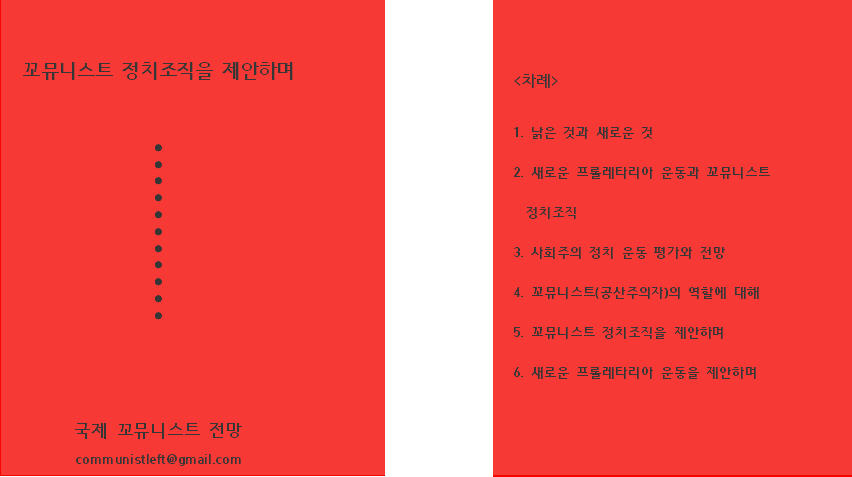
꼬뮤니스트 정치조직을 제안하며


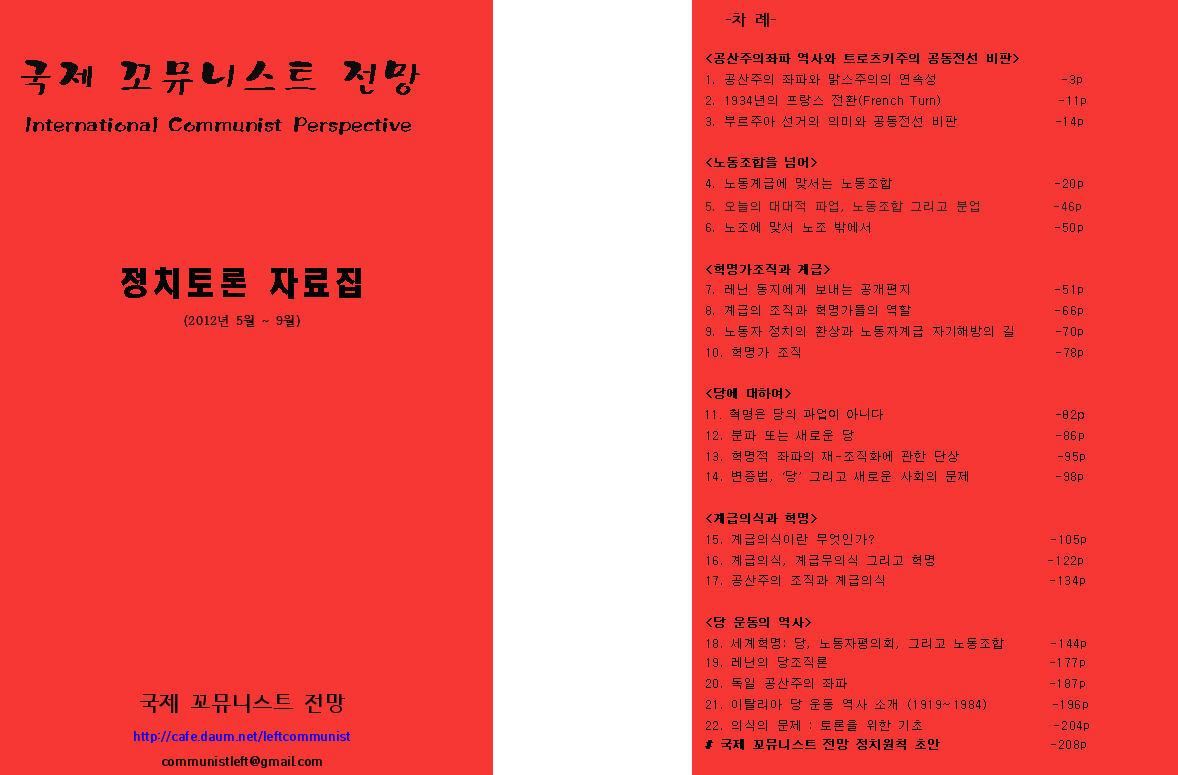
국제 꼬뮤니스트 전망에서는 꼬뮤니스트 정치조직 제안서』와  지난 8차례의 정치토론 자료를 모은


정치토론 자료집』발행하여,  꼬뮤니스트 정치에 관심있는 동지들에게 발송해 드리고 있습니다.


필요하신 동지들께서는 아래사항을 체크하여, 이메일로 보내주시면 발송해 드리겠습니다.


☞ 이메일 주소 :  communistleft@gmail.com


1. 꼬뮤니스트 정치조직 제안서 (소책자)  : 받으실 주소와 이름


2. 정치토론 자료집 (파일) : 받으실 이메일 주소


사용자 삽입 이미지


사용자 삽입 이미지


진보블로그 공감 버튼트위터로 리트윗하기페이스북에 공유하기딜리셔스에 북마크

트로츠키주의 비판 : 1934년의 프랑스 전환(French Turn)

1934년의 프랑스 전환(French Turn)

-꼬뮤니스트 노동자 조직(CWO)


1934년에 국제 공산주의 연맹으로 알려진 트로츠키주의자들의 운동은, 트로츠키가 전 역사에서 가장 심각한 전환점이라고 묘사했던 것을 수행했다. 그의 프랑스 셕션을 시작으로, 트로츠키는 제2인터내셔널의 당과 유사한 조직들에 가입하도록 그의 추종자들에게 재촉했다. 스탈린주의의 실패에 대한 트로츠키의 해결책은 사회민주주의로의 복귀였다. 이것은 노동자계급이 1914년~1926년 시기에 싸워왔던 모든 것과의 단절이었다. 그것은 제국주의 세력을 지원하라는 뜻이었고, 제국주의 전쟁을 지원한 구 노동조합으로 돌아가란 뜻이었으며, 1917년 이후 혁명기에 공산주의자들과 노동자들을 대량 학살로 이끌었던 이들에게 돌아가라는 뜻이었다. 그럼에도 불구하고, 그 전술은 다른 섹션에 곧 퍼졌고, 미국, 영국, 스페인에서 눈에 띄게 그러했다. 몇 세대에 걸쳐 트로츠키주의자들이 사회민주주의의 정치적 조직들을 강화시킨 트로츠키주의자들의 입당주의란 생각은 명백히 프랑스 전환에서 탄생했다.


프랑스의 트로츠키 조직은 1934년 여름, 프랑스에 사는 트로츠키로부터 강한 압력을 받아 결정적 전환을 하기로 결정했다. 1년 전, 이탈리아 공산당 좌익 분파의 동지들은 트로츠키주의자들에 의해 논쟁에서 관료적으로 축출되었다. 그들은 트로츠키와 그의 추종자들의 궤적을 예상했으며, 그에 반대하여 논쟁을 벌였다. 잡지 [빌랑]에서 우리 동지들은 트로츠키 전략은 본질적으로 프롤레타리아 혁명 파도의 쇠퇴를 분석해 보려는 우리의 노력을 대체하려는 반동적 대용물이라고 논쟁했다. 1933년 9월의 글에서 그들은, 사회민주주의자들의 좌익에 대한 트로츠키의 접근 방식은 2와 3/4 인터내셔널을 향한 움직임으로 가는 것으로 평가했다. 그들은 트로츠키가 좌익 사회민주주의자들과 함께 새로운 공산당을 건설한다는 목적으로 공동 사업을 주창함으로써 엄청난 오류를 저지를 것이라고 주장했다.


트로츠키주의자들과 대조적으로 좌익분파의 접근은 명확히 물질적 기반이 없을 때, 대중정당을 만드는 조직적 전략을 세우기보다, 그 시기의 본질에 대한 이해와 분석의 필요성의 문제를 제기하려 한 것이다.


프롤레타리아트는 반혁명적 중도주의의 성공을 거스르지 못하고 패배한 댓가로 1927년 고통 받았다. (역사적 과정은 공산당 내의 한 개인에 의해 지도될 수 없다는 것을 강조하기 위해 많은 추가 조항이 필요하지만 스탈린주의는 오늘날 더 정상적인 속기물일 수 있다.)


오늘날 인터내셔널의 처음 4차례 당 대회에 기초하여 새로운 당을 만들길 바란다고 얘기하는 것은 역사를 10년 전으로 되돌리는 것이다. 이것은 그런 당 대회 이후에 일어났던 일들을 이해하지 않으려는 것이며, 결국 새로운 당들은 그들의 고유한 역사적 환경속에 위치시키지 않기를 바라는 것이다. 우리가 미래에 새로운 정당들을 위치시켜야 하는 환경은 프롤레타리아 권력의 행사로부터 얻은 경험에 의해, 그리고 세계 공산주의 운동의 경험에 의해 이미 정의되어 있었다. 처음 4번의 당 대회는, 이 일에 관해서만은 매우 심도 깊은 조사와 비판의 대상이 되어야 할 것이다. 우리가 앞의 이야기를 종교적 교의로 받아들인다면 우리는 다음과 같은 결론에 다다르게 될 것이다. 즉, 레닌의 죽음, 혹은 트로츠키의 제거는 수많은 나라에서의 자본주의 승리의 원인이었고, 소련과 인터내셔널에서의 중도주의 승리의 원인이었다고 말이다.


그라나 빌랑의 저자들은 사회민주주의를 바라는 트로츠키주의자의 시도는 결국 불명예스럽게 끝날 것임을 알았다. 트로츠키주의자들이 1938년에나 스스로 알았던 그점을 그들은 미리 내다보았던 것이다. 상황의 미성숙함 [다른말로, 역사적 시대의 이해부족]은 이제 겨우 성장하는 2와 3/4 인터내셔널이 Trotskyists International Left Opposition이라는 딱지를 붙이는 정도일 것이라는 강력한 가능성을 암시해 준다.


트로츠키와 그의 추종자들에게 프랑스 전환과 제2인터내셔널주의자와 자본의 분파인 다른 정당들에 대한 방향전환은 통일전선 즉 혁명적 파고의 쇠락기(1920~1922)동안 코민테른의 정책으로 발전된 정책의 좀 더 실제적인 적용이었다. 1930년대 동안, 스탈린주의자와 트로츠키주의자 모두 비슷하게 그 위치에서 반혁명적 결론에 이르렀다.


이 점에서 트로츠키와 트로츠키주의는 이탈리아 좌파의 프롤레타리아적 흐름이 되는 것을 그만뒀다. 빌랑은 다음과 같이 발표했다.


“루비콘 강을 건너 사회민주주의와 결합한 그와 그 당파에 맞서 철저하고 용서 없는 투쟁을 펼칠 필요가 있다.”


1년 전 스탈린은 공식적으로 소련을 도적들의 무리(레닌), 즉 국제연맹에 가입시켜 경쟁하는 제국주의 무대 위로 되돌려 보냈다. 그의 목적은 간단했다. “동쪽으로” 라는 히틀러의 목적도 명확했다. 스탈린은 소련에 대한 공격이 피할 수 없다는 것을 깨달았고, 프랑스, 영국과의 동맹을 이뤄내려 시도했다. 이에 대한 코민테른의 역할은 1935년 7차 당 대회를 열어, 1928년 이래 사회민주주의에 반대하는 임시변통적 급진주의를 역사책에 위임하는 것이었다. 이는 사회주의자를 (부르주아)민주주의의 친구로 명명할 뿐만 아니라 모든 자유주의자, 발본주의자, 혹은 서유럽의 반파시스트 정당까지도 친구라는 이름을 붙여줬다. 통일전선은 이제 인민전선에서 그 극에 달했다. 여기서 이탈리아 좌익분파의 대응은 코민테른과의 어떤 연결도 끊은 것이었다. 그리고 7차 당 대회는 존재하는 모든 공산당들의 묘비를 세우는 것이었다고 말한다. 그 동안, 트로츠키는 인민전선을 통일전선의 오용이라고 규탄했으나 그가 인민전선의 근본적 기반, 즉 파시스트의 위험으로부터 소련의 방어라는 원칙을 받아들였기 때문에 그의 주장은 설득력이 없었다. 그리고 그 1차 세계대전 이후의 혁명적 격변기 동안, 파시즘에 기반을 깔아준 세력이 바로 트로츠키가 그의 추종자들로 하여금 입당하도록 했던 –사회민주당- 명확히 바로 그런 조직이었던 것이다.

히틀러의 출현 이후 반파시즘은 – 다른말로 자본주의 제국주의의 특정부분에 대한 반대는 부르주아 민주주의와는 또 다른 측면들을 지원하는 것을 의미했다. 이것은 스페인, 중국, 그리고 궁극적으로 2차대전 중에 전 세계적으로 그 모습을 드러냈다. 이것은 자본가 권력의 전통적인 욕구를 숨기는 이데올로기였으며, 그들로 하여금 수백만의 프롤레타리아를 그들의 군대로 내모는 것을 가능하게 한 이데올로기였다. 우리가 보았던 것처럼, 트로츠키는 소련의 방어라는 견지에서 이 십자군의 지원을 주장했다. 그의 살해 후 1년, 소련은 마침내 그들이 추구했던 것, 즉 서구 제국주의 권력과의 동맹(미국의 민주주의의 수호를 포함 한)을 이루어냈다.

------------------------------------------------------------------------


오늘날에 트로츠키주의자들의 분파들이 그렇게 많은 것은, 트로츠키주의의 중요한 구성요소를 구성하는 데 모순이 많음을 보여주는 증거이다. 그리고 객관적으로 이들의 무리지음은 부르주아 정치기구의 좌익을 의미한다. 그들은 프롤레타리아트의 해방을 대표하지 않고 새로운 지배자가 될 국가자본주의자들의 질서를 대표한다. 객관적으로 그들은 사회민주주의나 스탈린주의당의 좌익으로 기능하며, 이 당들이 혁명적인 정치적 입장의 공격을 받지 않도록 보호하며, 무엇보다 중요하게 이 당들이 노동자계급의 눈에 진실성이 있는 것처럼 보이게 한다.


트로츠키주의자들의 정치적 실천의 특징 중 하나는 그 경향인, 많은 분파의 경향으로 분열된 운동의 도움을 받아, 다양하고 서로 다른 반혁명적 이해관계와 유행, 조류에 그들의 정치를 적응시키는 것이다. 즉 혁명적 원칙의 유연한 적용이 아니라, 반혁명 정치로의 변화무쌍한 적응만이 있을 뿐이며, 프롤레타리아 대중에게 가장 큰 혼란을 심어주는 역할을 할 뿐이다.


프롤레타리아트는 오직 지도력이 부족할 뿐(지도력의 위기)이라는 선언을 맹종함으로써. 그들은 혁명정당의 부활을 위한 실제 조건을 깨닫는 데 실패한다. 이 조건은 프롤레타리아트 대중의 투쟁과, 당 강령의 명확화에 대한 객관적 필요속에 있다. 이러한 기초적인 조건들을 인지할 수 없었기에, 트로츠키주의자들은 프롤레타리아트가 과거에 이미 취한 혁명적 교훈의 길을 다시 거슬러 올라가 추적하지 않고서는 그들의 역사적 궁지에서 탈출할 수 없다. 만약에 그렇게 한다면 그들은 자신들의 근본적인 혼란들을 포기해야 할 뿐만 아니라. 트로츠키주의 그 자체의 반혁명적 본질을 깨달아야 하기 때문에 그들은 트로츠키주의자임을 포기해야 할 것이다.

진보블로그 공감 버튼트위터로 리트윗하기페이스북에 공유하기딜리셔스에 북마크

Homage to Il Jae Lee

Homage to Il Jae Lee


사용자 삽입 이미지We have recently been saddened by the news of the death in hospital of comrade Il Jae Lee, a militant of the Left Communist Group in Korea: he was 89 years old.


Il Jae was born in 1923 in the town of Daegu, in what is now South Korea but which was known at the time by its historical name of Chosun. At the time, the whole of Korea was a Japanese colony valued for its raw materials and agricultural wealth, destined to support the war effort of Japanese imperialism. Official Japanese policy was to reduce Korean culture to the status of a folk curiosity; at school, children were required to learn Japanese, and Il Jae spoke Japanese fluently.


In the midst of the war, not yet 20 years old, he was already taking part in workers' struggles. With the departure of the Japanese occupying forces in August 1945, the country was reduced to chaos and in many places the workers took control of production themselves in what Il Jae described as workers' councils (the Changpyong, or Choson National Workers' Council) – though in the conditions of the time it was impossible for such councils to do much more than produce the bare essentials of life in a war-shattered country.


Il Jae joined the Communist Party in September 1946, and was a leading member of the general strike that broke out in Daegu during the same year. With the suppression of the workers' struggles by the US occupation authorities, Il Jae joined the partisans fighting in the south of the country, being wounded in the leg in 1953.


In 1968, under the dictatorship of Park Chung Hee, he was arrested and sentenced to life imprisonment for his continued political activity. His health was permanently damaged by his time in prison, and his face still bore the marks of the torture he suffered there. In 1988 he was released on probation, which did not stop him from involving himself immediately in political activity in Daegu. He became a leading member of the Korean Trades Unions in 1997.


For a young worker to enter the Communist Party in 1946 was perfectly natural. But no matter how sincere and courageous many of its members undoubtedly were, the Party in Korean was in effect no more than the tool of Russian and Chinese imperialism, then at the end of the Korean War, of a particularly grotesque and barbaric caricature of Stalinism: the hereditary dictatorship of the Kim family.


Had this been all there was to his life then we would not be writing this homage: history is full of heroism in the service of bad causes. But Il Jae was truly remarkable in being able, as he neared his 80th year, to call into question the struggle of a lifetime. In 2002 he became active in the Socialist Political Alliance, a new group which was beginning to introduce the ideas of the Communist Left into Korea. When a delegation of the ICC travelled to Korea in October 2006 to take part in the International Marxist Conference organised by the SPA, we met comrade Il Jae. In the debates during the conference, while we disagreed with him on many questions – notably the possibility of reviving the trades union as an organisational form for workers struggle – it was clear to us that we were in the presence of a real internationalist: above all on the key question of North Korea, he rejected any support for that odious regime.


In our discussions with him during his last years, comrade Il Jae was concerned above all with two questions: the international unity of the working class, and in Korea, breaking down the barriers between workers on permanent contracts, casual workers, and the immigrant workers from Bangla Desh and the Philippines who are beginning to appear in Korea. The latter question made him break with the recognised unions, although he still had not given up the hope of using the union form of organisation. He attended the ICC's 17th Congress in 2007, and had hoped to accompany an ICC delegation to Japan in 2008: sadly his declining health made it impossible for him to do so.


Comrade Il Jae Lee was an indomitable fighter for the proletarian cause whose spirit remained unbroken by hardship and prison. He remained an internationalist to the end of his life. Above all, he had the moral courage to continue searching for the truth, even if this meant calling into question the ideas for which he had fought and suffered in the past. The working class is poorer for his loss: it is richer for his example.


by   ICC  <http://en.internationalism.org/icconline/201207/5046/homage-il-jae-lee>

진보블로그 공감 버튼트위터로 리트윗하기페이스북에 공유하기딜리셔스에 북마크

Two Texts on Communisation

 Two Texts on Communisation


Below are two texts on the subject of communisation. The first is by Mac Intosh of Internationalist Perspective. The second an open letter to IP by Maxime of the CDP. An expanded version of Mac Intosh's article will appear in Internationalist Perspective 57.


Communization Theory and the Abolition of the Value-Form


A theory of the value-form as the basis for an understanding of the logic of capital, its historical trajectory, and its contradictions, is integrally linked to a theory of communization. Communization is inseparable from the abolition of the value-form and of capital as valorizing value, and its Akkumulationszwang, its compulsion to accumulate. Communization entails the abolition of the proletariat, the class of waged-workers, whose abstract labor is the source of value. Socialism or communism is not the self-affirmation of the proletariat or worker’s power, and the creation of a republic of labor. The development of value-form theory, based largely on the publication of all the manuscripts that Marx had assembled for his critique of political economy, an undertaking that has only been completed over the past several decades, has also transformed the understanding of socialism or communism that existed within the Second and Third Internationals, as well as in the historical communist left (both the German-Dutch and the Italian left, the council communist and the Bordigist traditions).


The path towards a theory of communization in which value and the proletariat are abolished began with Marx’s Critique of the Gotha Programme (1875) in which the theoretical bases for the formation of a unified Social-Democratic Party in Germany, based on a vision of a “free state,” were subjected to a withering criticism, and in which Marx first outlined his conception of a lower and higher stage of communism. For Marx, in the lower stage of communism, “just as it emerges from capitalist society,” still stamped by its structures and social forms, “the individual producer gets back from society … exactly what he has given to it.” (1) In short, the worker, after deductions for the social funds and expansion of the productive forces, receives the full value of his/her labor: “Clearly, the same principle is at work here as that which regulates the exchange of commodities as far as this is an exchange of equal values. … a given amount of labour in one form is exchanged for the same amount in another. (2) For Marx, then, the value-form will preside over both production and distribution in the lower stage of communism, and only in its higher stage “can society wholly cross the narrow horizon of bourgeois right and inscribe on its banner: From each according to his abilities, to each according to his needs!” (3) Communization, then, as the abolition of the value-form in all its modes, would be preceded by a post-capitalist stage in which the law of value still regulated production and consumption. However radical, in the eyes of most socialists, Marx’s prescription was in 1875, today, in a capitalist world where the reproduction of the proletariat is threatened by the capitalist social relation, and the very existence of the value-form, such a vision is completely inadequate.


While Marx did not specify the precise form in which labor-time would determine production and distribution in the lower stage of capitalism, the revolutionary wave that unfolded in 1917 led to the insistence of the Bolsheviks that the dictatorship of the proletariat, whatever its specific political forms, would also be based on the continuation of waged-labor; that the distribution of products to the working class would be via a wage and money. It is here, that a debate arose within the historical communist left, different from the debates over the question of party or workers councils as the organ of the dictatorship of the proletariat, a debate in which Amadeo Bordiga insisted – against Lenin and Trotsky – that the continued existence of wages and money was a mortal threat to the proletariat, and would reproduce capitalist social relations. Two important documents of the historical communist left over the period between 1930-1970, grappled with the question of the value-form and communist production and distribution: The Fundamental Principles of Communist Production and Distribution, a collective text of the GIK (the German-Dutch left) published in 1930, with an important “Introduction” by Paul Mattick to its republication in 1970, and Jacques Camatte’s Capital and Community, written in the aftermath of ’68, within the political orbit of the Italian left (Bordigism). (4)


The Fundamental Principles advanced the idea that communist production and distribution would be based on labor-time accounting (the average socially necessary labor time), with the distribution of products to the workers – whose proletarian condition would be universalized – taking place through a system of “labor vouchers” (Empfangsscheinen or bons de travail), strictly based on the number of hours worked. In contrast, then, to the normal working of the capitalist system, where the market allocates labor and determines value through exchange post festum, in communist production and distribution this determination could rationally be determined by labor time as a measure of value without the intermediary of exchange. This, then, was a system, as Mattick acknowledged in his Introduction, in “which the principle of the exchange of equivalents still prevails,” in which, we maintain, the value-form still shapes social being, in which, as Marx, acknowledged in his Critique of the Gotha Programme, “equal right still constantly suffers a bourgeois limitation,” (5) and labor itself (travail, Arbeit) remains proletarian labor. Mattick, however, also found the GIK’s text to be outdated in some respects, superceded by the very trajectory of capital itself, by the prodigious development of the productive forces between 1930 and 1970, through which goods and services could be produced in such abundance that “any calculation of their individual shares of average socially necessary labor time would be superfluous,” and humankind might proceed directly to what Marx had called the higher stage of communism. (6)


Camatte follows Marx in distinguishing a lower, socialist, and a higher stage of communism, and insists “communism cannot be achieved from one day to the next,” (7) a position based on Bordiga’s claim that there are three post-capitalist stages: the dictatorship of the proletariat, the stage of socialism, and communism. For Camatte, the valorization of value must immediately cease, which he claims is the task of the dictatorship of the proletariat, yet he acknowledges that everyone has to work (“he who does not work, does not eat”), that the proletarian condition must be universalized, that human existence, which in capitalism was mediated by capital, “now is mediated by work.” (8) Moreover, Camatte acknowledges that an “economy of time” will continue to regulate what has now become communal production; that all labor will now be reduced to abstract labor, (9) and that such labor will retain the form of waged labor under the dictatorship of the proletariat, though “…the basis of the phenomenon is not the same. In capitalist society, wage labour is a means to avoid restoring the whole of the product to the individual who produced it. In the transitional phase, wage labour is the result of the fact that it is not possible to destroy the market economy from one day to the next.” (11) But the removal of the traditional capitalist veil does not eliminate the value-form, or the subjection of humankind to its laws of motion. Indeed, the very reduction of all labor to abstract labor, the very universalization of the proletarian condition and its modes of labor, risks the perpetuation of capital and its social relations. Moreover, that prospect is not removed by Camatte’s insistence that the labor vouchers that the worker will exchange for goods and services cannot be accumulated, are “valid for a limited period and is lost at the end of this period if it is not consumed,” (12) thereby preventing a restoration of capitalism. The question is not that of a restoration of capitalism, but rather its continued existence through that of value determined by labor time, and abstract labor, on the bases of which capitalism had never been abolished. For Camatte, it is only at Marx’s higher stage of communism that: “All forms of value are therefore buried; thus labour no longer has a determined form, there is no alienation.” (13)


The question raised by communization theory as it has developed over the past several decades is whether the social imaginary of a period of transition, of lower and higher stages of communism, has not become – at this historical stage of capitalism – one more obstacle to the communist revolution, to communization. (14)


Communization theory, as it has been articulated by pro-revolutionaries over the past several decades can perhaps be summarized in the following terms, in an essay by Bruno Astarian: Communization as a Way out of the Crisis

Communization does not mean that communism will be established by waving a magic wand. It will be established through a process of struggle, with advances and retreats by the revolution. What it means is that the actions undertaken by the revolutionaries will aim at the abolition of work and of value … here and now. When the revolution attacks capitalist property, it does not do so in order to vest the proletariat with the ownership of the property that it did not previously own, but in order to put an end to all forms of property immediately.

In short, the value-form, and the labor [travail, Arbeit] linked to it, must be abolished by the revolution, not as the culmination of a period of transition, as the historical communist left had maintained. Moreover, while communization is the immediate goal of the revolution, Astarian points out that: “We must not confuse immediacy with instantaneity. When we say immediacy of communism, we are saying that the goal of the proletarian revolution no longer consists in creating a transitional society, but in directly establishing communism.” For Internationalist Perspective, what is crucial here is not the specific content of the work or activity that must be immediately transformed, e.g. food or clothing, medicine or houses, will need to be produced. What must be immediately abolished is the reduction of that activity to the abstract labor, and its measurement by socially necessary labor time, that is the historically specific mode in which work has existed in capitalist society. And that, of course, also entails the abolition of a mode of distribution of goods and services by way of labor time, through a form of wage [le salariat] or even labor vouchers. It is in the very course of a revolutionary upheaval, then, and not at the end of a period of transition, that communization occurs. As RS in SIC 1, insists: “The revolution is communisation; it does not have communism as a project and result, but as its very content.”


Indeed, in the revolution itself, the abolition, not just of capital and labor, but also of the proletariat must occur. This is how BL puts it in SIC1: “In this struggle, the seizure of the material means of production cannot be separated from the transformation of proletarians into immediately social individuals: it is one and the same activity, and this identity is brought about by the present form of the contradiction between the proletariat and capital.” It is not, then, some variant of utopian thinking that has led IP to see communization as integral to the revolutionary upheaval itself, but rather the very logic of capital, its specific historical trajectory, and the nature of the capitalist crisis at the present historical conjuncture: the impossibility of the reproduction of the proletarian condition by capital apart from the massive expulsion of proletarian labor from the economy, the creation of a vast planet of slums, and impending ecological catastrophes, all attendant on the perpetuation of the value-form. It is those very real historical and material conditions, which have made communization the immediate task of revolution today.


But what of the abolition of work, which is integral to most theories of communization? Work, as proletarian labor, work as abstract labor, work as it has historically developed and been instantiated by capitalism, must be abolished. Work in its historical form, and the capitalist social relations in which production and distribution is based on average socially necessary labor time, in all its forms, must be immediately abolished. But anti-travail [anti-labor] must be accompanied by a vision of human activity, praxis, which encompasses the realm of production, freed of its historical (including its capitalist) integument. This text is not the place to even begin an elaboration of that theoretical task, but its broad outlines do need to be at least indicated. Communization is not the cessation of production. Quite the contrary! It is the beginning of the self-production of human beings, the auto-production of communist social relations. Human action has not been limited to labor, travail, Arbeit, under the constraint of exploitative and class relations. There is a distinction, then, between techné, poiésis, work, and labor, between the labor of the slave, the serf, the proletarian, and the work [oeuvre, Werke] of the social individual. It is precisely that set of distinctions, between labor and work, and the possibilities to be created by communization which pro-revolutionaries need to begin to explore: production, work, beyond labor. Mac Intosh


Open Letter from Maxime to Internationalist Perspective, echoing the contribution of Mac Intosh on communisation


As I said in a small email prior to IP's "conference" at Arezzo, Mac Intosh appears to engage IP - or emphasize its engagement - in a direction that I approve because it is also mine. Unlike most groups and individuals that we have agreed to call the ultra-left current, this text (it quotes Bruno Astarian, Roland Simon and Bernard Leon [BL] ) attests to a consideration of the positions of those it is also conventional to call the "communisateurs". My belief is that everything that comes from this perspective is not necessarily to be accepted in full or as is, but this vision without a doubt, for me, provides some of the most stimulating reflections on revolutionary theory . The communisateur milieu, I can only state, is much more fertile, far more dynamic than the heirs of the communist left, which sees the newly emerging developments in the evolution of capitalism through the old schemas and categories of political analysis more or less slightly retouched. I think we ( pro-revolutionaries, to use your words) have an interest in fostering the discussion -- even if it entails polemical elements -- with the communisateurs. I noticed that you have already taken the initiative (most recently through your exchange with the Greek group Blaumachen, for example) and that's to the good. The refoundation of communist theory, that I dare claim, for me, as for you, today represents the most urgent task of the “friends of the classless society,” as our Berlin comrades say, cannot be limited to a confrontation with the current designated as the communisateurs (“Théorie communiste” (TC) and those close to it: Blaumachen, Riff-Raff, Léon de Mattis [Denis], BL, etc., all contributing to the new publication SIC., as well as Bruno Astarian and the Dauvé-Nesic group, “Trop Loin.” That refoundation requires what other circles of reflexion contribute too, such as “Exit” and “Krisis,” and the editors of “Temps critiques,” (our dear friend of the Reseau, JW). With the communisateurs, they share the view that the crisis of the late 1960s and the beginning of the next decade heralded a new age of capitalism and its economic production of value, in which the communist revolution, or communisation, can no longer be seen, as before, in the figure of the revolutionary subject emerging in direct continuity with the antecedent vision (whether Marxist or even, for that matter, anarcho-communist).They draw the conclusion that in general the revolution can not be just a matter of proletarian class struggle. This stuates these last elements clearly outside the circle of communisateurs. JW, in particular, considers as absurd the dialectical position that supports TC's conception of the proletarian struggle as that of a fragmented class acting against its own class nature, which ties it to capitalism (I grant that “Master” Jacque's claims about R. Simon are quite thin). Even if perhaps through habits of political atavism, for my part I remain committed to the vision of revolution as the task of the class struggle, I do not think that the debate with these currents can be closed and I leave open in my own mind the problematic that they articulate.


In closing this letter, I want to add that on the theory of communisation, it is mainly the version of TC to which I refer here. This is just the beginning, and we will now continue the struggle.


Is communisation [just] a luke warm [or inconsequential] invention? At first glance, one might ask what is the originality of the communisateurs, because neither their general definition of communism nor the identification in the figure of the proletariat (and its class struggle), as the acting-subject of the revolution differ from those of classical Marxists - including those of the Left Communists. The very term communisation that these neo-Marxist little ugly ducklings use basically designates nothing else than good old communist revolution, that is to say the process of revolutionary transformation of the capitalist world in the direction of a classless society without hierarchy, without a state, an economy, and therefore without value and abstract labor, etc. Like traditional Marxists, the communisateurs in addition say that communism will not be accomplished with a magic wand (citing Bruno Astarian), in an instantaneous realization from one day to the next. I would also add that for them, the beginning of communisation, which has not yet begun, will depend on an acute crisis of capitalism, ideas that, here again, will not shock the common understanding of revolutionaries. Does the change in terminology, then, represent some kind of sectarian coquetry? Would this invention correspond to a rediscovery of luke warm water? We must clearly answer these questions not because the conception that the communisateurs have of the process of revolutionary transformation - of communisation - is actually far from that of the great vehicle of Marxism.


It must be remembered that, for the classics, the communist revolution (or communisation) takes place in necessary stages in which the accomplishment of one stage would be the condition necessary for the following one. The first step amounts to wresting the means of production from the hands of the capitalists, the second is to establish a transitional society termed "socialist", where the production and distribution of goods are socialized; at its end, begins the establishment of communism, which itself can take some time. Communism thus appears as the implementation of a program whose unfolding, in its whole duration, has been designated by Marxists as the “period of transition.”


The specific vision of communisation that the communisateurs promote clearly diverges from such a point of view. It rejects all programmatism and specifically spurns the goal of an intermdiary stage socialism (or the " lower stage of communism" to cite Marx' words). If communism is not fully realized at a single blow, the beginning of its construction, the communisateurs insist, will open from the very beginning of the revolutionary process. In fact, the goal and the path merge for them because, they say, it is directly the production of communism that destroys capitalism. And as the communist process is essentially the abolition of classes, the abolition of the capitalist social relation reciprocally linking proletarians to a class of capitalists must also immediatly occur. According to the vision of the communisateurs, the revolution is, indeed, the opposite of an affirmation of the proletariat ; it is opposed to the vision of an abolition of classes resulting in their absorption into the proletariat.


So here we perceive very clearly the gap between the communisation of the communisateurs and the Marxist advocates of the "period of transition," which undoubtedly rests on the program of the maximal affirmation of the proletariat as a prelude to its own demise. Mac Intosh relates quite faithfully the theoretical position of the communisateurs when he writes: "Communisation entails the abolition of the proletariat, the class of wage-workers, whose abstract labor is the source of value. Socialism or Communism is not the self-affirmation of the proletariat or workers' power, and the creation of a republic labor. "


Is the theory of communisation of the communisateurs legitimate? Why, after all, would it be better than the old conception of revolution? We can not even advance by claiming that the facts have demonstrated the falsity of the latter conception, because we have hitherto known only embryonic examples of a revolutionary process. On the other hand, the new theory remains to be tested.


The pioneer communisateurs in the years 1968-1975, roughly began from the conviction that the classical theory, based on the vector of the affirmation of the proletariat, was at best inadequate, at worst, wrong. For the young communisateurs, the failure of all previous revolutionary attempts, from 1871 to 1968, ocurred in the final analysis because of the non-recognition of the limits of proletarian affirmation and even because that very affirmation worked against the révolution. The communist left, and first of all certain theorists of the council communists tradition, had certainly seen that the instruments in which the Marxists usually saw the rise to power of the labor movement (unions, class parties , reformist parliamentary representation …), that is to say, the growth of proletarian affirmation, had produced just the opposite of the desired effect, but these communists stopped there by simply replacing the failed instruments with the affirmation of workers 'councils, of the self-organization of struggles, workers' autonomy, etc., retaining, therefore, what according to the communisateurs, was the source of the failure. These communisateurs, largely politically born around 1968 - as indeed many others of my generation - understood the global wave of struggles of that time as the point of rupture with "affirmationism" and the swan song of the old workers movement too.


But all that was not enough to give the new theory of communisation the true legitimacy that the mere recognition of the failure of the old vision could not bring. If a theory is false, this does not mean, in effect, that any theory that replaces it is accurate. The anti-affirmationism of the communisateurs in the immediate aftermath of "1968", expressed by the idea that the proletariat must begin to abolish itself in undertaking the revolutionary process at its outset (and in 1975 the "communist tendency" of Berard, arising from a break with the ICC also said this), contained an ambiguity at its very heart: was this a theory finally revealed in full by revolution and which could have been formulated in any revolutionary upheaval, or was this a theory could only arise on the basis of the modern development of capitalism? Admittedly, the communisateurs discovered this problem in the second half of the 1970s. They found the answer thanks to the profound restructuring of its system that capitalism initiated following the famous "oil shocks," the critical peak of the crisis of the “Fordist” mode of regulation -- on the bases of which capitalism had functioned since the 1920s - 1930's - which began around 1967. This restructuring, developed until the late 1980s, and uprooted all the bases of proletarian affirmation, explained the communisateurs. One of its main characteristics was to liquidate the "labor movement", reducing the proletarians virtually to individuals in confrontation with the powers of capitalism. Therefore, communisation according to the communisateurs appeared not so much as a better theory of revolution, but as the only possible theory that is adequate to the new era of capitalist accumulation. They presented it - and still do so today - as the revolutionary communist theory of our time, the time of a proletariat irreversibly fragmented.


The perception of fragmentation by the communisateurs differs from that of IP in that, unlike IP, the former (at least until now), do not have not a sense of the "recomposition of the workers movement," of the" labor movement "in other words.


Maxime

Paris, May 31, 2012


Notes

1. Marx, 'Critique of the Gotha Programme" in Karl Marx, The First International and After (Penguin Books), p. 346.

2. Ibid.

3. Ibid., p. 347.

4. While Camatte’s text is largely devoted to the trajectory of the value-form based on a reading of Marx’s unpublished manuscripts (The Grundrisse, and “The Results of the Immediate Process of Production”), its chapter on “Communism and the intermediary phases between capitalism and communism,” like the Fundamental Principles of the GIK, grapples with the issue of communization. Camatte’s treatment of this issue has its own basis in texts by Mitchell (Jehan) in Bilan in the 1930’s, and especially in texts by Bordiga starting from the late 1940’s through the ‘60’s.

5. Marx, Critique of the Gotha Programme, p.346.

6. Mattick’s picture of that abundance seems far too optimistic today, especially in light of decades of “development” based largely on the growth of fictitious capital and financial bubbles, while the reproduction of the proletariat has been violently threatened, and ever-greater masses of workers are being permanently expelled from the production process. While such questions are, indeed, important, they do not preclude a vision of revolution in which communization, understood as the abolition of the value-form and the proletarian labor to which it is yoked, cannot be put off until a higher stage or the completion of a period of transition.

7. Jacques Camatte, Capital and Community (Prism Key Press, 2011), p. 261.

8. Ibid., p. 265.

9. Ibid., p. 272.

10. Ibid., p. 266.

11. Ibid., p. 279.

12. Ibid., p.288.

13. Ibid., pp. 297-298.

14. One question that seems to be a diversion, though much ink and paper has been expended in discussing it in the pro-revolutionary milieu, is when communization, as opposed to a period of transition, became an historical possibility for the proletariat. Was communization possible in 1789, in 1848, in 1871, in 1917, in 1936, etc.? Communization did not occur then, and while we can discuss why it did not, the task today is to confront the historical necessity for communization in the present epoch, and the dangers that confront the collective worker in a capitalist world that survives its present crisis.
진보블로그 공감 버튼트위터로 리트윗하기페이스북에 공유하기딜리셔스에 북마크

Report on the Manchester Meeting of the CWO

Report on the Manchester Meeting of the CWO


The document that follows (Beyond Protest) is based on the notes of the introductory speaker for the CWO’s Manchester meeting on April 21. The meeting was also attended by members of the ICC and the Anarchist Federation as well as individual council communists and left communists.


The meeting was held in a fraternal manner with all seriously trying to grapple with the problem of the development of a wider class movement. The ICC comrade who replied first quoted extensively from the editorial in the last Revolutionary Perspectives (60) and stated that the ICC fully supported the introduction. He also agreed with the criticism of the democratist illusions of Occupy and emphasised the fact that it is only the international working class which can make the revolution. He also stressed that the working class still had to break out of union dominated ideology to face up to the crisis of today. He took heart from the Unilever strike analysed in RP60 as it was a place he knew well where paternalism had dominated the workforce for generations so it was good to see that even here workers were beginning to see through the system’s ideology.


A Manchester comrade then took up the point about how the working class which has no property to defend can materially alter its consciousness in the current situation and this became the main focus of much of the rest of the discussion. He argued that workers in struggle tended to reinforce their own embedding within the system and thus their struggles did not tend to develop their consciousness in a more general way. He gave the example of Greece where, despite the draconian cuts they had not yet found a way to resist. The only sign he had seen was that some people had started to take over hospitals but even this was fraught with problems. In Britain he pointed to the fact that the TUC is already using the idea of “solidarity” to get workers to accept some cuts.


Against this rather depressing view the meeting agreed that it was a real question sincerely posed but various comrades countered it by putting forward the notion that the acquisition of class consciousness was a process and we were only at the “starting line” as one comrade put it. Others pointed to the past history of the workers’ movement that just when the working class is written off as a historical force it suddenly proves everyone including revolutionaries wrong. The example of 1914 when the working class marched off in universal support for imperialist war only to begin the greatest revolutionary wave in history less than three years later stood out as an example of how class consciousness can be changed by material circumstances. In the current crisis the cuts had still yet to really hit home and all past indicators suggest that there is no immediate reaction to such things but only after a time lag when the actual burden of the new situation builds up.


In the meantime it was the task for revolutionaries to not only generalise any struggle but to point the way forward in the line of march towards greater class actions. Whilst some comrades were more eloquent in expressing a militant hatred of the capitalist system and its consequences which they could hardly wait to be ended the meeting agreed that class consciousness would be developed gradually through the increasing alienation from a system which could do nothing but attack us. It was also agreed that revolutionary consciousness would not arise overnight and that a degree of patience would be required. Class consciousness could not be developed by the revolutionary minority through a mere act of will. If there was a low level of class consciousness generally there was not a lot revolutionaries can do (as the last 40 years prove). As the Committee of Intesa wrote back in 1925 you cannot build a revolutionary movement “through expedients and tactical manoeuvres”. The sorry history of Trotskyism since 1938 is evidence enough for that.


There were also a couple of discussions which could be described as nominalist. The first was over the question of “party” and “revolutionary minority”. Whilst the ICT was quite happy to use the term “party” in terms of a class conscious political organisation it was recognised that for some (following Ruhle et al) the term had negative connotations given the experiences of the last revolutionary wave. Similarly the idea of “intervention” was a word imported from Italian and French comrades where it is common to describe any one individual’s contribution, but in English gives the unfortunate impression of someone speaking from outside the class. In both cases it was concluded that it is not so much the word but the idea behind it that was important and like our idea of “communism” itself such terms would always require explanation in order to clarify their content.


The only minor disagreement was when an ICC comrade said that things were changing and you would not have got the Communist Left addressing some sectors of internationalist anarchism ten years ago as today. The CWO comrades pointed out that they had worked with anarchists for twenty years in anti-parliamentary campaigns and No War But the Class War. The key dividing line in the current period was more about accepting an anti-capitalist revolutionary agenda and rejection of all types of reformism put forward by the left of capitalism. Whilst the Communist Left organisations were all agreed on this the problem was that not all anarchists understood this.


However this was minor issue in what was a positive meeting undertaken in a comradely spirit and we hope that future meetings will not only welcome more participants but also carry this level of discussion further.


Beyond Protest Manchester


For those of us who have dedicated almost all their adult lives to struggling for a movement which to bring about proletarian emancipation these are suddenly interesting times. Obviously they are not yet interesting times for most of the working class or there would be more people here to discuss how we can go “Beyond Protest” but there is no doubt that the speculative bubble which had been swelling for more than two decades until it burst in 2007-8 has been a major shock to the capitalist system, revealing it for what it truly is.


The collapse did not come as a shock to us. A young American sympathiser recently got back in touch with us on our website and reminded us what we wrote to him in December 2006.


“The current speculative bubble which is distorting real capital values cannot last forever, and if the system goes through a new global crash, the working class will need to have organised instruments in place in order to fight the authoritarian barbaric solutions which the capitalists will themselves put forward.”


Well it is still early in this crisis to yet see outright barbarism but what is going on in Syria is not far off it. However we should also point out that this crisis did not start in 2007 or 2008 but when we older comrades were young. It was the end of the post-war boom that brought our generation into the communist movement. More precisely it was the resistance of the working class to that crisis in the lat 60s and early 70s which encouraged us not to join the traditional left but to found in Britain at least a new communist movement.


The key facts of the last 4 decades are that capitalism despite trying Keynesianism, monetarism and neo-liberalism has been unable to get out of its stagnation. This has been because to really start a new round of accumulation it would need destroy an enormous amount of value. But to do this it would have to inflict austerity the like of which we have not seen since the Thirties and which would provoke social confrontations to threaten the system or else a new global war would do the trick excerpt the consequences for the capitalist are so incalculable in the era of nuclear weapons that this too would threaten their long term survival (and that is all they think about bugger the rest of us). The speculative bubble based on massive debt was their last trick and now that has burst the prospects for capitalism are indeed dire. Indeed we can currently see no other future for it but more of the same – stagnation, austerity, bailing out the banks to keep the system ticking over. Even the Governor of the B of E is talking of a lost decade. Lenin said there was no situation which capitalism could not get out of but the current situation is a bigger impasse than any we have seen so far. Managed decline is the course that has been chosen in the Micawberish hope that something will turn up. In the meantime speculation is once again being rehabilitated (but on commodities and currencies and not on housing and real estate).


The only other policy they have got is austerity – cuts upon cuts. We have already seen plenty of these. Everyone has there own favourite stats on the crisis but the ones we have printed in our latest Aurora from various sources give us a flavour.


“According to the Institute for Fiscal Studies:


•This year’s tax changes mean the ‘average family’ will lose £511 per year.

•A nominal increase in the minimum wage will leave it lower in real terms than it was in 2004. The government has taken the Low Pay Commission’s advice to freeze the minimum wage for young people from October. [£4.98 per hour for18-20 year olds, £3.68 for16-17 yr olds above school leaving age but under 18. The ‘apprentice rate’, for under 19s or 19+ and in the first year of apprenticeship will rise by 5p to £2.65 per hour.]

•Inflation has also outstripped average income growth, leaving workers worse off in real terms. The Institute forecasts that real net income of the average household will be lower in 2015-16 than in 2002-3.

Meanwhile the TUC estimates:


•By April 2013 families on working tax credit may lose more than £4,000 from changes to the credit system while 1.6m council workers will have their pay frozen for a third year in a row.

Consumer Focus estimates:


•4 million people have a Pay Day loan. A ‘typical’ monthly repayment on £100 is about £130 but higher interest rates, up to 5,000% p.a. are far from unknown. Tony Hobman, chief executive of the Money Advice Service, a government agency to help people in debt, is paid £250,000 a year before bonuses.

The ‘Institute of Health Equity’ at UCL reports:


•The gap in life expectancy between the richest and poorest has widened in most areas of England. The largest gap is for males in Westminster where average life expectancy of the richest is 84 but for the poorest the average is 16.9 years less.

The ONS latest employment figures show:


•The drop in unemployment is entirely due to the growth in part-time work.”

And on top of this we have to realise that over 90% of the planned cuts have not yet hit us.


Little wonder that we have seen movements like the Occupy and Indignados taking to the streets in scores of countries across the world. And little wonder that the bosses paper the FT keeps writing articles wondering at how they are getting away with it without greate social unrest. The important thing about the Occupy movement more than anything else is that it has raised a political agenda. Everyone now talks about “capitalism”. 5 years ago it was only the “nutters” of the Communist Left who used that kind of archaic language. And this is important since we can have al the economic struggles you like but unless they raise a political dimension they are something the system can accept and cope with. The Occupy movement has also questioned the hierarchical nature of society and its structures. Its open forums have shown how discussions can increase people’s confidence and widen their horizons. Our comrades have been able to participate in them in various countries. In Rome for example our comrades have been asked to organise a school of Marxism so that people read Capital in an attempt to understand the real crisis.


However before it sounds like we are getting over-enthusiastic about the Occupy and Indignados movements we also have to recognise their limitations. On a political level, the ‘anti-capitalism’ of Occupy, like the Occupy movement itself, has no coherency or substance. When questioned about the meaning of anti-capitalism most Occupy protesters would say they are against the banks and multinational corporations. But there is no economic critique of capitalism and no understanding of why capitalism will inevitably create these hated institutions. The Occupy Wall Street website states on its home page:


OWS is fighting back against the corrosive power of major banks and multinational corporations over the democratic process, and the role of Wall Street in creating an economic collapse that has caused the greatest recession in generations. The movement is inspired by popular uprisings in Egypt and Tunisia, and aims to fight back against the richest 1% of people that are writing the rules of an unfair global economy that is foreclosing on our future.


This sort of reformist perspective to ‘democratise capitalism’ in line with groups like UK Uncut who think that capitalism could be fair if only the government made the bourgeoisie pay their taxes, seems to be as close as the Occupy movement gets to having any political perspective at all. Such demands for a fair and democratic capitalism are rooted in petty bourgeois utopianism and serve only to peddle illusions about what is possible under capitalism, illusions that the working class must dispel if it is ever to wage an effective struggle against capital.


This brings us to the question of class. This is an issue that the Occupy movement chooses to gloss over, or perhaps even to deliberately obscure. Of course the inequality that exists in society is at the heart of what the Occupy movement opposes, but this is conceptualised in terms of the 1% of those that own and control the world’s wealth, compared to the 99% who don’t. This may be graphic representation of that inequality but it is just presented as a given, the consequence perhaps of the power of greedy bankers or megalomaniac multi-nationals. The fundamental point that capitalism is a class society based on the exploitation of the proletarian majority by the bourgeois minority is neatly overlooked, as this would undermine the Occupy movement’s utopian demands for a fair and democratic capitalism. Those who hold a Marxist understanding of the need for a revolutionary transformation of society led by the working class as the prime agent of change recognise that ther is no such thing as a fair and democratic capitalism.


So what is to be done?


The working class owns only the individual capacity to labour. It has no system of property to defend. For previous rising classes the question of revolutionary change was no problem. All they had to do was defend their form of property in every way they could and they coalesced into a movement which challenged the old order. The bourgeoisie in their struggle could even engender slogans which made it appear as though they we re fighting for all humanity (liberty, fraternity and equality). What they didn’t tell the workers was that equality was only for those who could afford it. In bourgeois society Orwell’s nostrum that some are more equal than others is a daily fact.


The only other weapon the working class possesses is its consciousness. This is nurtured and formed by its own struggles from its position in capitalist society but these sparks of consciousness rise now here now there and then die with the struggle. How can the perceptions of workers in struggle be carried from one point to the next? Marx was aware of the problem. He knew that the emancipation of the working class was “the task of the workers themselves” yet he also wrote that under capitalist conditions the ruling ideas are those who own the means of production, including intellectual production.


How to escape the dilemma – the political party.


The solution to the dilemma lies in the formation of a revolutionary minority or party if you like. This turns the consciousness of those individuals within the working class who already see what is at stake into a material force. A material force which fights within the wider working class to increase both the depth and the extent of its class consciousness. This revolutionary minority is entirely consistent with Marx’s own vision of a future international party. Many people quote Marx’s insertion into the rules of the IWMA in 1864 the nostrum that “the emancipation of the working class will be the task of the workers themselves”. What they usually claim is that this shows that Marx was against the idea of a revolutionary minority altogether. But this is an error. After all why would Marx include this in the rules of the International if it was an anti-party statement. What he meant here was that the workers had to forge their own organisations independent of all the bourgeois parties. Without an organisation representing the historic acquisitions of the working class the bourgeoisie will be capable of imposing its own solution on any movement however militant.


However Marx could not have envisaged all the false starts that the workers movement would make on its road to emancipation.


The revolutionary minority we have in mind will have to be unlike any other produced in the past. In the first place it will not fall into the social democratic error of trying to have a mass party which can only be achieved by capitulating to the immediate demands for reform and take on a parliamentary agenda.


Professional revolutionaries are not the answer either. This was advocated by Lenin for the Bolshevik Party when it was clandestine and under the brutal Tsarist dictatorship. He wanted revolutionaries to be “professional” in sense of not being bunglers who betrayed themselves and the workers to the secret police. We are against it for several historical reasons. Having party organisers who are employees mean they can be disciplined by the mere act of cutting their source of salary as Gramsci did to defeat the Italian Left majority in the Communist Party of Italy in the 1920s. However there is also another profound reason for not accepting this model and that is that the class party has to be a party of the class and the members remain with the class either in the workplace or in the community.


There were some good things about Bolshevism: before 1917 it was obviously an organisation which not only had a wide ranging debate but encouraged individual initiative at the local level and within workers’ organisations. It was its roots inside the working class established well before the revolution that were the key to its decision to drop its social democratic programme in April 1917.


Obviously though the next revolution will not be a rerun of the revolutionary wave of 90 years ago. Obviously too we have to learn from the errors of the revolutionaries of the past.


We have catalogued those of the Bolsheviks many times. On Day One Sovnarkom was set up which was really just a bourgeois cabinet with another name. The real revolutionary ruling body should have been the Executive Committee of the Congress of Soviets. Other examples are well-known. In June-July 1918 soviet elections in Petrograd were rigged for the first time and the isolation of the revolution and the continuing social democratic ideas about socialism which still lingered in Bolshevism ensured by 1921 that the class had disappeared and the party was the class. Anarchists have used these errors to argue that all along Bolshevism was a plot to defeat the spontaneous revolution of the working class. But the anarchists themselves lacked cohesion and organisation – personalities rather than polices dominated. When the Bolsheviks rigged the Petrograd soviet elections in 1918 it was to keep out the reaction not to prevent a move to a third revolution. And this is why some anarchist alter recognised that they had failed too and decided that they too needed organisation and a Platform which they produced in 1926. This remains controversial amongst anarchists, even to this day, but it is a recognition that a revolutionary minority is needed. And today the Anarchist Federation carries in its paper an outline of revolutionary action and organisation that is not too distant from our own. Similarly we have read on the ICC website of a group called the Birov Collective which calls itself anarcho-syndicalist but it s ideas of syndicates are very close to ours of workplace groups as both are essentially political in character (this contrast with the Solidarity Federation in the UK) . Today the debate is not between Anarchism and Marxism but between revolutionaries from both camps and the traditional left which are all based on the restoration in one form or another of social democracy.


From the Russian Revolution we take the lessons that to make the revolution the class will have to create a rev minority which is the material expression of it consciousness. That minority will fight in the class wide organs for the communist programme but being a minority it cannot wield power. As Onorato Damen wrote in the platform of the PCInt after the break with Bordiga “the working class does not delegate its power to any one not even its class party”. And the revolutionary minority has other tasks than to rule in any one geographical area – spreading the world revolution takes precedence and if its members are elected to posts of responsibility they are elected on the same basis as other delegates i.e. revocably.


Today we are seeing the beginning of a revival of an anti-capitalist consciousness. It is only a beginning but those of us who have been fighting for a revolutionary class outcome all our lives have an enormous responsibility to the new generation. Up to now communist have separated over issues largely of historical creation. Past errors have become current shibboleths. Rather than a source of understanding history has largely been a nightmare weighing on the living and magnifying differences which are hardly ever properly explored. Today we are on the edge of new situation and we need to re-examine our practices. We have been saying for many months that the issue is not just to fight the cuts but to fight the system that produces them. This is the starting point for all revolutionaries and we have declared ourselves willing to work with anyone who shares that basic premise. Out of common work comes common respect, out of respect comes real dialogue, and out of that a more effective working class resistance.


Jock


Monday, June 11, 2012


<출처> http://www.leftcom.org/en/articles/2012-06-11/report-on-the-manchester-meeting-of-the-cwo

진보블로그 공감 버튼트위터로 리트윗하기페이스북에 공유하기딜리셔스에 북마크

살아있는 노동자 자기해방 사상의 고전 '노동자평의회와 판네쿡'

노동자 평의회의 건설 과정과 역할


노동자평의회가 어떻게 발생. 발전하는가에 대한 분석에서, 판네쿡은 평의회는 실질적인 노동자 계급의 실천으로부터 자발적이고 유기적으로 나타나고,  와일드캣 파업(비공인파업)과 공장점거와 같은 활동에 태생적 형태로 이미 존재하고 있다고 주장했다. 그는 와일드캣 파업과 공정 점거를 노동자 평의회로 전환시키는 주요 요인은, 노동자들이 그러한 투쟁을 실행하기 위하여 조직하는 파업위원회 형태일 것이다라고 했다. 그러한 파업위원회들은 평의회조직의 가장 기본적인 두 개의 요소인 직접 민주주의와 계급 자치를 구체화시켰다고 보았다. 일단 와일드캣 파업과 공장 점거가 국가적이고 전체 계급 운동으로 발전한다면, 그것들은 즉각적으로 자본주의 국가와의 갈등으로 전화될 것이다. 그리고 이러한 갈등은 보다 높은 수준의 조직을 필요로 하게 될 것이다. 판네쿡은 노동자 평의회가 모습을 드러내기 시작하는 시점은 바로 이때이며, 자본 국가가 붕괴할 때까지는 혁명과 함께 노동자 평의회의 역할은 확장될 것이다라고 생각했다.


판네쿡은 최소한 부분적으로는 와일드캣 파업과 공장점거 전술을 전통적인 노동조합에 대항하는 불복종의 한 형태라고 보았다. 그는 선진 자본주의의 노동조합들은그들이 전에 가지고 있던 모든 프롤레타리아트 정체성의 흔적들을 잃어버렸고, 또한 자본주의의 통합적인 메카니즘이 되어버렸다고 주장했다. 그는 노동조합을 독점적 자본이 독점자본의 조건을 전체 노동계급에게 짐지우는 수단이라고 생각했다. 자본의 합리성 원칙에 대한 노동조합의 헌신 때문에, 노동조합이 결코 ‘노동자들의 통제'라는 문제를 제기할 수 없었다. 왜냐하면 ‘노동자들의 통제’는 노동조합 권력의 원천을 위협할 것이기 때문이었다. 그리고 노동조합들은 지도자들에 의한 지배 원칙을 기초로 하고 있었기 때문에, 노동조합들은 결국 자본주의 국가의 충실한 재생산 역할을 할 것이기 때문에, 새로운 노동자 운동의 부활은 이 옛날의 조직에 대항한 대중적 반역의 기초 위에서만 가능하다고 판네쿡은 주장했다.


판네쿡의 생애


판네쿡(1873-1960)은  혁명과 반혁명의 시기, 여러 나라에서 활동했던 혁명가이자 지식인이었다. 천문학자로서 국제적인 명성을 얻었던 판네쿡은, 1914년 이전까지는 네덜란드와 독일의 사회 민주주의의 좌익으로 활동했다. 로자 룩셈부르크와 함께, 그는 독일 반수정주의 좌익세력의 주요 지도자로서 두각을 나타내었으며, 사회 민주주의의 정통성에 대해서 강력하게 비판하였다. 제1차 세계대전이 발발한 뒤, 그는 새로운 인터내셔널의 형성을 요구했던 선구자들 중 한 사람이었고, 이후 찜머발트 반전 운동의 유력인사가 되었다. 독일 공산주의 노동자당의 탁월한 이론가였던 판네쿡은 레닌주의에 대해서 강력하게 비판을 하면서, 공산주의에 대한 서구적인 대안적 개념 제시하였다 - 이러한 레닌주의에 대한 그의 비판으로 인하여, 좌익공산주의 내에서 레닌의 계속적인 적대감을 얻게 되었다.


그의 저서들은노동자 계급의 혁명적 자기 해방의 이론과 실천으로서의 맑스주의를 발전시키려는 가장 일관되고 지속적인 시도들 중의 하나였다. 그는 해방세상을 위한 수단으로서의 맑스주의에 대해서 그리고 선진 산업사회에서의 지배와 종속이라는 문제에 대해서 일련의 인상적인 문제제기를 했던, 흥미롭고 독창적인 사상가로 남아 있다.


수학자이자 천문학자였던 판네쿡의 맑스주의 사상은 당대의 로자 룩셈부르크, 그람시, 루카치, 코르쉬 등에 비해 상대적으로 많은 관심을 받지 못했는데, 그 대부분은 판네쿡 사상의 노동자계급 당파성에 대한 좌우의  수정주의와 권위주의 세력의 종파적 대응 때문이었다.


노동자 평의회의 운영 방법


『노동자 평의회』에서  판네쿡은 평의회 체계가 실제로 어떻게 기능하게 될 것인가를 정확하게 세부 묘사하려고 노력하였다.  평의회들은 전문가들로 구성된 것이 아니고, 또한 공장 운영에 책임을 지는 것도 아니다. 평의회의 주된 기능은 노동자들의 결정을 수행하고, 토론을 촉진시키고, 다양한 노동 집단과 공장들 사이의 소통망으로서의 역할을 하게 되는 것이다. 지역 공장 평의회는 협력하는 지역적, 전국적, 산업규모의 평의회를 다양해진 연결망으로 통합되고, 생산은 서로 연관된 하나의 전체를 구성하게 되었을 것이다. 그래서 지역 평의회의 업무를 조정하기 위하여, 중앙 평의회는 보다 규모가 큰 지역 평의회와 같은 구조에 기초하여 형성될 것이다 - 즉, 즉각적인 소환이 가능한 작업장 대의원 원칙에 기초하여 형성될 것이다. 중앙 평의회는 조정, 자료 수집, 정보의 전파에 대한 책임을 지기는 하지만, 그들은 계획을 위한 기구는 아니다. 계획 임무는 지역 평의회의 노동자들에게 주어진 일이다. 지역 평의회의 노동자들은 일단 필요한 정보를 가지게 되면, 그들은 중요한 의사결정을 하게되고, 또한 그러한 의사결정들을 중앙 평의회의 대의원들에게 전달했다. 이러한 것 이외에도, 중앙 평의회는 같은 산업 내에 있는 공장들 사이의 수평적 협동과 그들에게 부품을 제공해주거나 그들의 제품을 사용하는 공장들 사이의 수직적 협동을 유지시키는 데에 대한 책임을 지게 된다. 이런 공장 평의회의 연결망을 보완하기 위하여,  판네쿡은 소비자와 전문가 집단을 위한 수평적 연결망을 생각했다.


판네쿡의 『노동자 평의회』는  현재에도 노동자 자기해방 사상의 고전으로 남아,  수많은 나라들의 프롤레타리아트에게 읽히며,  현실 운동의 무기로 등장하고 있다.  『노동자 평의회』가  낡은 표지를 벗고 다시 노동자들의 품속에 안겨, 거리에서 공장에서 투쟁의 현장에서 해방사상으로 살아날 때,  노동자혁명의 불길은 진정 계급의 가장 아래로부터 타오를 것이다.

진보블로그 공감 버튼트위터로 리트윗하기페이스북에 공유하기딜리셔스에 북마크