사이드바 영역으로 건너뛰기

게시물에서 찾기분류 전체보기

Presidential elections in Venezuela: Both Chavez and the opposition parties are against the working class

Presidential elections in Venezuela: Both Chavez and the opposition parties are against the working class


We are publishing below the translation of an article written by Internacialismo, our section in Venezuela, which was written before the election result was announced.

The presidential elections of 7 October in Venezuela represent a moment of heightened tension between bourgeois factions: the ‘Chavistas’ and the opposition parties. The latter, grouped together in the Platform of Democratic Unity have chosen Henrique Capriles as their candidate, while the official power is counting on its perpetual candidate, Hugo Chavez, who disposes of his party apparatus and hundreds of millions of bolivars1, to win votes, mainly among the working masses, who have been ground down since the arrival of the Chavista regime and before that by thirty years of political confrontations.

Decomposition and crisis behind the ‘final battle’

The rise of Chavez was the product of the decomposition of the Venezuelan bourgeoisie, in particular the political forces which governed the country prior to his coming to power in 1999. Because of his strong popularity, various sectors of capital supported him, with the aim of struggling against very high levels of corruption, of re-establishing the credibility of official institutions and above all of the government. In other words, of improving the system of oppression and exploitation in the interests of the nation and thus of the bourgeoisie. The opposition forces, though weakened, quickly entered into a trial of strength with the regime, most notably at the time of the coup d’Etat in 20022 and the blockade of oil production at the end of the same year. This proved fruitless in the end and merely reinforced the power of Chavez, who was re-elected in 2006.


After more than a decade of Chavismo, the crisis has pushed the different factions of the bourgeoisie into dispute over the central state power. The opposition forces are benefiting from the regime’s loss of popularity, which can be traced to two main causes;

  • the growing decomposition of the Chavista regime, which we characterised in a previous article in Internacialismo:New civil and military elites have been formed and divided up the posts at the top of the state bureaucracy. They have failed in their aim of overcoming the problems accumulated by previous governments since they are much more concerned with their personal interests and with dividing up the booty from the oil industry, resulting in an exponential growth in corruption and a progressive abandonment of serious state management. This situation, intensified by the megalomania of the Chavez regime which has the ambition of extending the “Bolivarian revolution” to the whole of Latin America, has little by little emptied the state coffers. It has also exacerbated the political and social antagonisms which have raised the inability to govern to a level even worse than it was in the 90s”.

  •  

  • the intensification of the crisis of capitalism in 2007 acted against the aspirations of the Chavez regime to develop its project of “21st century socialism”. Although Chavez, like other governments, declared that the Venezuelan economy was “armour-plated”, in reality the world crisis of capitalism has shown up the historic fragility of the national economy: it is utterly dependent on the price of oil. To this can be added the fact that the regime’s populist schemes have been made possible by attacks on wages and the reduction or suppression of ‘gains’ like the collective agreements which Chavismo has got rid of, referring to them as ‘tips’ for the workers.

The strategy of the opposition candidate, Henrique Capriles, based on daily ‘house to house’ tours trough the towns and villages of the country, is to exploit the failures of Chavismo and widespread feelings of social abandonment. According to the opinion polls there has been a sharp rise in his popularity. His tactic is to propose social, populist programmes similar to those of Chavismo, while avoiding direct confrontation, and it has brought results. Hugo Chavez, on the other hand, has put a lot of emphasis on the (pseudo-)success of his projects towards the poor and on his quality as the “guardian or order” against the anarchy threatening Venezuelan capital as a whole.


Despite all its weaknesses (losing control of provincial governments, conflicts of interests in its own ranks, the illness of Chavez, etc) Chavismo does not intend to abandon power and in the last few month has not neglected any details in areas where the opposition might draw an advantage: it has introduced obligatory membership of the United Socialist Party of Venezuela (the Chavista party) for public sector employees; placed obstacles against votes from abroad, especially from Miami and Spain; neutralised the parties which support the opposition (PODEMOS, PPT, COPEI) through convictions pronounced by the supreme court, etc. To which can be added the control exercised over the media and the means of communication which gives Chavez a decisive advantage at the level of election propaganda.


Chavez has also elaborated other strategies aimed at helping him win. He as already announced that the opposition has a plan for denouncing electoral fraud. To carry through this strategy, he is relying as always on the state power and especially the army, which has abandoned its status as “professional force at the service of the nation, non-decision making and apolitical” in favour of being “a patriotic, anti-capitalist, anti-imperialist and Chavista force”. We can understand from this what lies behind the frequent threats made by Chavez and his entourage against opponents.


The party in power also accuses the opposition of refusing to recognise the results that are due to be announced by the National Electoral Council (NEC): this is why the government is issuing an alert to prevent opponents from agitating the population when the NEC announces the triumph of Chavez. For its part, the opposition has explained that it can’t give a blank cheque to the NEC, which is both judge and participant, and which has issued sanctions against the opposition without criticising the government’s manipulation of the rules. To sum up: this is simply a confrontation between bourgeois parties in which each clan is using the tricks typical of that class to boost its bid for power.

The workers must reject all divisions among themselves

The Venezuelan proletariat has to stay on its guard and not become the victim of this ‘final battle’ between the forces of national capital, who are trying to mobilise it behind their power struggles.


Chavismo has some very powerful ideological weapons for mobilising the “poor” and the “excluded” who still hope that Chavez will keep to his promises, especially those about the “Missions”, which are in theory directed “against the predatory bourgeoisie, who want to go back to the past”. But Chavez is also preparing for an armed confrontation if that proves necessary. He knows he can count on the Bolivarian militia and on the shock troops constituted in various “collectives”, both in Caracas and in the interior of the country, and which are armed by the state.


The opposition forces, for their part, although they don’t have a public strategy in case there is a show of strength, won’t stand with folded arms. They include traditional parties like the social democratic Democratic Action, which has decades of experience in the organisation of armed “collectives”. In the ranks of the opposition, there are also organisations of the left who supported Chavismo in the beginning and are well acquainted with its methods of confrontation.


The workers must be aware that it is impossible to fight against precarious work and exploitation by changing the government. The crisis of capitalism will remain and deepen whoever wins, Chavez or Capriles. Both will bring in austerity programmes.


We must not fall into the ideological trap being dug by those who claim that this election is about ‘communism vs democracy’ or ‘the people against the bourgeoisie’. Chavez and Capriles both defend state capitalist programmes that can only be based on the exploitation of the Venezuelan proletariat.


The electoral dispute is just a moment in the confrontation between different factions of national capital. The proletariat must refuse to let itself be pulled into the conflicts between bourgeois gangs. It has to break with democratic ideology, draw the lessons from its own struggles, continue its efforts to rediscover its class identity, its unity and solidarity.


Revolucion Mundial, October 2012.


1 The local currency

2 Between 11 and 13 April 2002 the coup, led by Pedro Carmona, vainly tried to dislodge Chavez from power

진보블로그 공감 버튼트위터로 리트윗하기페이스북에 공유하기딜리셔스에 북마크

The Grand Spectacle: Capitalist Elections and the Permanent War

The Grand Spectacle: Capitalist Elections and the Permanent War

As Election Day approaches in the United States, it is important to evaluate the foreign policy of the current president, and place this administration within the contemporary imperialist framework. It will then become clear that the debate between representative political parties only centers around the interests of the ruling class specific to the current stage of capitalist decay. After pledging to change the course of American foreign policy, and to get away from George W. Bush’s doctrine, Barack Obama has hardly done either. In fact, the president has not moved away from, but expanded on Bush’s unilateral programs in the so-called “War on Terror”. More importantly, Obama’s administration has not changed the course of American foreign policy as they promised; they have merely given it a new outward appearance. This does not come as a surprise to those who understand the role of the state in supporting the imperialist project that is structurally embedded within the logic of capitalism. Nevertheless, there will be those during the course of the electoral spectacle who convince themselves that voting for the “lesser evil” is the most important thing to do. Rest assured no vote in the present electoral system will ever be able to catalyze a “democratic” revolution from below to end all wars. There is no “changing the course” of foreign policy.


The Historical Precedent for the Current Framework


Control of the Gulf has been the cornerstone of the global imperialist project for decades. The key ingredient of this project is the quest to control the world’s oil supply, the major contemporary source of global financial wealth. Iraq has been in constant turmoil since the first oil reserves were discovered during its time as a British protectorate. It is a highly coveted strategic location in the Middle East, and also has large reserves of water and natural gas. In 2000, before 9/11 and before the toppling of Saddam Hussein, the Project for a New American Century (the neo-conservative think-tank which pulled the strings of Bush’s top advisors) issued a report, titled “Rebuilding America’s Defenses,” which outlined their strategy for the future. The infamous report resolved that the United States must increase its military presence around the globe for, “the preservation of a favorable balance of power in Europe, the Middle East and surrounding energy producing region, and East Asia.” [5] Brushing aside the cloaked rhetoric, this entailed pursuing complete control of the Gulf in order to weaken America’s chief rivals by securing the vast oil reserves in the Middle East and Africa. “While the unresolved conflict with Iraq provides the immediate justification, the need for a substantial American force presence in the Gulf transcends the issue of the regime of Saddam Hussein.” [5] This unquestionable need for a strong American (or otherwise) presence in the Gulf is not rooted in a moral duty to liberate humanity from conservative religious zealots. Rather, it is an economic and strategic imperative in the imperialist epoch of capitalism which forces national bourgeoisies to compete over the division of the world’s resources, to constantly search for new investment opportunities, and to maintain the rate of profit by any other means necessary.


Put quite simply, US foreign policy since the end of the Cold War can be seen as an attempt to assert its imperial presence in the face of the prolonged capitalist crisis of profits, an increasingly unified Europe, and an increasingly powerful China. The most recent major developments in the crisis, the bursting of the latest debt bubble during the second half of the last decade, have only exacerbated this need for operations abroad, and President Obama has taken the helm in one of the most militarized presidencies in American history. It is important to understand that war is not merely a matter of policy and tactics, but is a crucial and necessary weapon for the survival of the capitalist class.


Obama’s Ramped-Up Initiatives


Barack Obama has more than quadrupled the number of armed drone strikes authorized since the Bush administration. Using new technologies, Bush’s pretense of executive privilege, proxy forces, elite special ops teams (essentially global death squads), and clever language designed to exploit legal loopholes, Obama is now directly involved in a number of highly secretive shadow wars being waged in at least 4 different countries, in which the president himself presides over a weekly “kill list”, and personally hand-picks who will be the next victim of extrajudicial murder, by remote control or otherwise.[3,4,6] While the “official” narrative is that only known terrorists are targeted and no non-combatants have been killed by drones, the reality is not so black and white. The Pentagon and the CIA define a combatant as “any military-aged male in the vicinity of an attack”.[2] White House officials consistently flip-flop over what is and is not known about civilian casualties, while conveniently clouding the differentiation between operations which target “specific individuals” and “signature strikes” (strikes aimed at groups, or entire facilities).[2]


With such vague and subtle diversions, it is hard to trust any official figures on civilian casualties by drone attacks. Between the various media outlets and research organizations, estimates of civilian deaths by drones, many of them women and children seen as collateral damage, hover around 20% of the approximately 4,000 killed since the program began in 2002.[1,2,3,4,7] According to the Bureau for Investigative Journalism, in Pakistan alone, between 2004 and 2011 at least 44% of the low estimate 385 noncombatant casualties in drone attacks were children.[8]


However, our argument is not a moralistic one, and we must not dwell on the figures regarding civilian casualties of war. The purpose of this exercise is to expose the blatant hypocrisy of the ruling class which uses moralistic provocations to justify their aggressive military campaigns abroad. We internationalists, on the other hand, are not on the side of some abstract moral imperative such as peace or universal love; we are on the side of the survival of the human race and its collective liberation from the constraints of an irrational state of affairs, which sacrifices our species on the altar of the accumulation of our own dead labor.


Strategic Maneuvering


During his 2008 campaign, Obama relied heavily on support from the anti-war liberals who made up his voting base. However, Obama’s critique of the wars in the Middle East was never based on an analysis of imperialism and class. This allowed him to rally behind the idealistic pacifist rhetoric of the mainstream left, and simultaneously remain a committed puppet of American imperialism. Obama’s presidency has virtually neutralized anti-war dissent and channeled its energy toward supporting his version of a more “diplomatic” war on terror, or a “kinder, gentler machine gun hand” (Neil Young). The Obama campaign phenomenon has created an army of rabidly jingoistic and apologetic followers who are blind to global realities. The psyche of empire in this country has rarely been so deeply entrenched, and the active collaboration of left reformist bourgeois elements has been instrumental in its establishment. In the coming election, the dialogue will not be of an anti-war president versus a pro-war president, but will be two pro-war capitalists trying to convince voters that their strategy is the best to further American interests abroad. The candidates argue before the declassed voting public where and against whom to go to war against next.


The Bottom Line


It is time for American workers to realize that no bourgeois election is ever going to end the permanent capitalist war. By voting, we are merely legitimatizing the system that needs war and exploitation in order to survive. While the world’s major imperialist powers are sharpening their knives over the resources of the developing world, while the crisis and the costs of said imperial wars continue to compel the capitalist class to push austerity on the masses, and while the current profit-driven system shows no intention of changing its ways even in the face of imminent ecological catastrophe [9], the American media continues to propel the false dichotomy of the political left and right. This year, as always, the voting booth will alienate workers from each other and rob them of their voice. Rather than participate in the elections of the ruling class, we must organize to put the struggle back on our own terrain, in the workplace and in our communities, to build a militant struggle and implement true working class power.

-R


Sources

  1. theglobeandmail.com
  2. blogs.independent.co.uk
  3. cjr.org
  4. guardian.co.uk
  5. newamericancentury.org
  6. wired.com
  7. counterterrorism.newamerica.net
  8. thebureauinvestigates.com
  9. rollingstone.com
진보블로그 공감 버튼트위터로 리트윗하기페이스북에 공유하기딜리셔스에 북마크

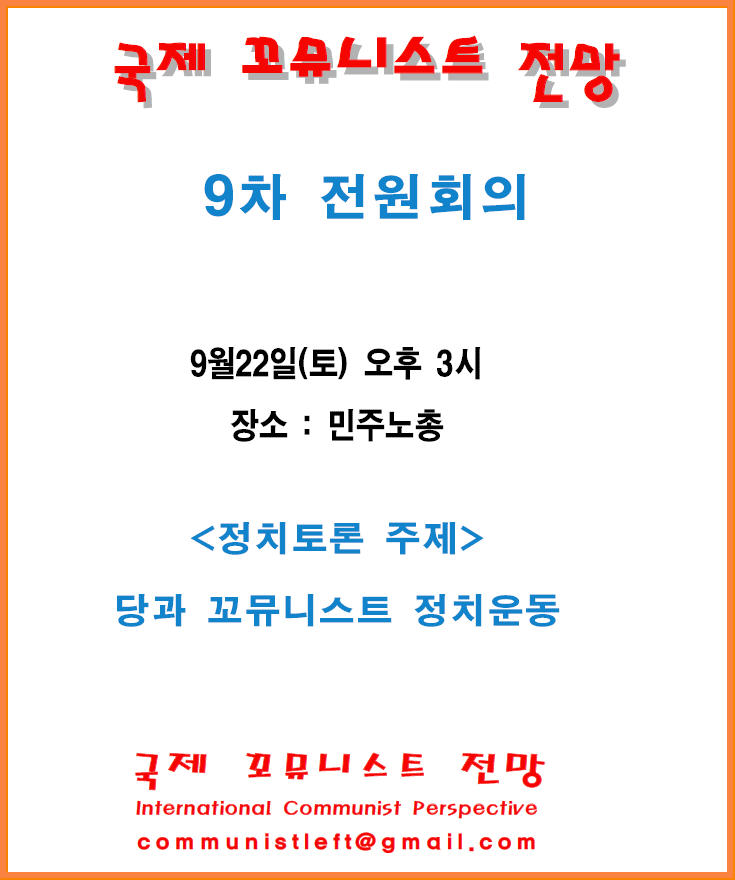
[9.22] 국제 꼬뮤니스트 전망 9차 전원회의

사용자 삽입 이미지

진보블로그 공감 버튼트위터로 리트윗하기페이스북에 공유하기딜리셔스에 북마크

Sexual freedom is impossible under capitalism

Sexual freedom is impossible under capitalism


Gay Rights

We are publishing here an article written by one of our very close contacts in collaboration with ICC militants.  We want to salute the comrade’s willingness to contribute to the ongoing discussions and clarification of one of the burning social issues of the time—gay “rights”-- from a working class perspective.  We also want to express our appreciation for the focus the comrade chose to give in writing this article.  We think it is refreshing to approach the issue from the angle of human emotions.  We also agree with the comrade’s political understanding and argumentation.  We invite all our close contacts to work in collaboration with ICC militants to write about issues of concern for the clarification and emancipation of working class thought.


The “debate” over whether gay and lesbian people should enjoy the “right” to legally marry and draw from such legal recognition all the financial benefits granted to heterosexual married couples –survivor’s benefits among the most hotly contested— has long been one of those hot button issues the ruling class periodically pulls out of its hat, most notably around election time.  In this article we would like to highlight the hypocrisy of the ruling class left, center, and right in taking up the issue from either a “humanistic” point of view—the left’s and center’s—or a moralistic/religious standpoint on the right.  The Obama administration likes to show itself as “liberal” and “progressive,” hence its call to reverse the anti-gay marriage laws passed at the state level (most recently by referendum in North Carolina), without, however, attempting to make gay marriage a constitutional “right.”  The right needs to satisfy the fears and quell the insecurities of its particularly conservative electoral base, hence the Republican Party to-be-nominee Mitt Romney’s anti-gay marriage stance.  The whole “debate” is really a ploy by the Obama administration to appeal to the youth and “independent-minded,” besides the gay electorate itself, and push Romney to discredit himself with the Evangelists if he does not clearly and forcefully come against gay marriage.  Romney’s further move to the right risks further alienating the undecided and independent sector of the electorate.  It is clear that this legalistic posturing is completely hypocritical.  It aims at utilizing a situation which is certainly experienced as dramatic and humiliating by gay and lesbian people by fueling divisions, animosity, and further misunderstandings for the purpose of political gains.  Further, the at times vehement opposition to gay marriage expressed by the rights should not confuse us as to the fact that the legalization of an aspect of personal life would do nothing to challenge the established system of capitalist exploitation.


Today, if you turned on the television set and surfed over to any mainstream bourgeois news channel, chances are headlines about the “debate over gay rights” might assault the screen. It is interesting how the bourgeois media is insistent on highlighting our personal human differences, in showing us where we disagree the most as people. But the bourgeoisie and their mouthpieces in the press are highly hypocritical. Especially when “partisanship” is so frowned upon in the current political climate. Now, certain factions of the ruling class claim to support gay marriage. Even further, they claim to do so out of a sense of deeper humanism, often referring to the gay rights struggle as a struggle for “equality” or “civil rights.”


It is at this point we have to ask: “equality” in the name of what? And for which people in society? Is “marriage equality” even an appropriate working class demand? Is sexual freedom even possible under capitalism? As workers, we have to say the answer to both of those questions is negative. Building a world free of homophobia and heterosexism, where each individual is viewed and treated as a human being, rather than a category, is impossible under capitalism.


For some time now, elements of the bourgeois political class have advocated the legal recognition of same-sex marriage. Often times their arguments are coded in language that appeals to workers. They say that legalizing same-sex marriage would improve the quality of life for gay and queer workers, as they would gain access to insurance benefits, divorce and property rights, etc. But under capitalism, human relations are reduced to a matter of exchange.  Emotions are nothing but mere commodities and finances to the bourgeoisie. So we can see the economic need of legalizing same-sex marriage, but what about the concept of marriage itself within capitalism?


Marx and Engels wrote in the Communist Manifesto that, “The bourgeoisie has torn away from the family its sentimental veil, and has reduced the family relation to a mere money relation.” They later continued, “The proletarian is without property; his relation to his wife and children has no longer anything in common with the bourgeois family relations...On what foundation is the present family, the bourgeois family, based? On capital, on private gain. In its completely developed form, this family exists only among the bourgeoisie.”

So according to Marx and Engels' definition of marriage under capitalism, we can begin to understand that “equal marriage rights” is a term which only applies to those who can afford the benefits of marriage. Rights which only apply to the propertied classes, the people who can even afford to legally marry in the first place. Marriage is fundamentally about property rights and inheritance. It has historically defined which people the ruling class deemed acceptable to own property, and even which people could be owned themselves! Originally of course, marriage meant the possession of the wife and her property by the husband. In the eyes of the bourgeoisie marriage is not at all about mutual respect and love—it's about possession, ownership, and property rights.


But why do we need a ruling class to tell us what marriage is and who we can and cannot marry? As we previously said in Internationalism #130 and in other places in the ICC press, a communist society would instead “be a society beyond the family in which human relationships will be regulated by mutual love and respect and not the state sanction of law.”

The bourgeois democratic state and its agents never pose the questions surrounding gay rights in terms of human need. What are the needs of gay and lesbian folks? Or even the basic needs of human beings in general? There is no question that the repression of the gay and queer community is real. We see homophobia, heterosexism, and patriarchy manifested everywhere in capitalism; anyone saying otherwise is simply in denial. The bullying of gay and queer youth for example has recently been referred to as an “epidemic” in the bourgeois media. Many of these traumatizing events where gay and queer people are bullied lead to depression, and in some cases even suicide.

But does the bourgeoisie focus on solving these issues? What about parliamentary legislation? Do any of the bills and amendments touch on any of these social issues? No! The debate is almost always framed in the context of religion, or moralism. Especially in the mainstream media, especially in the rhetoric of the ruling class. For all the vaunted talks—all the legalistic gibberish—about “human rights,” receiving the capitalist state’s approval and recognition under the guise of the law can do nothing to extirpate centuries long religious and moralistic bigotry. Religious people are “blamed” for their backward attitude, which further contributes to the polarizing, witch hunt-like atmosphere. In situations like these, legalizing same-sex marriage only helps portray the capitalist state as a “just” and “beneficent” entity.

If there is even a grain of sincerity in the ruling class' support of same-sex marriage, it comes from their need to distract workers and immerse them in the circus of electoral politics and legalism. Of course it is true that growing support of sexual freedom is part of humanity developing a deeper scientific understanding, and a greater sense of general human solidarity. But the ruling class cares nothing about these things, and why should they? If you have money your rights are never at risk, or up for debate. “Marriage equality” does not equal a good relationship or economic equality; it equals further class domination from the bourgeoisie.


Social struggles which only partially address the fundamental problems of capitalism, while expressing real social problems that exist in our society, distract the working class from revolutionary tasks and discussions. We have discussed already how the bourgeoisie can become fixated on the debate over gay rights, almost to the point of obsession. But this fixation happens among so-called “revolutionaries” as well.


Many people use language exclusively directed at workers in order to “organize” them around what is in essence a cross-class, broad social issue. The argument that gay rights will bring us “closer to full equality” is completely irrelevant, when it is a basic tenet of communists that full equality is impossible under capitalism. Why as revolutionaries should we be fighting to get “closer” to an egalitarian society? We need to stand against all of capitalisms injustices at once! Many of these same “revolutionaries” would call the legal and electoral decisions in favor of gay marriage rights “victories” for the workers. But these victories do nothing but bolster the appeal of bourgeois civil society.
 

The politics of legalism and democratism have nothing to offer the working class. True human emancipation can only come from working class revolution. Workers should always support gay and queer people themselves, especially in a society where they are alienated and ridiculed in such terrible ways. But we have to remain careful of the bourgeois campaigns which surround these debates. Often times they distract and mislead us from our ultimate goal—ending all forms of repression and exploitation for everyone on earth.

Jam 06/11/12


<출처 :  ICC >  

http://en.internationalism.org/icconline/201206/5004/sexual-freedom-impossible-under-capitalism

진보블로그 공감 버튼트위터로 리트윗하기페이스북에 공유하기딜리셔스에 북마크

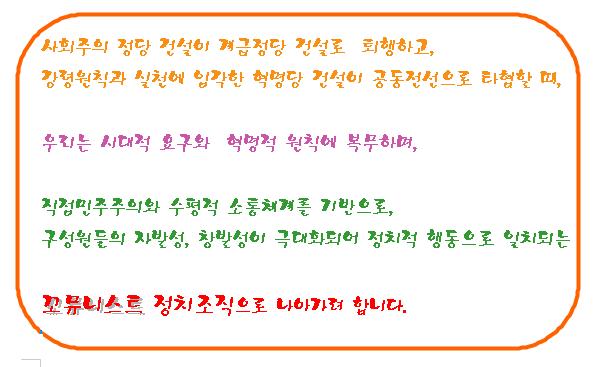
'꼬뮤니스트 정치조직' 건설을 위한 꼬뮤니스트 노동자 전원회의

사용자 삽입 이미지사용자 삽입 이미지

진보블로그 공감 버튼트위터로 리트윗하기페이스북에 공유하기딜리셔스에 북마크

꼬뮤니스트 정치조직 건설을 위한...


사용자 삽입 이미지


사용자 삽입 이미지


진보블로그 공감 버튼트위터로 리트윗하기페이스북에 공유하기딜리셔스에 북마크

The Eurozone Crisis:There is an Alternative but it is not on Any Electoral List

The Eurozone Crisis:There is an Alternative but it is not on Any Electoral List


The British Labour Prime Minister, Harold Wilson once famously remarked that a week is a long time in politics. And indeed it is amazing how quickly the capitalist class can forget. Take how the current phase of the crisis really started. If you read the financial commentators or listen to politicians in any country today, whether in the UK, US or Europe itself you would think the world crisis of capitalism was due to workers living it up in luxurious welfare states that now can’t be paid for!


Political and Economic Paralysis in Europe Continues


From Greece to Portugal via Italy and Spain the Southern European debt crisis is put down to lazy workers and tax-dodging petty bourgeois. To hammer this home numerous journals have printed quotations from “a (usually anonymous) worker” agreeing that “we all lived beyond our means”. They seem to have forgotten that it was the bursting (initially in the US) of a financial bubble created by bonus-bagging bankers and financiers that started it all. The banks and big financial institutions had to be bailed out by the state because they were “too big to fail”. It was this bailout which saddled the governments of Europe (and not just Europe) with their current “unsustainable” borrowing costs.


But even this does not get to the root cause of the crisis. States everywhere bailed out the financial system in order to save the entire capitalist order. The last twenty years of financial speculation came about because the whole system was already in deep crisis. This was a crisis of accumulation of capital which began in the 1970s. When other “solutions” like nationalisation and deficit financing failed to re-start accumulation to the post-war boom levels the capitalist crisis could only take one course. It evolved in traditional fashion towards speculation which Marx frequently equated with “swindling” in Capital Volume III.[1]


But speculating on the basis of arbitrary values attached to “assets” which were only assets on paper could only be sustained by the pretence that this fictitious capital was actually based on real production values. In fact it was based on a mountain of debt which extended down to the least capable of paying it in society.


This, paradoxically, was a useful alibi when the crash came. It made it so much easier to play on the “we are all in this together” lie. And haven’t our masters done well? After four years of increasing austerity to “bring down the debt” global banking debt has not substantially shrunk. According to the Bank of International Settlements, it remains at $22,347,200,000,000 [see bis.org] nor has the speculative trade in so-called derivatives. Indeed the latter (which are a form of hedging against future losses) continues to grow. In June 2009 total contracts were valued at $594.5 trillion but for the latest quarter for which data are available this is now $707,569, 000,000,000. [See bis.org]. It is not just bankers’ bonuses which have been safeguarded by state intervention but the whole game of financial speculation itself. The derivative debts are not only not unwinding but have expanded by $100 trillions in the last six months alone. This is more extreme in some states than in others.


As always the Anglo-Saxons continue to play hardest in the financial game with the UK being the only large state in the EU to increase banking debts in the last year. As Robert Peston affirmed at the end of last year


One other slightly surprising and - perhaps - disturbing trend is that the debt of financial institutions has risen, from 205% of GDP to 210% of GDP.[2]


And UK capitalism can do little else. Having drastically reduced the manufacturing sector to a point where it counts for only an eighth of GDP it is desperately reliant on the financial sector if it is to get any GDP growth. And this is why the eurozone crisis hits home here too. If the Eurozone economy stagnates how can the British banking sector find new financial and speculative games to play (or “provide banking services” as the British ruling class like to call it)? [3]


Add to that the debt question. Amongst the so-called PIIGS the UK has not much exposure to Greek or Spanish debt but is very exposed to Portuguese and Irish debt. If they default (and both survive on IMF and Eurozone handouts) then the British banking sector will also arrive at an absolutely unsustainable point. And rising debt in relation to GDP is unstoppable as far as the richer economies of the world are concerned. According to a recent report on ‘deleveraging’ (i.e. reducing debt):


Total debt has actually grown across the world’s ten largest mature economies since the 2008–09 financial crisis, due mainly to rising government debt. Moreover, the


ratio of total debt to GDP has declined in only three countries in our sample:


the United States, South Korea, and Australia.


In terms of percentage of GDP to debt the UK tops the world’s debt league. UK aggregate debt has now gone beyond 500% of GDP, closely followed by Japan. For Spain the percentage is over 300%.[4]


The Capitalist Choice


And to try to get these under control they have only one policy. It is to make the working class pay in cuts in welfare, health spending, wages, pensions and jobs. But as we wrote in Revolutionary Perspectives 59


Austerity is resulting precisely in the opposite of what was intended*[5]*


As the working class are thrown out of work, as welfare is cut so the economy contracts and government revenues diminish and so borrowing increases. The debts of the all countries, but particularly the so-called PIIGS, continues to rise and only further debt forgiveness and international bailouts will be needed.


Meanwhile the agony for millions increases daily. The latest unemployment figures given in the Guardian [1.5.2012] show that:


Across the European Union, there are now 24.7 million men and women out of work.


Within the eurozone, the youth unemployment rate jumped to 22.1% from 20.6%, with 3.345m adults under the age of 25 out of work.


ADD GRAPH[S]


Spain and Greece have unemployment amongst under 25s of over 50%. Even in Italy it has reached 36%. And this is official. What would it be like if all those in temporary, casual and part-time work were taken into account? Given that the general forecast is for this to last a decade we are looking at a lost generation. On top of that across Europe millions of families have reached a desperate situation with some families drowning under debt which continues to mount. Suicides are already on the increase in Greece and Italy in particular.[6] In Greece the average fall in family income over the last four years has been at 30%. Many families with children have only ?10 a day to spend on food and many will never get out of debt.[7]


The total bankruptcy (if we can be forgiven the irony) of the cuts policy has dented the confidence of the apostles of austerity. Amongst the global ruling class what could be described as the neo-Keynesians are making a comeback. Headed by economists like James Krugman and Larry Summers they are now pointing to the futility of current policy and calling for “stimulus”. And, taking their tone from this, the social democrats, in Britain and France particularly, are pretending they have a new policy to soften the blow of austerity. To many debt-laden and poverty-stricken workers who are totally cynical about the political establishment it seems a worth a try. It cannot be worse than the present.


It is however based on sand and in any case in real terms is not an alternative. The foundations of Keynesianism is deficit financing. The state borrows money (or just prints it) to invest now in projects which create jobs for workers who are then able to give a boost to spending (the so-called multiplier effect) and we get the magical growth. What this forgets is that historically Keynesian policies have only been applied after years of austerity have got down government borrowing. Now however the states are all saddled with so much debt how can they launch a policy for growth based on further deficit financing? These states will find it difficult to finance some of their borrowing through bonds issues to investors (i.e. big financial institutions) who are already running scared of sovereign debt! As it is they are already pursuing a policy of quantitative easing (printing money) just to give to the banks to keep the system going. Once this sort of money gets into circulation then the Merkel Weimar inflation nightmare will be the reality.


Bankrupt Policies on Offer


In fact, the politicians like Ed Balls and Francois Holland who are offering “change” or to do something different, are only offering to postpone austerity for a year or so longer than their right wing opponents. The idea of launching a policy for growth via the financing (on borrowed or printed money) of new infrastructure will only exacerbate the problem. In truth every segment of our ruling class has no better policy for getting out of the capitalist mess we are in than Charles Dickens’ Wilkins Micawber. But desperate voters will probably buy into it. Labour’s success in the local elections in the UK (albeit 7 out of 10 voters did not even go to the polls) and Hollande’s victory in the French Presidential elections are both signs of this. But nothing will change for workers as a result.


Down the road more desperate solutions are on offer. The extreme right is on the rise proposing “simple” if illusory solutions. For them unemployment and falling earnings are not consequences of the failure of the capitalist system but due to the European Union and immigration. In the Greek situation our comrades have already raised the alarm over the rise of xenophobic and ultra-nationalist alliances which have sprung up as the crisis is increasingly portrayed as one “Made in Germany”.[8] The likes of Golden Dawn in Greece which has now entered parliament for the first time (with 21 seats), Geert Wilders party in the Netherlands and, not least, the National Front in France have all stepped up the anti-immigrant and anti-EU message. In Greece the thugs of Golden Dawn, like the Nazis they ape, will start to make life more hellish for immigrants than it is already. The more subtle Marine Le Pen hopes to build on Sarkozy’s failure by splitting his party over the issues of immigration and crime in order to make the National Front the main party of the right. Playing the “national” card comes naturally for our ruling class. The “we are all in it together” and sacrifices are needed for the “good of the country” messages are all aimed at diverting attention away from the fact that the working class are paying for the ruling class to continue enjoying the fruits of our exploitation. No doubt the political climate will get nastier. Our Greek comrades have tried to counteract this growing nationalism with an appeal to both German and Greek workers. This has been distributed in its thousands and has been well-received in factories in Germany.[9] The leaflet shows that the working class in Germany have already paid and are still paying for the “economic miracle”.


The other side of the German “economic miracle” of the last decade are the shrinking wages of the population dependent on employment, because they have paid and are still paying the price of “improving the competitiveness” of the German economy. Real wages of German workers are falling year by year and companies’ profits “inflate” constantly. Purchasing power is now well below inflation. 7 million (about 20% of the workforce) work part-time under fixed-term contracts (“mini-jobs”), with monthly earnings below 400 euros and without insurance. While real wages have declined over the last 10 years, banks have increased their profits by 39%.


And this is what the ruling class everywhere want for us all. Take the following piece on the eve of the French Presidential election from Josef Joffe in the Financial Times [3 May]


Francois Hollande is odds-on favourite to win the French Presidency, a bleak prospect for all but new Keynesians and old socialists. … he should take the lead from his fellow social democrat, Gerhard Schröder.


Why the former German chancellor? Because he dared tell his own electorate what neither Mr Hollande nor Nicholas Sarkozy would have uttered even on the rack. Nine years ago, Mr Schröder warned his country: reduce social benefits, loosen up labour markets and accept individual responsibility – or else. Then he carried through with his “Agenda 2010”. And lo, Germany went from zero to 3 per cent growth in the two years before the crash – and back to 3 per cent thereafter.[10]


Today German workers are no better off but the mass of surplus value they create has given weapons for the likes of Merkel to use in trying to force through more austerity. And as our comrades point out the problem is the same everywhere.


Elections or Real Change?


Since the crisis broke 4 years ago twelve governments in the major capitalist states have been replaced including those in Greece and France this month (May 2012).


Elections, as the article from a French comrade which follows this makes clear, are only the means by which the ruling class get us to give them legitimacy. By nominally choosing our rulers we become accomplices in what they do to us. The options on offer from our rulers are increasingly narrowing. For us the electoral choice the capitalist class offers is like that of the concentration camp – either death by overwork or through starvation. Greek workers have naturally tried to avoid such a choice as the election results there showed. Despite it being illegal not to vote more than a third of the electorate did not do so. Those that did vote (in contrast to France) massively abandoned the social democrats of PASOK for those left parties who oppose the deal with the EU. Hollande won in France for promising to renegotiate the European stability pact but PASOK was almost wiped out for accepting the EU terms for its bailout.


That apart the Greek election result gave no clear indication as to a course of action for the Greek ruling class. Indeed the stand-off in Greece is almost a metaphor for the whole world economy. The difference is that Greeks are already experiencing what we will all face in years to come. In fact the Greek elections only confirm! the economic and political impasse of capitalism today. The state of the crisis has led to heavy losses for the two parties of the coalition which negotiated the austerity package with the EU and IMF. Despite the peculiarities of the Greek parliamentary system which gives the leading party 50 extra seats PASOK and New Democracy have fallen two MPs short of being able to form a government to carry on with the EU deal. In fact it would be a travesty if they had been able to achieve it as 7 out 10 of those that did vote gave their votes to parties which campaigned against the deal.


The surprise second largest party was the so-called left coalition of SYRIZA which benefitted most from the discontent with the EU deal. It gained votes from PASOK but also from of young professionals who would lose their professional association status under the proposed EU-sponsored reforms.[11] As many of these were former New Democracy supporters it can hardly be trumpeted as a new rise of the electoral left as some are doing both inside and outside Greece. The voters have not given a vote of confidence to SYRIZA, because this party apparently lacks any serious alternative to the deep crisis. Its vote was achieved through a reaction against increasingly harsh austerity. Another paradox of the situation is that the voters want to renegotiate with the EU rather than leave the eurozone for a fistful of dodgy drachma and an even more uncertain future. The resultant confusion is political paralysis for which the only solution the Greek ruling class are offering is – another election. Not one of these parties offers an alternative to the continuation of the capitalist system which is the root of all the misery in the first place. And it is not


The Unions


Even where an increasing number of workers are abandoning hope in the electoral system there is still no clarity about a way forward. Many agree that workers should resist austerity but think that uniting as workers means putting our trust in unions. On face value the idea of all being together to force some redress has a certain appeal but it falls down on two counts. In the first place the unions don’t unite us but actually divide us. In second place the assumption behind all the union campaigns is that there is still plenty of money about, it just needs to come our way a bit more. In other words capitalism is really OK and just needs to be better run to be fairer. This is utopian but not surprising. The unions which once were real workers’ organisations are today bloated bureaucracies with paid officials on 6 figure salaries. They are a well-integrated part of the capitalist system.


All the above features were made obvious in the recent street protests in Spain after the Rajoy government announced that the austerity measures already undertaken were not enough. A further ?36 billion of cuts would have to be made to meet the agreed debt reduction target agreed with the EU.[12] Spain already has the highest unemployment in Europe and this latest cut will reduce its people to the same level of desperation as those in Greece. The anger on the streets was predictable but the unions were divided as to how to react. The two biggest establishment unions the Workers’ Commission (CC.OO linked to the Communist Party) and the General Workers’ Union (UGT – linked to the Socialist Party) tried to take control of class anger by calling a general strike (for only one day of course). The Daily Telegraph reported


In Madrid, protestors stopped traffic through the capital as they took to the streets braving the rain to protest austerity measures. Coming together for a rally in Puerta del Sol, the site of Los Indignados protest last summer, demonstrators were fired up by the words of union leaders.


"Nearly a million workers across Spain are in the streets saying 'No' to this way of understanding labour _relations," said Ignacio Fernandez Toxo, secretary general of the CC.OO union._


Eh? Were workers only complaining that the unions had not been consulted before they were sacked? We don’t think so but the emphasis is indicative of the union mentality – they just want to be asked nicely by the state before they manage our exploitation. And then they will still negotiate away our jobs and conditions. The time, however, for negotiations is long past.


The Real Alternative


The real alternative to playing the game the capitalist way is much harder to take in and, despite the misery inflicted on us, most are not yet ready to contemplate it. This is no less than the overthrow of the capitalist system and its replacement by a new social order in which money, debt and exploitation will no longer exist.


This is clearly not going to be an immediate quick fix. The process of mounting a fightback has to begin from the working class itself autonomously organising their own struggle via mass assemblies and strike committees which are accountable to those mass meetings of all the workers in the struggle. To some extent this is already happening, particularly in Spain. The Indignados and Occupy movements have helped to raise the political awareness of the need for an anti-capitalist agenda. In some places the mass meetings have recognised that the real secret of success is to keep everyone involved by having wider debates about the current situation and what we do now. To take one example, here is an extract from a leaflet put out by the Workers’ Group of Palencia:


FOR A STRIKE WITHOUT INTERMEDIARIES


Once again the ruling class has reminded us who is in charge; this time with the Labour Reform which leave workers even more at the mercy of the employer. From now on, whether you keep your job or not will depend exclusively upon the boss’s need to maximise profits. This is not due to this or that government but rather expresses the fact that for Capital we are nothing more than commodities. Faced with this prospect we have no other option than to struggle: What should this struggle be? How to carry it out?


The majority unions offer us their model: they command, we obey. They make a lot of fuss about the Labour Reform, but at the same time they cut deals that make things worse for the workers. In reality, our rights are of no importance to them. For them we are nothing more than a number that justifies their existence and their subsidies. What is important to them is that we are exploited and enslaved while they continue their charade! They are nothing more than puppets in the service of the capitalists. Their real function, which is why they continue to exist, is to absorb, divert and subdue the real struggle of the working class; to stop it becoming a real danger to the system and its ruling class.


... we cannot follow the majority unions nor their strategies. In order to nullify all revolutionary struggle, they have agreed to hold a strike with conditions, the so-called “minimum services”. When have we ever seen a war where a pact has been signed with the enemy in order to “not cause too many problems”? The aim of a strike is to cause harm, to oblige the employers to bend before our interests. To strike where it hurts them most: the economy. This will not be done with an agreed strike and only on one day: it will be achieved through indefinite wildcat strikes.


We cannot give the traitorous unions and the opportunists on the Left of Capital more time. We must organise ourselves and without intermediaries in assemblies, in workers’ councils. Only through determined action and without conditions can we defeat the exploiters and their servants in all areas: from the stopping of the Labour Reform to the destruction of the capitalist system.


AGAINST THE CUTS


ORGANISE OURSELVES WITHOUT INTERMEDIARIES![13]


What is equally significant here is that the leaflet does not stop at a mere defensive struggle against the cuts but puts the issue of the system that causes it. This is already a step beyond that of the Indignados and Occupy movement agendas. The issue raised here is not to make capitalism fair but to get rid of it.


And this is not only a question of how we organise. It requires political consciousness. The problem is that all these movements arise now in one place then in another. Political consciousness is so hard to hold onto. Moreover, if we are to avoid the pitfalls of the past we have to take on board the lessons of our own history. In our understanding those who share the political agenda of the need to overthrow capitalism, the need for a society without money or exploitation, without a state and oppression need to get together in a global political entity which for want a better word we call a party. This party is not a government in waiting but an international fighting body whose single aim is to advance the programme of the world revolution In itself it does not take power in any place. The party’s organs are not the medium for the mass struggle. Rather the international party will fight for the establishment of organs of workers’ power (or “workers’ councils” as the Palencia workers say in their leaflet). And once these organs are established it fights within them, as part of the class to which it belongs, against any return to capitalist schemas (not least those which will be proposed by the state capitalist and social democratic left). This is obviously not a perspective which will be taken up immediately by masses of workers but it is the only perspective which offers us a real alternative. This is the perspective which we are patiently fighting for everywhere we can.


Footnotes


[1] See for example “Banking and credit, however, thereby also become the most powerful means for driving capitalist production beyond its own barriers and one of the most effective vehicles for crisi and swindling” Capital Vol III p. 742 Penguin version.


[2] bbc.co.uk UK’s Debts Biggest in the World


[3] It is this overdependence on the financial sector that has led to the total isolation of the British government in Europe over the nature and scope of the Basel III regulations. See “Osborne hand hovers over No vote on key reform” in the Financial Times 4.5.2012


[4] Report by Mckinsey Global Institute, available on mckinsey.com


[5] See “Capitalism in the Quagmire of Debt”. Those looking for our opinion on the future of the Eurozone will find more on that issue there.


[6] See blog.occupiedlondon.org


[7] See channel4.com and for the UK “Credit boom left low-income groups in debt forever” Financial Times 4.5.2012


[8] See leftcom.org


[9] See leftcom.org or read Aurora, Bulletin of the Communist workers’ Organisation. Free to anyone who sends a stamped addressed envelope to BM CWO, WC1N 3XX.


[10] ft.com


[11] In Greece there is a special status for dozens of professions. These professions are “closed” because a special permission is required in order for someone to practice. For example, a would-be notary, taxi driver or pharmacist has to buy a licence from a retiring one. The cost for a pharmacy licence is upward of 400,000$. There are more than 130 “closed” professions: beauticians, drama and dance school instructors, bakers, antiques dealers, insurance agents, insurance consultants, employment consultants, diagnostics centre staff, divers, cameramen, driving school instructors, cab drivers, tourist bus drivers, newspaper stand owners, electricians, sound technicians, private school owners, tobacco sellers, gun manufacturers and sellers, hairdressers, private investigators, port workers, real estate agents, lifeguards, carpenters, financiers, opticians, auditors, movie/theatre director and even car mechanic.


The opening of the so-called “closed” professions comes after strong pressure from the troika (IMF, ECB, EU) – however some real profit-making professions like pharmacists and lawyers will still remain closed.


[12] And to top it all more money will be needed for Bankia, the bank set up two years ago to absorb much of the bad debt is now in trouble as the banks it took on board had understated their debts and overstated their assets. It has debts of over ?52 billion. The Spanish Government has had to nationalise it in order to save the banking system but this has only added to its sovereign debt burden.


[13] This was quoted by “Ernie” of the ICC on libcom.org and we are grateful to him for pointing us to it.


Tuesday, May 15, 2012


Revolutionary Perspectives

진보블로그 공감 버튼트위터로 리트윗하기페이스북에 공유하기딜리셔스에 북마크

You can’t fight austerity through elections!

You can’t fight austerity through elections!


After the replacement of President Sarkozy by Hollande in France, and the electoral slump of the parties of the outgoing Greek government, a commentator in the Guardian (8/5/12) was not alone in declaring that “Revolt against austerity is sweeping Europe.” Leftists saw a growing backlash against austerity across Europe” (Socialist Worker 12/5/12), “deep popular opposition to austerity measures” (wsws.org 8/5/12) and even declared that “Europe turns left” (Workers Power May 2012).


In reality, whatever the level of dissatisfaction felt at election time, the ruling bourgeoisie will continue to impose and intensify its policies of austerity. Voting against governments can happen because of the depth of discontent, but it doesn’t change anything. For the working class it’s only through the mass organisation of its struggles that anything can be achieved. The election game is played entirely on the bourgeoisie’s terms, but workers still troop into the polling stations (if in decreasing numbers) because they still have widespread illusions in what could be achieved. There’s still a belief that elections can somehow be used as a means for social change, or that there are alternative economic policies that the capitalist state could follow. There has been no ‘revolt’ across Europe expressed in these elections, although there is definitely a lot of anger which has been impotently misdirected into the various democratic mechanisms. Having said that, if you actually examine what’s happened in recent elections they do reveal a lot about the capitalist class and the state of its political apparatus.


Not just the usual seesaw

Since the financial crisis of autumn 2008 a number of individual leaders and political parties have been replaced because of their identification with public spending cuts, job losses, wage and pension reductions, and all the other aspects of economic ‘rigour’ and austerity. There is no overall bourgeois strategy, just the removal of parties and individuals and their replacement by others, whether from the left or the right or by coalitions. The ruling class is just reacting to events without a clear idea of how it will arrange its political forces in the future. And it’s not taking long for the new leaders to begin to be discredited as they are exposed as being in continuity with their predecessors.


In November 2008 John McCain was defeated by Barack Obama in the US Presidential election partly because of his connection with the policies of George Bush and the fact that the US economy had been in recession since late 2007 in a crisis deeper than anything since the 1930s.


In the UK, following the general election of May 2010, the Labour Party was replaced by a Conservative and Liberal Democrat government, the first coalition since the Second World War. The British bourgeoisie, usually so assured in its political manoeuvres, was not able to accomplish its usual Labour/Tory swap. Since the election it has also had difficulties in presenting Labour as a viable ‘alternative’.


In Belgium it took 18 months from the election of June 2010 before a government was finally formed.


In the general election in Ireland in February 2011, Fianna Fail, the party that had been the largest since the 1920s, saw its proportion of the vote go from 42% to 17%. The Irish government is now a Right/Left coalition of Fine Gael and Labour. Ireland was in recession in 2008 and 2009. It returned to recession in the third quarter of 2011. The new government has predictably shown itself no different from the previous FF/Green coalition. The myth of the ‘Celtic Tiger’ faded out a long time ago.


In the Portuguese legislative elections of June 2011 the governing Socialist Party saw its support go from 37% to 28%. Electoral turnout declined to a historically low level of 58%. Unemployment continues to rise, up to more than 13%, having been less than 6% in 2002. Portugal is in its worst recession since the 1970s. The conditions for its 2011 bailout from the EU and IMF have meant a vicious series of government spending cuts.


In the Spanish general election of November 2011 the votes for the ruling Socialist Party went from 44% to 29%, and there was growing support for minor parties. Under the conservative People’s Party Spain has fallen back into recession. Unemployment, which has been growing throughout the last five years, has reached record levels with a 24.4% jobless rate (over 50% of under 25s), the highest figures in the EU.


In Italy in November 2011 Silvio Berlusconi was replaced by a government led by economist Mario Monti. His cabinet was constituted of unelected ‘technocrats’. He has introduced a range of austerity measures – with the support of most of both Italian houses of parliament.


In Slovenia in December 2011 there was a parliamentary election in which a new party, Positive Slovenia, that had only been founded in late October, got the highest proportion of the vote. After a period of manoeuvres and negotiations the outgoing 4-party coalition was replaced by a 5-party coalition which only had a Pensioners’ Party in common, but not Positive Slovenia. With the Slovenian economy is in recession, a new programme of austerity measures was adopted by the Slovenian Parliament on 11 May. Major unions which had staged demonstrations against the programme have said they would not oppose it with a referendum. Last year four pieces of legislation were rejected by referendum.


In presidential elections held in Finland in January and February this year the long period of the decline of the Social Democratic Party reached a new low point. The new president is the first in 30 years not to be a Social Democrat. Voter turnout was the lowest since 1950.


In the Netherlands in April this year the coalition government resigned after only 558 days in power. The parties have been in dispute over budget cuts.


In the recent French Presidential election Hollande’s victory was in many ways due to his not being Sarkozy. Despite his claims to have a different approach on questions such as investment he will have no choice but to continue the attack on living and working conditions. Hollande said before his first visit to Angela Merkel that he would bring "The gift of growth, jobs, and economic activity." Although this is the usual politician’s hot air, corresponding to no material reality, at least the situation in France is by no means as desperate as that in Greece.


Greek politics in a mess

Following the latest elections in Greece it was clear the parties of the PASOK/New Democracy/LAOS coalition had lost the most support. It should be recalled that the coalition had only been installed last November, to replace George Papendreou’s government and implement the measures required by the IMF/EU/ECB. In the elections, despite there being a choice of 32 parties, there was a significant reduction in the number of people voting to a lowest ever figure of 65%. This contrasts with the previous low figure of 71% in 2009 and previous figures in the high 70s or even more than 80% that Greece was used to. If the French election result mainly expressed opposition to Sarkozy, the Greek result showed mainly opposition to the government coalition and the measures it had undertaken. The fact that the Greek parliament now has four parties of the Left and three of the Right where once it was dominated by PASOK/New Democracy shows the degree to which the bourgeoisie’s political forces have splintered. The prospects of a new coalition without a new election seem limited.


There has been a lot of attention in the media on the role of the leftwing coalition Syriza, portrayed as a new force without whose co-operation or tolerance no government could function. Because they claim to be against austerity they will, for the moment, quite possibly continue to increase their support. However, whether they operate as a buffer between government and striking workers, or actually join a government coalition, they do not represent anything new. Along with its anti-austerity phrases Syriza has clearly stated that Greece should remain in the EU and the euro, debts can not just be written off, but it would prefer some more benign conditions for receiving the latest bailout.


Where the emergence of Syriza is a sign of some residual flexibility from the bourgeoisie, the sharpest evidence of the decomposition of Greek capitalism’s political apparatus is seen in the gains made by Chrysi Avgi (Golden Dawn) at the expense of LAOS. Greece has had right wing parties before (LAOS is the most recent example), and in Metaxas they had a real dictator in the late 1930s, the contemporary of Hitler, Mussolini, Franco and Salazar. However, Chrysi Avgi isn’t just another racist, right-wing party demonised by the Left. It’s anti-immigrant policies are backed up by physical attacks on foreigners. It has also mounted attacks on its political opponents, tried to intimidate journalists and has links with Nazi groups.


Chrysi Avgi campaigned on the slogan “So we can rid the land of filth” with candidates claiming to be more soldiers than politicians. They claim to be ‘Greek nationalists’ in the mould of Metaxas, rather than being neo-Nazis. You could be forgiven for being confused on this when you see the black symbol on the red background of their party flag. It looks very similar to a swastika, although it is in fact a ‘meander’ or ‘Greek fret.’ Whatever label you want to pin on them, Chrysi Avgi are clear evidence of the further decay of bourgeois politics. Parties in Greece that support the return of the monarchy are barred from standing at elections, but Chrysi Avgi has 21 members in the new parliament.


The Greek elections are the most obvious example of how the bourgeoisie across Europe is coping politically with the economic crisis. It can’t offer any genuine economic alternatives to austerity, but it is also using up its political alternatives as parties take their turns to impose programmes that will not challenge the impact of the economic crisis. There is no particular political strategy, just a day-to-day reaction to events. Bourgeois democracy continues to function, but the ruling class has a decreasing variety of ways to deploy its political apparatus. The number of people who are voting is in decline; new parties and coalitions are emerging to cope with changed situations. But, for the working class there is nothing to be gained by the replacement of one government by another, or in any participation in the democratic game.


All the political parties are factions of one state capitalist class. This is one of the reasons that democracy is so important for the bourgeoisie, because it gives the illusion of offering a number of different choices. For the working class only struggle on its own terms can set in motion a force that can break the social stalemate between the classes. The bourgeoisie has nothing to offer, not in its economy, and not in its elections. The working class can only rely on its self-organisation, on a growing consciousness of what’s at stake in its struggles.


Car 14/5/12

진보블로그 공감 버튼트위터로 리트윗하기페이스북에 공유하기딜리셔스에 북마크

2011년의 사회운동 : 분노에서 희망으로

2011년: 분노에서 희망으로


2011년에 일어난 가장 중요한 사건들은 자본주의 세계위기의 첨예화 그리고 튀니지, 이집트, 스페인, 그리스, 이스라엘, 칠레, 미국, 영국… 에서의 사회운동들이다.(1)


국제적인 차원의 분노

자본주의의 위기의 결과들은 세계인구의 절대다수에게 매우 혹독하다. 생활조건들이 악화되고, 실업은 점점 더 큰 양상을 띠고 그 지속기간 또한 길어저서, 최소한의 안정성도 기대할 수 없는 비정규직화가 점점 더 깊이 잠식하고 있다. 극도의 가난과 굶주림이 만연한다…


수백만의 사람들이 "안정적이고 정상적인" 삶의 가능성이 그리고 "우리 아이들을 위한 미래"의 가능성이 사라져가는 것을 근심어린 눈으로 지켜보고 있다. 이는 심각한 분노를 야기했고 수동성을 돌파하고 광장과 거리들을 점거하려는 열망을 불러일으켰다. 지난 5년 이래 극도로 첨예화된 위기의 원인들에 관한 문제들을 토론하려는 열망을 불러일으켰다.


그러한 분노는 은행가들과 정치가들 그리고 기타의 자본가계급 대표자들이 명백히 드러낸 오만과 소유욕 그리고 대다수의 사람들의 고통에 대한 그들의 무관심으로 인해 한층 더 격화되었다. 그러나 심각한 사회문제들에 대해 정부들이 보여준 무능력으로 인해서. 그 정부들의 대책들은  어떤 해답도 제시하지 못한 채 오직 빈곤과 실업만을 심화시키고 있다.


분노한 사람들의 운동은 국제적으로 확산되었다. 이는  사회주의적 정부가 최초의 혹독한 긴축정책을 펼치려 안간힘을 쓰던 스페인에서 시작되었다. 그런 다음 부채위기의 상징인 그리스에서, 세계자본주의의 전당인 미국에서, 근동의 가장 극심하고 가장 오랜 제국주의적 충돌의 두 인접국가들인 이집트와 이스라엘에서.  특히 이집트에서는 아랍의 봄이후 운동의 새로운 동력으로 작용했다.


이것이 세계적인 운동이라는 의식은, 민족주의의 파괴적인 무게에도 불구하고, 그리스와 이집트, 그리고 미국에서 국기를 흔들었던 사람들이 있었음에도 불구하고 널리 확산되었다. 스페인에서는 그리스 노동자들에 대한 연대가 다음과 같은 슬로건들로 표현되었다. "아테네여 견뎌라, 마드리드가 떨쳐 일어난다!"  2011년 11월 미국 오클랜드에서 파업노동자들은 "전세계의 점거(Occupy)운동과의 연대"를 외쳤다. 이집트에서는 미국의 그 운동에 대한 카이로의 연대선언이 의결되었다. 이스라엘에서는 "네탄야후, 무바라크, 엘 아사드는 모두 똑같은 도당들"이라고 외쳐졌고 팔레스타인의 노동자들과 연락을 취했다.


현재로서는 이 투쟁들의 최절정이 지난 상태이다. 그리고 비록 새로운 투쟁들의 증후들이 스페인과 그리스와 멕시코등에서 있긴 하지만, 많은 이들은 다음과 같이 스스로에게 질문을 던진다, "이러한 분노의 저항물결이 무슨 소용이 있었는가?", "우리가 무언가를 얻었는가?"


이 운동의 긍정적인  측면들뿐만 아니라 약점과 한계 또한 알아보기 위해서 대차대조를 통한 결산을 해볼 필요가 있다.


"광장을 점거하자" – 운동의 공통된 슬로건

그처럼 광범위하고 다양한 주도성들은, 자체의 이해를 도모하며 우리를 통제하는 환상과 혼란을 극복하려는 노력으로서 거리와 광장을 점거하는 것 같은 주도성들은 지난 30여년 이래 처음이었다.


'패배한, 무관심하고 무기력한' 사람들로 표현되었던 이 사람들, 노동자들, 착취당하는 자들, '주도성을 발휘하고 무언가를 함께 이뤄내기에는 무능한'  그들이 결집하고 공동으로 주도성을 발휘해서 이 체제의 일상성이 우리에게 부과한 수동성을 깨뜨릴 수 있었다.


이는 우리의 기운을 북돋웠고, 우리 자신의 능력들에 대한 자신감을 강화시켰다. 우리는 대중의 공동 행동이 발산하는 권력을 발견했다. 사회적인 분위기가 바꼈다. 공공의 주제들에 대한 정치가와 전문가와 "대지도자"들의 독점이 서서히, 스스로 발언하기를 원하는 수많은 무명인들에 의해 의문시되었다.(2)


확실히 이는 여전히 쉽게 부서져버릴 지 모르는 여린 출발점이다.  환상, 혼란,  기운의 불가피한 기복, 억압, 탄압력들과 자본주의 국가들이 우리를 유인하려는 위험한 함정들 (그 선두에 좌파정당과 노동조합들이 있는)은 반동과 쓰디쓴 패배를 야기할 것이다. 우리는 길고 험난한 길 앞에 서 있다. 난관으로 가득찬 하지만 승리의 보장이 없는. 그러나 우리가 스스로 움직이기 시작했다는 사실 그 자체가 이미 첫번째 승리이다.


 집회 – 운동의 심장

집회들은 단지 불만들을 표출하는 수동적인 태도에 스스로를 국한한 것이 아니라, 스스로를 집회들 속에서 조직한다는 능동적인 태도가 발전했다. 다양한 집회들은 1864년의 제 1 인터네셔널(국제노동자연합)의 주요이념, 즉, "노동자계급의 해방은 노동자들 스스로의 일이어야 한다 "를 구체적으로 보여주었다. 이렇게 해서, 파리콤뮨과 더불어 시작되었고, 1905년과 1917년 러시아에서 그 최고조에 도달했으며 1918년 독일에서 그리고  1919년과 1956년 헝거리에서, 그런 다음 1980년 폴란드로 이어져 온 노동자계급의 이러한 전통이 계속된다. 


총회와 노동자평의회는 노동자투쟁의 진정한 조직형식이며 새로운 사회 조직형식의 핵심이다.


총회들을 통해 우리는 대대적으로 결합하고, 우리를 임금노예제에 얽매고 있는 사슬들을 파괴하며, 파편화, 즉 "각자 제 살궁리만 하는 것"을 폐기하고, 제각각의 영역들이나 사회적 범주들의 게토 속으로의 고립을 극복하는 것을 도모할 수 있다.


총회들을 통해 우리는 공동으로 고민하고, 토론하며 결정하는 것을 도모할 수 있다. 이루어진 결정들에 대해 집단적으로 책임을 지며, 결정과 그 실행에 모두가 참여할 수 있다.


총회들을 통해 우리는 투쟁의 추진에 필수 불가결할 뿐만 아니라 미래의 계급과 착취없는 사회의 기둥 역할을 할 상호신뢰와 전반적인 공감과 연대를 만들어갈 수 있다.


2011년에 폭발적인 전정한 연대가 있었는데, 이는 지배계급이 설교하는 위선적이고 이기적인 "연대"와는 전혀 무관하다. 예를 들어, 마드리드에서는 체포된 사람들의 방면을 위하거나 경찰이 난민들을 체포하는 것을 저지하기 위한 시위들이 있었다. 또한 스페인과 그리스 그리고 미국에서는 주거장소로부터의 강제이주를 막기 위한 대대적인 회합들이 있었다. 미국 캘리포니아의 오클랜드에서는, "파업집회에서 다른 작업장들로 파업파괴 저지원 파견을 결정했고, 직원들이나 학생들을 11월 2일의 총파업에 참가했다는 이유로 처벌한 작업장이나 대학을 점거할 것이 결정되었다. "  또한, 비록 아주 간헐적이고 짧게 지속되긴 했어도, 모두가 같은 생각을 가진 동지들에 의해 지지되고 보호된다는 느낌을 함께 느꼈던 순간들이 있었고, 이는 불안감과 무방비상태와 가망없음이 지배적인 이 사회의 "정상적인 상태"와는 전적으로 정반대였다.     


 논쟁문화는 미래을 밝히는 능불

수백만의 노동자들이 세계를 변혁하기 위해서 필수적인 의식은 우리가 계몽된 지도자의 말을 귀기울여 듣거나 그의 지침들을 따른다고 해서 도달될 수 없다. 오히려 대대적인 논쟁에 의해 동반되고 또 그러한 논쟁으로 이끌어지는 투쟁들을 경험함으로써 발생한다. 예전의 투쟁경험이 참작되지만 또한 시선은 앞에 놓인 미래를 향하게 됨으로써 이뤄진다. 이는 스페인에서, "혁명없이는 어떤 미래도 없을 것이다"와 같은 슬로건들로 표현되었다.


논쟁문화, 상호존중과 경청에 기반한  공개토론은 총회 안에서 싹트기 시작할 뿐만 아니라 그 주변에도  마찬가지이다. 이동도서관과 소모임과 회합이 조직되기 시작했다. 많지 않은 기술적인 설비로 수많은 인문적 활동들이 커다란 즉흥적 창의력을 바탕으로 거리와 광장들에서 시작되었다.  총회들에서 그렇듯이 이는 노동자운동의 이전 경험들로의 재연결을 의미한다. "그렇게 오랫동안 억압되어 있던 지식열이 혁명 속에서 격렬하게 분출되어 나왔다. 스몰리대학으로부터만도 첫 6개월동안 매일 수톤에 달하는 몇 트럭의 책들이 지방으로 보내졌다.  러시아는 뜨거운 모래가 물을 빨아들이 듯이 물릴줄 모르게 모든 읽을 거리를 빨아들였다. 그리고 그렇게 삼키듯 읽힌 책들은 우화집들이 아니었다, 거짓된 역사책도  지루한 종교책도 아니였다, 풍기문란을 유발하는 소설책도 아니였다.  그것은 사회 및 경제 이론들, 철학서들, 톨스토이와 고골과 고리키의 책들이었다…"(존 리드,“ 세계를 뒤흔든 10일", 제 1장)


"성공모델"을 위해 투쟁하는 듯하지만 자꾸 수백만번 실패하는 이 사회의 문화에 대해서, 지배 이데올로기와 매체가 우리에게 주입시키려드는  소외된 전형들과 위조에 대항해서, 수천의 사람들이 자체의 비판적이고 독립적인 척도를 제시하려는 노력과 더불어 그들 스스로가 담지하는 진정한 민중문화를  발전시키기 시작했다. 이러면서 위기와 그 뿌리, 은행의 역할 등과 같은 주제들이 다뤄졌다. 마찬가지로 혁명에 대해서 토론되었는데, 이때 이 문제에 대한 모든 가능한 견해들이 출현했는데, 이는 많은 혼란들을 표현했다.  민주주의와 독재에 대해서도 논의되었다. 그렇게 해서 상호보완적인 다음과 같은 문구들이 출현했다. "그들은 그것을 민주주의라 부르지만 그것은 전혀 민주주의가 아니다." "그것은 일종의 독재다. 하지만 사람들은 그것을 모른다." 계략과 거짓과 모호함, 즉 지배계급의 정치를 특징짓는 짓거리들의 세계와는 전혀 무관한, 다수의 진정한 정치가 시작되기 위한 최초의 발걸음이 내디뎌졌다. 이러한 접근법에서, 경제나 정치분야뿐만 아니라 환경파괴나 윤리, 문화, 교육, 건강부문등 우리와 관련된 모든 주제들이 모두 다뤄진다.   


 미래는 노동자계급의 손에 놓여있다

지금까지 서술된 것과 같은 2011년의 운동의 전개가 이 해를 희망의 시작의 해로 만든다면, 그렇지만 우리는 여전히 그 운동들의 매우 커다란  한계와 약점들을 인식하기 위해 진지하고 혜안적이며 비판적인 시선을 그 운동들에 던질 필요가 있다.


자본주의가  낡은 체계임을 그리고 "인류가 살아남기 위해서는 자본주의가 극복되어야 함"을  전세계의 점점 더 많은 사람들이 인식하는 반면, 많은 이들은 여전히 자본주의를 한줌의 "악" (가차없음, 금융상어, 비정한 독재자들 )으로 환원시킨다. 하지만  자본주의는 전체적으로 심원하게 변혁되어야만 하는 복잡한 사회관계망이다.  그 다양한 현상들 (금융, 투기, 정치경제계 지도자들의 부정부패)로 인해 혼돈에 빠져서는 안된다. 그렇게 되면 힘을 허비하는 것이다.


자본주의의 모든 구멍들을 통해 휘몰아쳐 나오는 폭력(억압, 테러와 테러리즘, 윤리적 야만)이 마땅이 거부되어야 하지만, 이 체제가 오직 "시민들"의 평화로운 압력만으로 척결될 수 있을거라고 믿어서는 안된다. 소수일 수 밖에 없는 지배계급은 그들의 권력을 순순히 포기하지는 않을 것이다.  그것은 4년이나 5년마다 있는 선거로 스스로를 정당화하는 국가의 배후에 있다. 결코 지키지않을 공약을 내세우고 예고하지 않은 일들을 처리해버리는 정당들을 기반으로 하고 있다. 지배계급의 또 다른 기둥들은 시위대를 해산시키기 위해 노동자들을 동원하고 지배계급이 서명하라고 내놓는 모든 것에 서명하는 노조이다. 오직 대대적이고 집요하며 끈질긴 투쟁만이, 국가의 존재를 떠받치고 있는 억압수단을 파괴하는데 필수적인 힘을 착취받는 사람들에게 제공할 수 있다. 오직 그렇게만 그들은 스페인에서 항상 다시 등장하는 슬로건, "모든 권력을 총회로"를  실현할 수 있다.


비록 미국의 점거(occupy)운동에서 그렇게 인기가 있었던 슬로건 "우리가 99%(상위의 소수 1%에 대비해서)"을 통해,  사람들이 우리가 살고 있는 깊은 계급격차들을 서서히 인식하고 있다는 사실이 드러나고 있긴 할지라도, 그 저항운동 참가자 대부분은 스스로를 "자유롭고 평등한 시민들"이 사는 사회에서 인정받기를 원하는 " 아래로부터의 시민"으로 생각한다.


그러나 이 사회는 계급들로 나누어져 있다. 한 편에는 생산수단을 소유하고 아무 것도 생산하지 않는 자본가계급이, 다른 한편에는 모든 것을 생산하지만 점점 더 빈곤해져가는 착취받는 계급, 노동자계급이 존재한다. 사회발전의 동력은 "대다수 시민의 결정"이라는 민주주의 놀음 (이 놀음은 오히려 지배계급의 독재를 은폐하고 정당화하는 가면에 다름 아님)이 아니다, 그것은 계급투쟁이다.


사회운동은  가장 중요한 착취받는 계급, 즉 노동자계급의 투쟁을 그 참조점으로 하여 수행되어야 한다.  왜냐하면 이계급은 다 함께 사회의 주요한 부를 생산하고, 공장, 병원, 학교와 유치원, 대학들, 사무실, 항구, 건설산업, 운송 및 우편등  사회생활이 기능하도록 담보한다. 2011년의 몇몇 운동들에서 그 힘이 싹틈을 예감할 수 있었다.  이집트에서 분출해서 무바라크의 퇴진을 결과시킨 투쟁물결.  미국 캘리포니아의 오클랜드에서 점거자들은 총파업을 외쳤고, 항만이 마비되었으며 항구의 종사자들과 화물차운전자들에게 능동적인 지원이 요구되었다. 런던에서는 파업중의 전기기사들과 세인트 폴 성당의 점거자들이 공동의 행동을 위해 함께 모였다. 스페인에서는 광장 집회들에서 투쟁중인 특정 영역들을 단합시키려는 노력들이 있었다.


현대 프롤레타리아트의 계급투쟁과 자본주의사회의 억압에 고통받는 사회계층들의 근본적 욕구들사이에는 어떤 대립도 없다. 프롤레타리아트의 투쟁은 결코 이기적인 운동이 아니라, 오히려 "엄청난 다수의 이해를 위한 엄청난 다수의 자립적인 운동"의 기초이다. (공산주의 선언, MEW, 제 4권, 472쪽)


현재의 운동은 2백년간의 노동자투쟁의 경험들을 비판적으로 평가하여 교훈을 얻음으로써 이전의 투쟁들과 해방시도들로부터 배울 수 있다. 그 길은 기나 길고 장해물로 가득차 있다. 그로부터 스페인에서 항상 다시 들리는 슬로건이 생겨났다. 즉, "우리가 천천히 가는 것이 아니라,  우리가 갈 길이 먼 것이다(No es que vamos despacio, es que vamos muy lejos)"  우리는 집요하게 새로운 운동을 준비하기 위해서  어떤 염려나 두려움 없이 가능한한 광범위하고 깊이 있게 논쟁해야 한다.  오직 그렇게만이 자본주의와는 다른 새로운 사회를 위한 기초가 세워질 수 있다.


2012년 3월 12일

국제공산주의흐름 


(1) 인터내셔널리뷰 148호의 글, "경제위기는 끝없는 이야기가 아니다. 그것은 한 체계의 종말을 그리고 새로운 세계를 위한 투쟁을 예고한다" 참조. 시스템의 세계적 위기와 연관되어 후쿠시마사태는 인류가 직면한 거대한 위험들을 분명하게 보여주었다.


(2) 시사잡지 타임(The Times)이 "2011년의 인물"로 "분노한 자들"운동의 참가자들을 선택한 것은 시사하는 점이 많다.


http://cafe.daum.net/leftcommunist/Qf2f/60

진보블로그 공감 버튼트위터로 리트윗하기페이스북에 공유하기딜리셔스에 북마크

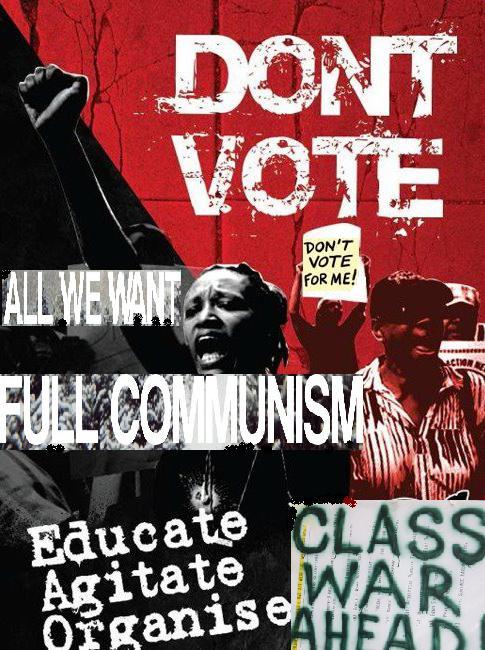
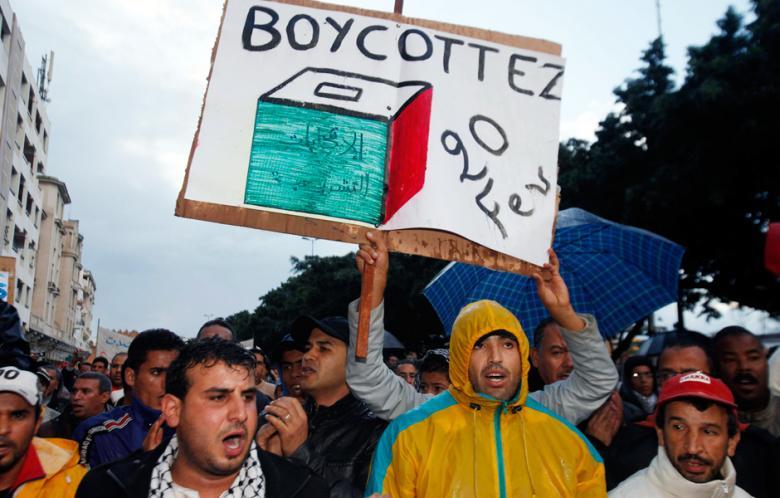
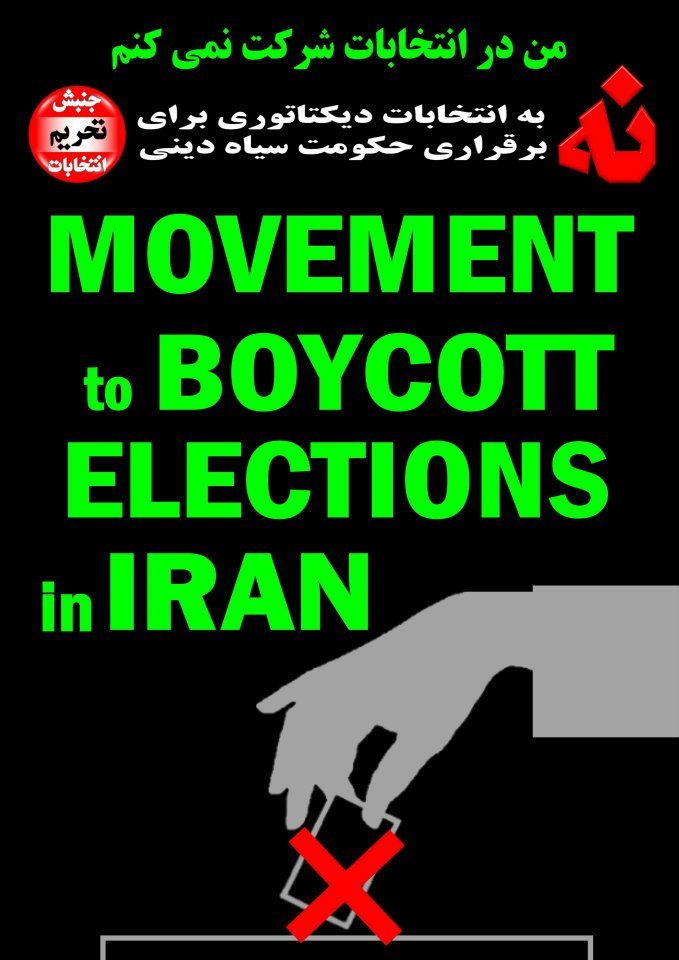
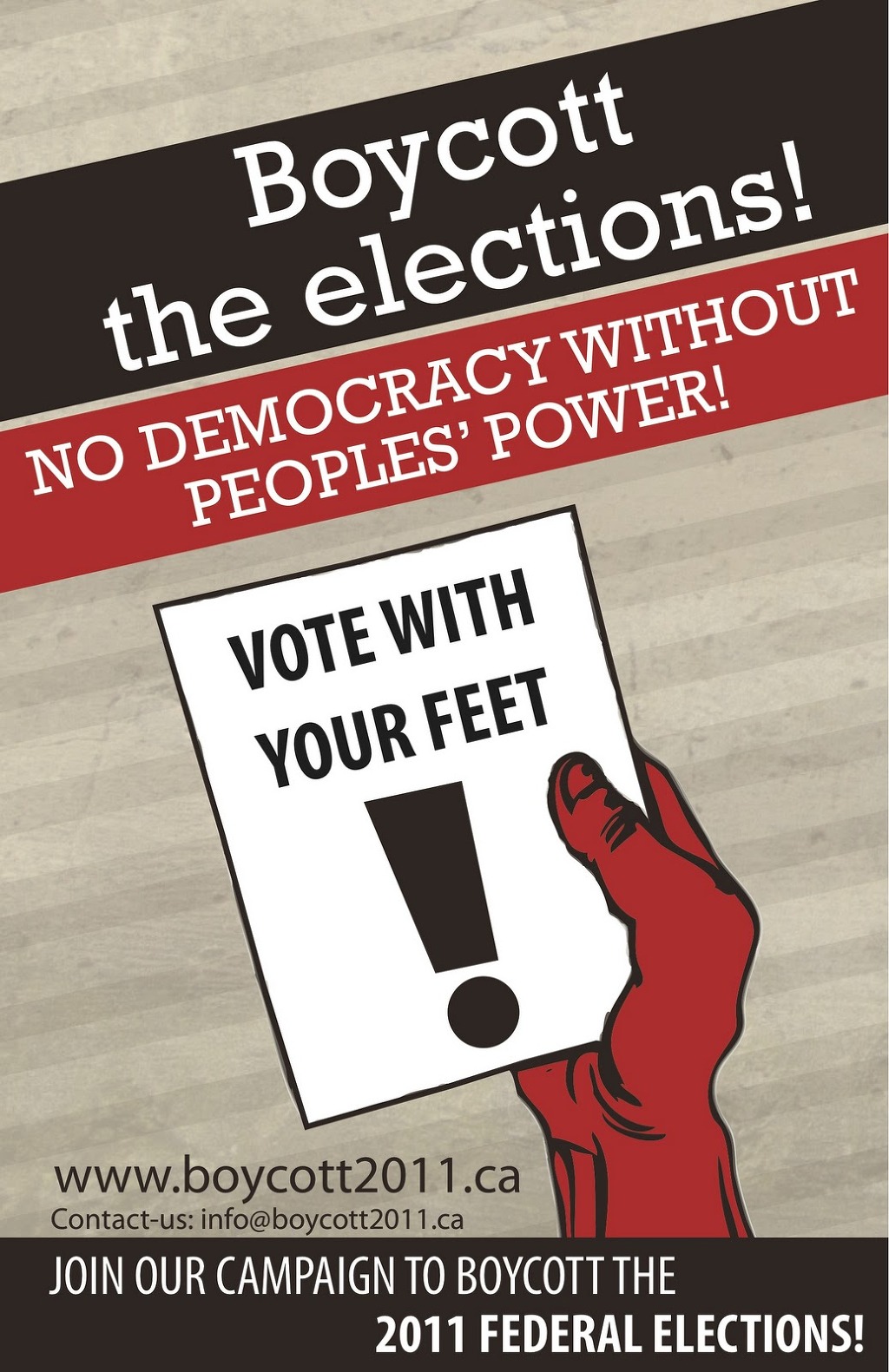
투표거부는 노동자계급이 지배당하지 않을 진정한 권리이다

투표거부는 노동자계급이 지배당하지 않을 진정한 권리이다


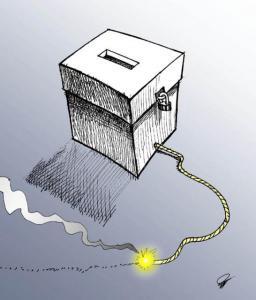
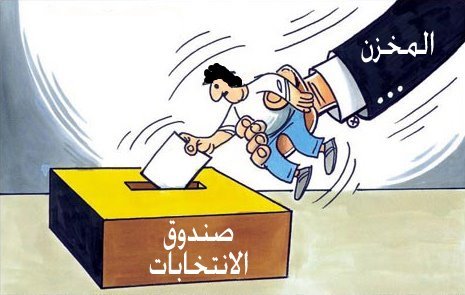
선거는 세상을 바꿀 수 없을 뿐 아니라 오히려 부르주아 권력을 강화시켜, 비록 그들을 지지하지 않았다 하더라도 선거이후 4~5년을 투표행위로 권력을 위임한 자들에게 합법적으로 지배당해야 한다.


하지만, 투표거부(보이콧)는 권력을 약화시킬 뿐 아니라 4년 내내 정당성이 없는 권력에 맞서 대중들이 투쟁에 나서게 한다. 그리고 투쟁이 확산되어 전면화 되면, 공장에서 노동자들은 총파업을 위한 투표를, 거리와 대중총회에서는 광장점거를 위한 투표를, 지역에서는 스스로의 권력을 갖는 평의회를 위한 투표를 계급적으로 집단적으로 압도적으로 실행한다.


이번엔 어쩔 수 없었지만, 다음선거엔 준비된 보이콧 운동을!!!


1973년 북아일랜드 국민투료 보이콧 : 카톨릭 투표율 1%

1983년 자메이카 총선 보이콧 : 투표율 2.7%


1991년 부르키나파소 대통령선거 보이콧 : 투표율 27%

1992년 가나 국회의원 선거 보이콧 : 투표율 28%

1997년 말리 대통령선거 보이콧 : 투표율 29%

1997년 슬로바키아 국민투표 보이콧 : 투표율 9.5%

2002년 홍콩 지방선거 보이콧 : 투표율 16%

2003년 가나 대통령선거 보이콧 : 투표율 15%

2005년 베네주엘라 국회의원 선거 보이콧 : 투표율 25%


일본, 캐나다, 이탈리아, 스페인 그리고???


 선거 보이콧은 계급투쟁의 부활과 함께 더욱 광범위하게 일어날 것이다.

진보블로그 공감 버튼트위터로 리트윗하기페이스북에 공유하기딜리셔스에 북마크